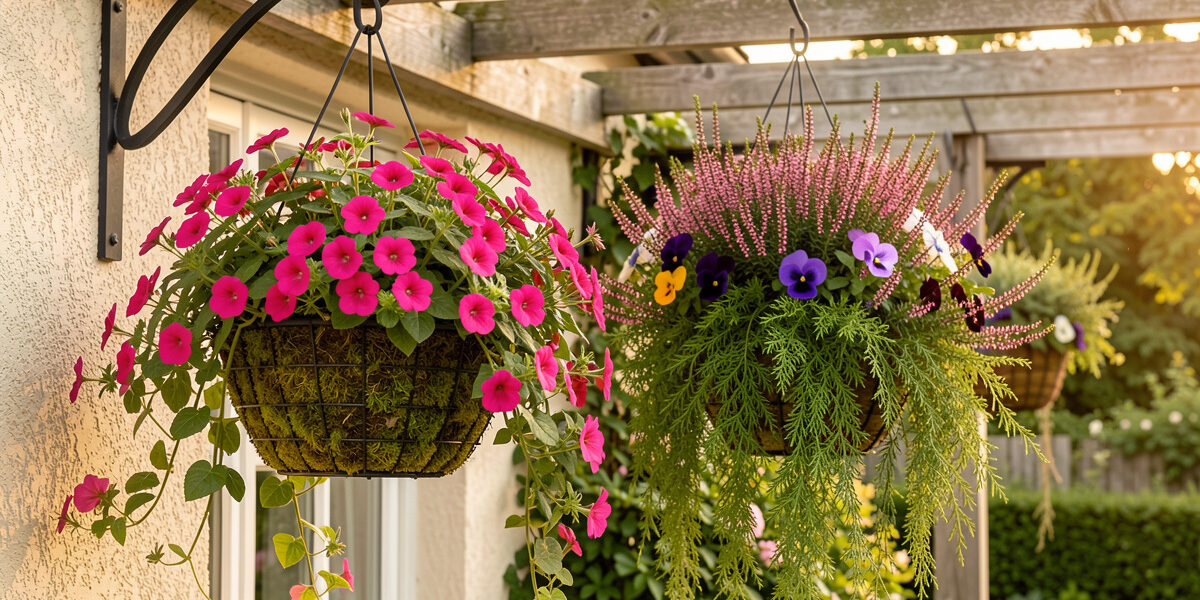
The best all year round hanging baskets combine trailing ivies for winter structure, spring-flowering bulbs, summer trailers like petunias, and autumn chrysanthemums for continuous color. By planning seasonal transitions, your hanging baskets remain attractive every month.
For container methods, pot selection, soil advice, and seasonal planning across all container types, see our container gardening complete guide. The focus below is on hanging baskets specifically — the plants, transitions, and care routine that keep them looking full through all four seasons.
Hanging baskets present unique challenges for year-round gardening. They dry out quickly, have limited root space, and are exposed to weather from all sides. Success requires choosing tough plants that thrive in these demanding conditions. Proper planning ensures beautiful displays regardless of season.
Why Hanging Baskets Need Special Planning
Hanging baskets have distinct growing conditions that differ from ground plantings. Their elevated position exposes them to more wind, causing faster drying — on my south-facing balcony rail, a hanging basket loses moisture twice as fast as the same plants in a pot on the floor. Limited soil volume means nutrients deplete quickly; I feed hanging baskets at half-strength every 7-10 days during the growing season instead of the standard 2-week schedule for ground containers. Full sun exposure from all sides intensifies heat stress.
These challenges require resilient plant selections. Choose varieties that tolerate drying, heat, and wind. I have killed enough fuchsias in hanging baskets to learn that lesson — they look beautiful at the nursery but wilt the first hot afternoon they face on an exposed balcony rail. Avoid delicate plants that need constant attention. Tough survivors like trailing petunias, ivy, portulaca, and sedum outperform demanding species in baskets every time.
Strategic seasonal replacement maintains color. Unlike garden beds where plants persist year-round, hanging baskets benefit from fresh plantings each season. This approach keeps displays vibrant and allows trying new combinations.
Choosing the Right Basket: Materials, Liners, and Size
The basket itself does as much work as the plants in it. The three choices that actually matter are material, liner, and size — get those right and the watering burden drops noticeably. I have run the same seasonal planting in a coir-lined wire basket and a solid plastic reservoir basket side by side on my balcony, and the difference in how often I have to water is the difference between once a day and twice a day in July heat.
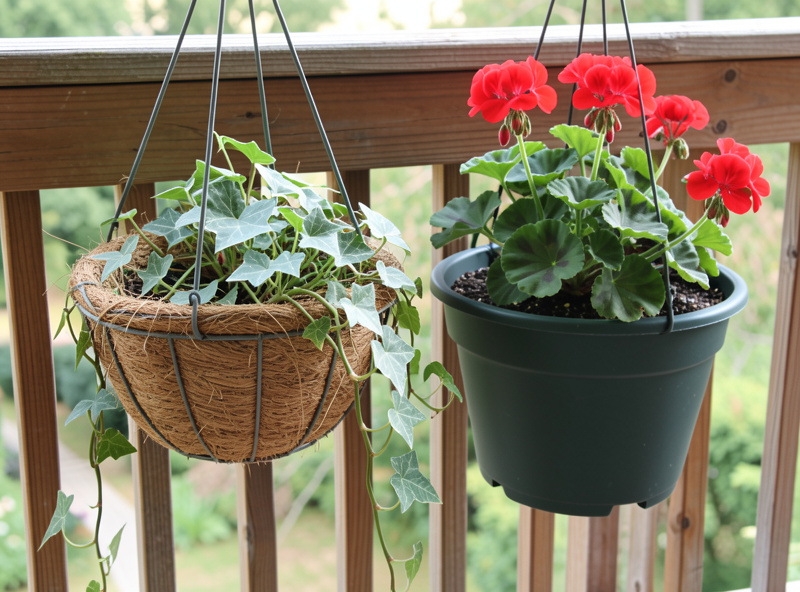
Coir or moss-lined wire baskets look the part and breathe well, but they lose moisture through the sides as fast as through the top — University of Illinois Extension notes that lined wire baskets lose a tremendous amount of moisture through the sides as well as the surface, which is exactly why they dry out so fast (Hanging Baskets, Illinois Extension). They suit shady, sheltered spots and gardeners who do not mind watering twice a day in summer. Line them with a thin plastic sheet punched with a few drainage holes and you reclaim much of that water loss without sacrificing drainage.
Solid plastic or resin baskets hold moisture far longer and weigh less when wet, which matters on a balcony rail with a weight limit. The trade-off is airflow — roots stay wetter longer, so use a free-draining potting mix and resist the urge to overwater in cool weather. Many now come with a built-in reservoir in the base that catches runoff and wicks it back up; on my rail, those cut summer watering in half.
Size: a 14-16 inch basket is the sweet spot for year-round use. Smaller baskets (10-12 inch) dry out too fast and limit root room for the summer trailers that make a basket spectacular. Larger baskets (18+ inch) hold more soil and moisture but get heavy — a saturated 18-inch basket can weigh 25-30 pounds, which is real weight to hang off a balcony rail or a bracket. Check the load rating on whatever is holding the basket up before you go big.
If you are building your hanging basket collection, browse hanging baskets and planter sets on Amazon — coir-lined baskets with built-in water reservoirs reduce summer watering frequency. As an Amazon Associate I earn from qualifying purchases.
Winter Hanging Basket Plants
Planting timing: Establish winter baskets in early autumn before hard frost. This allows plants to root before cold arrives.
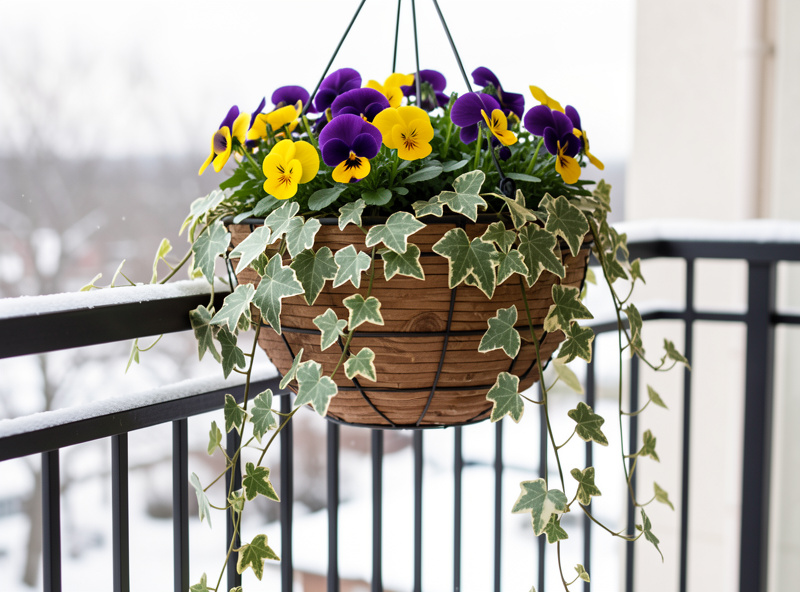
Trailing Ivy (Hedera helix varieties)
Evergreen foliage provides structure through winter. Variegated varieties add visual interest even without flowers. Plant around the basket edges for cascading effect. Tolerates shade and cold better than most trailing plants.
Winter-Flowering Pansies
Hardy pansies survive frost and bloom sporadically through winter cold. Choose trailing varieties specifically bred for hanging baskets. Colors include white, yellow, purple, and burgundy.
Winter Heather (Erica carnea)
Low-growing pink or white flowers from December through March. Combine with ivies for texture contrast. Tolerates cold and provides winter nectar for pollinators. Space plants around basket edges.
Cyclamen coum
Delicate pink or white flowers with silver-patterned leaves. These tuberous plants naturalize in baskets and return reliably each winter. Plant tubers near basket edges where their low growth displays best.
Ornamental Kale and Cabbage
Stunning foliage in pink, purple, and white improves as temperatures drop. These architectural plants create winter interest when flowers are scarce. Tolerate frost and provide bold color.
Trailing Rosemary
Evergreen aromatic foliage survives mild winters. Upright varieties add structure; trailing types cascade over edges. Combines beauty with culinary utility. Tolerates dry conditions between waterings.
Spring Hanging Basket Selections
Transition strategy: As winter plants fade, gradually introduce spring selections while keeping some persistent winter performers for overlap.
Miniature Daffodils
Compact varieties like Tete-a-Tete reach only 6-8 inches tall. Plant bulbs in autumn for March-April bloom. Plant centrally in baskets for vertical accent before trailers fill in.
Primroses and Polyanthus
Traditional spring flowers thrive in cool, moist conditions. Choose trailing varieties for basket edges. Rainbow colors available. Bloom for 6-8 weeks, bridging winter to summer.
Forget-me-nots (Myosotis)
Delicate blue flowers self-seed readily. These filler plants soften basket edges and complement spring bulbs. True blue color is rare and valuable in spring designs.
Spring-Flowering Pansies
Cool spring weather brings pansies into full production. Refresh baskets with new plants for maximum color. Continue until summer heat arrives.
Grape Hyacinths (Muscari)
Small blue flower spikes create vertical interest. Combine with yellow miniature daffodils for classic spring combinations. Fragrant blooms attract early pollinators.
Wallflowers (Erysimum)
Spicy fragrance and bright colors in yellow, orange, and red. Biennial plants flower heavily in spring. Compact varieties suit baskets well. Deadhead to extend blooming.
Summer Trailing Plants
Success requirement: Summer baskets need daily watering, sometimes twice daily in heat. Choose drought-tolerant varieties or commit to regular irrigation.
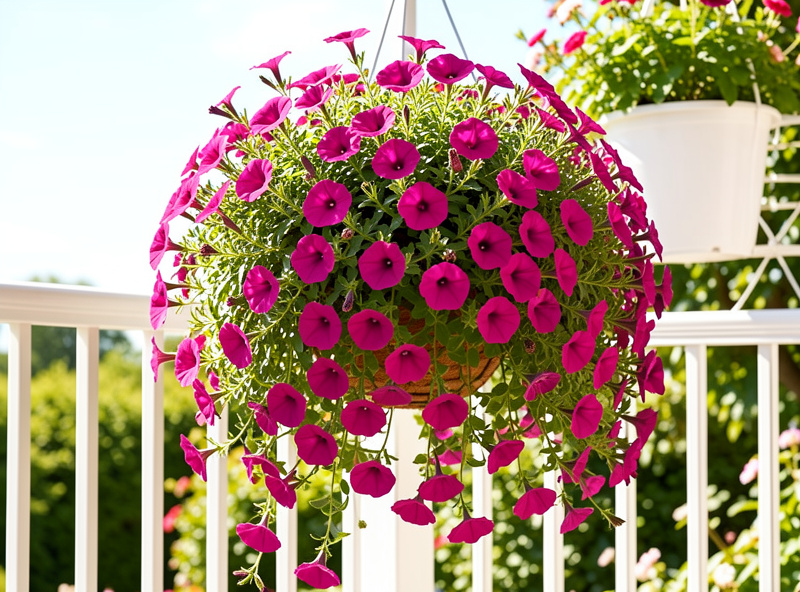
Trailing Petunias
The classic summer basket plant. Choose self-cleaning varieties that do not require deadheading. Available in every color imaginable. Wave series trails up to 3 feet, creating spectacular cascades.
Calibrachoa (Million Bells)
Smaller flowers than petunias but even more prolific. Trails 2-3 feet over basket edges. Thrives in heat and sun. Self-cleaning varieties available. Heavy feeders need regular fertilization.
Bacopa
Delicate white, pink, or blue flowers on trailing stems. Blooms continuously without deadheading. Tolerates some shade. Combines beautifully with bold-colored companions.
Lobelia
True blue flowers, plus varieties in white and pink. Cascades gracefully over basket rims. Prefers moist soil; do not let dry completely. Crystal Palace offers classic deep blue.
Verbena
Clusters of small flowers in purple, pink, red, or white. Trailing varieties cascade beautifully. Tolerates heat and drought better than many annuals. Attracts butterflies.
Trailing Portulaca (Moss Rose)
Succulent foliage and jewel-toned flowers in yellow, orange, pink, and red. Thrives in hottest, driest conditions. Flowers close in shade, reopening in bright sun. Perfect for neglectful gardeners.
Dichondra Silver Falls
Silver-gray foliage creates stunning cascades. Not a flower, but provides beautiful texture and color contrast. Tolerates heat and drought exceptionally well.
Autumn Hanging Basket Plants
Design tip: Transition to autumn selections while soil remains warm for root establishment before winter.
Ornamental Peppers
Colorful fruit in yellow, orange, red, and purple lasts until frost. Upright growth provides basket center focal points. Fruit is edible but typically very hot. Tolerates cooler temperatures than summer annuals.
Chrysanthemums
Autumn blooms in warm colors. Choose compact, trailing varieties specifically for hanging baskets. Deadhead to prolong blooming. The quintessential fall flower.
Ornamental Grasses
Graceful texture and autumn color. Feather reed grass or blue fescue add movement and seasonal interest. Seed heads persist into winter. Provide vertical contrast to trailing plants.
Ornamental Kale and Cabbage
Stunning foliage improves as temperatures drop. Pink, purple, and white coloration intensifies in cold. Tolerates frost well. Combines beautifully with autumn flowers.
Autumn Pansies
Plant fresh pansies in early autumn for color until hard frost. Hardier than summer-planted specimens. Provide nectar for late-season pollinators.
Sedum (Stonecrop)
Pink flower heads turn coppery-russet in autumn. Succulent foliage provides structure. Drought tolerant. Attracts butterflies and bees. Trailing varieties cascade beautifully.
Basket Care Through the Seasons
Watering: Hanging baskets dry out faster than ground plantings. In summer, water daily and twice daily in heat. In winter, reduce watering but never let soil completely dry. Baskets under eaves may need extra water as rain does not reach them.
Feeding: Apply liquid fertilizer weekly during growing season. Container plants exhaust nutrients quickly. Use balanced fertilizer (10-10-10) or bloom-boosting formulas (15-30-15) for flowering plants.
Deadheading: Remove spent flowers regularly to encourage continuous blooming. This is essential for plants like petunias and geraniums. Self-cleaning varieties reduce this workload.
Soil refresh: Replace completely each season. Remove old plants, loosen soil, and add fresh potting mix. This prevents disease buildup and replenishes nutrients.
Watering Strategies That Actually Work
Hanging baskets are the thirstiest container in a small garden, and in a Nordic summer the daylight stretches toward 18 hours, which means the soil is losing water almost around the clock. The people who give up on hanging baskets usually give up because of the watering schedule, not the plants. Iowa State Extension makes the same point — baskets full of closely spaced plants in a light potting mix need frequent watering, sometimes twice a day on hot, sunny days, and water should run from the bottom to confirm the whole root ball is wet (Creating and Growing Hanging Baskets, ISU Extension). A few systems take that burden off the daily to-do list.
Self-watering reservoir baskets with a wick or bottom chamber are the single biggest upgrade. The reservoir holds a day or two of backup water and wicks it upward as the soil dries. I run these on my balcony rail for exactly this reason — they turn a twice-daily July chore into an every-other-day check. The same wicking principle is why I print self-watering inserts for my floor containers; the basket version just comes built in.
Water-holding crystals mixed into the potting mix at planting absorb hundreds of times their weight in water and release it slowly as the soil dries. They are not magic — a basket with crystals still needs regular watering in a heatwave — but they buy you a grace period on the days you forget or are away.
Drip or capillary watering from a reservoir above the basket takes the manual work out entirely. A slow-drip spike fed from a bottle, or a capillary cord wicking from a hidden reservoir, keeps the basket evenly moist. For a rail of several baskets, a small gravity-fed drip line run from a balcony-rail reservoir is the setup that finally let me leave for a long weekend in July without coming home to crispy petunias.
Timing: water early in the morning so plants take up moisture before the heat hits and so foliage dries before nightfall, which cuts down on fungal problems. A morning check also tells you which baskets made it through the previous day and which need a second soak by evening.
Design Principles for Stunning Baskets
Thriller, Filler, Spiller formula: Combine one tall thriller (grass, pepper, upright salvia), rounded fillers (mums, geraniums), and trailing spillers (petunias, bacopa) for professional results.
Color coordination: Limit to 2-3 main colors for cohesive design. Monochromatic schemes (all purples) look sophisticated. Complementary colors (purple and yellow) create vibrancy.
Texture contrast: Mix fine textures (lobelia, fern) with bold leaves (ornamental kale, succulents). Variegated foliage adds interest without relying solely on flowers.
Scale appropriateness: Match plants to basket size. Large baskets (16+ inches) handle vigorous trailers like Wave petunias. Small baskets suit compact plants like miniature daffodils and heather.
Related Articles
Learn about year-round container flowers for ground-level pots.
Find heat-tolerant plants for sunny hanging locations.
Discover vertical gardening techniques for small spaces.
Get essential equipment for basket maintenance.
Frequently Asked Questions
What plants are best for all year round hanging baskets?
Combine trailing plants (ivy, bacopa) with blooming plants (petunias, lobelia) and foliage plants (fern, creeping Jenny) for continuous interest throughout the year.
How do you keep hanging baskets blooming all year?
Deadhead regularly, feed every 2 weeks, water daily during hot weather, and replace seasonal plants as they decline. Rotate baskets for even sun exposure.
How often should you water hanging baskets?
Water daily during hot weather, every 2-3 days in moderate weather, and weekly in cool weather. Hanging baskets dry out quickly because they are exposed to air on all sides.