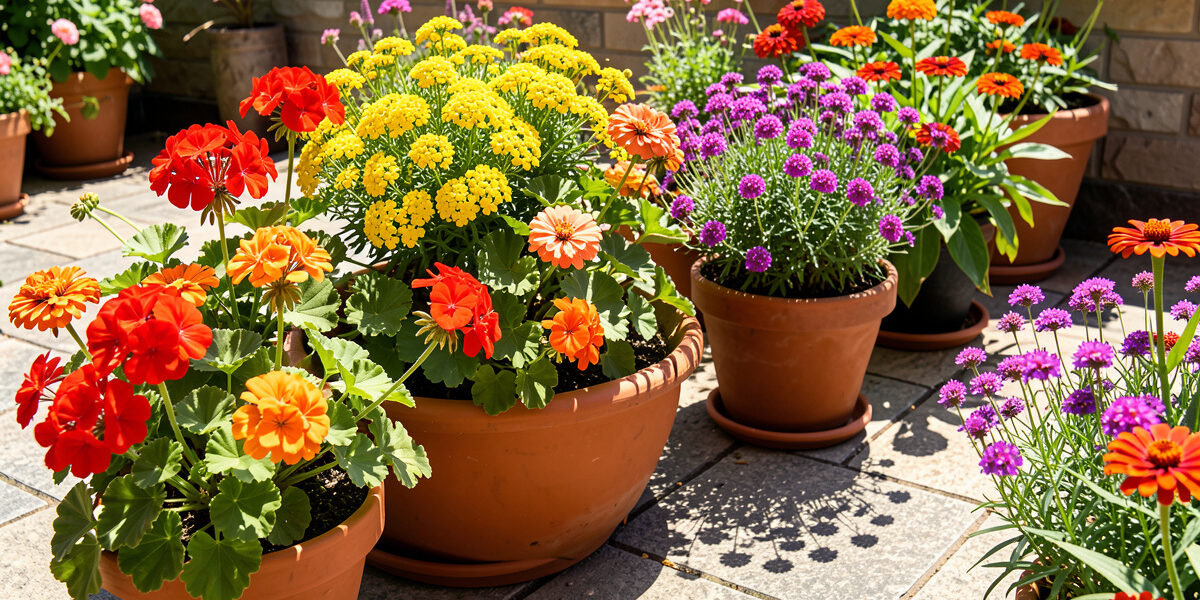
The best flowers for pots in full sun include geraniums, portulaca, lantana, and vinca — all heat-tolerant plants that thrive in 6+ hours of direct sunlight. These drought-resistant bloomers maintain color even during the hottest summer days.
For container methods, pot selection, and seasonal planning across all container types, see our container gardening complete guide. The focus below is on flowers that thrive specifically in full-sun pots — the heat-tolerant varieties that bloom harder the hotter it gets.
Sunny containers present unique challenges. Soil heats up quickly, moisture evaporates faster, and plants must withstand intense light. Choosing sun-loving, heat-tolerant varieties ensures your pots remain colorful through the dog days of summer. Proper plant selection eliminates the frustration of watching delicate flowers wilt in heat.
Understanding Full Sun Container Challenges
Container plants in full sun face stress factors that garden plants avoid. The confined root zone heats up dramatically. Dark-colored pots can reach 120 degrees Fahrenheit internally, cooking roots. Rapid evaporation means soil may dry completely within hours.
Wind exposure compounds drying. Elevated containers on balconies or patios catch every breeze. Unlike garden soil that draws moisture from surrounding areas, pots have finite water reserves.
Success requires choosing plants evolved for harsh conditions. Desert natives, Mediterranean species, and drought-adapted annuals outperform moisture-loving plants. Iowa State Extension’s drought-tolerant annuals list makes the same point — a short roster of annuals flower profusely through dry spells that defeat ordinary bedding plants, which is exactly the roster you want to lean on for a full-sun pot (Drought-Tolerant Annuals, ISU Extension). These survivors have developed mechanisms to conserve water and withstand intense light.
In a Nordic climate, “full sun” means something specific: the season is short, but the days are long. Through June and July my balcony gets 16-18 hours of daylight, so a south- or west-facing pot bakes harder and longer than the same pot would in a more temperate summer — the sun is low but it never really lets up. The heat-tolerant plants below are the ones that survived that intensity on my rail without me standing over them with a watering can twice a day.
Key adaptations to look for: Succulent leaves store water. Waxy coatings reflect light. Small leaves reduce surface area for water loss. Deep root systems access limited moisture efficiently.
Top Heat-Tolerant Container Flowers
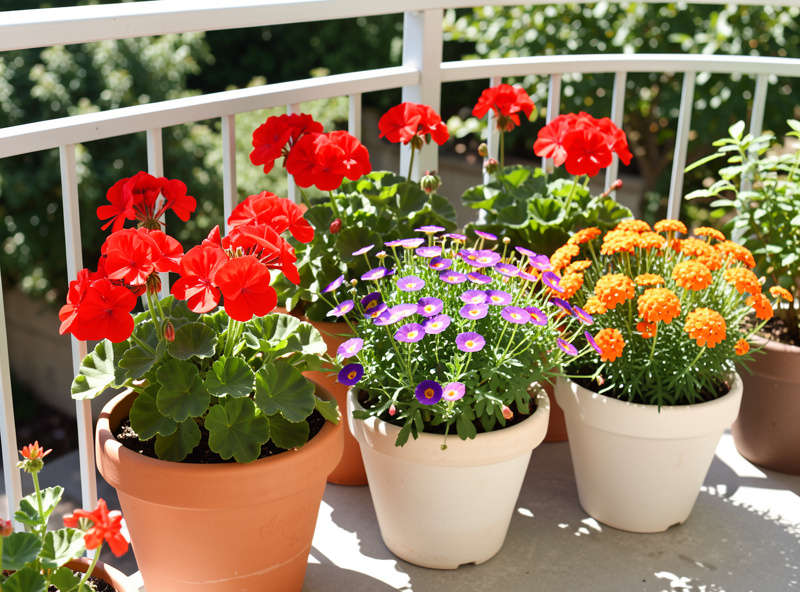
These are the plants I rely on when the pot sits in unrelenting sun. NC State Extension singles out vinca as a true summer workhorse that flourishes in full sun and shrugs off periods of drought once established — the same trait that makes the rest of this list dependable (Heat-Tolerant Annuals, NC State Extension).
Geraniums (Pelargoniums)
The ultimate sun-loving container plant. Bright red, pink, salmon, and white flowers bloom continuously from late spring through frost. Tolerates heat and some drought once established. Zonal varieties offer upright growth; ivy types trail beautifully. Deadhead regularly to maintain flowering.
Portulaca (Moss Rose)
Succulent foliage and jewel-toned flowers in yellow, orange, pink, and red. Thrives in the hottest, driest conditions. Flowers close in shade or cloudy weather, reopening in bright sun. Perfect for neglected containers in scorching locations.
Lantana
Clusters of tiny flowers in multicolor combinations. Butterflies and hummingbirds love these tough plants. Tolerates heat, humidity, and poor soil. Compact varieties stay under 12 inches. The more sun, the more flowers.
Vinca (Periwinkle)
Shiny dark foliage with white, pink, or purple flowers. Extremely heat and drought tolerant. Blooms relentlessly all summer without deadheading. Thrives in conditions that kill less tolerant plants. Cora series offers improved disease resistance.
Angelonia (Summer Snapdragon)
Spikes of snapdragon-like flowers in purple, pink, white, and blue. Heat-loving plants that bloom continuously in full sun. Archangel series offers best performance. Tolerates humidity better than many heat-lovers.
Additional Sun-Loving Options
Petunias
Choose heat-tolerant Wave or Supertunia varieties. These modern hybrids resist the mid-summer decline that affects older petunia types. Daily deadheading keeps them blooming. Trailing types excel in containers.
Gaillardia (Blanket Flower)
Native wildflower with red and yellow daisy blooms. Extremely drought tolerant once established. Attracts pollinators. Arizona Sun variety offers compact growth perfect for containers.
Zinnias
Bold colors in every shade except blue. These classic sun-lovers bloom heavily from summer through frost. Excellent for cut flowers too. Profusion series offers disease resistance and compact habit.
Salvia
Spikes of blue, purple, red, or white flowers. Heat and humidity tolerant. Many varieties attract hummingbirds and butterflies. Victoria Blue and Mystic Spires offer excellent container performance.
Marigolds
Classic summer annuals in yellow, orange, and red. Tolerate intense heat and poor soil. French varieties stay compact; African types grow larger. Natural pest deterrent properties.
Celosia (Cockscomb)
Unusual textured flowers in bright colors. Extremely heat tolerant. Crested varieties resemble brains; plumed types look like flames. Dried flowers retain color for arrangements.
Container Care for Sunny Locations
Pot selection: Choose light-colored containers that reflect heat rather than absorbing it. Dark pots can cook roots in full sun. Terracotta breathes but dries quickly; plastic retains moisture but heats up. Select based on your watering habits.
Soil mix: Use quality potting mix with added perlite for drainage. Add water-retaining crystals to help soil stay moist longer. Do not use garden soil which compacts and bakes in containers.
Watering schedule: Water deeply every morning during hot weather. Check soil moisture by inserting your finger 2 inches deep. Water when dry. Afternoon wilting often recovers after evening watering, but morning watering prevents stress.
Mulching: Apply 1-inch layer of fine gravel or bark mulch on soil surface. This reduces evaporation and keeps roots cooler. Decorative mulches like glass beads add style while providing benefits.
Fertilizing: Heat increases nutrient needs. Apply liquid fertilizer every 2 weeks during peak summer. Container plants exhaust nutrients quickly. Use bloom-boosting formulas (higher middle number) for flowering plants.
Placement Strategies
Wind protection: Group containers together. This creates humidity pockets and reduces individual wind exposure. Place larger plants upwind to shelter smaller companions.
Rotating pots: Turn containers weekly for even growth. Sun-facing sides grow faster and may bloom more. Rotation ensures balanced development.
Afternoon shade: In extreme heat zones (regularly above 95 degrees), provide afternoon shade. Move containers or use shade cloth during peak heat waves. Even sun-lovers appreciate relief from scorching afternoon sun.
Elevated positions: Higher locations catch more breeze, increasing drying. Lower pots on ground level stay cooler and retain moisture longer. Position thirsty plants lower; drought-tolerant varieties higher.
Heat Wave Survival Strategies
Preparation: Before predicted heat waves, water containers thoroughly. Well-hydrated plants withstand stress better. Move vulnerable pots to afternoon shade locations.
Monitoring: Check containers twice daily during extreme heat. Wilting indicates immediate water need. Some plants recover after evening watering; others suffer permanent damage.
Emergency cooling: Mist foliage during extreme heat. This temporary relief reduces transpiration stress. Group pots together and mist the group for humidity benefits.
Recovery: After heat waves, remove damaged foliage to encourage new growth. Resume normal care. Most heat-tolerant plants recover quickly from temporary stress.
Container Selection for Full Sun Gardens
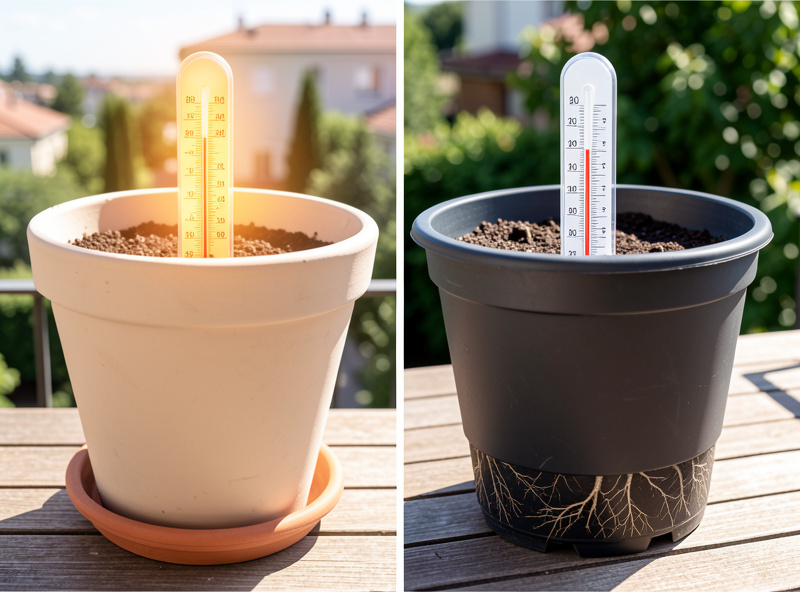
Material matters: Unglazed terracotta breathes but dries quickly — ideal for succulents but challenging for thirsty plants. Glazed ceramic retains moisture longer. Plastic and fiberglass offer lightweight options with good water retention. Concrete and stone provide insulation but are heavy and permanent.
Size considerations: Larger containers (16+ inches) retain moisture better than small pots. Root systems stay cooler in big containers. For full sun locations, bigger is better. Small pots (under 12 inches) may require twice-daily watering in heat.
Drainage essentials: All containers need drainage holes. Standing water kills roots faster than drought. If your favorite pot lacks holes, drill them or use as outer decorative cachepot with a well-drained inner pot.
Self-watering options: Reservoir containers reduce watering frequency significantly. Water-wicking systems draw moisture from below. These are a major upgrade for hot, sunny locations — on my rail, a reservoir basket roughly halves how often I have to water. Expect to water about half as often with self-watering designs.
Companion Planting Strategies
Thriller, Filler, Spiller technique: Combine architectural thriller plants (salvia, celosia), rounded fillers (geraniums, zinnias), and trailing spillers (portulaca, verbena). This creates professional-looking mixed containers with depth and interest.
Color theory applications: Complementary colors (opposites on color wheel) create vibrancy — orange marigolds with blue salvias. Analogous colors (adjacent on wheel) create harmony — yellow, orange, and red portulacas together.
Height layering: Position tall plants centrally or at back, medium-height around them, trailers at edges cascading over. This ensures all plants are visible and creates abundant appearance even in modest-sized containers.
Texture combinations: Mix fine-textured plants like lobelia with bold-leaved portulaca or celosia. Variegated foliage adds interest without relying solely on flowers. Silver-leaved plants like dusty miller provide cooling contrast to hot colors.
Season Extension Techniques
Early spring start: Start heat-lovers indoors 6-8 weeks before last frost. Harden off gradually in partial shade before moving to full sun. This extends blooming season by weeks.
Fall transition: As summer plants decline, replace with heat-tolerant autumn selections. Portulaca and lantana often continue until frost. Add ornamental kale for cool-season color as summer flowers fade.
Microclimate manipulation: Group containers together to create humidity pockets and reduce individual wind exposure. Place near walls that radiate heat at night, extending growing season slightly.
Wind protection: Elevated full-sun locations often catch wind. Use other plants, furniture, or screens as windbreaks. Wind accelerates drying significantly. Even heat-tolerant plants struggle with constant desiccating winds.
Fertilization Schedules
Slow-release foundation: Mix slow-release fertilizer into potting soil at planting. This provides baseline nutrition for 2-3 months. Choose formulations balanced for flowering plants (middle number 20-30).
Liquid supplement: Apply water-soluble fertilizer every 2 weeks during peak bloom. Use bloom-boosting formulas higher in phosphorus (middle number). This maintains continuous flowering in demanding full-sun conditions.
Foliar feeding: Spray liquid fertilizer directly on leaves during extreme heat when soil uptake slows. Use half-strength solutions to avoid leaf burn. Effective emergency nutrition during stress periods.
Organic alternatives: Compost tea, fish emulsion, and seaweed extracts provide gentle nutrition. Apply weekly. These support soil biology while feeding plants. Less risk of fertilizer burn than synthetic options.
Signs of deficiency: Yellowing lower leaves indicate nitrogen shortage. Poor flowering despite good foliage suggests phosphorus lack. Purple-tinged leaves may signal phosphorus deficiency. Adjust feeding accordingly.
Water Conservation Strategies
Mulching benefits: Apply 1-inch layer of fine gravel, bark, or even glass beads on soil surface. This cuts evaporation noticeably and keeps the root zone cooler through the hottest part of the day. Dark mulches heat up; light-colored mulches stay cooler and reflect heat.
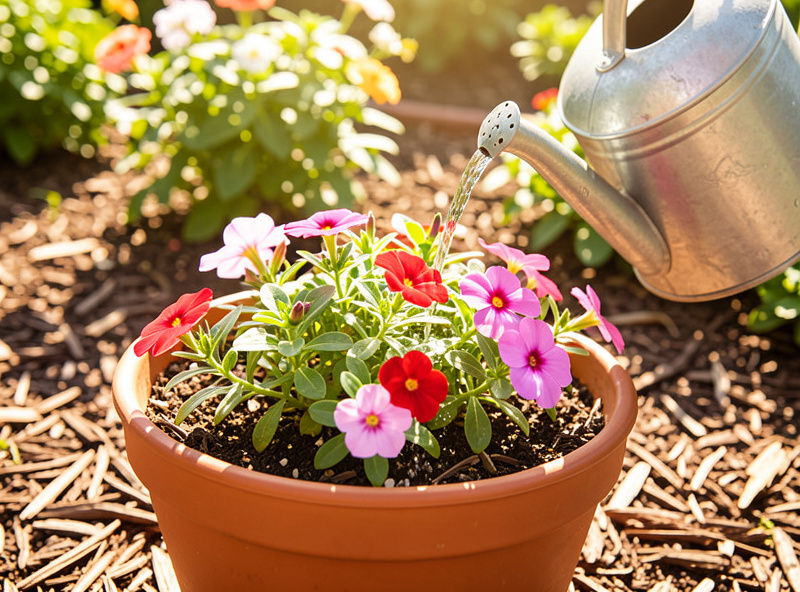
Watering timing: Water early morning (6-9 AM) for best results. Plants absorb moisture before heat arrives. Evening watering risks fungal issues in humid climates. Avoid midday watering which wastes water to rapid evaporation.
Deep watering technique: Water thoroughly until excess drains from bottom. This encourages deep root growth. Shallow frequent watering creates shallow root systems vulnerable to rapid drying.
Drip irrigation: Install simple drip systems with timer for consistent watering. Run 15-30 minutes daily in peak summer. Drip delivers water directly to roots without waste. Initial setup pays off in plant health and time saved.
Olla irrigation: Bury unglazed clay pots filled with water among containers. Water slowly seeps through porous clay, maintaining consistent soil moisture. Ancient technique, highly effective for containers.
Pest Management in Sunny Containers
Spider mites: These tiny pests thrive in hot, dry conditions. Fine webbing and stippled leaves indicate infestation. Blast with water spray or apply insecticidal soap. Increase humidity around plants to discourage them.
Aphids: Cluster on new growth, sucking sap. Blast with water or apply soap spray. Ladybugs and lacewings provide natural control. Avoid over-fertilizing which produces soft growth aphids prefer.
Japanese beetles: Skeletonize leaves and eat flowers. Hand-pick early morning when sluggish. Drop into soapy water. Milky spore applied to lawn reduces grub populations long-term.
Whiteflies: Tiny white insects fly up when disturbed. Yellow sticky traps catch adults. Insecticidal soap controls nymphs. Vacuum with handheld vac early morning for mechanical control.
Prevention focus: Healthy plants resist pests better. Avoid water stress and nutrient extremes. Inspect weekly for early problem detection. Remove severely infested plants to protect others.
If you need containers for a full-sun flower display, browse outdoor planters for full sun on Amazon — light-colored ceramic or resin pots keep roots 15-20°F cooler than dark plastic in direct sun. As an Amazon Associate I earn from qualifying purchases.
Related Articles
See our year-round flower guide for seasonal rotation ideas.
Learn about shrubs for containers for permanent structure.
Discover hanging basket options for full sun spots.
Avoid common urban gardening mistakes in container care.
Frequently Asked Questions
What flowers grow best in pots in full sun?
Petunias, geraniums, lantana, portulaca, zinnias, and verbena thrive in full sun containers. They are heat-tolerant and bloom continuously through summer.
How do you keep container flowers alive in full sun?
Use large pots (16+ inches) that retain moisture, water daily during hot spells, mulch the soil surface, and choose heat-tolerant varieties. Provide afternoon shade if possible.
What size pots do you need for full sun flowers?
Use pots at least 14-16 inches in diameter for full sun flowers. Larger pots retain moisture better and protect roots from heat. Dark-colored pots absorb more heat — choose light colors for hot climates.