Vertical gardening doubles your harvest in the same square footage. After five years of growing tomatoes, beans, and strawberries up trellises and pocket planters on my Stockholm balcony, I can say with confidence that going vertical is the single highest-ROI move for a small-space grower. A wall or railing you’re not using right now adds 6–8 square feet of productive growing surface per square foot of floor space — and in a Nordic climate where the season is short, that extra canopy area means the difference between a garnish and an actual harvest.
Why Grow Vertically on a Balcony or Small Terrace?
Vertical growing adds 6–8 square feet of canopy per square foot of floor space — a multiplication you can’t get any other way in an apartment. Better air circulation between trellised plants cuts powdery mildew pressure by roughly half compared to bush-trained crops jammed into containers. Fruit hangs off the ground where slugs can’t reach it, and in the tight light of a north-facing balcony, training a tomato vertically puts more leaf surface into the direct sun than letting it sprawl across a pot. These aren’t marginal gains — on my balcony, the trellised indeterminate tomatoes routinely outproduce the bush types 2:1 per square foot of floor occupied.
Understanding the Space Math
A 4-foot-wide balcony rail with a string trellis gives you roughly 20 vertical square feet of growing surface above a single container occupying 2 square feet of floor. The same floor space planted horizontally with bush beans would give you… 2 square feet. That 10:1 canopy multiplier is why a balcony grower who ignores the vertical dimension is leaving most of their season’s potential on the table.
Types of Vertical Growing Systems (and Which I’d Pick First)
Trellises and Supports
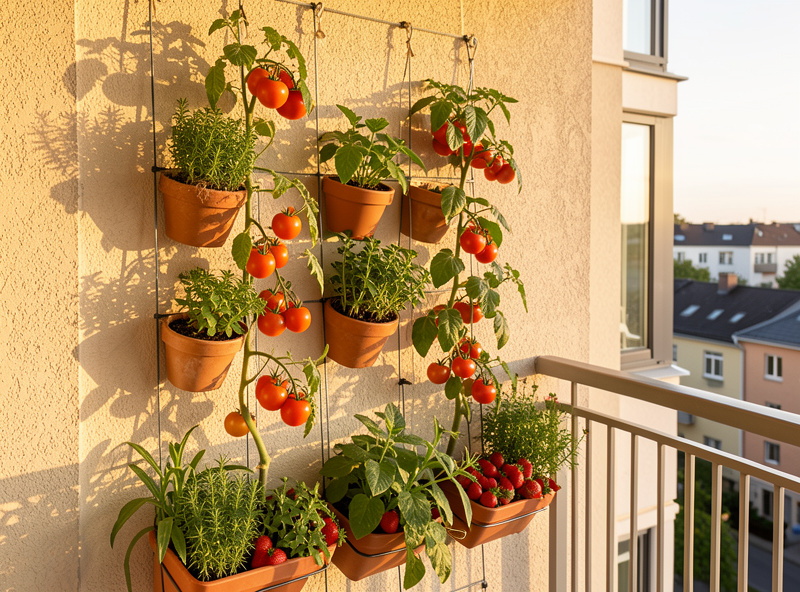
The simplest vertical systems are just something to climb on. A string trellis — mason line run from a hook on the balcony ceiling or railing down to a heavy container — costs $10–15 and handles tomatoes, pole beans, peas, and cucumbers through a full Nordic summer. Wire cages work but I’ve found they trap humidity in our damp August weather and encourage botrytis on tomatoes; I now wire them open into flat panels instead.
As an Amazon Associate I earn from qualifying purchases.
Wall-Mounted Systems
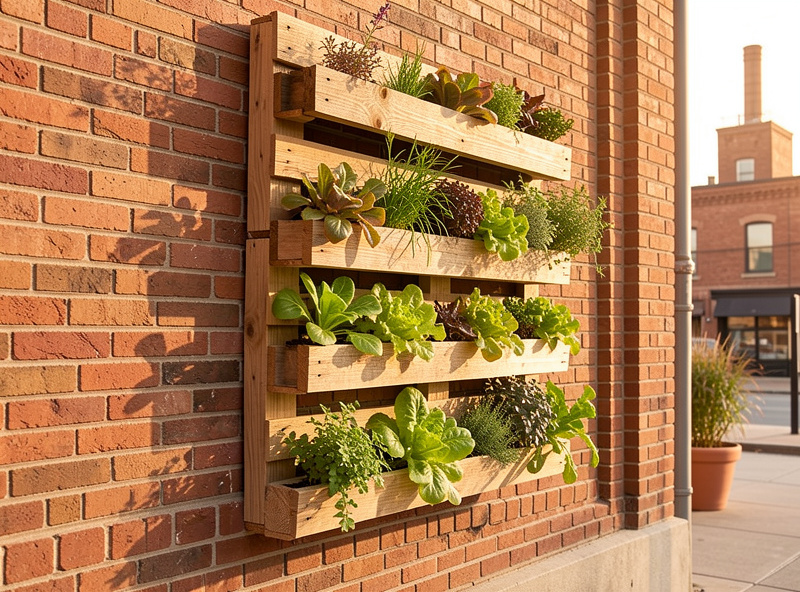
Pocket planters — the fabric panels with planting slots — are ideal for herbs, strawberries, and cut-and-come-again greens. I’ve run a 20-pocket felt panel on my south-facing balcony wall for three seasons; the top two rows dry out fastest, so I plant rosemary and thyme there (they prefer drier conditions), with lettuce and strawberries in the lower rows that stay moist longer. Gutter gardens excel for shallow-rooted greens, and a repurposed pallet garden (must be heat-treated, marked “HT” — never methyl-bromide-treated “MB”) costs near zero if you find one behind a grocery store.
Freestanding Vertical Units
Stackable tower planters with a central composting tube (like the GreenStalk or Garden Tower models) are the highest-output freestanding option — a 5-tier tower holds 30–50 plants in a 2-foot diameter footprint. Vertical hydroponic towers like the Gardyn or Lettuce Grow Farmstand work brilliantly indoors but require ongoing nutrient monitoring. A-frame trellises are my pick for heavy climbers like small melons and winter squash on a balcony: they’re self-supporting, so no wall drilling needed, which keeps the landlord happy.
Vertical System Cost Comparison
These prices reflect what I’ve actually paid or seen at Scandinavian retailers (Plantagen, Bauhaus, Amazon.se) over the last few seasons. DIY costs assume you own basic tools.
| System Type | DIY Cost | Pre-Made Cost | Best For | Nordic Note |
|---|---|---|---|---|
| String Trellis | $10–15 | $25–40 | Tomatoes, beans, cucumbers | Anchors must resist fall wind gusts |
| Pallet Garden | $0–20 | N/A | Herbs, lettuce, strawberries | HT stamp required; MB is toxic |
| Gutter Garden | $30–50 | $60–100 | Salad greens, radishes | Freeze-thaw cycles crack cheap vinyl |
| Pocket Planters | $20–40 | $40–80 | Herbs, small greens, strawberries | Bring indoors before first hard frost |
| Tower Garden (stackable) | $50–100 | $150–400 | Mixed vegetables, herbs | Weight at full water load can exceed 150 lbs |
| Living Wall System | $100–200 | $200–500+ | Large-scale production | Irrigation automation is near-mandatory |
My recommendation: Start with a string trellis. It costs less than lunch for two and teaches you everything about training, watering, and the light dynamics of a vertical canopy. Master that, then add a pocket planter for herbs — that combination has been my most reliable producer for three seasons running.
Best Plants for Vertical Growing (Tested in a Nordic Climate)
Natural Climbers
These plants evolved to climb and need minimal intervention:
- Pole beans: ‘Blue Lake’ and ‘Neckargold’ produce reliably even in cool Scandinavian summers; a 6-foot trellis supports 8–10 plants
- Peas: ‘Alderman’ (also sold as ‘Tall Telephone’) reaches 6 feet and keeps producing through cool spring weather that shuts down bush peas
- Cucumbers: ‘Marketmore 76’ and the mini ‘Picolino’ are my go-to outdoor varieties; they grab string trellises with tendrils and the fruit hangs straight
- Small melons: ‘Minnesota Midget’ and ‘Sugar Baby’ watermelon can work in a warm microclimate, but need slings made from old pantyhose to support the fruit
Trainable Climbers
These need regular tying to supports but reward the effort:
- Indeterminate tomatoes: ‘Sungold’, ‘Gardener’s Delight’, and the cold-tolerant ‘Stupice’ all thrive on a single-stem vertical system in a 10-gallon fabric grow bag
- Peppers: ‘Lipstick’ and ‘Jimmy Nardello’ benefit from vertical staking when heavy with fruit in late summer
Compact Plants for Pocket Systems
These suit the shallow soil volume of pocket planters and gutter gardens:
- Lettuce and salad greens: ‘Salad Bowl’ and ‘Lollo Rossa’ are my staples — I succession-sow every 3 weeks through the short season
- Herbs: Basil, parsley, cilantro, thyme, and chives all thrive in pockets. Mint goes in its own pocket (it will colonize neighbors otherwise)
- Strawberries: Everbearing types like ‘Mara des Bois’ and ‘Albion’ cascade beautifully from upper pockets — I run these indoors under LED through winter too
- Spinach and Swiss chard: ‘Space’ spinach and ‘Bright Lights’ chard give cut-and-come-again harvests from May through October in a south-facing pocket system
Plants to Avoid Vertically (I Learned This the Hard Way)
Root vegetables need deep soil volume — carrots, beets, and potatoes have no business in a pocket planter. Large winter squash like ‘Butternut’ produce fruit too heavy for realistic trellis support (I lost half a crop to a collapsed bamboo teepee in my second season). Corn needs dense planting for wind pollination and takes up vertical real estate without earning it. Full-size cabbage and broccoli demand more root volume than any wall-mounted system can provide.
DIY Vertical Garden Projects (Three I’ve Built and Still Use)
Project 1: String Trellis from Balcony Ceiling ($10–15)
Materials: 100 feet of UV-resistant mason line, 2 heavy-duty screw eyes (rated for 75+ lbs each), 1 large fabric grow bag (10+ gallons) as bottom anchor.
Build steps (30 minutes):
- Screw an eye hook into the balcony ceiling joist or a solid overhead beam. For balconies without overhead structure, use a tension rod between walls.
- Run a horizontal line across, then drop vertical strings every 8–12 inches, tying each to the bottom container handles with a slip knot.
- Plant climbing vegetables at the base of each string. Train vines by wrapping tips clockwise around the string — they’ll follow.
- A Swedish July will push a tomato vine up 6–8 inches per week. Check and redirect every 2–3 days or the vines will grab the neighbor’s string.
I use this for: Indeterminate tomatoes and pole beans. After 3 seasons, the mason line shows zero UV degradation — buy it once.
Project 2: Heat-Treated Pallet Herb Wall ($0–20)
Materials: 1 HT-stamped wooden pallet (ask at grocery and hardware stores — they’re usually free), 2 yards of landscape fabric, staple gun, 3 cubic feet of container mix (I mix 40% coir, 30% perlite, 30% worm castings from my worm bin).
Build steps (2 hours + 3 weeks for plant establishment):
- Confirm the pallet is stamped “HT” (heat-treated), not “MB” (methyl bromide — toxic for food plants).
- Staple landscape fabric to the back, bottom, and sides, leaving the front slat openings uncovered.
- Lay the pallet flat, fill every pocket with container mix, plant seedlings horizontally between slats.
- Water and let establish flat for 2–3 weeks so roots anchor before you go vertical.
- Raise the pallet to vertical over 1–2 weeks (lean it against the wall at increasing angles).
- Mount securely — two heavy-duty wall anchors per side, minimum.
I use this for: Herbs and strawberries on a south-facing wall. The worm castings in the mix keep the herbs productive without additional fertilizer through the entire short season.
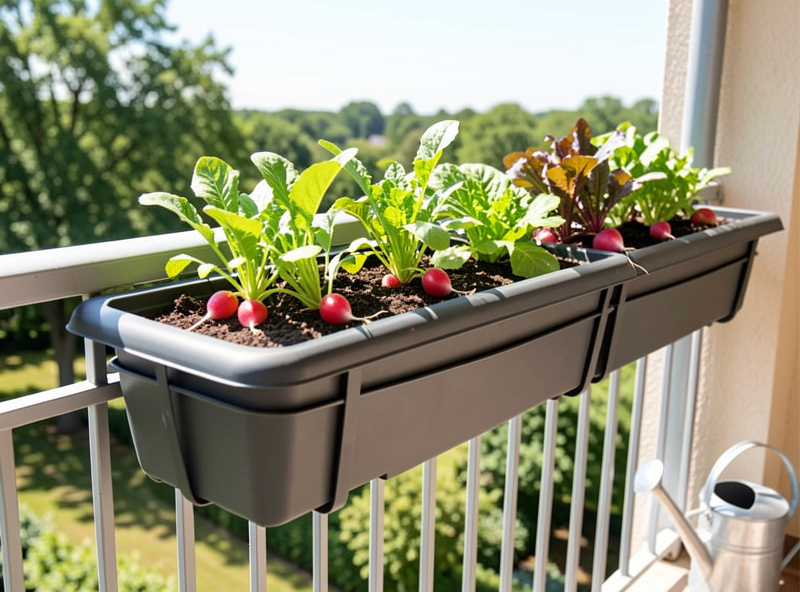
Project 3: Three-Tier Gutter Garden ($30–50)
Materials: 3 sections of vinyl gutter (4–6 feet each), end caps, brackets rated for 40+ lbs each, potting mix with slow-release fertilizer.
Build steps (2 hours):
- Cut gutters to length, snap on end caps, drill 1/4-inch drainage holes every 6 inches along the bottom.
- Mount brackets on a south or west-facing wall or fence, spaced 14–16 inches apart vertically so the top gutter doesn’t shade the one below.
- Fill with container mix to 1 inch below the rim. Pre-water the mix before planting — dry coir repels water and seedlings die overnight.
- Plant salad greens in the top gutter (most sun), spinach and radishes in the middle, and arugula or mizuna in the bottom (they tolerate partial shade).
Nordic warning: Cheap vinyl gutters become brittle in freeze-thaw cycles. I empty mine in October and store them indoors for winter. Aluminum gutters cost more but survive outdoors year-round — worth it if you have storage constraints.
Vertical Garden Care and Maintenance (What the First Season Teaches You)
Watering: The #1 Failure Point
Vertical gardens dry out roughly twice as fast as ground-level containers because more surface area is exposed to wind and sun. In a Swedish July heat wave (anything over 25 °C), I water my pocket planters twice daily — once at 7 AM and again at 4 PM. The top pockets always dry first; plant drought-tolerant herbs there and keep lettuce in the bottom rows. A drip irrigation kit with pressure-compensating drippers solves the uneven-watering problem that plagued earlier gravity-fed systems.
My current setup: I use a 5-gallon bucket reservoir with a submersible pump on a programmable timer — 4 minutes at 7 AM waters all three tiers evenly. The pump kit cost $30 and cut my daily watering time from 15 minutes to zero. It’s the single best vertical-garden investment I’ve made.
Fertilizing in a Fast-Draining System
Frequent watering flushes nutrients out of vertical systems faster than traditional containers. I mix slow-release Osmocote into the container mix at planting (2 tablespoons per gallon of mix), then supplement with diluted fish emulsion every 10–14 days during peak growth. Yellowing lower leaves on tomatoes signal nitrogen deficiency — the most common nutrition issue in vertical setups. Worm castings as a top-dressing every 3 weeks provide steady slow-release nutrition and improve moisture retention.
Training and Pruning
Climbing plants grow fast in June and July — check every 2–3 days. I use strips cut from old cotton t-shirts as plant ties; they’re soft, free, and don’t cut into stems the way plastic twist ties do. For indeterminate tomatoes on a string trellis, prune to a single leader and remove all suckers weekly. Each sucker you leave unpinched becomes a competing stem that reduces fruit size and increases the odds of a tangled, disease-prone canopy.
Structural Safety (Balcony Weight Math)
A fully watered vertical system is surprisingly heavy. A 5-tier tower planter with saturated soil can exceed 160 lbs. A living wall with 50 pockets and integrated irrigation runs 200+ lbs. I spread the load across multiple mounting points and always use anchors rated for at least double the wet weight. For balconies, check your lease for weight limits — most European balconies are rated for 300–500 kg per square meter, but concentrated point loads are a different calculation from distributed weight.
Seasonal Vertical Gardening in a Nordic Climate
Spring (April–May)
Our last frost date hovers around mid-May in Stockholm — earlier along the coast, later inland. I start peas on the trellis in late April (they shrug off light frost) and start tomatoes and cucumbers indoors under my LED bar in March for transplanting after the frost date. Clean and repair trellises before the season starts; a rusted wire that snaps in July loses you an entire tomato plant.
Summer (June–August)
This is the push. Water twice daily during any stretch above 25 °C. Train climbers weekly — in peak growth, a cucumber vine can add 4–6 inches per day. Harvest pole beans every 2 days; leaving pods to mature signals the plant to stop producing. I succession-sow lettuce in pocket planters every 3 weeks through August 1 for continuous harvests into October.
Fall (September–October)
Switch summer crops for cool-season greens in pocket systems. Sow spinach, mâche, and winter purslane in early September — they mature through the cooling days and survive light frosts. Remove spent climbing plants and clean trellises thoroughly. I take photos of each system at peak production in August; they’re the best planning tool for the following year.
Winter (November–March)
Fabric pocket planters come indoors before the first hard freeze — frozen wet fabric tears when handled. Leave permanent metal and wood structures in place but check fasteners for rust and looseness. I plan next year’s vertical layout in January using the August photos and a notebook of what worked and what didn’t. Seed orders go in by February 1 for the best selection of climbing varieties adapted to short-season climates.
Vertical Growing Indoors Through the Nordic Dark Months
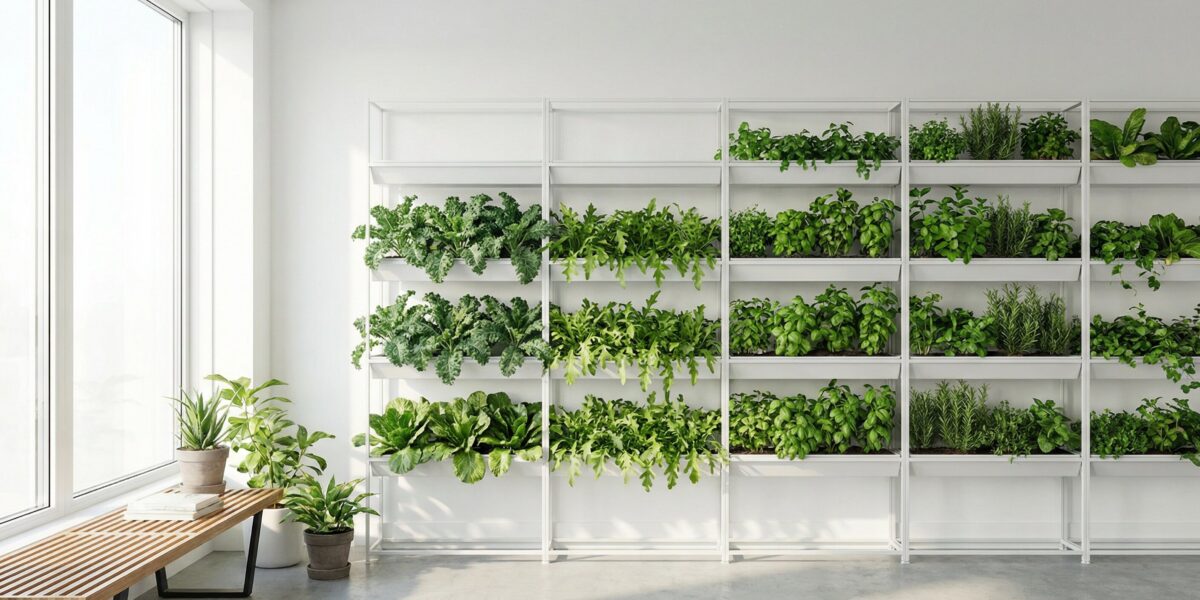
When the outdoor season closes in October, vertical growing does not stop — it moves inside, and for me that is where the Nordic advantage actually shows. From November through March I run a vertical setup against an interior wall: a freestanding shelving unit under a full-spectrum LED bar, with shallow trays of microgreens and cut-and-come-again greens on each shelf and a couple of trailing strawberries in wall pockets beside it. It is the same vertical logic as the balcony — stacking canopy into a small footprint — only the light source moves from the sun to a metered LED I run on a timer.
The reason vertical works so well indoors is that good grow lighting is expensive per square foot, so you want every photon landing on a leaf rather than on empty shelf. A single LED bar covering one shelf of greens produces far more food per watt than the same light spread across a flat windowsill, because you are stacking two or three layers of canopy into the same lit column. I measure coverage and run-cost rather than wattage, and the vertical shelf is the setup that consistently gives me the most fresh greens for the least electricity through the dark months.
For indoor vertical I stick to shallow-rooted crops — microgreens, baby greens, herbs, and the everbearing strawberries — because deep containers are heavy, the leak risk goes up, and the light only penetrates the top canopy anyway. Root vegetables and fruiting crops stay outdoors where they belong. Knowing your USDA Plant Hardiness Zone tells you exactly when the indoor setup has to take over from the balcony and when it can hand back off in spring. The University of Wisconsin Extension’s guide to growing vegetables in containers is the reference I use for the soil and drainage fundamentals that keep an indoor vertical shelf from turning into a soggy mess on the floor.
Common Vertical Gardening Mistakes I’ve Made (So You Don’t Have To)
Mistake 1: Underestimating Water Needs
The #1 killer. My first season, I treated my pocket planter like a regular container and watered once daily. By August, everything in the top row was dead. Set phone reminders. In hot weather, check moisture by sticking a finger into the top pocket — if it’s dry past the first knuckle, water immediately.
Mistake 2: Wrong Plants for the System
I once tried growing determinate tomatoes in a pocket planter. They produced exactly two undersized fruit before the 2-quart pocket ran out of root space and the plant stalled. Match the plant to the soil volume: natural climbers for trellises, shallow-rooted greens for gutters and pockets, large-rooted crops for deep containers.
Mistake 3: Ignoring Light Gradients
Upper tiers get more light. On my south-facing setup, the top row receives roughly 3× the daily light integral of the bottom row. Sun-loving plants (tomatoes, peppers, basil) go at the top. Shade-tolerant crops (lettuce, arugula, parsley) go at the bottom. Get this backward and you’ll wonder why your tomatoes in the bottom pocket never set fruit.
Mistake 4: Weak Structures
A trellis that collapses under tomato weight in August wastes an entire season. Over-engineer. I now use 4×4-inch posts set in concrete-filled buckets as freestanding trellis anchors — they’ve withstood three seasons of Baltic wind gusts and fully loaded indeterminate tomatoes.
Mistake 5: Starting Too Big
My second season, I built a 50-pocket living wall with automated irrigation and planted it all in one weekend. I spent more time troubleshooting the drip system than actually growing. Start with one string trellis. If you rent and can’t drill walls, our no-drill vertical garden guide for renters covers freestanding systems that don’t touch the walls — a landlord-safe way to grow vertically on any balcony. Learn what equal water distribution looks like. Then add one system per season.
Reading a Vertical Canopy
The longer I run vertical systems, the more I trust the canopy to tell me what is wrong before anything dies. A healthy vertical wall has even, upright growth across every tier; when one row starts lagging, the cause is almost always water or light, and the position of the lag tells you which. Top-row plants going crisp and pale mean the system is under-watering or the top tier is over-exposed to wind; bottom-row plants going leggy and yellow mean they are starved of light by the tier above and need to be moved up or rotated. Leaves curling downward across the whole wall usually means the reservoir ran dry or a dripper clogged — check the irrigation before you reach for fertilizer.
The single best habit I have built is a 30-second daily scan from top tier to bottom, looking for the one plant that looks different today than it did yesterday. Vertical systems fail fast because they dry fast, but they also recover fast when you catch the problem early. By the end of one season you will read your own canopy the way you read the weather — and most of the troubleshooting above stops being something you look up and becomes something you just notice.
Vertical Gardening on a Balcony: Nordic Apartment Reality
Railing Planters and Lease Compliance
Most Swedish leases prohibit objects hanging over balcony railings. I use planters that sit inside the railing or clamp to the inside face. Before buying anything, read your lease’s balcony clause — a neighbor’s complaint about dripping water can get your whole setup removed by the housing association.
Wind on Upper Floors
My 4th-floor balcony gets wind that flattens unsupported trellises within days of mounting. I guy tall trellises back to the railing with paracord and use windbreak fabric (available at building supply stores) on the windward side during spring storms. Wind also accelerates drying — a windy 18 °C day can dry out pocket planters faster than a still 28 °C day.
Weight Distribution
European balconies are typically engineered for 300–500 kg/m² uniformly distributed load. But a 160-lb tower planter on four small feet is a point load, not a distributed one. I place a 2×2-foot plywood sheet under heavy planters to spread the weight across a larger area. It’s cheap insurance against a very expensive structural conversation with the landlord.
How to Pick Your First Vertical System (If I Were Starting Today)
If I were setting up a first vertical garden on a Nordic balcony tomorrow morning, I’d build a string trellis from the ceiling or a tension rod, drop two 10-gallon fabric grow bags below, and plant one ‘Sungold’ indeterminate tomato and four ‘Blue Lake’ pole beans. Total cost: about $35 including the fabric grow bags. In return: fresh tomatoes from late July through September, pole beans by the handful every two days, and a full season of learning how water, light, and wind behave in a vertical canopy — knowledge that makes every subsequent system you build succeed faster.
2026 Update: Drip Irrigation for Vertical Systems Has Finally Gotten Cheap
Automated drip irrigation kits purpose-built for vertical systems hit the consumer market in force during 2025–2026. A basic 10-plant kit with pressure-compensating drippers and a programmable timer now costs $25–35 and connects to a standard faucet or a 5-gallon bucket reservoir. For apartment dwellers who travel, work long hours, or just got tired of watering twice daily through a Swedish heat wave, this solves the number one vertical garden failure mode. The 2026-generation kits include pressure-compensating emitters that deliver identical water volume to every tier regardless of vertical height — fixing the top-dries-out-while-bottom-saturates problem that made earlier gravity-fed drippers useless above three tiers. I retrofitted my balcony setup with one last spring and it paid for itself in saved plants within the first month.
What is the cheapest vertical garden system?
A simple string trellis costs $10-15 and supports tomatoes, beans, and cucumbers. A repurposed wooden pallet garden costs $0-20 and works perfectly for herbs, lettuce, and strawberries. Both are excellent starting points for beginners on a budget.
How often do vertical gardens need watering?
Vertical gardens dry out faster than ground-level containers. Check moisture daily in moderate weather and twice daily during heat waves. Pocket systems and shallow planters lose moisture fastest. Water from the top and let it cascade down through lower plants.
Can I grow tomatoes vertically in containers?
Yes, indeterminate tomatoes are excellent vertical growers. Use a strong trellis or string system in a 5-10 gallon container. Prune to a single stem and tie vines regularly. Determinate (bush) varieties are less suited for vertical growing since they stop growing at a certain height.
How much weight can a vertical garden system support?
A fully watered vertical garden can exceed 100 lbs for larger systems. Use appropriate wall anchors rated for the weight. String trellises distribute weight to the ground and are safest. Wall-mounted systems need heavy-duty anchors. Always over-engineer your supports.
What vegetables grow best vertically?
The best vertical vegetables are natural climbers: pole beans, peas, cucumbers, and small melons. Trainable climbers include tomatoes, peppers, and eggplant. Compact plants like lettuce, herbs, and strawberries work well in pocket planters and tower systems. Avoid root vegetables, corn, and large squash.
What’s on My Balcony Right Now
If you’re curious what a working vertical setup looks like on a real Nordic balcony, here’s what’s running on mine in the current season: two 10-gallon fabric grow bags with ‘Sungold’ indeterminate tomatoes on a ceiling-mounted string trellis (harvesting from late July through September), a 20-pocket felt planter on the south-facing wall with strawberries in the top two rows, thyme and oregano in the middle rows, and cut-and-come-again lettuce in the bottom row where the light is gentler, a three-tier gutter garden with spinach, arugula, and radishes on the west-facing railing, and a small worm bin under the bench that feeds the whole setup with castings every 3 weeks. Total floor footprint: about 6 square feet. Total vertical growing surface: roughly 35 square feet. That’s the math that makes vertical growing worth the effort — and after five years of refining it, I can water everything in under 10 minutes with the drip kit and harvest something every day from May through October.
One Last Note on Going Vertical
If you take one thing from this guide, let it be this: vertical growing rewards the grower who starts small and watches closely far more than the one who builds the whole wall on day one. The math is real — you genuinely can multiply your harvest in the same footprint — but the skill that makes it pay off is the daily attention, and that only develops one system at a time. Build a string trellis this weekend, run it through a full season, and let what you learn dictate the next system you add. Five years in, my balcony produces more food per square foot than I ever grew flat, and every inch of that extra productivity is growing up rather than out.
Related Articles
Continue building your vertical growing knowledge with these guides:
- Vertical Vegetable Garden: Crops, Layout, and Yield Guide — Crop-specific vertical growing strategies with yield estimates
- DIY Vertical Garden: 5 Budget-Friendly Projects Step by Step — Detailed build instructions for every skill level
- Growing Cucumbers Vertically: Trellis, Training, and Harvest Guide — Specialized cucumber trellis systems and pruning
- Gardening for Beginners at Home: Complete Urban Guide — Start here if you’re new to growing food in the city
- Best Vegetables for Urban Gardens — Space-efficient vegetables ranked by ease and productivity
- Urban Gardening on a Budget — Start growing food for under $50