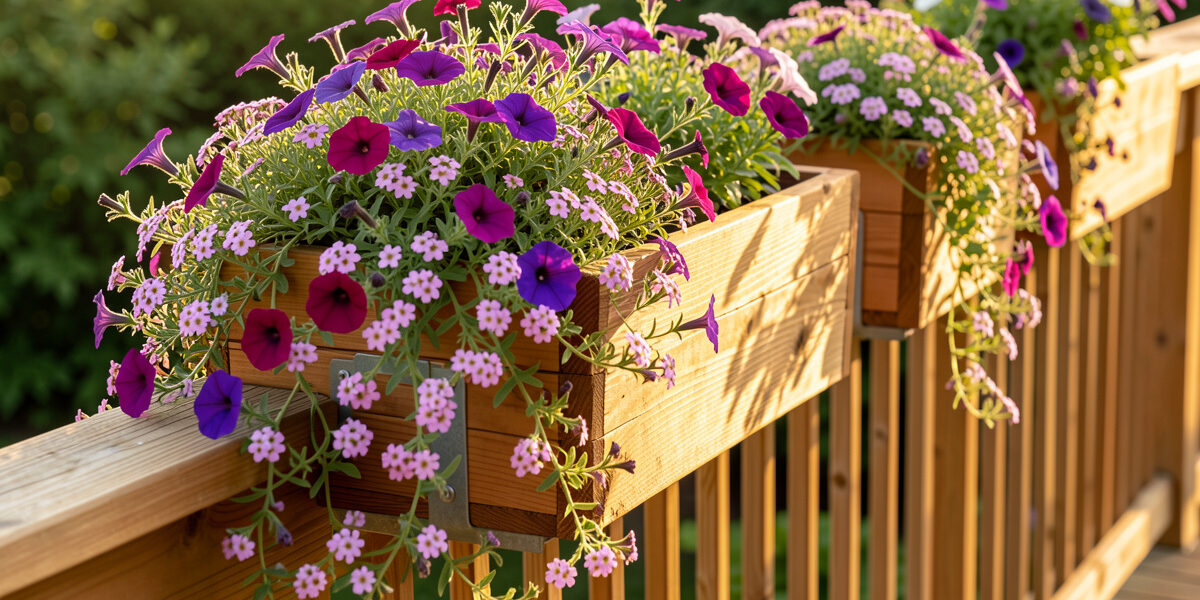
The best deck rail planters combine UV-resistant construction, adjustable brackets gripping rails 2-6 inches wide, 2.5-4 gallons of soil capacity, and integrated drainage with saucers protecting the deck surface below. On my Swedish apartment balcony, railing planters are the single most space-efficient growing method I use — they add 4-6 linear feet of growing space without consuming floor footprint.
I run self-watering railing troughs for basil and parsley on my east-facing railing because those two herbs sulk hardest when soil dries out. Mediterranean herbs (rosemary, thyme, oregano) go in standard-drainage planters that let the root zone dry between waterings. After three Nordic growing seasons testing railing-mounted containers through 18-hour summer daylight and October wind gusts, these five planters are the ones I would recommend.
What Makes a Superior Deck Rail Planter
Structural Integrity
Deck rail planters endure constant sun exposure, temperature extremes, and occasional impact. Superior construction uses UV-stabilized materials resisting brittleness and fading. Thin-walled planters warp and split within 1-2 seasons — I lost a budget planter to a single winter freeze-thaw cycle. The UV-stabilized resin replacements are on season three with no visible degradation.
Metal planters should feature powder-coated finishes preventing rust. Wood options require naturally rot-resistant species (cedar, redwood) for long-term outdoor use.
Railing Attachment Systems
The best deck rail planters install securely without tools while accommodating various railing widths:
The best deck rail planters install securely without tools while accommodating various railing widths:
- Adjustable brackets: Expanding/contracting mechanisms gripping rails 1-6 inches wide. I prioritize brackets with at least 2 inches of rail-top contact for wind stability on upper-floor balconies.
- Deep hooks: Engaging rail tops with multiple contact points to distribute weight evenly.
- Secondary safety straps: Backup attachment preventing accidental dislodging — worth the extra few pounds for anyone above the second floor.
- Non-slip padding: Protecting rail finishes from scratches, especially important on rental balconies.
Drainage Engineering
Quality planters feature drainage holes positioned slightly above the base, creating a small water reservoir while preventing saturation. Self-watering models include reservoirs holding 1-3 quarts of reserve water — on my railing, this stretches the watering interval from daily to every 3-4 days during Nordic summer when 18-hour daylight bakes container soil dry.
Appropriate Soil Volume
Soil depth determines what you can grow:
- 6-inch depth: Minimum for herbs, lettuce, shallow-rooted flowers
- 8-inch depth: Ideal for compact vegetables, strawberries, most ornamentals
- 10-inch+ depth: Required for tomatoes, peppers, and eggplants
A 24-inch planter with 3 gallons of soil supports 3-4 herb plants or 2 compact vegetables. A 36-inch planter with 3.5+ gallons supports 6-8 herbs or 3-4 compact vegetables.
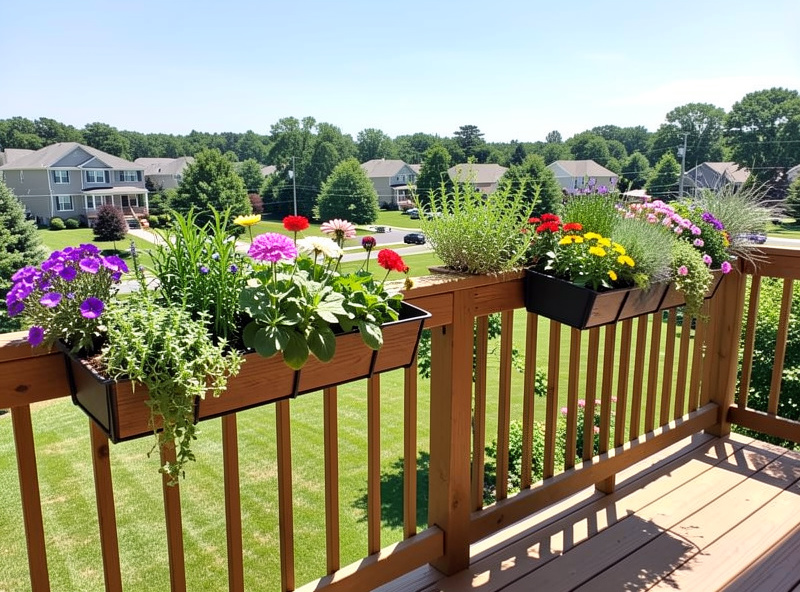
Top Deck Rail Planters Reviewed
As an Amazon Associate I earn from qualifying purchases.
1. HC Companies Garden Bowl Railing Planter
Dimensions: 24″ L x 12″ W x 8″ H | Railing Fit: 2-6 inches | Material: UV-resistant polypropylene | Capacity: 3 gallons
The HC Companies Garden Bowl railing planter offers exceptional value without compromising quality. Thick-walled construction resists impacts and UV degradation. Adjustable steel brackets install tool-free and grip securely to wood, vinyl, or metal railings. The bowl shape maximizes soil volume in a compact footprint. Available in terra cotta, black, and espresso brown.
Best For: Budget-conscious gardeners wanting reliable performance without premium pricing.
2. Veradek Metallic Series Railing Planter
Dimensions: 32″ L x 10″ W x 10″ H | Railing Fit: 2-5 inches | Material: Galvanized steel with powder coating | Capacity: 3.8 gallons
The Veradek Metallic Series railing planter‘s galvanized steel construction withstands decades of weather exposure. Matte black, bronze, and weathered zinc powder-coat options complement modern outdoor spaces. The 32-inch length accommodates 6-8 herb plants or 3-4 compact vegetables. At 12 pounds empty, it stays put in wind gusts that would shift lighter plastic planters.
Best For: Modern outdoor spaces where industrial aesthetics complement contemporary design.
3. Alpine Corporation Adjustable Railing Planter
Dimensions: 28″ L x 11″ W x 9″ H | Railing Fit: 1.5-7 inches (widest range) | Material: Resin wicker over steel frame | Capacity: 3.2 gallons
Alpine’s adjustable system accommodates the widest railing range available — from narrow wrought iron to wide composite deck rails. Wicker-look resin provides traditional aesthetics with zero maintenance. The steel internal frame prevents sagging when filled with wet soil.
Best For: Decks with unusual railing dimensions or anyone wanting adjustable flexibility.
4. Gardener’s Supply Company Self-Watering Railing Planter
Dimensions: 30″ L x 9″ W x 9″ H | Railing Fit: 2-4 inches | Material: BPA-free plastic | Capacity: 2.8 gallons soil + 1.5 gallons water reservoir
The 1.5-gallon reservoir wicks moisture to roots as needed, extending the watering interval to 7-10 days depending on weather and plant type. The water-level indicator eliminates guesswork. Ventilated sides promote healthy root aeration. This self-watering railing planter is the one I would recommend to anyone who travels or struggles with consistent watering.
Best For: Busy gardeners or inconsistent waterers wanting low-maintenance solutions.
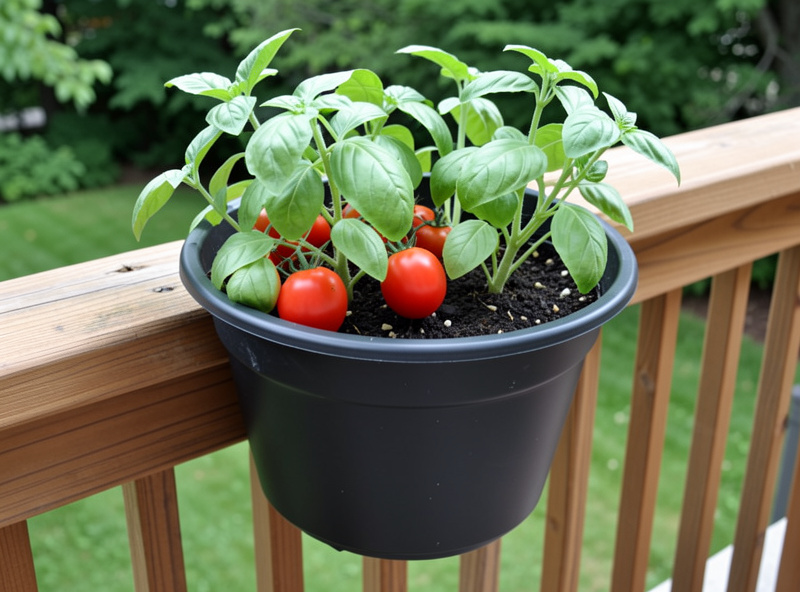
5. Windowbox.com Cedar Railing Planter
Dimensions: 36″ L x 8″ W x 8″ H | Railing Fit: 2-6 inches | Material: Western red cedar | Capacity: 3.5 gallons
Western red cedar contains natural oils resisting rot and insects without chemical treatments — Iowa State Extension specifically lists cedar and redwood as the preferred decay-resistant woods for outdoor garden structures. The wood weathers to an attractive silver-gray patina. Pre-assembled with stainless steel fasteners preventing corrosion in outdoor conditions.
Best For: Organic gardeners wanting natural, food-safe materials with traditional aesthetics.
Installation and Setup Tips
Before purchasing, measure your railing width at the top, thickness, and material (wood, vinyl, metal, composite). Choose planters with adjustable brackets that span your specific dimensions.
Saturated soil weighs roughly 100 pounds per cubic foot. A 24-inch planter adds 20-25 pounds when wet; a 36-inch planter adds 35-45 pounds. Distribute weight evenly along the railing rather than clustering planters in one position. Maintain 6-12 inches between containers for air circulation and visual separation.
On my Nordic balcony, I check railing-planter attachment security each spring before the growing season begins. A winter of freeze-thaw cycles can loosen even well-installed brackets. Test by applying firm downward pressure before loading any planter with soil.
Use lightweight potting mix specifically formulated for containers rather than garden soil, which compacts in shallow planter depths and drains poorly. Pre-moisten soil before filling to reduce settling after planting.
One detail that makes a visible difference over a full season: rotate your railing planters 180 degrees every two weeks. Plants on a single-side railing naturally lean toward the light source, and unrotated planters end up with one-sided, leggy growth by midsummer. A half-turn every fortnight keeps the foliage balanced and the harvest even across the planter. It takes ten seconds and costs nothing, but the difference in plant shape at harvest time is dramatic.
Planting Design Strategies for Rail Planters
Edible Combinations: For a “pizza garden,” plant basil, oregano, parsley, and thyme with trailing cherry tomatoes at the edges. For salsa, combine cilantro, compact jalapeños, and patio tomatoes with marigolds that deter aphids naturally. I have run a pizza-garden railing planter for two consecutive seasons and the basil-thyme-oregano trio produced steadily from June through September with weekly harvesting.
Thriller-Filler-Spiller Formula: Position taller plants (ornamental grasses, compact salvias, dwarf tomatoes) at the center. Fill the middle with bushy herbs or geraniums. Trail petunias, sweet potato vine, or creeping thyme over the edges to soften the planter silhouette.
Sun-Matched Groupings: Plant rosemary, thyme, oregano, and sedum together in full-sun positions — they all want infrequent deep watering. Group coleus, impatiens, begonias, and mint in partial-shade positions where soil stays moist longer. On my balcony, the full-sun railing planter with Mediterranean herbs gets watered once every 5-7 days while the shaded mint-and-coleus planter needs water every 2-3 days even though both are the same size and mount. Grouping plants by water need across separate planters eliminates the guesswork of mixed-care containers.
What Actually Thrives on a Nordic Railing
The plant lists in most railing-planter guides assume warm US growing zones with long, reliable summers. On a Swedish balcony, the season is short and the light runs out fast, so the cultivar choice matters as much as the planter itself. The herbs and greens that have performed best for me across three seasons on the rail are the cut-and-come-again types that tolerate temperature swings and keep producing after each harvest: leaf lettuce, spinach, mizuna, pak choi, and rocket in the shallow troughs; basil and parsley in the self-watering troughs where the reservoir buffers against dry-out; and trailing strawberries in the open-framework baskets where airflow keeps the fruit from rotting in humid weather.
What I have stopped trying on the railing: anything that needs deep root space or a long hot season. Cherry tomatoes, compact peppers, and bush beans are tempting in a railing planter but they need more soil volume and more consistent heat than a shallow trough delivers. I grow those in 14-inch floor containers instead, where the root run is deep enough and the soil mass buffers temperature swings. The railing is for herbs, greens, and strawberries — the crops that give you daily harvest from a narrow strip of soil.
Seasonal Care and Maintenance
In spring, inspect planters for winter damage, replace the top 2-3 inches of soil, and clean drainage holes. In summer, check railing planters daily during heat waves — they dry faster than floor containers because wind circulates on all sides.
In the Nordic climate, I transition railing planters to cold-hardy greens (kale, spinach) by mid-August for a fall harvest through October. In freeze-prone climates, remove planters from railings before winter to prevent ice damage. Store upside down, emptied and cleaned, in a sheltered location.
The bracket hardware deserves as much attention as the planter body. I inspect every bracket each spring for cracks, stripped screws, or UV embrittlement in plastic clips — a bracket that held fine last August may have degraded over a winter of freeze-thaw cycling. Replace any bracket showing hairline cracks or excessive flex, and tighten every fastener before loading the planter with soil. Five minutes of bracket maintenance each spring is the cheapest insurance against a planter full of wet soil and herbs coming down in the first autumn gale.
In a Nordic climate, the railing-planter season runs mid-May through late September — roughly 18 weeks. I plant herbs and strawberries into the railing troughs the third week of May, after the last frost date passes. The self-watering railing planter with basil and parsley produces continuously until the first October frost kills the basil. Hardy herbs like thyme and oregano last longer, often into November if the autumn is mild. I empty and store the railing planters by mid-November to avoid freeze-thaw damage to the brackets and resin bodies. In warmer zones where winter freezes are rare, railing planters can stay mounted year-round with cold-hardy plants like kale, winter pansies, and evergreen herbs filling them through the dark months.
For the complete framework covering container sizing, soil mixing, and seasonal planning, see my balcony gardening complete guide. For railing planter comparisons optimized specifically for apartment balconies, visit my hanging railing planters guide. My balcony herb garden ideas covers edible layouts designed for railing-mounted growing. Deck rail planters integrate with other balcony methods — I use mine for herbs and strawberries while floor containers handle the larger tomato and pepper plants that need deeper root runs.
What are the best deck rail planters?
The HC Companies Garden Bowl (24 inches, 3 gallons, UV-resistant polypropylene) and Veradek Metallic Series (32 inches, 3.8 gallons, galvanized steel) are top performers. Look for adjustable mounting brackets gripping rails 2-6 inches wide, minimum 8-inch planting depth, and integrated drainage with saucer protection for the deck surface below.
How do you mount planters on deck railings?
Use adjustable brackets that clamp onto the railing. Ensure brackets are rated for 20-45 pounds of wet soil depending on planter size. Test security by applying downward pressure before loading. On balconies above the second floor, add secondary safety straps as wind protection.
How wide should deck rail planters be?
8-12 inches wide is ideal for most deck railings. A 24-inch planter holds 3-4 herb plants; a 36-inch planter holds 6-8 herbs or 3-4 compact vegetables. Check your railing weight capacity before installing multiple planters, and distribute them along the rail rather than clustering.
Do deck rail planters need self-watering reservoirs?
Self-watering reservoirs holding 1-1.5 gallons extend watering intervals from daily to every 5-10 days. They are especially valuable on south-facing railings or for herbs like basil and parsley that wilt when soil dries out. Mediterranean herbs (rosemary, thyme, oregano) prefer standard drainage without reservoirs.