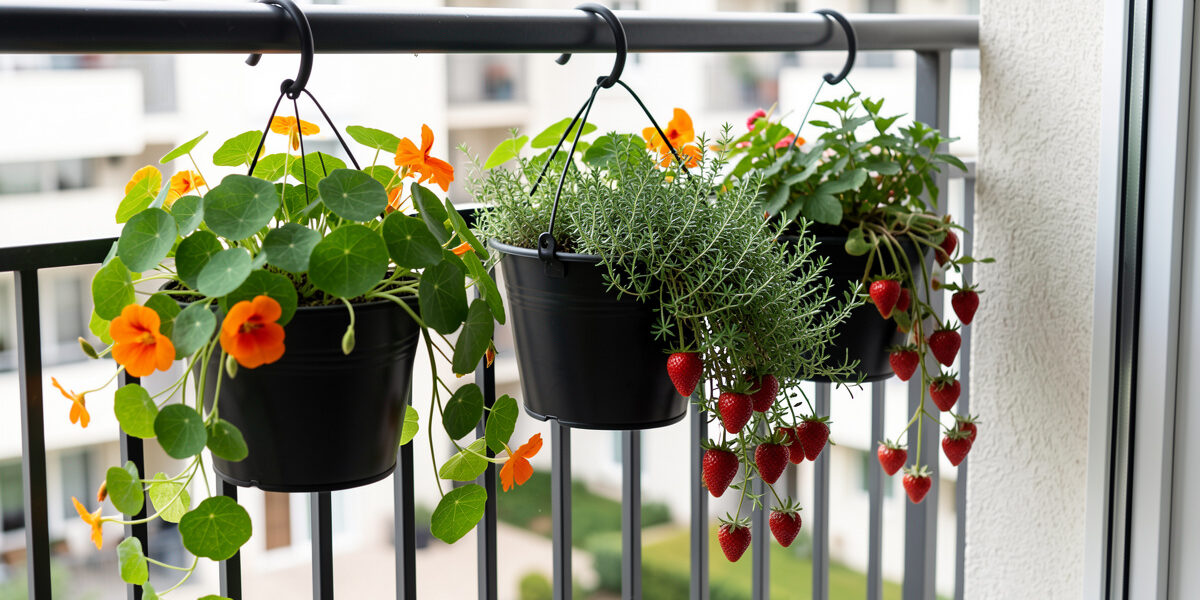
The best hanging railing planters combine secure attachment brackets rated for 15-30 pounds of wet soil, at least 6 inches of planting depth, and integrated drainage that protects the balcony surface below. On my own Swedish apartment balcony, railing planters are the single most space-efficient growing method I use — they add 4-6 linear feet of growing space without consuming a single inch of floor footprint.
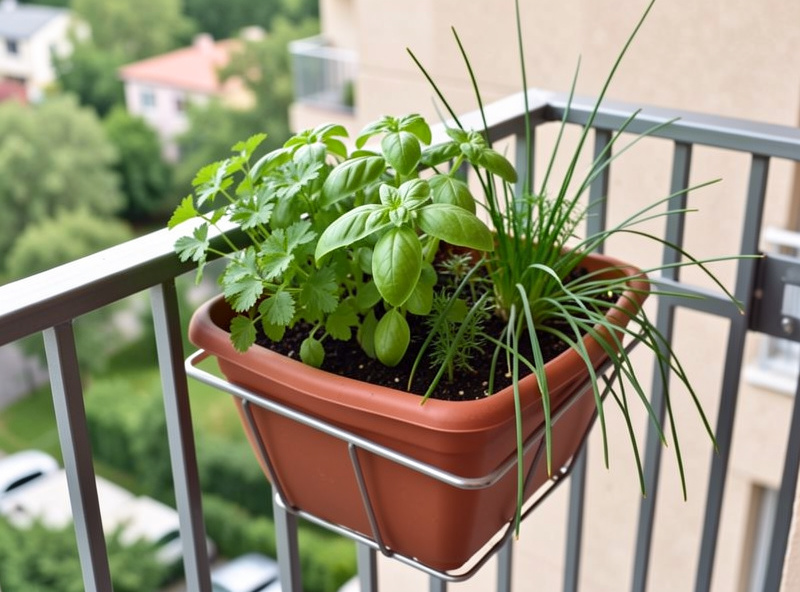
I run two railing planters on my east-facing balcony: one self-watering trough with basil, parsley, and chives, and one fabric-lined metal basket with trailing strawberries and creeping thyme. Between them, they produce roughly half of the fresh herbs my kitchen uses from May through October. The planters below are the ones I would recommend after three seasons of hanging things on a fourth-floor Nordic balcony railing.
As an Amazon Associate I earn from qualifying purchases.
Why Choose Hanging Railing Planters
Railing planters add growing space without consuming floor footprint — the single most valuable resource on any balcony under 30 square feet. Positioned at elbow height, they eliminate bending and kneeling during planting, watering, and harvesting. That ergonomic advantage matters more than most buyers realize until they have spent a season reaching down into floor containers.
Elevated positioning improves air circulation around plants, reducing the fungal diseases that thrive in crowded balcony environments. On my balcony, the railing planters dry out faster than floor containers — a blessing and a curse that I manage with self-watering reservoirs in the troughs that need consistent moisture (basil and parsley) and standard drainage in the Mediterranean-herb containers that prefer to dry between waterings.
Critical Features to Evaluate
Railing Compatibility
Measure your railing width, thickness, and material before purchasing. Most planters fit railings between 1-4 inches wide. My building’s railings are standard 2-inch square steel tubing — I look for planters with adjustable brackets that grip that profile securely without damaging the paint.
Adjustable mounting brackets offer the greatest flexibility, expanding or contracting to grip various railing dimensions. Fixed-width planters work for standard apartment balcony rails but may not fit custom or oversized railings.
Attachment Security
On a fourth-floor balcony, attachment security is non-negotiable. Quality hanging planters feature:
Quality hanging planters feature several attachment types:
- Hook systems: Heavy-duty metal hooks gripping rail tops with 2-3 contact points. Test by applying gentle downward pressure before loading with soil.
- Bracket mounts: Screw-attached brackets for permanent stability — these are what I trust for heavier planters in windy positions.
- Adjustable clamps: Tension mechanisms tightening onto rails of various sizes.
- Safety straps: Secondary attachment points securing planters even if primary hooks fail — worth the extra few pounds for anyone above the second floor.
Soil Volume and Plant Capacity
Minimum 6-inch depth supports herbs and shallow-rooted flowers. 8-10 inch depths accommodate compact vegetables, strawberries, and deeper-rooted ornamentals — depth ranges that align with Wisconsin Extension’s container vegetable guidance. Width determines plant count — 20-inch planters hold 3-4 herb plants or 2 compact vegetable plants.
Calculate soil volume needs: herbs require 1-2 quarts each, while compact tomatoes or peppers need 3-5 gallons minimum for productive growth. On my railing, I keep herbs and strawberries in the railing planters and save the larger 14-inch floor containers for the tomatoes and peppers that need deeper root runs.
Drainage and Water Management
Essential drainage holes prevent root rot from waterlogged soil. Better planters include integrated saucers catching excess water to protect balcony surfaces below. Self-watering reservoirs holding 1-2 quarts of reserve water extend the time between watering to 3-5 days — a feature I consider mandatory for east and south-facing railings where soil dries out daily in 18-hour Nordic summer daylight.
Top Hanging Railing Planter Recommendations
1. Bloem Deck Rail Planter
Dimensions: 24″ L x 12″ W x 8″ H
Railing Fit: 2-6 inches wide
Material: UV-resistant resin
Capacity: 2.5 gallons
The Bloem Deck Rail Planter features adjustable brackets gripping virtually any railing securely without tools. The heavy-duty resin construction withstands years of UV exposure without cracking or fading. Dual-level drainage system prevents overwatering while optional saucer attachment protects balcony floors.
Available in 8 colors. The 24-inch length accommodates 4-6 herb plants or 2-3 compact vegetables.
Best For: Gardeners seeking tool-free installation with reliable performance across various railing types.
2. Mayne Fairfield Railing Planter
Dimensions: 36″ L x 11″ W x 10″ H
Railing Fit: 2.5-4 inches wide
Material: Double-walled polyethylene
Capacity: 3.5 gallons
The Mayne Fairfield railing planter offers cottage-garden aesthetics with modern durability. Double-wall construction creates insulation protecting roots from temperature extremes. The included sub-irrigation system wicks water from a 1-gallon reservoir — the self-watering feature I find most reliable across multiple brands I have tested.
The 36-inch length creates substantial planting space for mixed herb collections or cascading flowers. Wood-grain texture provides traditional appearance without wood maintenance.
Best For: Those wanting traditional styling with self-watering convenience and extended soil volume.
3. CobraCo Black Horse Hanging Planter
Dimensions: 30″ L x 8″ W x 7″ H
Railing Fit: 1.5-4 inches wide
Material: Steel with powder coating
Capacity: 2 gallons
The CobraCo Black Horse hanging planter‘s steel construction offers industrial strength supporting heavier soil loads without flexing. The removable coco liner provides excellent drainage and aeration, replaceable when eventually depleted. Arched hanger design distributes weight evenly across railing tops.
The open framework allows superior air circulation — on my balcony, this planter consistently grows the healthiest strawberries with the least fungal pressure.
Best For: Gardeners prioritizing durability and air circulation over maximum soil volume.
4. Emsco Group Greek Column Railing Planter
Dimensions: 24″ L x 10″ W x 9″ H
Railing Fit: 2-5 inches wide
Material: Resin with column texture
Capacity: 2.2 gallons
Distinctive column texture adds architectural interest. Adjustable resin brackets conform to various railing shapes including round and square profiles. Integrated water reservoir extends watering intervals to 5-7 days in moderate weather.
Best For: Design-conscious gardeners wanting planters that double as decorative architectural elements.
5. Akro-Mils Deck Box Planter
Dimensions: 18″ L x 8″ W x 8″ H
Railing Fit: 2-6 inches wide
Material: Recycled polypropylene
Capacity: 1.5 gallons
Akro-Mils offers compact, affordable railing planters. Simple clip-on design installs in seconds. Made from recycled materials. The 18-inch width accommodates 3-4 compact herb plants.
Best For: Budget-conscious gardeners or those with limited railing space wanting simple, effective solutions.
Installation and Setup Tips
Before installing hanging planters, verify railing width falls within planter specifications. Railing material must support 15-30 additional pounds per planter when wet. Most residential balcony railings handle this easily — the load distributes across the entire railing span rather than concentrating on one point. Building codes in most jurisdictions permit railing attachments, but confirm with management if your lease restricts them.
Test attachment security before filling with soil by applying firm downward pressure. I give each installed planter a solid push from below to confirm the hooks or brackets grip without sliding. For railings above the third floor, add safety straps as secondary attachment points — the $5-10 in hardware is cheap insurance against a wind gust dislodging a planter over a pedestrian walkway.
Use lightweight potting mix specifically formulated for containers rather than garden soil. Pre-moisten soil before filling to reduce settling after planting. In Nordic conditions where the growing season is short, I fill railing planters the third week of May and they stay planted through late September.
One last assembly tip that saves grief: line the bottom of each planter with a sheet of permeable landscape fabric before adding soil. It stops the growing mix washing out through the drainage holes every time you water or a summer storm hits — a mess that stains light-coloured balcony surfaces and slowly empties your planter of the soil your plants need. The fabric costs pennies per planter and takes thirty seconds to cut and drop in. Skip it and you will be topping up soil every couple of weeks all season.
Planting Strategies for Railing Success
Trailing and Cascading Plants
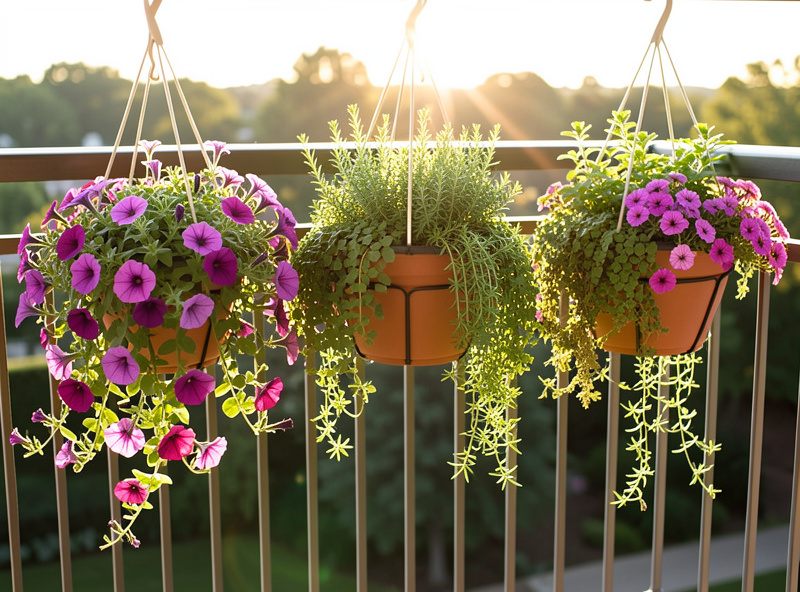
Position trailing plants at planter edges to create visual depth. Sweet potato vine, trailing petunias, lobelia, and creeping thyme cascade beautifully over railing sides. On my balcony, the creeping thyme in the outer railing planter edge has drawn more compliments from neighbors than any intentional flower display.
Thriller-Filler-Spiller Formula
Thriller: Upright focal point (ornamental grasses, salvia, compact tomato)
Filler: Medium plants adding mass (herbs, geraniums, impatiens)
Spiller: Trailing plants softening edges (petunias, sweet potato vine, bacopa)
Companion Combinations
Group plants sharing water and light needs in the same planter. Sunny drought-tolerant pairings include rosemary, thyme, sedum, and portulaca — these all want infrequent deep watering. Partial-shade moisture-loving pairings include coleus, impatiens, begonias, and mint — these want consistent moisture.
For the complete framework covering container sizing, soil mixing, and seasonal planning, see my balcony gardening complete guide. Learn which plants perform best in your specific light conditions with my apartment balcony plants guide.
Wind: The Balcony Variable Nobody Mentions
Every railing-planter guide I have read treats wind as an afterthought. On a fourth-floor Stockholm balcony, wind is the primary design constraint — not sun, not water, not temperature. The funnelling effect between apartment blocks means a 15 mph ground-level breeze becomes a 30 mph gust at railing height, and a planter loaded with wet soil and trailing foliage catches that wind like a sail. I learned this the expensive way: my first CocoCoil basket blew off the rail in a September storm and shattered on the courtyard below, taking a full season of strawberry runners with it.
Three practical fixes that have kept every planter on my rail since. First, prefer low-profile rectangular troughs over deep round baskets — the lower windage profile means less sail area. Second, use at least two independent attachment points per planter, not one hook: a bracket grip on the rail plus a zip-tie or safety strap around the rail post. Third, position the heaviest planters (the self-watering ones with full reservoirs) on the windward end of the rail so they act as a windbreak for the lighter baskets downwind. That arrangement alone lets me grow delicate herbs like basil in a position that would otherwise shred them in a single afternoon blow.
Seasonal Care and Maintenance
Spring Setup
Inspect planters for winter damage. Refresh top 2 inches of soil with new potting mix. Test drainage holes for clogs.
Summer Maintenance
Railing planters dry faster than floor containers due to wind exposure on all sides. In July and August, I check railing-planter moisture twice daily — morning and late afternoon — because 18-hour Nordic summer daylight bakes container soil faster than any US gardening guide accounts for. Apply water-soluble fertilizer every 2 weeks during peak growth. Deadhead flowers regularly.
Fall Transition and Winter Storage
Replace spent summer annuals with cool-season alternatives: pansies, ornamental kale, cold-hardy herbs. In cold climates, remove planters from railings before freeze-thaw cycles begin. Store upside down to prevent water accumulation, empty soil, and clean thoroughly before spring reuse.
From Railing Planters to a Complete Balcony Garden
Hanging railing planters integrate naturally with other balcony growing methods. For the step-by-step setup process, see my how to create a small balcony garden guide. For vegetable-specific recommendations optimized for containers, visit my growing vegetables on your balcony guide.
What are the best hanging railing planters for balconies?
The Bloem Deck Rail Planter (24 inches, 2.5 gallons, adjustable brackets) and Mayne Fairfield (36 inches, 3.5 gallons, self-watering reservoir) are top performers. Look for planters with adjustable mounting brackets rated for 15-30 pounds of wet soil, minimum 6-inch planting depth, and integrated drainage with saucer protection for the balcony surface below.
How do you attach hanging planters to railings?
Use adjustable brackets that clamp onto the railing. Ensure brackets are rated for the weight of the wet planter (15-30 pounds). Test security by applying downward pressure before loading with soil. For balconies above the second floor, add safety straps as secondary attachment against wind gusts.
How much weight can railing planters hold?
Most railing planters hold 15-30 pounds of wet soil. Wet container soil weighs roughly 100 pounds per cubic foot; a 2.5-gallon planter of saturated soil weighs approximately 25 pounds. Check your building’s railing load capacity before installing multiple planters, and distribute them along the rail rather than clustering in one position.
What can I grow in hanging railing planters?
With 6-8 inches of depth, grow herbs (basil, parsley, chives, thyme), strawberries, lettuce, and trailing flowers like petunias and lobelia. With 10+ inches of depth, add compact bush beans and dwarf pepper varieties. Save tomatoes and larger vegetables for 14-inch floor containers with deeper root runs.