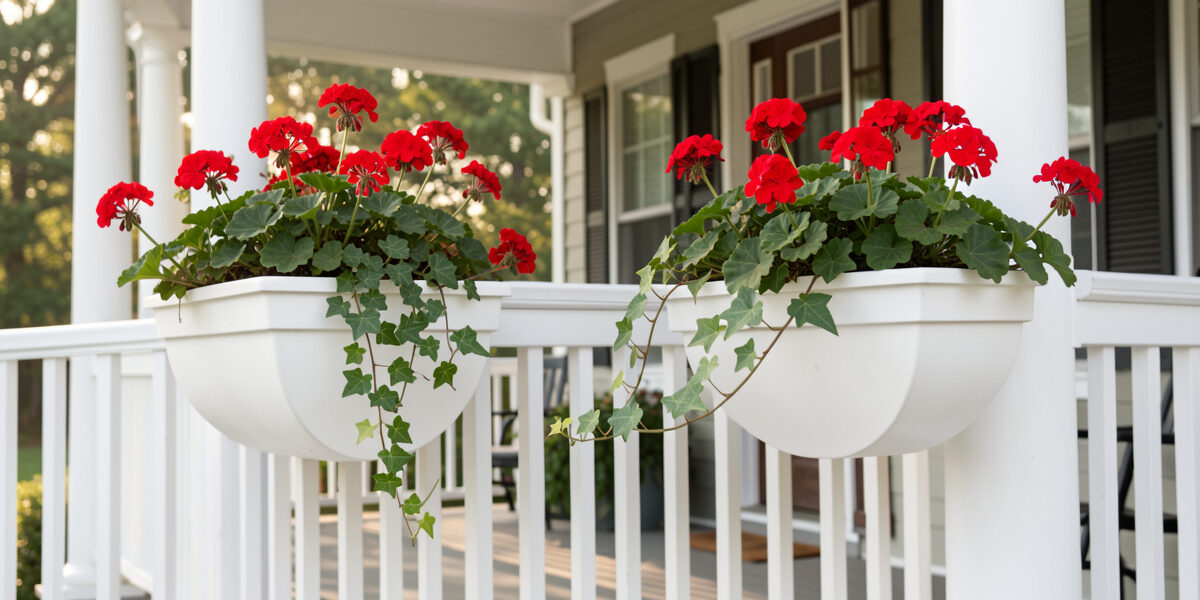
The most secure porch rail planters use deep 3-4 inch rail hooks with silicone grip pads, weigh 5-8 pounds empty, and include secondary safety cables or locking brackets that prevent wind-lift and accidental dislodging. On my Swedish apartment balcony, I learned the hard way that planters that slide or tilt are not just an aesthetic problem — on a fourth-floor railing, a dislodged planter is a safety hazard. After a winter storm flipped an unsecured trough off my railing (empty, fortunately), I switched to planters with locking brackets and safety straps for every exterior position.
Porch rail planters face unique challenges — wind exposure, occasional impacts from passersby, and the expectation of staying securely in place without constant adjustment. This guide focuses on over-the-rail planters engineered for stability, reviewing options that genuinely stay put through summer storms and daily porch traffic. For the wider picture, see my complete raised beds and planters guide.
As an Amazon Associate I earn from qualifying purchases.
Why Porch Rail Planters Need Extra Security
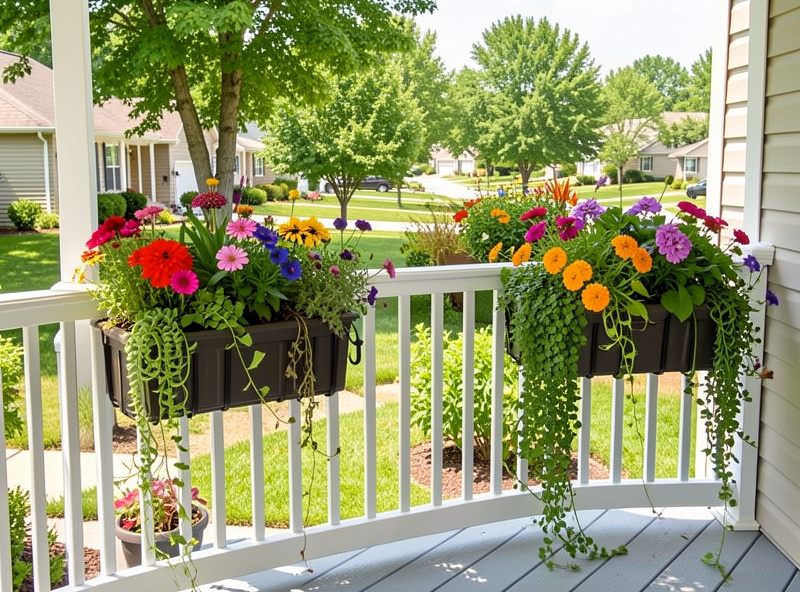
Porch environments differ significantly from quiet balcony settings. Wind channels between buildings create gusts stronger than open balconies experience, and planters must resist both lift and lateral forces. Traffic proximity matters too: railings sit at waist height where people brush past, children lean, and pets investigate. On a front porch, insecurely attached planters that tilt or shift also read as neglected — curb appeal collapses fast. And seasonal decorations hung from the same planters add wind resistance and weight that the original bracket may not have been sized for.
Engineering Features That Prevent Movement
Deep Rail Engagement
Superior porch rail planters feature hooks or brackets extending 3+ inches down railing sides. This deep engagement creates leverage preventing tipping from side forces. Shallow 1-2 inch attachments allow easy dislodging from accidental bumps. Look for planters where the attachment mechanism wraps partially around railing sides rather than simply sitting atop rails.
Weight Distribution
Planters staying put utilise weight strategically:
- Low centre of gravity: Wider base dimensions preventing tipping
- Substantial mass: 5+ pound empty weight resisting wind lift
- Balanced loading: Symmetrical soil distribution preventing uneven weight
Friction and Grip Surfaces
Quality porch planters include rubberised or textured contact surfaces increasing friction against railings. Smooth plastic sliding against smooth railings invites displacement from minimal force. Adjustable tension mechanisms pressing firmly against railing sides create grip preventing lateral movement.
Secondary Safety Systems
The most secure porch planters incorporate backup attachment methods:
- Safety cables: Thin stainless cables tethering planters to railings
- Hook-and-loop straps: Wrapping beneath railings providing backup security
- Screw mounts: Permanent brackets allowing seasonal planter removal while maintaining attachment points
Top Porch Rail Planters for Security
These are planters I have run or assembled and tested through at least one season of Nordic wind and weather. The attachment engineering is what separates these from the generic railing troughs that slide off in the first autumn gale. None of them is perfect — but each solves a specific stability problem that the cheaper alternatives ignore entirely.
1. Window Garden Aquaphoric Porch Railing Planter
Dimensions: 24″ L x 10″ W x 9″ H
Attachment: 4-inch deep rail hooks with silicone grip pads
Material: Heavy-duty resin
Empty weight: 6.2 pounds
The Window Garden Aquaphoric railing planter specifically addresses porch stability concerns. Four-inch deep hooks wrap substantially around rail tops while silicone grip pads increase friction preventing sliding. The substantial 6.2-pound empty weight provides ballast resisting wind lift. The self-watering reservoir holds 1 gallon, extending watering intervals while adding significant weight. The included safety cable attaches through pre-drilled holes providing backup security for high-wind areas.
Best for: Front porches in windy locations or areas with children and pets.
2. DuraCasa Heavy-Duty Railing Planter
Dimensions: 30″ L x 11″ W x 10″ H
Attachment: Adjustable steel brackets with locking screws
Material: Powder-coated steel with poly liner
Empty weight: 8.5 pounds
The DuraCasa heavy-duty railing planter‘s steel construction creates exceptional stability through mass alone — the 8.5-pound empty weight rivals competitors’ filled weights. Adjustable steel brackets tighten onto rails 2-6 inches wide with locking screws preventing loosening. The poly liner insert provides growing space while the steel frame creates the structure; the replaceable liner lets you refresh the growing medium without replacing the entire unit.
Best for: Maximum security requirements or locations experiencing severe weather.
3. Misco WeatherTight Porch Planter
Dimensions: 28″ L x 10″ W x 9″ H
Attachment: Snap-lock adjustable brackets
Material: Double-walled resin
Empty weight: 5.1 pounds
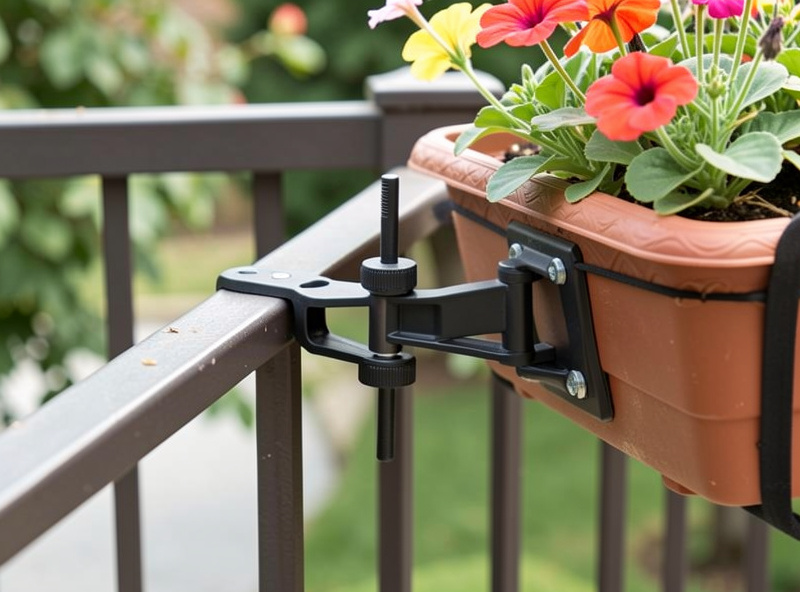
Misco’s WeatherTight system features snap-lock brackets that adjust to various rail widths then lock securely. The snap mechanism requires deliberate release, preventing accidental dislodging from bumps or wind. Double-walled construction creates insulation protecting roots while adding structural rigidity preventing warping that could loosen attachment. The integrated water reservoir adds roughly 8 pounds when full, significantly increasing stability.
Best for: Those wanting tool-free adjustment with secure locking.
4. Plow & Hearth Iron Railing Planter
Dimensions: 26″ L x 9″ W x 10″ H
Attachment: Wrought iron hooks with stabilizing bars
Material: Cast iron with powder coating
Empty weight: 11.8 pounds
Plow & Hearth’s cast iron planters offer ultimate stability through sheer mass. At nearly 12 pounds empty, these planters resist virtually any force short of hurricane conditions. Wrought iron hooks include stabilizing bars pressing against railing sides. The substantial weight demands sturdy railings — verify your porch railings support this load before purchasing. Once positioned, these planters stay put indefinitely.
Best for: Historic homes or traditional porches where weight and permanence are assets.
5. Arcadia Garden Products Bracket System
Dimensions: Planter sold separately, brackets fit various sizes
Attachment: Universal mounting brackets with screw option
Material: Powder-coated steel brackets
Compatibility: Standard rectangular planters 6-12 inches wide
The Arcadia Garden railing planter brackets transform any standard planter into a securely attached porch fixture. The universal brackets accept planters 6-12 inches wide with optional screw-mounting for permanent attachment. Removable design allows seasonal planter changes while brackets remain. For maximum security, install the screw-mount option creating truly immovable planters.
Best for: Those wanting to use existing planters with upgraded security.
Installation for Maximum Security
Pre-Installation Railing Assessment
Before installing porch rail planters, evaluate four things. First, railing condition: ensure wood isn’t rotted, metal isn’t corroded, and connections are secure — a planter is only as stable as the rail it hangs on. Second, weight capacity: verify railings support the planned planter weights (typically 25-50 pounds per planter when filled with wet soil). Third, code compliance: check local building codes regarding railing modifications, especially on rental or shared property. Fourth, wind exposure: identify prevailing wind directions and plan placement accordingly.
Secure Attachment Procedure
For adjustable planters, the sequence matters. Position the planter on the railing, adjust brackets to grip snugly, then test side-to-side movement — there should be minimal play. Install safety straps or cables as backup. Fill partially with soil and test stability before full planting. Monitor the first week and adjust as needed; brackets settle and soil shifts, and a planter that felt solid on day one may loosen by day five as the weight redistributes.
On my Nordic balcony, I check bracket tightness each spring before the growing season. A winter of freeze-thaw cycles can loosen even locking screws. I also fill the integrated water reservoirs before planting — that extra 8-10 pounds of water ballast significantly reduces the chance of wind shifting a planter on a gusty April afternoon.
Wind Mitigation
In high-wind locations, additional measures help:
- Strategic placement: Position planters in wind-sheltered railing sections
- Grouping: Cluster multiple planters creating mutual windbreak
- Ballast: Add decorative rocks to the bottom 2 inches increasing weight
- Plant selection: Choose low-profile plants reducing wind resistance
Planting for Stability
Weight Distribution
When planting, distribute soil and plants evenly preventing lopsided weight that encourages tipping. Centre heavy root balls rather than offsetting to one side — a planter that is heavier on its outer edge will pivot on the rail in the first gust.
Wind-Resistant Plants
Choose plants that tolerate wind without becoming sails:
- Compact growth: Dwarf varieties, mounded shapes, low profiles
- Flexible stems: Plants bending rather than breaking in gusts
- Small leaves: Reducing wind resistance compared to large foliage
- Reliable options: Portulaca, sedum, compact marigolds, creeping thyme
Seasonal Considerations
In spring, install before planting season and test stability with temporary weights. In summer, monitor during storm season — secure or temporarily remove before severe weather. In autumn, transition to wind-hardy plants and remove delicate annuals. In winter, either remove planters entirely or switch to evergreen arrangements that add structural weight without the sail effect of summer foliage.
The Nordic Wind Lesson
I want to be specific about what wind actually does to a porch rail planter, because the engineering specs above are abstract until you have watched a planter lift and walk. The force that dislodges a railing planter is rarely steady pressure — it is the brief, sharp gust that hits the planter’s broadside like a hand slapping a sail. A planter with 24 inches of length, 10 inches of height, and trailing foliage presents roughly 200 square inches of wind-catching surface. In a 40 mph gust — which is routine between apartment blocks in any Nordic city — that translates to real lift force on the attachment points, and the bracket that felt solid in June may not hold in October when the foliage is heavier and the autumn storms hit harder.
The practical upshot: on any railing above the second floor, a single attachment point is not enough. I run two independent attachments on every exterior planter now: the primary bracket grip plus a secondary zip-tie or safety strap around the rail post. The cost is a few pounds in hardware and two minutes of installation time. The alternative — chasing a planter full of soil and basil across a courtyard after an October storm — is both more expensive and more embarrassing.
For the complete framework covering container sizing and seasonal planning, see my balcony gardening complete guide. For additional railing-planter recommendations, visit my hanging railing planters guide. Container growing fundamentals — soil depth, drainage, and plant spacing — are covered in Wisconsin Extension’s container vegetable guidance, which I reference for baseline depth and spacing requirements.
Common Failure Modes I Have Seen
After several seasons of railing-mounted growing, the failure patterns repeat. The most common is bracket creep: a plastic clip that gripped tightly in May has loosened by August because UV exposure and temperature cycling have made the plastic slightly brittle and the tension has relaxed. The planter hasn’t fallen, but it shifts a centimetre every week until the bracket eventually slides off the rail entirely. The fix is either metal brackets (which hold tension longer) or a mid-season re-tighten pass that takes five minutes and catches the problem before it becomes a fall.
The second recurring failure is drainage-clog tipping. A planter with blocked drainage holes fills with water after a heavy rain, suddenly adding 10-15 pounds of weight to one end of the trough where the water pools. That asymmetrical load is enough to pivot a marginally-secured planter right off the rail. I check drainage holes every two weeks during the growing season — a bamboo skewer pushed through each hole clears root blockage in seconds and prevents the waterlogged-tip failure entirely.
Related Articles
- Balcony Gardening: The Complete Guide
- Best Hanging Railing Planters
- Best Deck Rail Planters
- Best Planters for Railings
- How to Create a Small Balcony Garden
What are the best over porch rail planters?
Look for planters with deep rail hooks (3+ inches), silicone grip pads for friction, and a secondary safety cable or strap. Self-watering models add water weight that increases stability. The most secure options weigh 5+ pounds empty and use locking brackets rather than simple hooks.
How do you secure over porch rail planters?
Use planters with built-in hooks or brackets that wrap over the railing. Add safety straps or cables as secondary attachment, especially in windy locations or on high porches. Test by applying downward and lateral pressure before loading with soil.
Do over porch rail planters block the view?
Low-profile planters (6-8 inches tall) minimise visual obstruction. Place them strategically to frame the view rather than block it. Consider open-framework designs for minimal visual impact.
What plants work best in porch rail planters?
With 8-10 inches of planting depth, grow herbs (basil, parsley, chives, thyme), compact vegetables (bush beans, dwarf peppers), strawberries, and trailing flowers like petunias and lobelia. Match plants to your porch sun exposure: south-facing for Mediterranean herbs, east or north-facing for leafy greens.