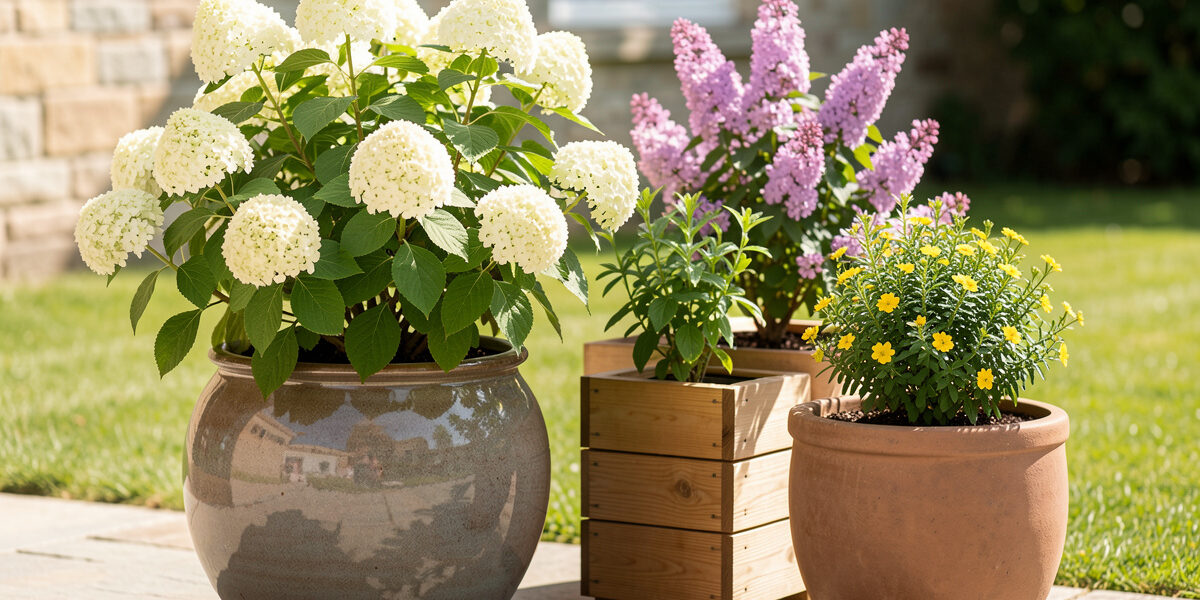
A sunny patio or balcony is perfect for shrubs in pots — lavender, rosemary, hydrangeas, and dwarf conifers all thrive in a large container with 6+ hours of sun and give years of structure and colour for almost no work. I grow several on my balcony, and the one thing I’d flag for a cold climate: choose for hardiness as well as looks. Dwarf conifers are bombproof through a Nordic winter; lavender and rosemary want sharp drainage and shelter; and a potted shrub’s roots sit far more exposed to frost than one in the ground, so the tender ones may need wrapping or moving under cover. Start with healthy nursery shrubs, and here’s how to keep them going — for in-ground options too, see my small garden trees and shrubs guide.
The best shrubs for pots in full sun include lavender, rosemary, hydrangeas, and dwarf conifers — tough, low-maintenance plants that thrive in containers with 6+ hours of direct sunlight. These long-lived shrubs provide structure and color for years with minimal care.
For container methods, pot selection, soil advice, and seasonal planning for all container types, see our container gardening complete guide. The focus below is on shrubs specifically — which ones thrive in full-sun pots and how to keep them healthy in containers year after year.
Unlike annual flowers that need replacing each season, shrubs in pots offer lasting value. They establish deep root systems, survive winter in containers, and return bigger and better each year. For sunny patios and balconies, container shrubs anchor your garden design with permanence that annuals cannot match.
Why Choose Shrubs for Containers
Container shrubs solve multiple garden challenges. They provide instant mature size that annuals take months to achieve. Established shrubs require less frequent watering than annuals once root systems develop. Winter hardiness means they return each spring without replanting.
Shrubs offer structural diversity. Their woody framework creates winter interest when herbaceous plants disappear. Different growth habits — upright, mounded, weeping — add architectural variety to container collections.
Long-term economy makes financial sense. While a shrub costs more initially than annuals, it survives 5-10 years or longer. Amortized over time, shrubs cost pennies per season compared to replacing annuals repeatedly.
Container advantages: Portability allows repositioning for optimal design. Soil control eliminates garden problems like poor drainage or heavy clay. Protection from aggressive spreaders prevents garden takeover.
Top Sun-Loving Container Shrubs
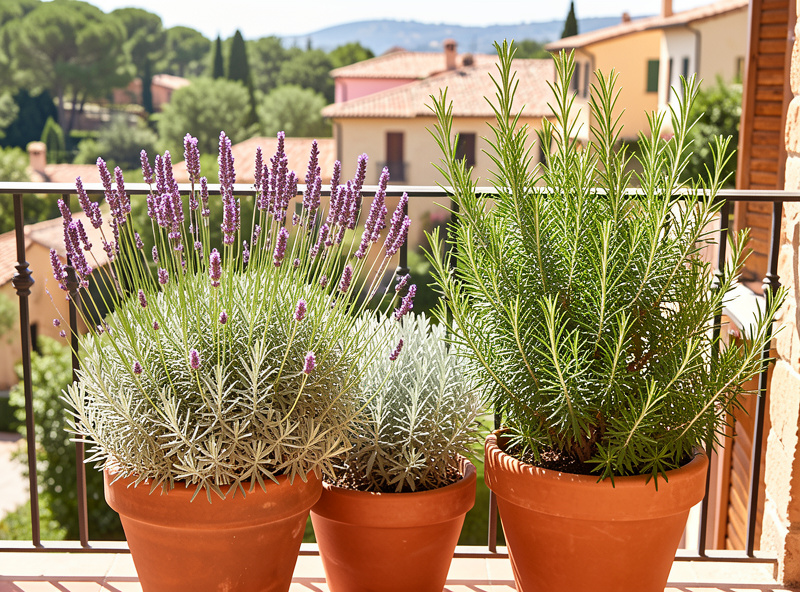
Lavender
Silvery foliage and fragrant purple flower spikes. English and Spanish varieties thrive in hot, sunny conditions. Drought tolerant once established. Perfect for Mediterranean-style containers. Hidcote and Munstead are classic English varieties; Otto Quast offers Spanish type performance.
Rosemary
Evergreen needle-like leaves with blue spring flowers. Culinary and ornamental value in one plant. Extremely heat and drought tolerant. Upright or trailing varieties available. Arp and Tuscan Blue offer cold hardiness; Prostrate varieties trail beautifully.
Dwarf Hydrangeas (Paniculata varieties)
Compact varieties like Bobo and Little Lime reach only 3 feet but produce full-size flower heads. White blooms turn pink in autumn. Prefer morning sun with afternoon shade in hottest climates. Panicle hydrangeas are most sun-tolerant hydrangea type.
Dwarf Conifers
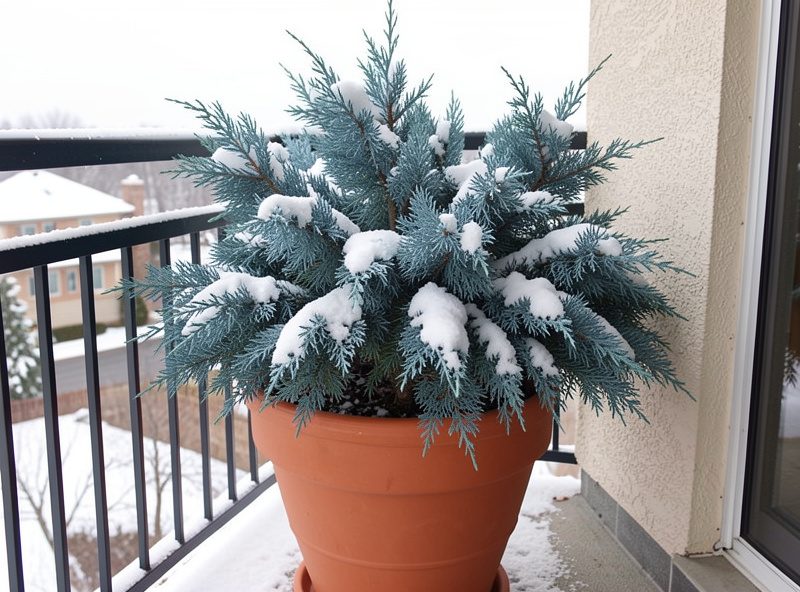
Junipers, cypress, and pines in compact forms provide year-round structure. Many stay under 3 feet and tolerate extreme heat and cold. Blue Star juniper and Tiny Tower cypress are excellent choices. Gold Cone juniper adds bright color.
Butterfly Bush (Buddleia)
Loose Buddleia varieties like Blue Chip stay under 3 feet. Spikes of fragrant flowers attract butterflies all summer. Extremely heat tolerant and blooms continuously. Nanho Blue and Purple Emperor offer compact alternatives.
Additional Container Shrubs
Barberry (Berberis)
Colorful foliage in gold, orange, and burgundy. Tiny varieties like Sunsation and Golden Ruby stay under 2 feet. Thorny branches provide security benefits too. Excellent fall color. Tolerates extreme heat and drought.
Dwarf Spirea
Neat mounded shrubs with pink or white flower clusters. Magic Carpet offers gold foliage with pink blooms; Goldflame provides orange new growth. Tolerates heat and some drought. Blooms on new wood; prune in early spring.
Boxwood
Classic formal evergreen for structured containers. Dwarf varieties like Sprinter and Winter Gem stay under 3 feet. Tolerates shearing for topiary forms. Green Velvet offers improved cold hardiness. Year-round structure with minimal care.
Rose of Sharon (Hibiscus syriacus)
Deciduous shrubs with tropical-looking flowers in white, pink, purple, or blue. Satin and Azurri varieties stay under 4 feet. Blooms for months in heat. Late to leaf out in spring; do not assume winter-killed until June.
Dwarf Butterfly Bush (Lo and Behold series)
These innovative hybrids reach only 2-3 feet but offer full-sized flower spikes. Blue Chip and Ice Chip provide continuous blooms. Sterile varieties do not self-seed. Perfect for small containers where standard butterfly bushes would overwhelm.
Container Requirements for Shrubs
Pot size: Minimum 18-inch diameter and depth for most shrubs. Larger is better — shrubs develop extensive root systems. Terracotta or concrete pots provide insulation and stability for top-heavy plants.
Soil mix: Use quality potting soil with added compost. Avoid garden soil which becomes compacted in containers. For Mediterranean plants like lavender, add extra sand or perlite for drainage. Acid-loving shrubs like hydrangeas benefit from acidic potting mix.
Drainage: Essential for shrub health. Ensure pots have multiple drainage holes. Elevate pots on feet to prevent waterlogging and improve air circulation under containers.
Weight considerations: Large containers with shrubs become heavy. Place final positions before filling completely. Use pot saucers with wheels for movable large plantings. If you are sizing up containers for shrubs, browse large outdoor planters on Amazon — look for 14-inch minimum diameter with good drainage, and light colors to protect roots from overheating in full sun. As an Amazon Associate I earn from qualifying purchases.
On a balcony, weight is the constraint that catches people out. A 20-inch terracotta pot with a mature shrub and wet soil can weigh 80 pounds or more, and that is before you account for snow load in winter. I use lighter resin or fiberglass for the biggest shrub pots and place them directly over a support joist rather than mid-span on the decking. The other cold-climate detail: freeze-thaw cracks cheap terracotta in a single winter. If you want the terracotta look, either bring those pots in for winter or buy frost-proof (high-fired) terracotta and keep it off the ground on feet so it never sits in frozen water.
Soil mix: Use quality potting soil with added compost. Avoid garden soil which becomes compacted in containers. For Mediterranean plants like lavender, add extra sand or perlite for drainage. Acid-loving shrubs like hydrangeas benefit from acidic potting mix.
Maintenance Tips
Watering: Water deeply when top 2 inches of soil dry out. Established shrubs tolerate some drought but perform best with consistent moisture. Newly planted shrubs need more frequent watering until established.
Fertilizing: Apply slow-release fertilizer in spring. Avoid over-fertilizing which promotes weak, leggy growth. Mediterranean shrubs like lavender and rosemary need minimal feeding.
Pruning: Remove dead wood in early spring. Light shaping after flowering maintains compact form. Never remove more than one-third of growth at once. Most flowering shrubs bloom on new wood; prune in late winter.
Repotting: Move to larger containers every 2-3 years or refresh soil in same pot. Signs needed: roots growing from drainage holes, rapid drying, declining vigor. Best done in early spring before new growth.
Winter care: Move pots to sheltered locations in harsh climates. Wrap pots with bubble wrap or burlap to protect roots from freezing. Group containers together for mutual protection.
Seasonal Care Calendar
Spring: Apply slow-release fertilizer. Prune dead branches and shape plants. Begin regular watering as growth resumes. Inspect for winter damage.
Summer: Water deeply during drought stress. Deadhead spent flowers to encourage reblooming on appropriate varieties. Monitor for pest issues in heat.
Autumn: Enjoy fall color on deciduous shrubs. Reduce watering as growth slows. This is ideal planting time for new shrubs. Apply winter protection in cold zones.
Winter: Minimal care required. Move containers to sheltered areas. Check moisture occasionally; water during dry winter spells if soil thaws. Plan next year’s additions.
Winter Survival for Potted Shrubs in Cold Climates
A shrub that sails through winter in the ground can die in a pot, and the reason is almost always the roots. University of New Hampshire Extension puts it plainly: perennials and shrubs in containers face much harsher winter conditions than the same plants in the ground, because frigid air and drying winds hit the root system directly instead of being buffered by soil (How Can I Overwinter Perennials Still in Containers, UNH Extension). Roots are less cold-hardy than the tops of most shrubs, so a plant rated for your zone in the ground may need a zone or two of margin when it goes into a pot. This is the single biggest trap for container shrubs in a Nordic climate, and it is the one most generic advice skips.
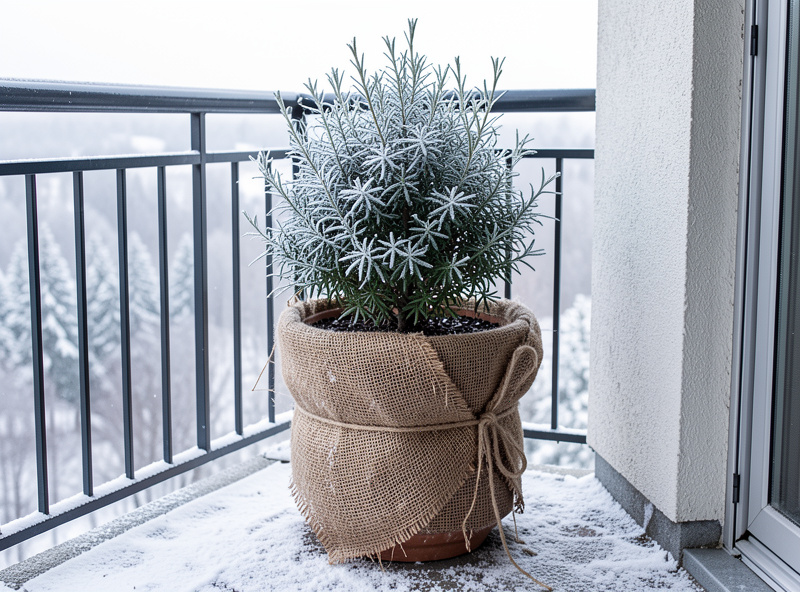
The pot-freeze problem: a frozen root ball that thaws and refreezes does real damage — the expanding ice shears root tissue, and the plant limps into spring with a root system it cannot recover from. I lost a potted rosemary exactly this way in my second winter; it looked fine under its burlap until a January warm spell, then a hard re-freeze finished it off. Iowa State Extension’s overwintering guidance covers the same failure mode and the methods that prevent it — burying pots, heavy mulching, or moving them into unheated but protected storage (Overwintering Trees, Shrubs and Perennials, ISU Extension).
Insulating the pot: wrap the container — not just the plant — in bubble wrap, burlap, or horticultural fleece, and pack the gap between two nested pots with straw or leaves. The goal is to keep the root ball at a more stable temperature, not to keep it warm. Grouping pots together in a sheltered corner adds a few degrees of protection from radiated warmth and a windbreak.
Drainage through winter: a pot sitting in a saucer of frozen water is as deadly as a bone-dry one. Elevate pots on feet through winter so meltwater drains away rather than pooling around the root crown. Check moisture during winter thaws — a shrub in a pot under a balcony eave gets no rain and can actually desiccate from cold wind even while frozen.
What survives a Nordic balcony: dwarf conifers (junipers, dwarf pine, cypress) are genuinely bombproof and stay green through the worst months. Boxwood and dwarf spirea are reliable if the pot is insulated. Lavender and rosemary are the borderline cases — they want to survive, but they demand sharp drainage and will rot in a cold, wet root ball. If you grow them, give them the most free-draining mix you can make and the most sheltered spot you have.
Design Ideas for Container Shrubs
Specimen plantings: Feature one spectacular shrub as a focal point. A lavender in a decorative pot or a dwarf hydrangea creates impact through multiple seasons.
Mixed containers: Combine shrubs with annuals and perennials. Plant lavender or rosemary centrally with trailing annuals around edges. The shrub provides structure; annuals provide seasonal color.
Formal arrangements: Use boxwoods in matching containers for symmetrical designs. Shear into geometric shapes or leave naturally mounded.
Sensory gardens: Combine fragrant shrubs like lavender and rosemary with tactile plants. Position near seating areas where scents and textures can be appreciated.
Butterfly gardens: Feature butterfly bush as centerpiece with nectar-rich annuals around base. Position in sunny locations where winged visitors can be observed.
Related Articles
Combine with annual flowers for seasonal color.
See year-round basket ideas for vertical interest.
Learn container basics for shrub success.
Get the right tools and equipment for maintenance.
Frequently Asked Questions
What shrubs grow well in pots in full sun?
Lavender, rosemary, dwarf buddleia, and dwarf hydrangea grow well in full sun containers. They are drought-tolerant and adapt well to confined root spaces.
How do you care for shrubs in full sun pots?
Water daily during hot weather, feed every 2-4 weeks during the growing season, prune annually after flowering, and repot every 3-4 years to refresh the soil.
What size pot do shrubs need in full sun?
Use pots at least 18 inches in diameter for most shrubs. Larger pots retain moisture better and provide adequate root space. Ensure excellent drainage with multiple holes.