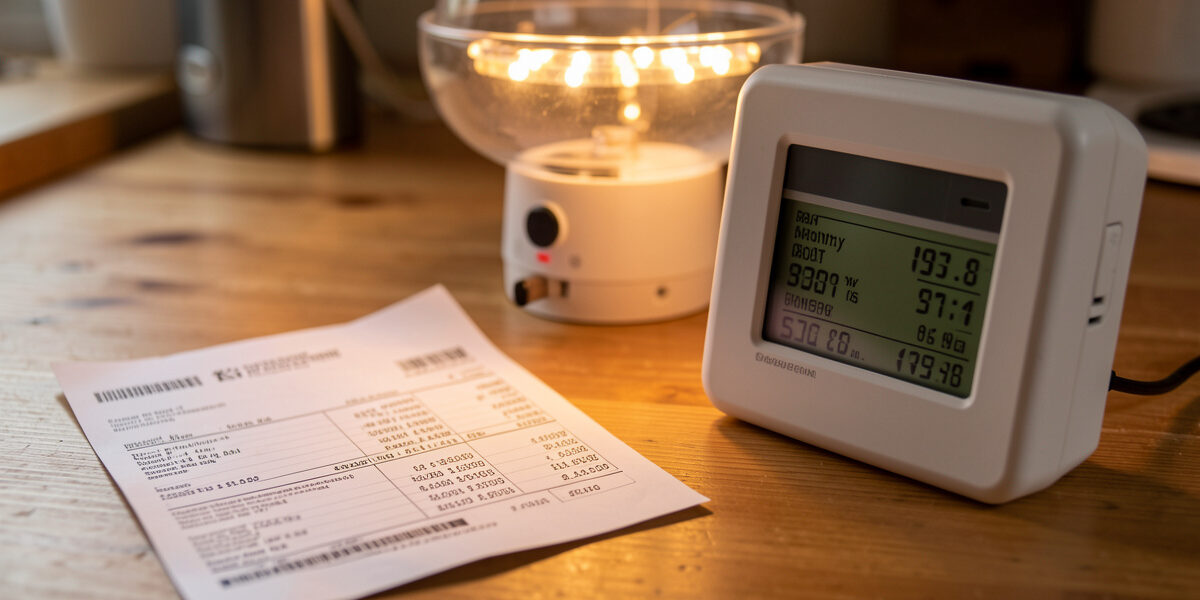
A typical small-space grow shelf adds somewhere between a few euros and the price of a nice meal to your monthly electricity bill — a 100‑watt bar run 14 hours a day uses about 42 kWh a month, which is roughly €6 at a cheap rate and closer to €17 at a painful winter one. The light is rarely the villain people expect. Your rate is.
I get asked “how much does a grow light cost to run” more than almost anything else, and the honest answer is that the question is half-formed until you know your real per-kWh price. I run lights through a Nordic winter when electricity is at its most expensive and daylight at its scarcest, so I have watched the same shelf cost wildly different amounts month to month without changing a single setting. This guide is about pinning down the number that actually moves your bill.
The Only Calculation You Need
Grow light electricity cost is actual watts × hours per day × days ÷ 1000 × price per kWh. That divide-by-1000 turns watt-hours into kilowatt-hours, the unit your utility bills in. Everything else — tariffs, seasons, appliance comparisons — is just context for the two numbers you most often get wrong: the fixture’s real draw and your true rate.
I keep this on a sticky note by the shelf. Plug your fixture into a meter, read the watts, multiply through, and you have a defensible monthly figure instead of a vague worry. For the full version with worked examples across several setups, the grow light running cost calculator hub lays it all out; this page is about getting the electricity side honest.
Find Your Real Rate (Not The Spot Price)
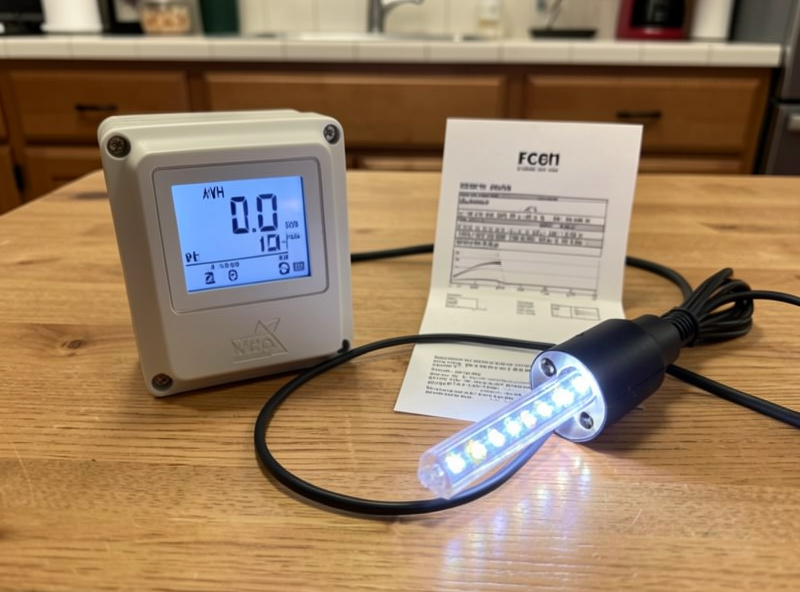
The biggest costing mistake is using the spot price quoted in the news. Your real cost per kWh is the all-in figure: energy plus grid transmission fees plus tax and VAT. Across much of Europe that all-in rate runs close to double the bare spot price, so a calculation built on spot can understate your bill by half.
To find your true rate, take your most recent invoice, divide the total amount paid by the kilowatt-hours consumed, and you have your blended cost per kWh. Use that figure in the formula. If you are on an hourly or time-of-use tariff, note your peak and off-peak rates separately — that gap is exactly what a timer can exploit, which I cover in my grow light timer setup.
What A Winter Shelf Really Adds
Here is what a few real setups cost across a 30‑day month, at three illustrative all-in rates. These are worked examples — swap in your own rate to get your number.
| Setup (real watts × hours) | kWh/month | @ €0.15 | @ €0.25 | @ €0.40 |
|---|---|---|---|---|
| Herb clip-on, 25W × 14h | ~10.5 | ~€1.58 | ~€2.63 | ~€4.20 |
| Seedling bar, 60W × 14h | ~25.2 | ~€3.78 | ~€6.30 | ~€10.08 |
| Microgreen shelf, 100W × 16h | ~48.0 | ~€7.20 | ~€12.00 | ~€19.20 |
| Two-tier rig, 200W × 16h | ~96.0 | ~€14.40 | ~€24.00 | ~€38.40 |
The pattern is clear: a single herb light is lost in the noise of a household bill, while a serious two-tier rig at a winter rate is a line item you will notice. Most apartment growers live in the first three rows, which is genuinely cheap — the worry is usually larger than the bill.
How A Grow Light Compares To Everyday Appliances
Context helps the number land. A 100‑watt grow light on 14 hours pulls 1.4 kWh a day. That is less than a typical electric kettle boiled a few times, comparable to running a modern fridge, and a fraction of an electric heater or a tumble dryer cycle. Put bluntly, the LED shelf that grows your winter greens often costs less to run than the appliances you never think twice about.
This matters because the fear of grow-light cost stops people growing food they would happily eat. Once you have the real figure, you can make a clear-eyed call — and usually the call is “this is fine.” Where it stops being fine is large, inefficient, or always-on setups, which is where the levers below come in.
Five Levers That Cut The Bill
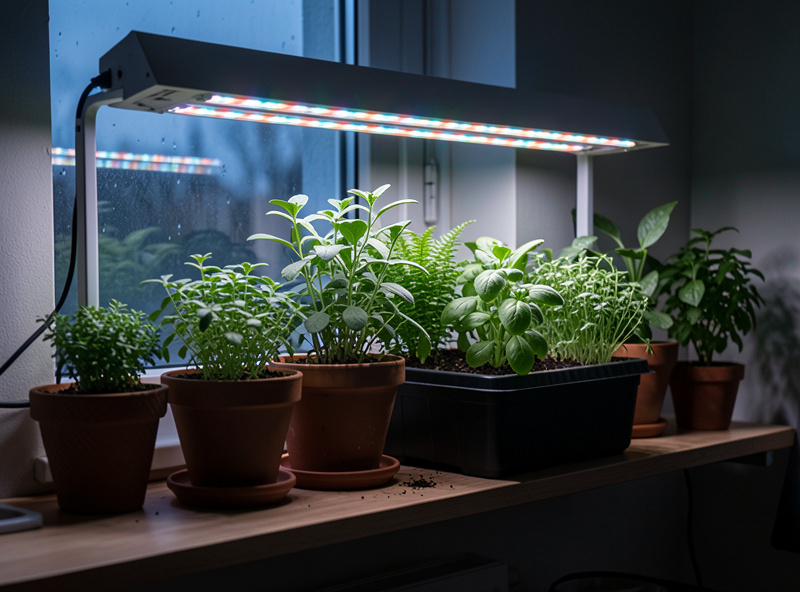
Once you know your cost, four of these five levers are free. First, set the right photoperiod — most greens need 14–16 hours, not 24, and the difference is pure savings (see how many hours of grow light per day). Second, hang the light correctly so you are not wasting intensity to distance. Third, size the shelf properly at watts per square foot so you are not paying to overshoot.
Fourth, put it on a timer so it is never on by accident, and on a variable tariff, schedule it for cheaper hours. Fifth — the only one that costs money up front — choose an efficient fixture that delivers more PPFD per watt, so every kilowatt-hour does more growing. Whether the premium fixture pays back is the question I tackle in are expensive grow lights worth it.
The Nordic Winter Reality
Up here the cost calculation is at its harshest precisely when you most want the light. From November to February I have around four usable daylight hours, so the shelf runs its full photoperiod daily, and electricity prices tend to peak in the same months because national heating demand is highest. Both the hours term and the price term climb together, so a shelf that cost a trivial amount in October can quietly double by January.
That is why I budget the winter shelf in autumn: I decide which crops earn the expensive light — greens, herbs, the indoor strawberry tower — and which wait for spring daylight. Treating electricity as a seasonal budget rather than a fixed cost is the difference between a shelf you enjoy and a bill you resent.
As an Amazon Associate I earn from qualifying purchases. The one purchase that pays for itself here is a plug-in electricity usage monitor — it turns guesswork into a number you can act on.
Frequently Asked Questions
How much does a grow light cost to run per month?
A 100-watt grow light run 14 hours a day uses about 42 kWh a month, costing roughly 6 euro at a cheap rate or up to 17 euro at an expensive winter rate. Your per-kWh price is the biggest factor.
Do grow lights use a lot of electricity?
Most small-space LED setups do not. A 100-watt bar uses about 1.4 kWh a day, similar to a fridge and far less than an electric heater or tumble dryer. Large or inefficient rigs are where cost adds up.
What rate should I use to calculate grow light cost?
Use your all-in rate, not the spot price. Divide the total on your latest bill by the kilowatt-hours consumed to get your blended cost per kWh, which includes grid fees and tax and is often double the bare spot price.
How can I reduce my grow light electricity cost?
Set the correct photoperiod, hang the light at the right height, size the shelf properly, put it on a timer, and choose an efficient fixture. The first four cost nothing and together cut the bill significantly.
Why is my grow light bill higher in winter?
In northern climates the light runs its full photoperiod daily because daylight is scarce, and electricity prices often peak in winter due to heating demand. Both factors climb together, so the same shelf can cost noticeably more.
Is it cheaper to run a grow light or grow on a windowsill?
A windowsill is free but rarely gives enough light in a northern winter, producing weak, leggy plants. A modest LED shelf costs a few euros a month and is usually the cheaper route to actually edible greens in low-light months.