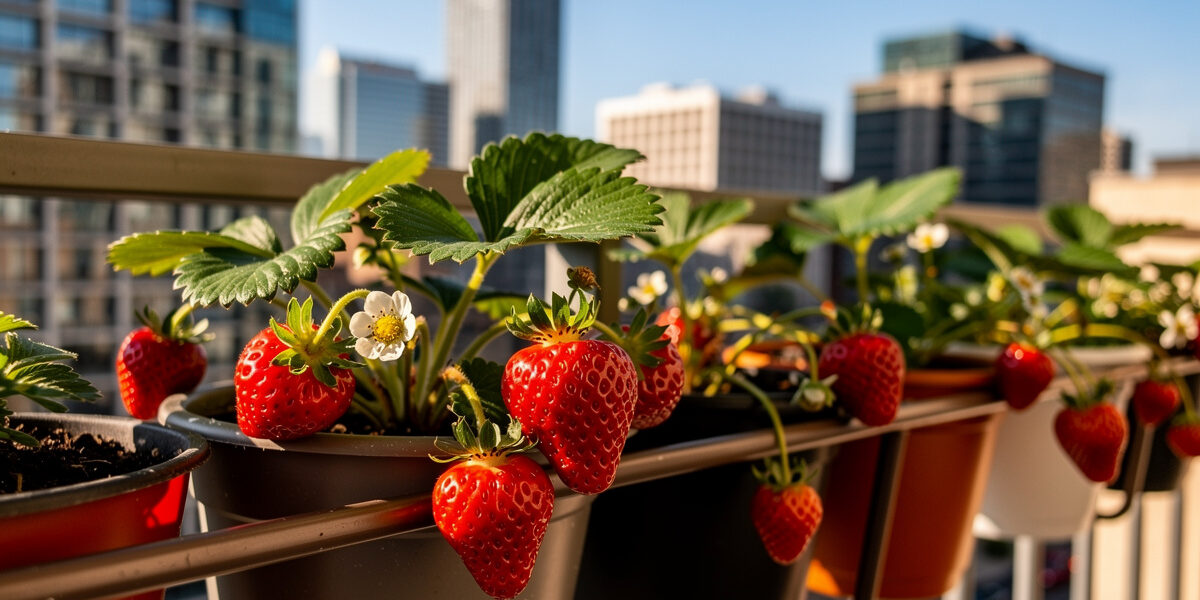
Strawberries are one of the most rewarding crops you can grow indoors — and they are the project I have run longest on my own grow shelf, fruiting day-neutral varieties through the dark Nordic winter when nothing on the balcony is awake. They are compact, productive, and deliver fruit that tastes dramatically better than anything from a grocery store. But growing strawberries in containers takes a different approach than growing them in the ground, and the Royal Horticultural Society’s strawberry guide — which covers variety choice, planting, and growing in pots — is the reference I keep coming back to (How to Grow Strawberries, RHS). This guide covers everything from variety selection to harvest so you can grow sweet, juicy strawberries on a windowsill, balcony, or indoor grow shelf.
For a complete overview of all indoor growing methods and crops, see our LED lights for growing plants indoors guide for lighting specifics and our complete indoor growing guide.
Why Grow Strawberries in Containers?
Strawberries are naturally well-suited to container growing. Their root systems are shallow — most feeder roots sit in the top 15 to 20 centimeters of soil — which means they thrive in pots that would be too small for most other fruiting plants. Container growing also gives you precise control over soil quality, drainage, and placement, all of which are critical for productive strawberry plants.
Key advantages of container-grown strawberries:
- Portability: Move plants to follow the sun or protect them from frost, heavy rain, or extreme heat
- Soil control: Strawberries need slightly acidic, well-draining soil — easy to achieve in containers, harder to manage in garden beds
- Pest protection: Elevated containers reduce slug, snail, and soil-borne disease pressure
- Space efficiency: A single 25-centimeter pot produces a full-sized strawberry plant. Stack or hang multiple containers for a compact fruit garden
- Year-round potential: With a grow light and warm indoor space, you can extend the growing season or grow everbearing varieties year-round
Choosing the Right Strawberry Varieties
Strawberry varieties fall into three categories, and your choice determines your harvest pattern, container strategy, and overall success.
| Type | Harvest Pattern | Best For | Container Suitability |
|---|---|---|---|
| June-bearing | One large crop over 2-3 weeks in late spring/early summer | Maximum yield, jam-making, preserving | Good — large containers needed |
| Everbearing | Two to three harvests: spring, summer, and fall | Continuous fresh fruit, small-space growing | Excellent — most popular for containers |
| Day-neutral | Continuous fruiting from spring through fall as long as temperatures stay between 1-30°C | Year-round indoor growing, steady harvest | Excellent — best for indoor/extended season |
For container growing, everbearing and day-neutral varieties are the best choice. They produce fruit over a longer period, which means you get a steady supply rather than one overwhelming harvest. They also tend to be more compact, which suits container growing perfectly.
Top Varieties for Containers
| Variety | Type | Berry Size | Flavor | Notes |
|---|---|---|---|---|
| Albion | Day-neutral | Large | Very sweet, firm | Disease resistant, excellent for containers |
| Seascape | Day-neutral | Large | Sweet-tart, aromatic | Heat tolerant, prolific producer |
| Ozark Beauty | Everbearing | Medium-large | Classic strawberry flavor | Cold hardy, reliable performer |
| Tristar | Day-neutral | Medium | Intensely sweet | Compact plant, great for small pots |
| Quinault | Everbearing | Large | Sweet, soft | Self-pollinating, beginner-friendly |
| Mara des Bois | Everbearing | Medium | Wild strawberry flavor | Premium variety, exceptional taste |
If you are growing indoors under lights, Albion and Seascape are the top choices — they respond well to controlled environments and produce consistently under grow lights. For a windowsill setup without supplemental lighting, Quinault and Tristar are more forgiving of lower light levels.
Container Selection and Setup
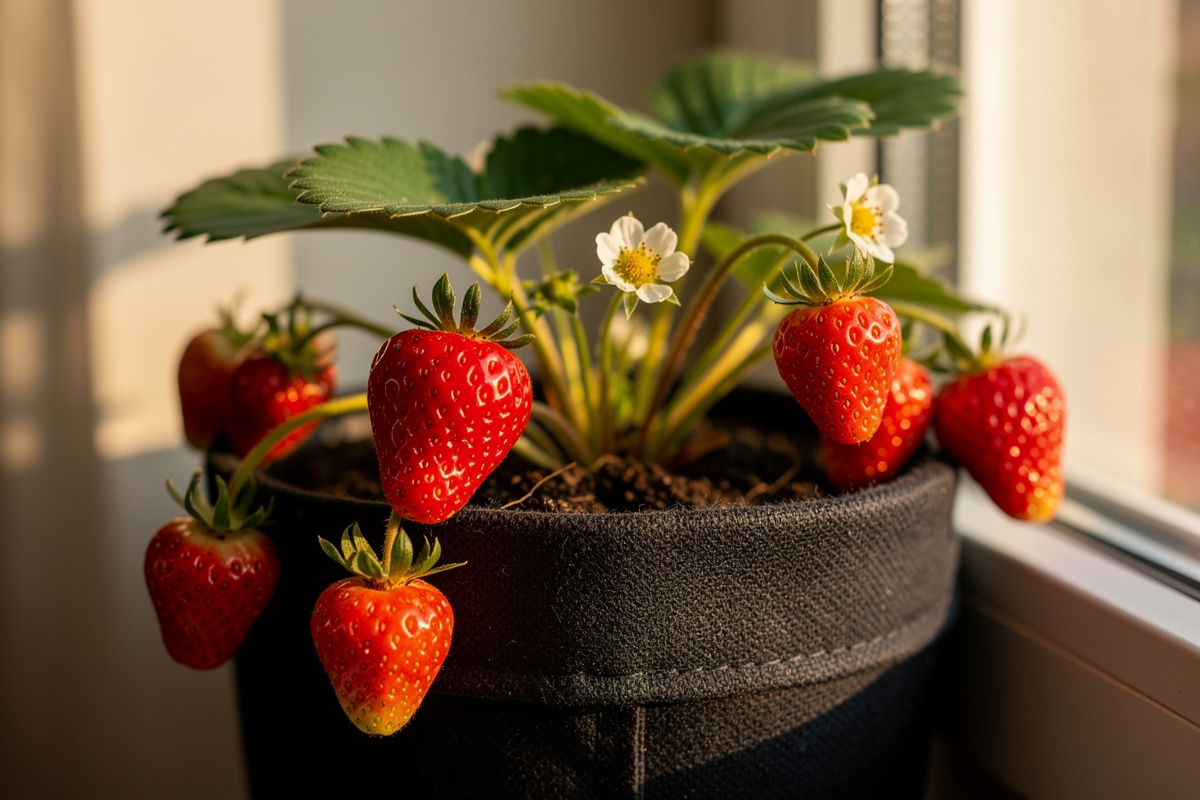
The right container makes the difference between a struggling plant and a prolific producer. Strawberries need containers that are wide enough for their spreading root systems and deep enough to hold adequate moisture. Oregon State Extension’s container-planting guidance underscores the same principle — matching container size to the crop’s root needs is what keeps a potted fruit plant productive rather than stunted (Container Planting, OSU Extension [PDF]).
Container Types
Standard pots (20-30 cm diameter): The simplest option. One plant per pot, easy to move and manage. Fabric pots provide excellent aeration and prevent root circling. Plastic pots retain moisture longer, which is useful in hot climates.
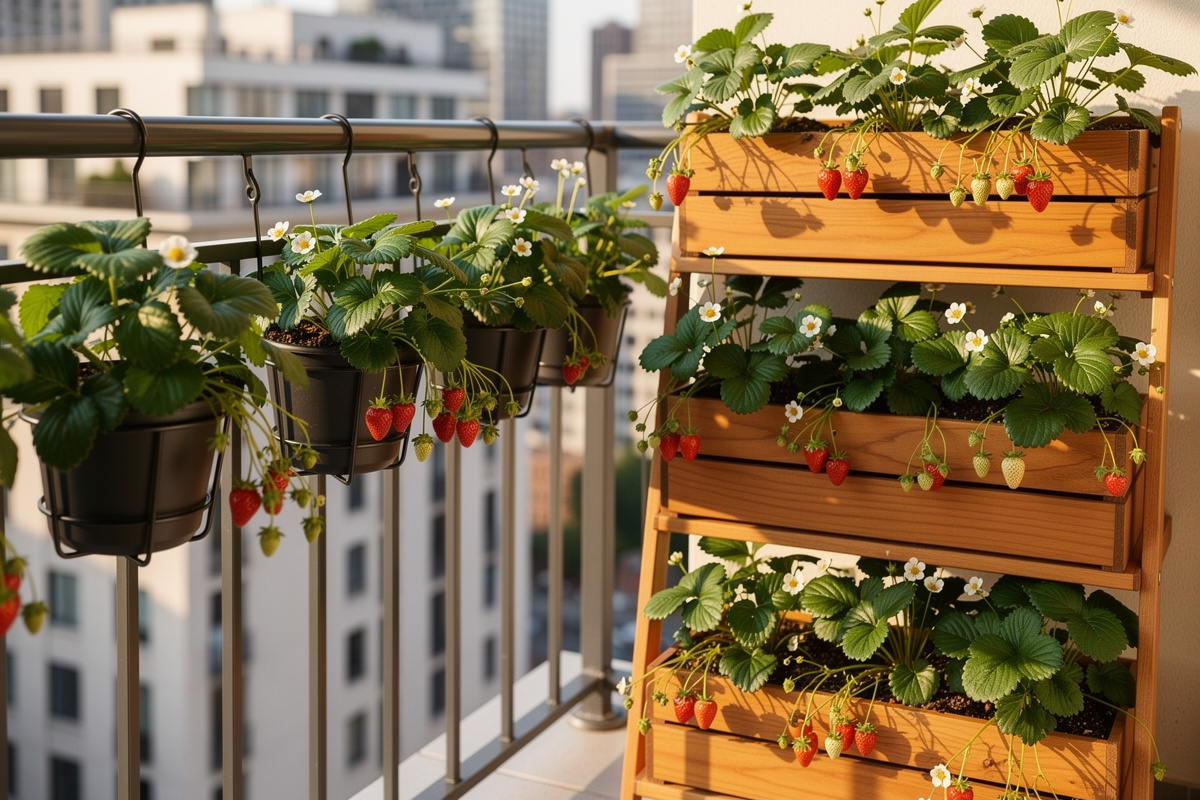
Strawberry planters (tiered or stacked): Specialized containers with multiple planting pockets around the sides. A single 40 cm tiered planter holds 8 to 12 plants in a compact footprint. Ideal for balconies and patios where floor space is limited.
Hanging baskets: Strawberry plants trail beautifully, making them excellent hanging basket candidates. The cascading growth keeps fruit off the ground (reducing rot and pest damage) and maximizes vertical space. Use a coco coir-lined basket for moisture retention.
Window boxes: Perfect for kitchen windowsill growing. A 60 cm window box holds 3 to 4 plants. Choose boxes at least 20 cm deep for adequate root space.
Container Requirements
| Factor | Minimum | Ideal |
|---|---|---|
| Depth | 15 cm (6 inches) | 20-25 cm (8-10 inches) |
| Width per plant | 20 cm (8 inches) | 25-30 cm (10-12 inches) |
| Drainage holes | At least 1 | 3-5 holes for good drainage |
| Material | Any with drainage | Fabric pot or terracotta (best aeration) |
Soil Mix for Container Strawberries
Strawberries need slightly acidic, well-draining soil with good organic matter content. The wrong soil mix is the most common reason container strawberries fail — heavy or alkaline soil causes root rot and nutrient lockout.
Recommended mix: 50% quality potting mix, 25% perlite for drainage, and 25% compost or well-rotted manure. Add a handful of peat moss or coco coir to lower the pH slightly — strawberries prefer pH 5.5 to 6.5.
Avoid: Garden soil (compacts in containers), heavy clay mixes, and soil that is too rich in nitrogen (produces lots of leaves but few berries). Never reuse potting soil from previous tomato or pepper plants without sterilizing it first — soil-borne diseases like verticillium wilt can carry over.
Planting Strawberries in Containers
Strawberries can be started from bare-root crowns, plugs, or seeds. Bare-root crowns are the most common and cost-effective option for container growing.
From Bare-Root Crowns
1. Soak roots: Soak bare-root crowns in water for 20 to 30 minutes before planting. This rehydrates the roots and improves establishment.
2. Plant at the right depth: This is critical. The crown (the thickened stem where roots meet leaves) must sit exactly at soil level. Plant too deep and the crown rots. Plant too shallow and the roots dry out. The roots should spread downward into the soil, and the crown should be visible just above the soil surface.
3. Space properly: In containers, space plants 20 to 25 cm apart. Crowding reduces airflow and increases disease risk.
4. Water thoroughly: Water immediately after planting to settle the soil around the roots. Keep the soil consistently moist (not waterlogged) for the first 2 weeks while roots establish.
From Seeds
Starting strawberries from seed is possible but slow. Seeds need 2 to 4 weeks of cold stratification (refrigeration) before sowing, then 4 to 6 weeks to germinate at 18 to 21°C. From seed to first harvest takes 4 to 6 months. This method is best for alpine strawberry varieties, which are more reliably grown from seed than from crowns.
Light Requirements
Strawberries need 8 to 10 hours of direct sunlight per day for good fruit production. A south-facing windowsill provides the best natural light for indoor growing. East or west-facing windows work but may produce fewer berries.
If your space gets less than 6 hours of direct sun, supplement with a full-spectrum LED grow light. Position the light 30 to 45 cm above the plants and run it for 12 to 14 hours per day. Even a modest 40 to 60 watt LED panel makes a significant difference in fruit set and berry sweetness.
For a complete guide to indoor grow lights that work for strawberries and other fruiting crops, see our grow lights for vegetables guide — the same principles apply.
Watering and Feeding
Container strawberries dry out faster than garden plants because the limited soil volume holds less moisture. Consistent watering is essential — irregular watering causes misshapen berries and blossom end rot.
Watering Schedule
Check daily: Stick your finger 2 to 3 cm into the soil. If it feels dry at that depth, water thoroughly until water runs from the drainage holes.
Hot weather: In summer, containers may need watering twice daily — morning and late afternoon. Fabric pots dry out faster than plastic.
Avoid overhead watering: Water at the base of the plant to keep leaves and fruit dry. Wet foliage encourages fungal diseases like powdery mildew and botrytis (gray mold).
Fertilizing
Strawberries are moderate feeders. Over-fertilizing with nitrogen produces lush leaves but few flowers and berries. Under-fertilizing produces small, pale fruit.
At planting: Mix a slow-release balanced fertilizer (10-10-10) into the potting soil at half the recommended rate.
During growth: Feed every 2 to 3 weeks with a liquid fertilizer that is higher in phosphorus and potassium (5-10-10 or tomato fertilizer). Switch to this formula once you see flower buds forming.
During fruiting: Continue feeding every 2 weeks. Potassium is the key nutrient for fruit size, sweetness, and color development.
Pollination
Outdoor strawberry plants are pollinated by wind and insects. Indoor or balcony plants may need help, especially if you are growing behind screens or in enclosed spaces.
Hand pollination method: Gently tap or shake each flower cluster once a day when flowers are open. Alternatively, use a small paintbrush to transfer pollen from the center of one flower to another. This takes less than a minute per plant and dramatically improves fruit set.
Most modern strawberry varieties are self-fertile, meaning a single plant can pollinate itself. You do not need multiple varieties for cross-pollination, though having several plants increases overall yield.
Common Problems and Solutions
| Problem | Cause | Solution |
|---|---|---|
| Small, hard berries | Poor pollination, insufficient light, or low potassium | Hand pollinate, increase light exposure, boost potassium feeding |
| Gray mold on fruit | Botrytis fungus from wet conditions and poor airflow | Improve air circulation, water at base only, remove affected fruit immediately |
| Yellowing leaves | Overwatering, nitrogen deficiency, or pH too high | Check drainage, feed with balanced fertilizer, test soil pH (should be 5.5-6.5) |
| Runners draining energy | Plant sending energy to runners instead of fruit | Pinch off runners as they appear to redirect energy to fruit production |
| Powdery mildew | High humidity, poor airflow, overhead watering | Improve ventilation, water at soil level, apply neem oil if severe |
| Birds eating fruit | Birds find ripe berries before you do | Use netting over containers or move plants to enclosed balcony |
Harvesting and Storage
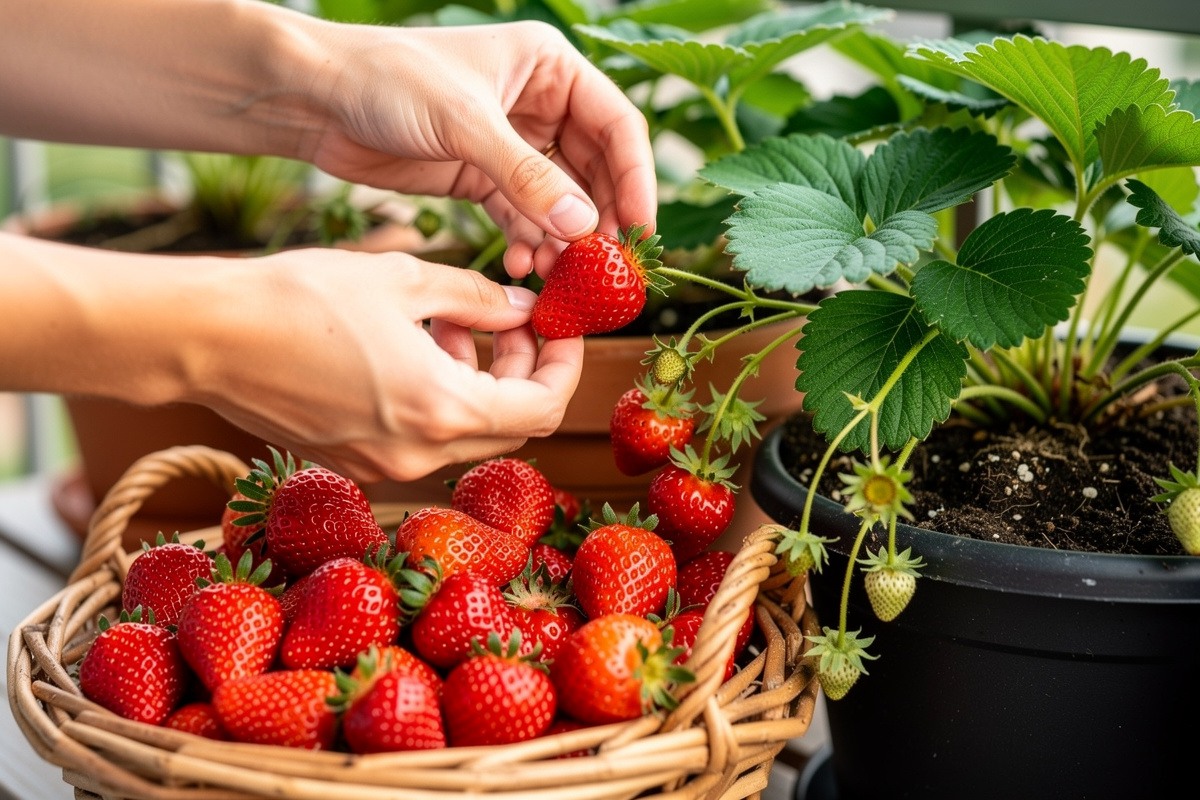
Strawberries do not continue ripening after harvest, so timing is everything. Pick berries when they are fully red with no white or green patches. The best time to harvest is in the morning when berries are cool and firm.
Harvest method: Pinch the stem above the berry — do not pull the berry itself, which can damage the plant. Leave the green cap (calyx) attached to extend shelf life.
Storage: Fresh strawberries last 3 to 5 days in the refrigerator. Do not wash until ready to eat — moisture accelerates spoilage. For longer storage, freeze whole berries on a baking sheet, then transfer to freezer bags. Frozen strawberries keep for 8 to 12 months.
Expected yield: In my own setup, a healthy container-grown everbearing strawberry plant gives me roughly 150 to 300 grams of fruit across a season, and a day-neutral variety under the LED bar through winter can push toward 300 to 500 grams. Those are my observed numbers, not a guarantee — light, temperature, and how relentlessly you pinch runners all swing the total. With 4 to 6 plants in containers, you get a steady supply of fresh strawberries rather than a single glut.
Overwintering Container Strawberries
Strawberry plants are perennial and can produce for 3 to 4 years with proper care. In cold climates, container plants need winter protection because the roots are more exposed to freezing than in-ground plants.
Indoor overwintering: Move containers to an unheated garage, shed, or basement where temperatures stay between 0 and 7°C. Water lightly once a month to prevent roots from drying out completely. Move back to warm, bright conditions in early spring.
Outdoor overwintering: Bury the container in the ground or mulch heavily with straw or leaves to insulate the roots. In zones 7 and warmer, containers can stay outside with a thick mulch layer.
Year-round indoor growing: With consistent grow light (14 hours daily) and temperatures between 18 and 24°C, day-neutral varieties like Albion and Seascape can produce fruit year-round indoors. Replace plants every 2 to 3 years as productivity declines.
Strawberry Container Growing: Quick Start Checklist
1. Variety: Choose an everbearing or day-neutral variety (Albion, Seascape, or Quinault).
2. Container: 20 to 30 cm pot with drainage holes, or a tiered strawberry planter for multiple plants.
3. Soil: 50% potting mix, 25% perlite, 25% compost. pH 5.5 to 6.5.
4. Planting: Bare-root crowns planted at soil level (crown visible, roots spread downward).
5. Light: 8 to 10 hours direct sun, or 12 to 14 hours under LED grow lights.
6. Water: Keep soil consistently moist. Water at the base, not overhead.
7. Feed: Balanced fertilizer at planting, switch to high-potassium formula when flowers appear.
8. Pollinate: Gently tap flowers daily if growing indoors or on enclosed balconies.
9. Maintain: Pinch runners, remove dead leaves, and watch for gray mold or powdery mildew.
10. Harvest: Pick when fully red, store unwashed in the refrigerator for 3 to 5 days.
For growers interested in a soil-free alternative that can produce strawberries even faster, our comparison of hydroponic vs soil strawberries on SmartHydroLab breaks down the pros and cons of each method.
Can you grow strawberries in pots year-round?
Yes, day-neutral strawberry varieties like Albion and Seascape can produce fruit year-round in containers when grown indoors with adequate light (12-14 hours of LED grow light daily) and temperatures between 18-24°C. Without supplemental lighting, most varieties go dormant in winter and resume fruiting in spring.
How many strawberries can one container plant produce?
A healthy everbearing or day-neutral strawberry plant in a container produces 150-500 grams of fruit per growing season, depending on variety, light levels, and care. Day-neutral varieties under optimal indoor conditions with grow lights produce at the higher end. With 4-6 plants, you can harvest fresh strawberries throughout the season.
What size pot do strawberries need?
Strawberry plants need a minimum pot depth of 15 cm (6 inches) and 20 cm (8 inches) width per plant. The ideal container is 20-25 cm (8-10 inches) deep and 25-30 cm (10-12 inches) wide per plant. Larger containers hold more moisture and nutrients, reducing watering frequency and improving yields.
Do strawberries need full sun in containers?
Strawberries need 8-10 hours of direct sunlight per day for good fruit production. In containers, a south-facing windowsill or balcony works well. If natural light is insufficient, supplement with a full-spectrum LED grow light for 12-14 hours daily. Less light means fewer flowers and smaller, less sweet berries.
Why are my container strawberries not producing fruit?
The most common reasons are: insufficient light (less than 8 hours), too much nitrogen fertilizer (produces leaves not fruit), planting too deep (crown rot), lack of pollination indoors, or the plant is sending energy to runners instead of fruit. Pinch off runners, switch to high-potassium fertilizer, increase light exposure, and hand-pollinate flowers to boost fruit production.
Related Articles
- Grow Lights for Tomatoes: Indoor Growing Guide — Same lighting principles apply to strawberries
- Grow Lights for Vegetables: Indoor Setup Guide — Complete guide to choosing and positioning grow lights
- Vertical Gardening: Systems, Methods, and Setup Guide — Maximize space with tiered strawberry planters
- Container Gardening: Complete Guide — Fundamentals of growing in pots and planters
- Hydroponic Strawberries vs Soil Grown — Compare soil vs hydroponic strawberry growing on SmartHydroLab