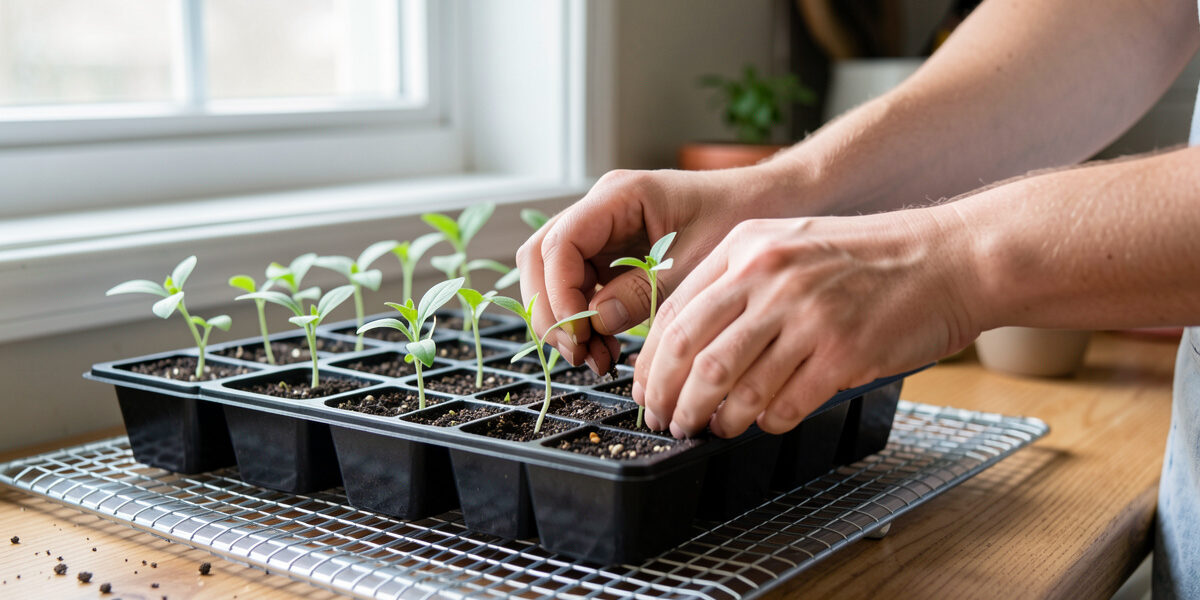
Start pepper seed indoors in late February to early March, roughly 8 to 10 weeks before your last frost, on a heat mat held at 25 to 28 C, and put the seedlings under bright light the moment they break the surface. Peppers are the slowest, fussiest seed in the whole growing year to germinate, and in a Nordic climate that early start is the entire reason your plants will ripen at all.
Almost every disappointing pepper season I have seen traces back to one of two seed-starting mistakes: sowing too late, or sowing into compost that was too cold. Get the timing and the warmth right and the rest of the season becomes far easier. This is the one job where being early and a little obsessive genuinely pays off.
When to sow: counting back from your frost date
Peppers want 8 to 10 weeks of growth indoors before they go outside, and they should only go outside once nights are reliably above 10 C. In much of Sweden that means moving plants out in late May or early June, which counts back to a sowing date in the last week of February or the first week of March. That is weeks earlier than tomatoes, and a world earlier than anything direct-sown.
It is worth sowing the slowest varieties first. Superhots and large bells take longest both to germinate and to mature, so they go in first; quick sweet snacking types and early jalapenos can wait a couple of weeks. The table below is the rough timeline I work to for a southern-to-central Swedish season; shift it later the further north you are.
| Stage | Timing (central Sweden) | Target temperature |
|---|---|---|
| Sow superhots and bells | Late February | 25-28 C soil |
| Sow sweet and early hot types | Early-mid March | 25-28 C soil |
| Pot up to larger cells | 3-4 weeks after sowing | 18-22 C air |
| Begin hardening off | Mid-late May | 10 C+ nights |
| Move outdoors | Late May-early June | 10 C+ nights |
Heat is what wakes pepper seed up
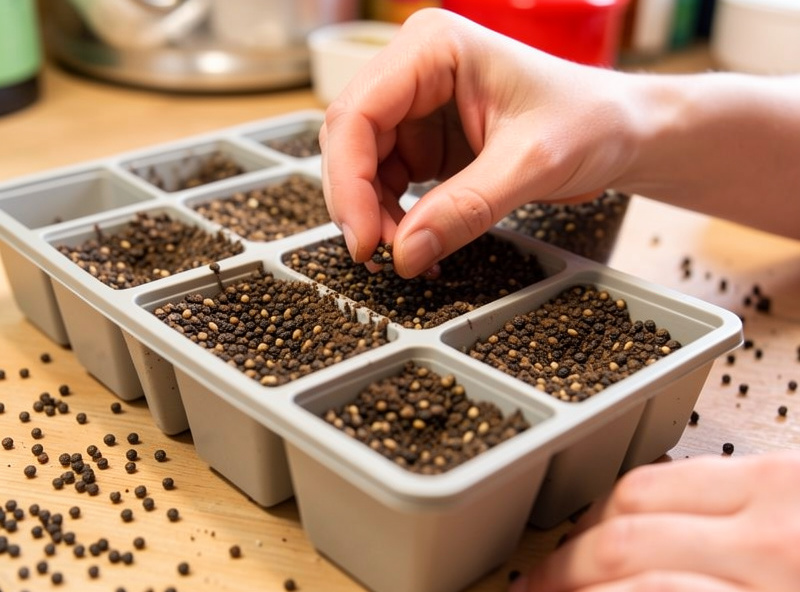
Pepper seed germinates on warmth, not light, and the difference between cold and warm compost is dramatic. At a windowsill temperature of 16 to 18 C, pepper seed can sit for three weeks and barely move, and a lot of it simply rots before it sprouts. At 26 C it comes up in a week to ten days, evenly and strongly. This is why a seedling heat mat is the single most worthwhile thing you can buy for peppers; it is not a luxury but the actual mechanism.
Set the mat under your seed trays, cover with a humidity dome or a sheet of clear plastic to hold warmth and moisture, and keep the surface evenly damp but never soggy. The moment the first loops of stem appear, the heat has done its job and the priority instantly shifts to light. Leave seedlings on a hot mat under poor light and they stretch fast.
Light from the very first day, or you get leggy seedlings
The day your peppers germinate, they need strong light, and a late-winter windowsill this far north does not provide it. With only a few usable daylight hours and weak, low-angle sun, seedlings reach toward the glass, producing pale, thin, stretched stems that flop and never fully recover. This legginess is the most common indoor-growing failure and it is entirely a light problem.
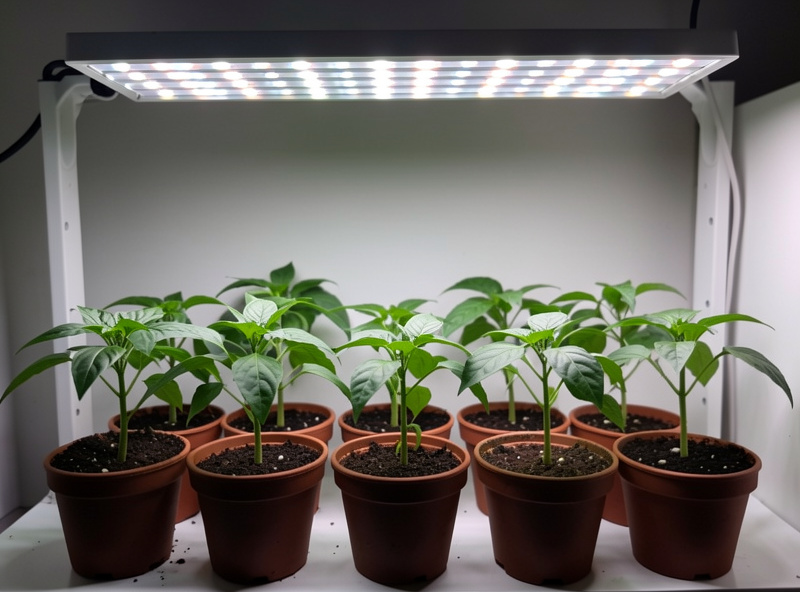
Under the bar I run, seedlings stay short, stocky and dark green, with the first true leaves close to the soil. Keep a full-spectrum LED grow light 10 to 20 cm above the seedlings and run it 14 to 16 hours a day. Spectrum and intensity, measured as PPFD, matter far more than the wattage printed on the box, which is the whole argument I make in the dedicated grow lights for peppers guide. As an Amazon Associate I earn from qualifying purchases. A basic seedling grow light is enough to start.
Sowing depth, potting up and feeding
Sow pepper seed about 0.5 to 1 cm deep in a fine, free-draining seed-starting mix, two seeds per cell, thinning to the stronger one. Once seedlings have their first set or two of true leaves and the cell fills with roots, pot them up into larger cells or small pots so they never become root-bound; a checked pepper seedling sulks for weeks. Start a weak, balanced liquid feed once true leaves appear, because seed-starting mix holds little nutrition.
Keep air temperatures in the high teens to low twenties once they are growing, off the hot mat, and keep the light close as they grow taller. By the time they are ready to harden off they should be sturdy little plants, often with the first flower buds forming. This is also the point where you decide which varieties suit your space; the full picture for each crop is in growing sweet peppers in containers and growing hot chili peppers.
Hardening off before they move out
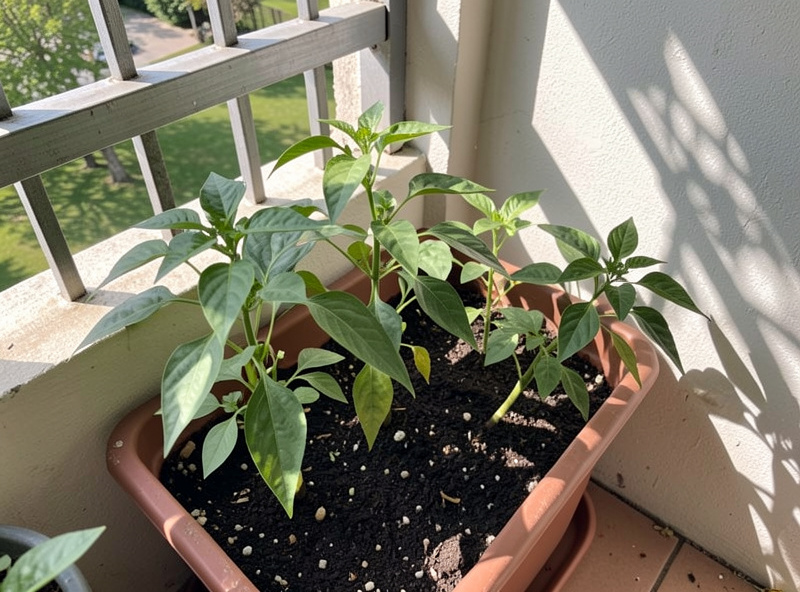
A pepper raised indoors under steady light and warmth has never felt wind, direct sun or a cold night, and moving it straight outdoors will scorch and check it badly. Hardening off is the gradual week-to-ten-day process of introducing it to outdoor conditions: an hour or two in a sheltered, shaded spot on the first day, building up exposure and direct sun over the following days, and bringing plants in if nights drop near or below 10 C.
Rushing this step undoes weeks of careful indoor work in an afternoon. Done properly, the plants toughen up, the leaves take on a slightly thicker, darker look, and they slide into their final containers without missing a beat. From there they are running on the season, and the next thing on your mind is keeping them watered and fed, which is where the main pepper growing guide picks the story back up.
The seed-starting mistakes that cost a season
Beyond sowing late and sowing cold, a few errors come up again and again. Overwatering seedlings into damping off, a fungal collapse at the soil line, is common when the dome stays on too long with no airflow; vent it once seeds are up. Letting seedlings go root-bound in tiny cells stunts them permanently. And skipping the hardening-off because the forecast looked warm leads to scorched, set-back plants. None of these are hard to avoid once you know to watch for them, and dodging them is most of what separates a strong pepper season from a frustrating one.
Frequently Asked Questions
How early should I start pepper seeds indoors in a cold climate?
Late February to early March, about 8 to 10 weeks before your last frost. Peppers germinate and mature slowly, so they need the earliest start of any crop. Sow the slowest types, like superhots and large bells, first, and quicker sweet and early hot varieties a couple of weeks later.
Why won’t my pepper seeds germinate?
Almost always temperature. Pepper seed needs 25 to 28 C to germinate well; on a cool windowsill at 16 to 18 C it can sit for weeks and often rots. Use a seedling heat mat and a humidity dome, keep the mix evenly damp, and most seed comes up within 7 to 10 days.
Why are my pepper seedlings tall, thin and falling over?
They are leggy from too little light. A late-winter windowsill this far north is not bright enough, so seedlings stretch toward the glass. Put them under a full-spectrum LED grow light 10 to 20 cm above the plants for 14 to 16 hours a day from the moment they germinate.
Do pepper seeds need light to germinate?
No. Pepper seed germinates on warmth, not light, so it can sit covered on a heat mat until it sprouts. Light becomes critical the instant the seedlings break the surface, because without strong light immediately they stretch into weak, leggy stems.
When can I move pepper seedlings outdoors?
Only once nights are reliably above 10 C, which in much of Sweden means late May to early June. Harden the plants off gradually over a week to ten days first, starting with a couple of hours in a sheltered shaded spot and building up exposure, or the move will scorch and check them.