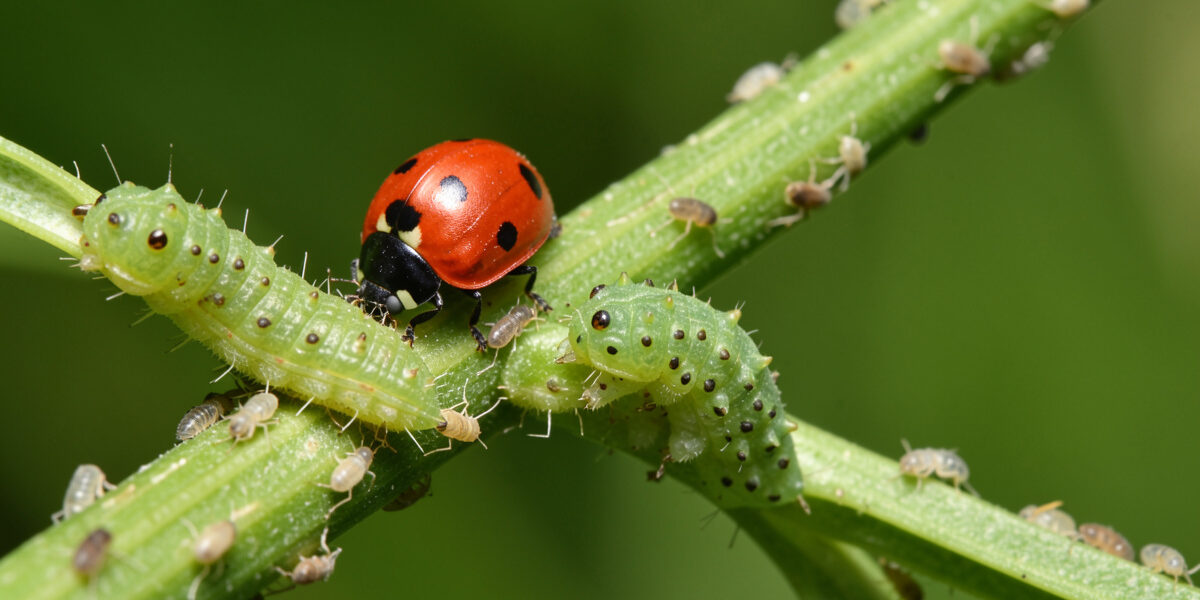
Beneficial insects are the predators and parasites that eat your garden pests for free: ladybirds and hoverfly larvae demolish aphids, lacewings hunt soft-bodied pests, and tiny parasitic wasps control caterpillars and aphids from the inside. Plant flat, open flowers to feed the adults, stop spraying, and a small garden builds its own pest control within a single season.
This is the part of pollinator gardening that pays you back directly. The same flowers that bring in the bees also recruit an unpaid pest-control crew, and once that system establishes you can put the spray bottle away for good. I haven’t sprayed an insecticide on my balcony in years — not out of principle alone, but because the predators handle it better than I ever did. Here’s how the system works and how to set it up in a container garden or small plot.
Meet the crew — who eats what
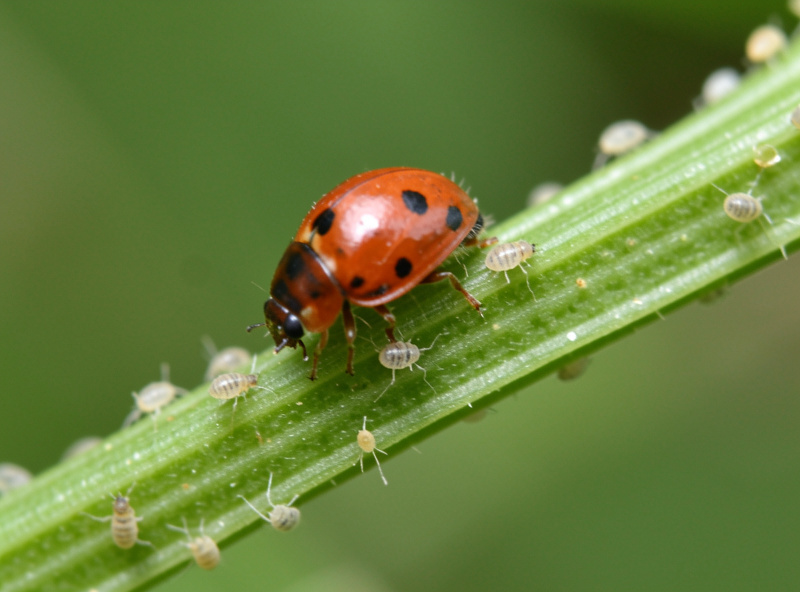
Ladybirds are the famous ones, but it’s their larvae — small, alligator-shaped, often grey-and-orange — that do the real damage, each one eating hundreds of aphids as it grows. Learn to recognise the larvae so you don’t squash your own workforce. Hoverflies look like small wasps but hover and don’t sting; the adults feed on nectar while their maggot-like larvae are voracious aphid predators. Lacewings, both green and brown, have larvae nicknamed “aphid lions” that hunt aphids, thrips, and mites.
Parasitic wasps are tiny, harmless to you, and devastating to pests — they lay eggs inside aphids and caterpillars, and the larva consumes the host from within (the bloated brown “mummy” aphids on a leaf are their work). Ground beetles patrol at night for slugs, caterpillars, and root pests. Together this crew covers nearly every soft-bodied pest a small garden throws up. The big-picture strategy that ties this to the rest of the garden is in the pollinator garden guide.
Which beneficial controls which pest
| Beneficial insect | Main pests controlled | Attract it with |
|---|---|---|
| Ladybird (and larvae) | Aphids, scale, mites | Aphid presence, dill, fennel, yarrow |
| Hoverfly (larvae) | Aphids | Single marigold, alyssum, umbel flowers |
| Lacewing (larvae) | Aphids, thrips, mites | Cosmos, dill, coriander flowers |
| Parasitic wasp | Aphids, caterpillars, whitefly | Dill, fennel, alyssum, small flowers |
| Ground beetle | Slugs, caterpillars, root pests | Ground cover, mulch, undisturbed soil |
How to recruit them: feed the adults
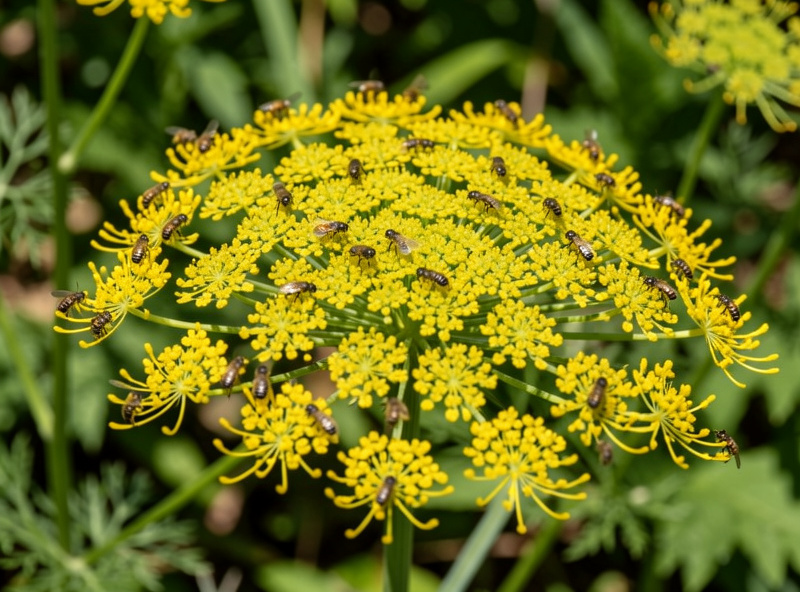
The key insight is that the adults of most of these predators feed on nectar and pollen, not on pests — only their larvae are carnivorous. So to keep a breeding population around, you feed the adults flowers. The single best flower type is the flat-topped umbel: dill, fennel, coriander left to bolt, and yarrow. Their tiny, shallow flowers are perfectly shaped for short-tongued hoverflies and parasitic wasps to feed from. Single marigolds and sweet alyssum are the other classic insectary plants. The Wildlife Trusts’ rundown of aphid-eating insects is a good plain-English guide to exactly who you’re feeding when you do this.
Conveniently, several of these double as kitchen herbs, so a pot of dill earns its place three times over — herb, butterfly host, and beneficial-insect feeder. Tuck a few of these flowering plants among your vegetables and you create what’s effectively a built-in pest-control system, the same principle behind companion planting. For the flower side of the equation, see flowering plants that attract bees — there’s heavy overlap, because a garden good for bees is good for predators too.
The golden rule: stop spraying
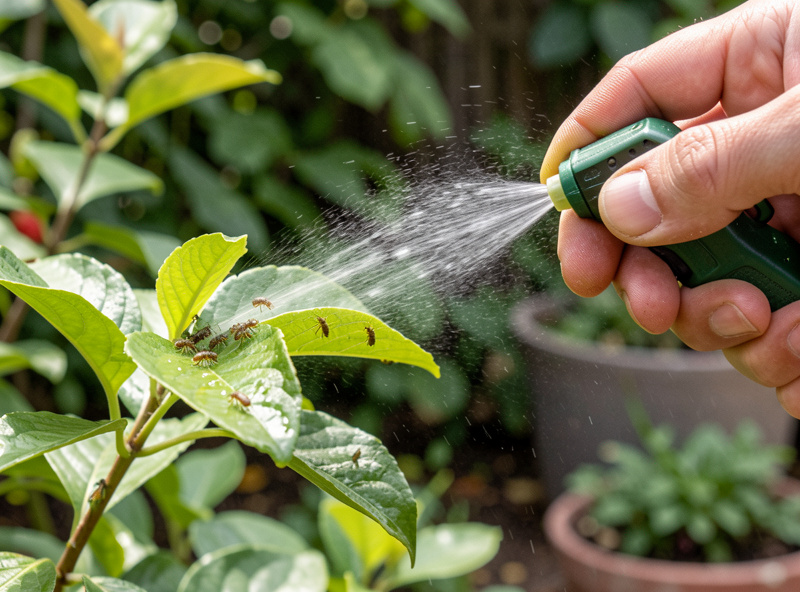
None of this works if you reach for the spray. Broad-spectrum insecticides — including many “organic” ones — kill the predators and pollinators along with the pests, and because pests breed back faster than predators, spraying often leaves you worse off, locked into a cycle of needing to spray again. The predators are slower to recover, so each spray sets your free pest control back further. The Wildlife Trusts’ wildlife-friendly gardening guidance makes the same case for putting the broad-spectrum bottle down for good.
The mental shift that makes the whole thing work is tolerating a low level of pests. A few aphids aren’t a crisis — they’re the food that keeps ladybirds and hoverflies breeding on site. If you wipe out every last aphid, the predators leave and the next infestation arrives with nothing to check it. On my balcony I treat a light aphid flush on the nasturtiums as a feeding station rather than an emergency, and the ladybirds usually clear it within a week or two.
Handling an outbreak without wrecking the system
Sometimes a pest does get ahead of the predators — a heavy aphid bloom on new growth, say. The fix is targeted and gentle, not nuclear. A strong jet of water knocks aphids off and most can’t climb back. For a stubborn patch, insecticidal soap or a wipe-down hits the pests on contact without leaving a residue that poisons the predators arriving to mop up. Squashing by hand works on small infestations. The goal is always to knock the pest back to a level the predators can manage, not to sterilise the plant.
Give the system time, too. When you first stop spraying it can take a few weeks for predator numbers to build, and that lag is exactly when people panic and reach for the bottle again. Push through one season and the balance establishes. After that, outbreaks become rarer and self-correcting, and your main job is just keeping the insectary flowers blooming.
A few words on buying beneficials
You can buy ladybirds, lacewing larvae, and nematodes by mail order, and for an enclosed space like a small greenhouse they can be worth it. But in an open garden or balcony, bought ladybirds usually just fly away — you’re far better off attracting and keeping wild populations with flowers and habitat than paying to release insects that leave. The exception is biological controls for specific enclosed problems, like nematodes for slugs or vine weevil in pots. For most small-space growers, plant the flowers, skip the spray, and let the locals move in. To round out the habitat, the small-garden version of this is in attracting pollinators to a small garden, and the container plant picks are in bee-friendly balcony plants.
Frequently Asked Questions
What are the most useful beneficial insects for a small garden?
Ladybirds, hoverflies, lacewings and parasitic wasps. Their larvae eat aphids, thrips, mites and caterpillars, while the adults feed on nectar. Ground beetles add slug and caterpillar control at night. Together they handle nearly every soft-bodied pest a container or small garden produces.
How do I attract beneficial insects to containers?
Plant flat, open flowers the adults can feed from, especially umbel flowers like dill, fennel, coriander and yarrow, plus single marigolds and alyssum. Keep something flowering across the season and never spray insecticide. A few of these plants among your pots will draw predators within weeks.
Will beneficial insects get rid of all my aphids?
They control aphids but will not eliminate them, and that is the point. A small residual aphid population is the food that keeps ladybirds and hoverflies breeding on site. Wiping out every pest drives the predators away and leaves the next outbreak unchecked.
Is it worth buying ladybirds for my garden?
Usually not for an open garden or balcony, where released ladybirds tend to fly away. You get better, lasting results by attracting wild populations with flowers and habitat. Bought biological controls make more sense in enclosed spaces like a small greenhouse, or for specific pests like nematodes for slugs.
How long does it take for natural pest control to establish?
Usually one season. When you first stop spraying, predator numbers take a few weeks to build, which is when many gardeners panic and spray again. Push through that lag, keep the insectary flowers blooming, and the balance establishes so outbreaks become rarer and self-correcting.
Can I use any spray if pests get out of control?
Use the gentlest targeted option: a strong jet of water, insecticidal soap, or hand-squashing on a localised patch. Avoid broad-spectrum insecticides, which kill predators and pollinators too and set your natural control back further than the pests. Knock the pest down to a manageable level, do not sterilise the plant.