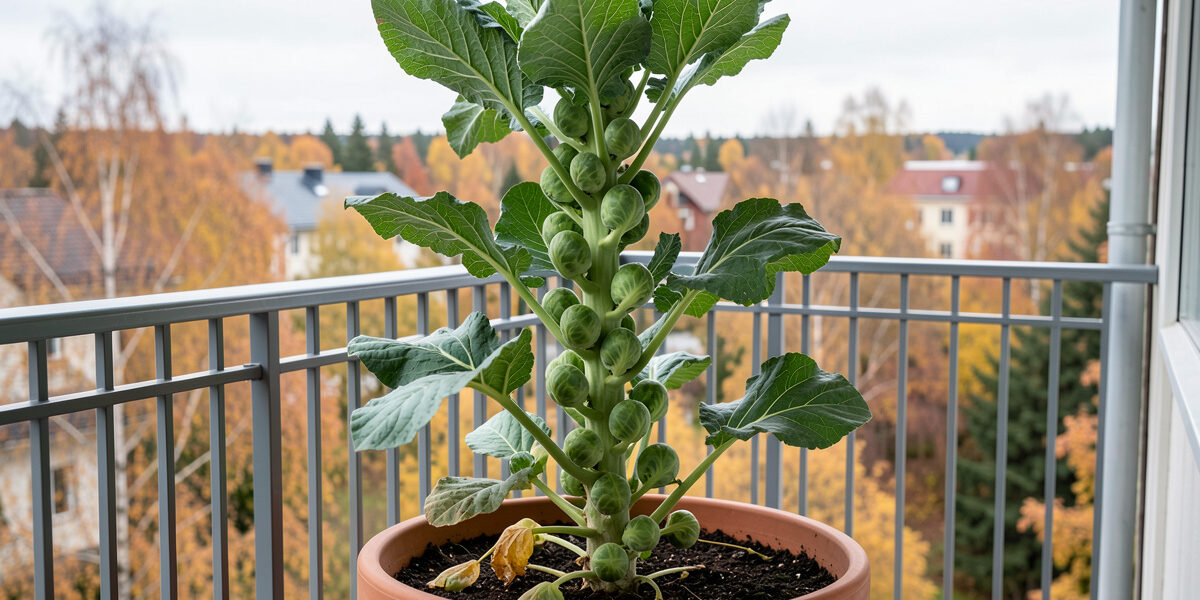
Brussels sprouts can be grown in a container, but they are the long game of the brassica family: one plant needs a 20 litre pot at least 35 cm deep, a sturdy stake against balcony wind, and 90–110 days of steady growth to crop. The payoff is a tall stem packed with sprouts that the first autumn frosts actually sweeten — making this a brassica the cold climate improves rather than threatens.
This is the brassica I’d attempt last, after a season or two with the easier head-formers, because it asks for the most patience and the most root volume. You commit a big pot to a single plant for most of the growing year, and a lot can go wrong over that long a run — wind rock, a feeding lapse, “blown” loose sprouts from heat or loose soil. But there’s nothing like picking firm sprouts off your own stem after the first frost, and up north the cold that ends most crops is exactly what makes these taste their best.
The Big Pot and the Stake
Give one Brussels sprout plant a 20 litre pot at least 35 cm deep — the deepest and largest container of any brassica in this guide. The plant grows tall and top-heavy, so it needs both the root anchorage of a big pot and a stake driven in at planting. On an exposed balcony, wind rock that loosens the roots is the number one cause of loose, poor sprouts.
Everything about a sprout plant is bigger and slower than its relatives: it builds a metre-tall stem that has to stand firm for months while sprouts form in the leaf axils all the way up. That stem is a sail on a balcony, so I stake it at transplant — not later, when driving a stake in would tear the roots — and I plant it firmly and slightly deep, then firm the mix again as it grows. Loose planting is fatal here: a plant that rocks at the base can’t form tight sprouts, because the constant root disturbance checks its growth. Choose a big heavy pot or set the fabric bag against the load-bearing wall, because a 20-litre container of damp mix plus a tall plant catches a lot of wind. The general container and feeding rules from the brassicas hub apply, just scaled up.
The Long Season: Timing Up North
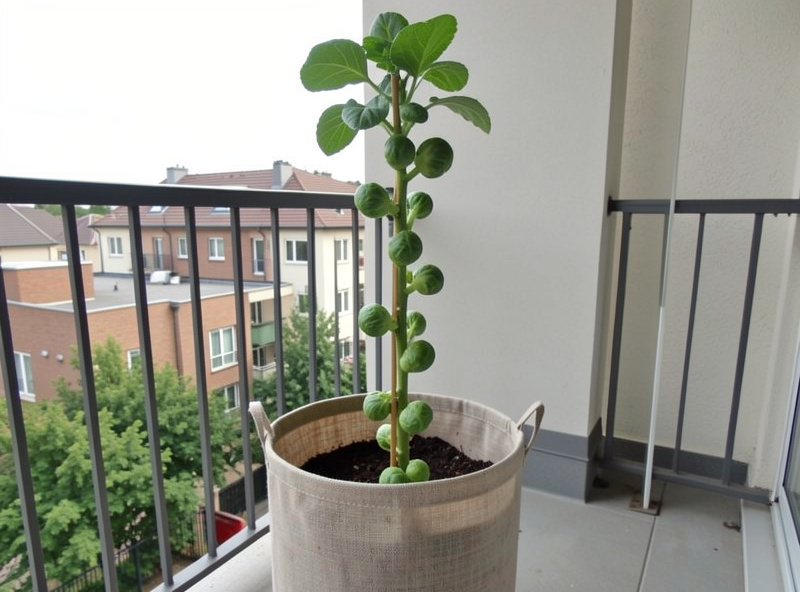
Brussels sprouts need 90–110 days from transplant and are timed to mature into autumn and winter, so start them early — indoors under a light in early spring — and transplant out in late spring once hardened off. In a Nordic climate that long season is tight, so an early start and a reasonably quick variety matter; a late start simply won’t fill a stem before deep winter.
This is the brassica where our short season bites hardest, because there’s no second chance — one plant, one long run, harvested at the far end of the year. I start sprouts among the very first things on the seedling shelf so they go out as strong young plants the moment the nights settle, giving them every available growing day. Choose a variety with a maturity time that fits your season; the show-stopping late types bred for a long British autumn may not finish up here, so a mid-season sprout is the safer pick. Through summer the plant just builds its frame and stem; the sprouts swell and firm as the weather cools, which is exactly the point.
Feeding and Watering a Marathon Crop
Because it’s in the pot so long, a container sprout plant needs sustained feeding — a steady supply of nutrition across the whole season, not a single early dose. Keep moisture consistent too: like all brassicas it splits and blows its sprouts under feast-and-famine watering. A self-watering reservoir takes much of the daily pressure off a crop you’ll be tending for months.
A pot holds a finite reserve of nutrients, and a plant this large will exhaust it long before the season ends, so I top-dress with worm castings and keep a liquid feed going through the summer build, then ease the nitrogen back as the sprouts start to firm so I’m not pushing soft, loose growth. The full schedule is in the fertilizing brassicas guide, and it matters more here than anywhere else in the family simply because of the time involved. On water, I run sprouts on a self-watering insert because hand-watering a 20-litre pot reliably every day for four months is a big ask, and a single bad dry-out can blow the sprouts into loose little rosettes. Consistent moisture from a reservoir is the easiest way to keep a long-season crop on an even keel.
Stopping, and Harvesting from the Bottom Up
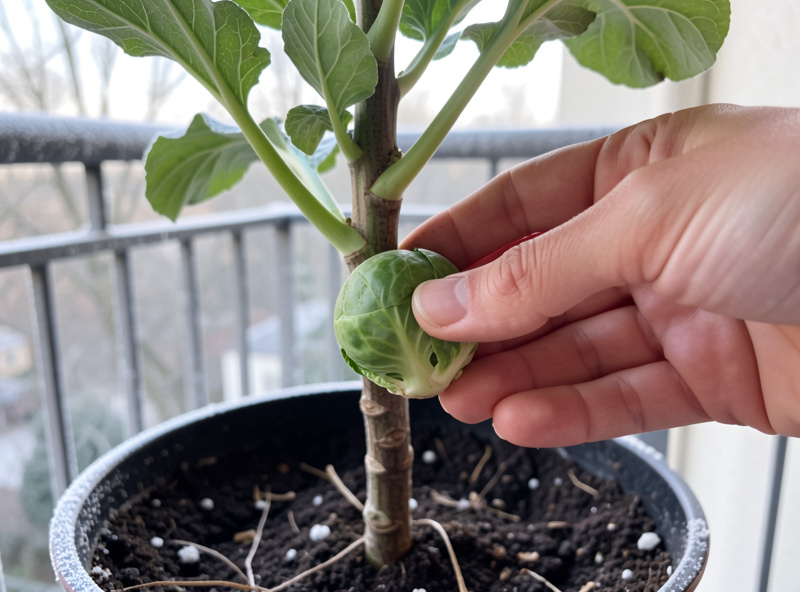
Sprouts mature from the bottom of the stem upward, so harvest from the bottom first, snapping off firm, tight sprouts once they reach about 2–3 cm and feel solid. “Stopping” — pinching out the growing tip in late summer once the plant is tall enough — encourages the sprouts to fill and firm more evenly along the stem rather than the plant putting energy upward.
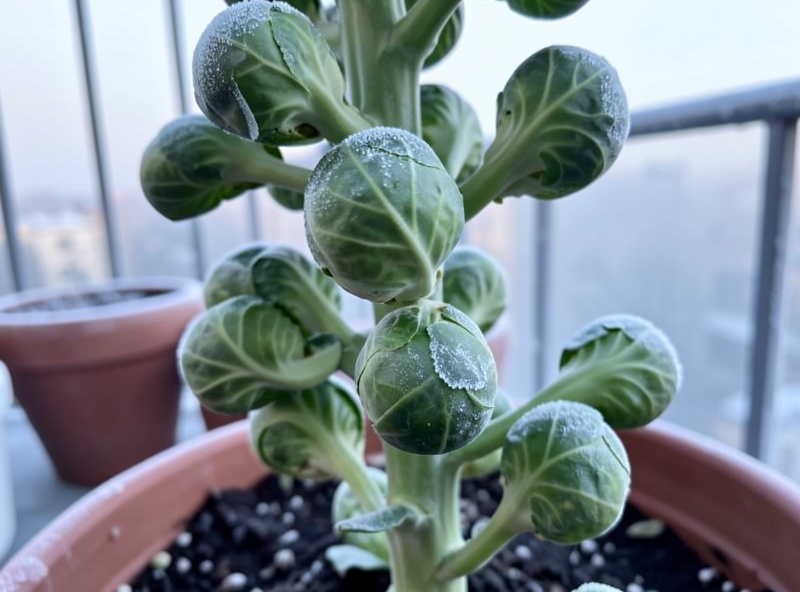
The frost connection is the best part: a light frost converts starches in the sprouts to sugars, so the ones picked after the first cold snaps are noticeably sweeter and milder than summer sprouts, which can be harshly cabbagey. That’s why I never rush them — I let the cold do its work and pick up the stem as autumn turns. Stopping the plant by nipping out the top growing point in late summer is an old trick to get a uniform crop ready around the same time, useful if you want a single picking; skip it if you’d rather have a longer, staggered harvest. Take the lowest sprouts first, working up as those above firm, and strip the yellowing lower leaves as you go to keep air moving and pests down. A healthy stem will keep giving through hard frosts that have finished everything else on the balcony. The loose outer leaves and the leafy top, incidentally, cook up like greens — don’t bin them.
Choosing a Variety for a Short Season
For a cold-climate container, variety choice is mostly about maturity time: pick an early or mid-season F1 sprout rated to finish in your season, not a showy late type bred for a long mild autumn. Modern F1 hybrids hold their sprouts firmer and longer on the stem than older open-pollinated kinds, which matters when you’re harvesting over weeks of cold weather.
The old garden sprouts had a habit of “blowing” — opening into loose rosettes — and ripening unevenly, which is a real problem on a single balcony plant you’ve waited all year for. The F1 hybrids fixed most of that: they crop more uniformly and the sprouts stay tight and button-firm through repeated frosts, so the lower ones aren’t past their best by the time you’re picking the top of the stem. If you can find a variety described as good for “standing” through winter, that’s the trait you want for a Nordic balcony, because it lets one plant feed you slowly across the cold months rather than all at once. Seed catalogues list maturity in days or by season — match that honestly to how long your season really is, not how long you wish it were. The RHS Brussels sprout guide sets out the standard sowing-to-harvest windows, which are worth shifting earlier for a shorter northern season.
Pests and the Usual Netting
Over a long season a sprout plant faces every brassica pest in turn — cabbage whites in summer, aphids that colonise the developing sprouts, and whitefly clouds in warm spells. Fine insect netting from transplant blocks the worst of it, and because the plant stands for months, staying on top of pests early is even more important than with a quick crop.
Aphids are the particular menace here because they hide down inside the forming sprouts where they’re hard to reach and they multiply over the long season, so I check regularly and knock colonies back before they get established. Whitefly rise in little clouds when you brush the plant in warm weather; netting and keeping the lower leaves stripped helps. The full container approach — netting, dealing with aphids in the sprouts, and root fly collars — is in the brassica pest control guide. Stake well, net early, feed steadily, and a balcony sprout plant will reward the long wait.
Frequently Asked Questions
Can you grow Brussels sprouts in a container?
Yes, but they need the biggest pot of any brassica: a 20 litre container at least 35 cm deep for one plant, plus a stake against wind. They also need 90-110 days of steady growth, so they are a long-season commitment rather than a quick crop.
Why are my container Brussels sprouts loose and open instead of tight?
Loose, blown sprouts are caused by wind rock that loosens the roots, loose planting, inconsistent watering, or too much nitrogen late in the season. Stake the plant at transplant, plant firmly and slightly deep, keep moisture steady, and ease off the nitrogen as sprouts form.
Do Brussels sprouts taste better after frost?
Yes. A light frost converts starches in the sprouts to sugars, making sprouts picked after the first cold snaps noticeably sweeter and milder than summer-picked ones. This is why Brussels sprouts suit a cold climate, where the autumn cold improves the crop rather than ending it.
When should I start Brussels sprouts in a cold climate?
Start them early, indoors under a light in early spring, and transplant out in late spring once hardened off. They need 90-110 days to crop and are timed to mature into autumn and winter, so a late start will not fill a stem before deep winter up north.
How do I harvest Brussels sprouts from a container plant?
Sprouts mature from the bottom of the stem upward. Snap off the lowest firm, tight sprouts first once they reach about 2-3 cm, working up the stem as those above firm. Strip yellowing lower leaves as you go to keep air moving and pests down.