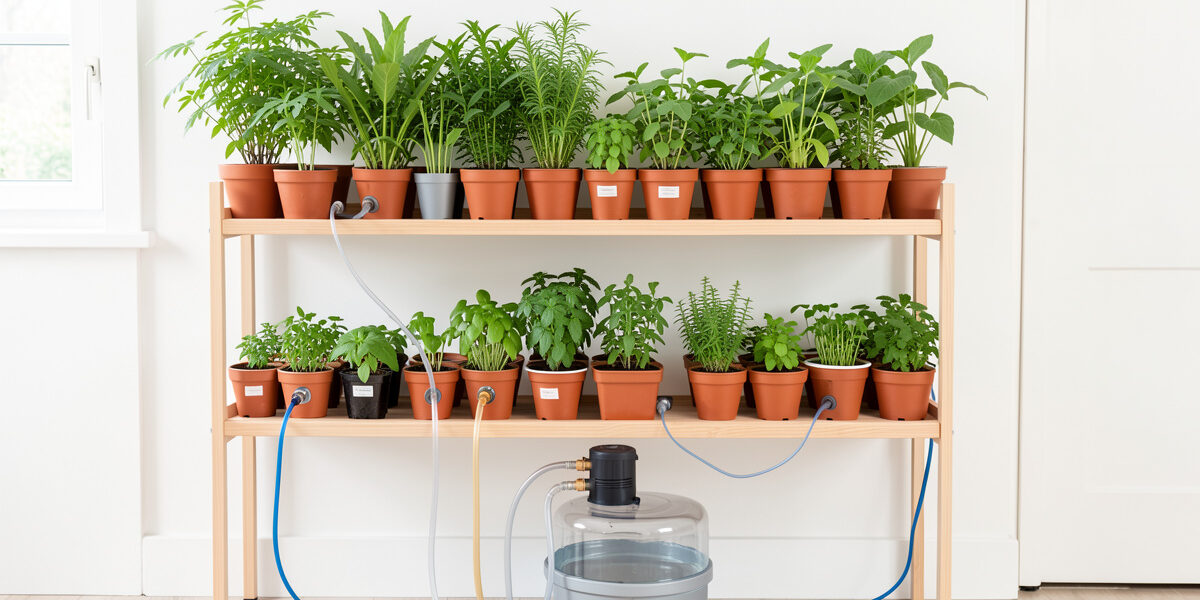
An indoor automatic plant watering timer is the only reliable way to keep a shelf of pots alive for longer than a week, because unlike a globe or a wick it adds water on a schedule instead of emptying a fixed tank. The core rig is a small pump sitting in a water reservoir, a battery or plug-in timer, and thin tubing carrying water to each pot, and it will run a whole plant shelf from one bucket for two weeks or more.
I run one over my seed-starting and microgreen shelf whenever I am away past a week, and the whole appeal is that it does not care how thirsty the plants are or how long the trip is, as long as the bucket holds out. The catch is that a timer can fail in ways a passive method cannot, so the settings and a proper test run matter more here than anywhere else. Here is how to set one up so it waters your plants rather than flooding the floor or missing them entirely.
How an Indoor Watering Timer Works
The system has three parts: a reservoir of water, a pump on a timer that switches on for a set period at set intervals, and a tubing network that splits the flow to a dripper at each pot. When the timer fires, the pump pushes water through the tubes for, say, thirty seconds, delivering a measured dose to every pot, then shuts off until the next cycle. It is the indoor, small-scale version of the drip irrigation kits used on balconies.
The key difference from every passive method is that a timer is not self-regulating. A wick or a globe gives each plant only what it draws; a timer gives every pot the same dose whether it needs it or not. That is a strength for reliability and volume, and a weakness you have to manage, because a badly set timer will happily overwater a small pot while underwatering a big one on the same line. Getting the dose and the dripper sizing right is the whole skill.
Timer Types: Battery, Plug-In, and Smart
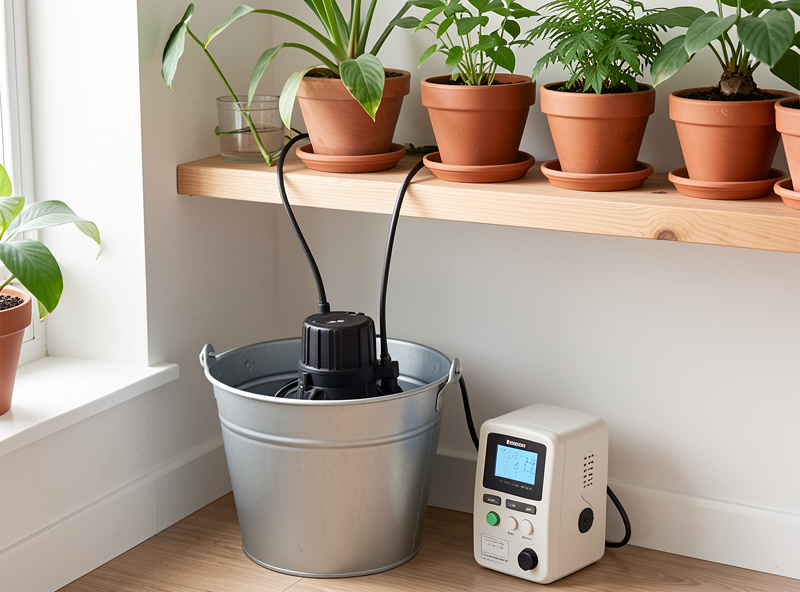
Indoor watering timers come in three broad types, and the right one depends on how much control and reliability you want. Simple battery pump kits are cheap and self-contained, plug-in timers with a mains pump push more water and never run out of battery, and smart Wi-Fi units let you adjust or trigger watering from your phone. For a plant shelf, a battery pump kit is the usual starting point.
The battery kits are the ones sold for exactly this job: a small pump, a built-in interval timer, and enough tubing for a handful of pots, all running off AA batteries or a USB pack. They are inexpensive and genuinely work, with the one caveat that you must fit fresh batteries before a trip, because a dying battery is the most common failure. A plug-in timer driving a mains-powered pump is more robust for a bigger shelf and never faces the battery problem, though it ties you to a socket near the reservoir. Smart plugs and Wi-Fi timers add the ability to fire an extra cycle in a heatwave or kill the pump if a friend reports a flood, which is the safety net I value most for a longer absence. You can compare current indoor watering pump and timer kits to see which suits your shelf.
As an Amazon Associate I earn from qualifying purchases.
Indoor Timer Types Compared
Here is how the three approaches stack up for an apartment plant shelf. “Reliability risk” is the thing most likely to end your trip early, which is what you are really buying against with a timer.
| Type | Water volume | Cost | Reliability risk | Best for |
|---|---|---|---|---|
| Battery pump kit | Small-medium shelf | Low | Battery dies mid-trip | Starter shelf, cheap and simple |
| Plug-in mains pump + timer | Large shelf | Medium | Needs a nearby socket | Bigger collections, long trips |
| Smart Wi-Fi timer / plug | Any (with pump) | Medium | Depends on Wi-Fi | Remote control and heatwave tweaks |
| Gravity-drip bag timer | Few small pots | Low | Uneven flow as bag empties | No-power tabletop setups |
Setting the Schedule Without Flooding or Starving
The golden rule is short, frequent cycles rather than one long daily blast, and every setting must be tested with real water before you leave. Start with a small dose on a once- or twice-daily cycle, run it while you are home, and watch how much water actually reaches each pot and whether any tray overflows or any pot stays dry. Then adjust and test again.
Most kits let you set both how often the pump runs and for how long. I begin conservatively, because it is far easier to see a pot is too dry after a test day and add a cycle than to recover a plant that drowned. A common good starting point for a shelf of herbs is a short run of twenty to forty seconds once or twice a day, but the exact figure depends entirely on your pump’s flow rate and dripper sizing, so the numbers on the box mean nothing until you measure your own. Put a cup under a dripper for one cycle to see the real dose. The pots nearest the pump often get more than the far ones, so check the whole line and swap in higher-flow drippers on the far pots if needed. Above all, run the full system for a day or two before departure with the plants in place, because a timer that misfires or a tube that pops off looks fine until you are already gone. This is the same test-run discipline that underpins every method in the away-watering guide.
Avoiding the Classic Timer Failures
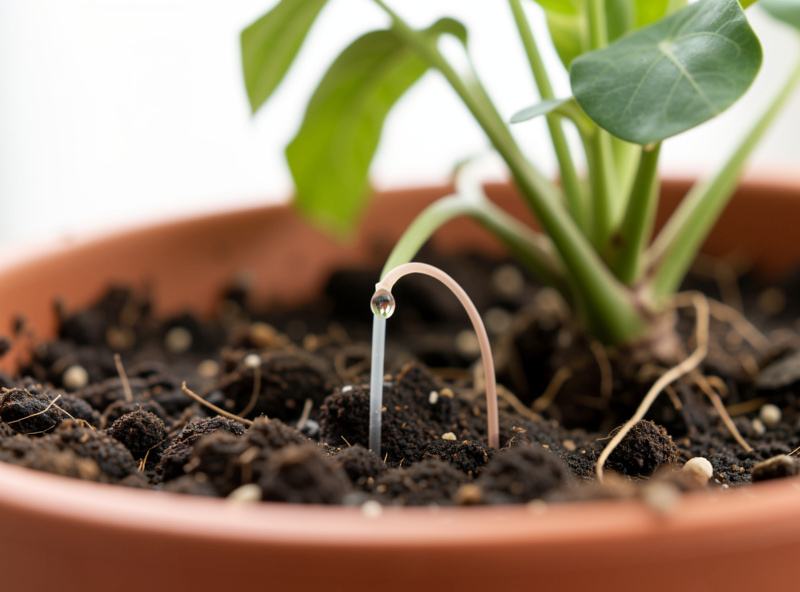
Timers fail in a handful of predictable ways: dead batteries, a tube that pops off under pressure, a dripper clogged with debris, the pump running dry when the reservoir empties, and cycles set so long they flood. Every one is preventable with fresh batteries, secured fittings, a filter, an oversized reservoir, and a test run.
The popped-tube failure is worth designing against specifically, because it not only stops that pot getting water but can pump your whole reservoir onto the floor. Push every fitting fully home, and where you can, use kits with locking connectors rather than friction-fit ones. Clogging is the next most common: a small inline filter or simply using clean water from a covered reservoir keeps grit out of the fine drippers. Running dry is a reservoir-sizing problem, so I always use a bucket far bigger than the trip strictly needs and check the level drop during the test to confirm it will last. A smart plug on the pump is cheap insurance here, letting you cut power remotely if something goes wrong, and pairing it with a lowered grow-light photoperiod reduces the plants’ draw while you are gone, which ties into my grow-light timer setup. For a genuinely valuable collection, nothing beats combining the timer with a friend who tops up the bucket midway.
When a Timer Is Worth It
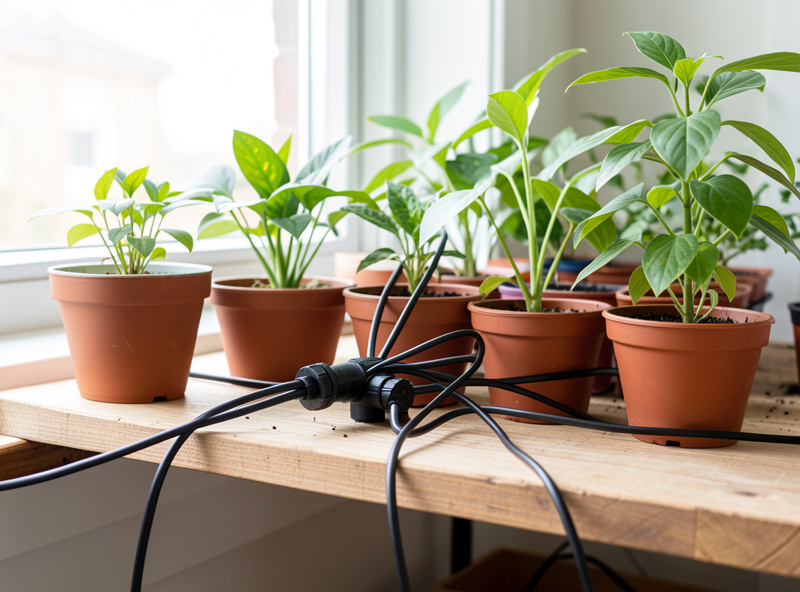
A timer earns its cost for trips over a week, thirsty plants, and shelves too big for matting or wicks. If a passive method can hold your plants, use it, because it cannot flood and needs no power; but once you are gone longer than a week or keeping fruiting plants alive, a timer is the only method that keeps up. It is the step up from a globe or a wick when those keep running dry.
For most apartment growers the sweet spot is a battery pump kit for the seed-starting shelf and a smart plug for peace of mind, reserving the full mains-pump setup for a large collection or a long absence. Whatever you choose, the timer is only as good as its test run, so build in that dry day and you turn a two-week trip from a gamble into a non-event. The full decision map for matching method to trip length lives in the complete away-watering guide.
Frequently Asked Questions
How do I set up an automatic watering timer for indoor plants?
Put a pump in a water reservoir, connect it to a timer, and run thin tubing with a dripper to each pot. Set short, frequent cycles, then test the whole system with real water for a day or two before you leave to confirm every pot is watered.
How long can an indoor watering timer keep plants alive?
As long as the reservoir holds out, which can be two weeks or more with a large bucket. Unlike a globe or wick it adds water on a schedule rather than emptying a fixed tank, so trip length is limited only by reservoir size and power.
How often should an automatic timer water indoor plants?
Start with a short run of twenty to forty seconds once or twice a day for a shelf of herbs, then adjust after a test day. The right figure depends on your pump’s flow and dripper sizing, so measure the real dose rather than trusting the box.
Why did my automatic watering system fail?
The usual culprits are a dead battery, a popped-off tube, a clogged dripper, or the reservoir running dry. Fit fresh batteries, push every fitting home, use clean water with a filter, oversize the reservoir, and always run a test before your trip.
Do I need power for an indoor watering timer?
Most pump-based timers need either batteries or a mains socket. Battery kits are self-contained but must have fresh cells before a trip, while gravity-drip bag timers need no power at all but give uneven flow as the bag empties.