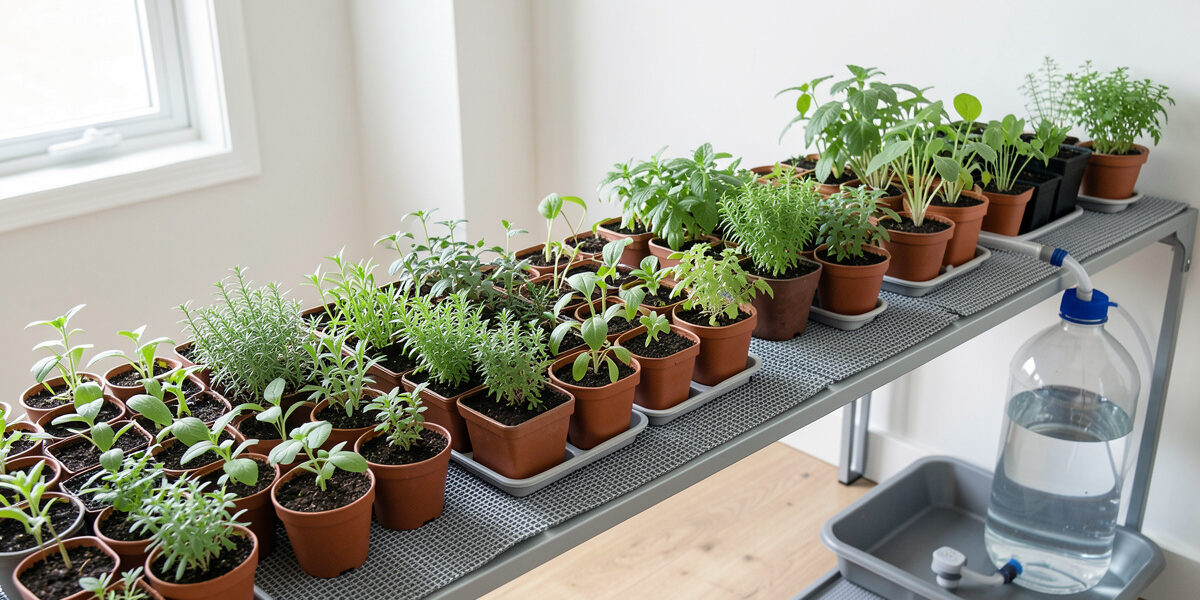
Capillary matting is the quietest away-watering method I own: a felt-like fabric that sits under your pots, wicks water up from a reservoir, and keeps a whole shelf of small plants evenly moist for a week with nothing to clog, no battery, and no moving parts. For an indoor tray of herbs, seedlings, or microgreens it is the method I reach for before any gadget, because it waters many pots from one tank and simply does not fail in the dramatic ways globes and pumps can.
I have run matting under my microgreen trays and windowsill herbs through more trips than I can count, and its appeal is that it is boring. You soak it, you dip one end in water, and it works. But there are three things that decide whether a mat holds your plants for a week or dries out on day three, and they are all about how water actually crosses from the felt into the soil.
How Capillary Matting Works
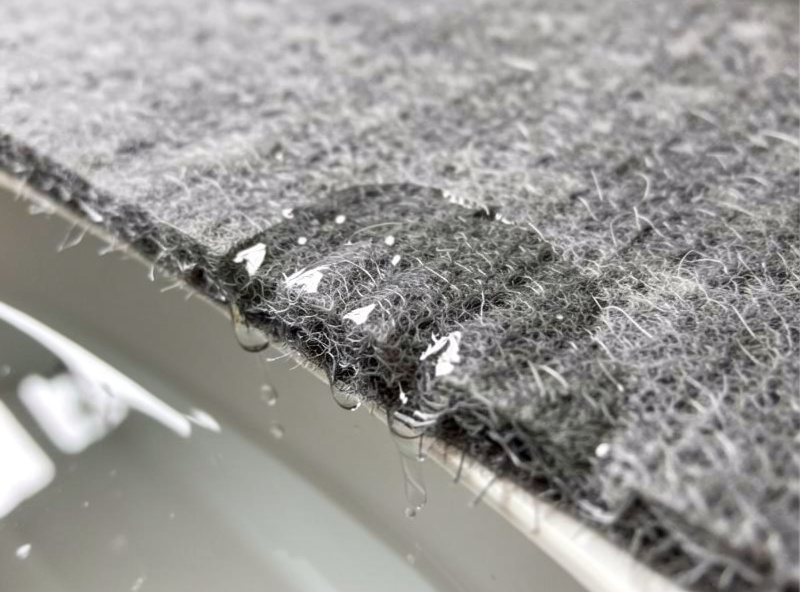
The mat is an absorbent synthetic fleece that holds water and releases it by capillary action to anything touching it that is drier than the mat itself. Stand a pot with open drainage holes on a saturated mat and the soil pulls water up through the holes as it dries, keeping the root zone at a steady moisture level rather than swinging between soaked and bone dry. The reservoir keeps the mat wet, and the mat keeps the pots wet, all by physics.
That steady, self-regulating supply is the real advantage over a globe or bottle. Where a globe dumps a fixed amount and then stops, a mat gives each pot only what it draws, so a thirsty pot and a barely-drinking one on the same tray both stay right. It is the same capillary principle as wick watering, just spread flat under many pots at once instead of running as a single cord, which is why it scales so beautifully to a crowded seed-starting shelf.
The Three Things That Decide Success
Whether matting holds for a week comes down to pot contact, mat saturation, and reservoir height. Get those three right and it is close to foolproof; get any one wrong and the plants dry out while the reservoir sits full, which is the failure that makes people give up on matting too soon.
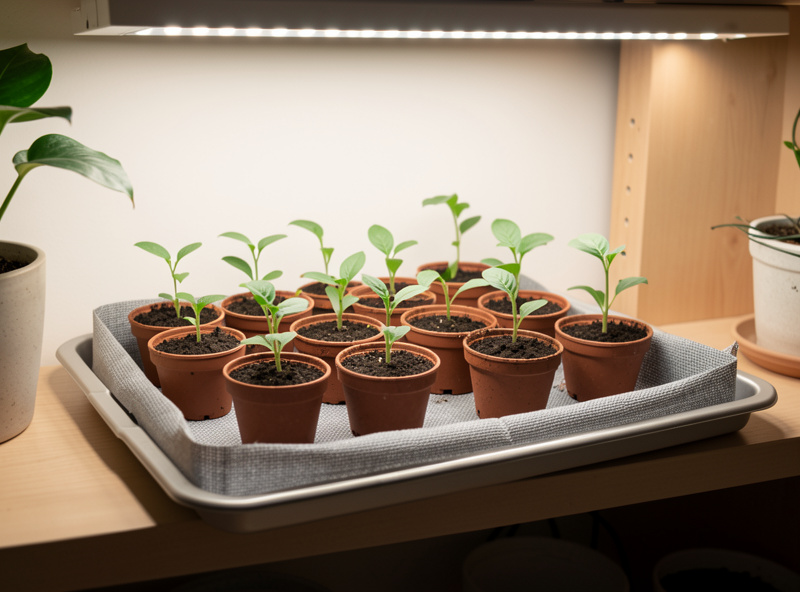
Pot contact is the one people miss. Water can only cross into soil that actually touches the wet mat through open drainage holes, so thin plastic pots and seed trays work perfectly, while thick terracotta, glazed ceramic with a recessed base, or any pot sitting on a saucer cannot draw and will not water. If you love terracotta, this is simply not your method. Mat saturation matters because a dry mat wicks slowly and unevenly; I always pre-soak the whole thing until it drips before I leave, so it starts fully charged rather than spending the first day getting up to speed. Reservoir height is the last piece: the water source needs to sit at or just below the tray so the mat stays fed by gravity and capillary pull, not fighting to lift water uphill. A reservoir that is too low or that empties leaves the far end of the mat dry while the near end is still damp.
Setting Up a Mat for a Week Away
My setup is simple and takes ten minutes. Cut the mat to fit a waterproof tray, run one end into a filled reservoir kept slightly lower than the tray, soak the whole mat until saturated, and stand thin-based pots directly on it with no saucers. Then test it for a full day before you leave so you can confirm the reservoir is dropping and every pot is drawing.
For the reservoir I use anything from a second tray tucked under a shelf to a bottle laid so its mouth keeps the mat end submerged. Size it to the trip: a small tray of herbs might sip half a litre over a week, while a full shelf of thirsty seedlings can want several litres, so bigger is safer and there is no penalty for an oversized reservoir. The one-day test run is the step I never skip, because a mat that looks wet can still fail to feed pots that are not making proper contact, and you only catch that by coming back after a day to check the soil surface of each pot is damp rather than trusting that it looks fine. If some pots are drying while others are wet, it is almost always contact: press those pots down firmly onto the mat or add a scrap of mat wicking up into the drainage hole.
What Matting Is Best For, and Where It Fails
Matting is unbeatable for a shelf of many small, thin-walled pots and useless for a few big or terracotta ones. It is the away-watering method for seed-starting trays, microgreens, and windowsill herbs, and the wrong one for a balcony of large fabric bags or a fruiting tomato in a heavy ceramic pot.
The strengths are exactly the small-space indoor cases I care about most. Under my microgreen trays it keeps the 10x20s evenly moist without the flooding that ruins a tray from the top, and under a row of herb pots it handles a whole windowsill from one reservoir. It also pairs neatly with the humidity and shade prep in my away-watering guide, because a tray of grouped pots on a mat is already half a humidity setup. Where it falls down is scale and pot type: it cannot lift enough water for a large deep pot, it will not work through terracotta or a saucer, and outdoors on a breezy balcony the mat dries from the top faster than it can wick, so it is really an indoor tool. For those bigger or outdoor cases I switch to a drip kit or an indoor pump timer, and for a single medium pot a globe is simpler than rigging a whole tray.
DIY Matting Before You Buy a Roll
You do not strictly need to buy matting to try the method. Any absorbent synthetic fabric that stays wet and does not rot quickly can stand in, and an old microfibre towel, a piece of thick felt, or a folded synthetic blanket will get you through a first trip well enough to decide if the method suits your pots. The proper matting is better because it is designed to wick evenly and resist rot, but the physics is identical.
The one thing I would avoid for a DIY mat is anything natural that rots fast, the same problem cotton wicks have, because a fabric that breaks down turns to slime in a week of standing water and starts to smell. Synthetic fleece, microfibre, and polyester felt all hold up. Test a homemade mat exactly as you would a bought one: soak it fully, set your pots on it with the reservoir dipped in, and leave it a day to confirm the pots are drawing. If it works, you can decide whether the modest cost of a real roll is worth the tidier fit and longer life, which for me it always has been. It is the same buy-or-build calculation I make with a lot of small-space kit, and trying the free version first is rarely a bad idea.
Matting on the Winter Grow Shelf
Matting comes into its own on a Nordic winter shelf, where short days mean low water draw and a mat can hold a tray of herbs or strawberries for well over a week without a refill. The cold-season version of away-watering is far easier than summer, because the plants simply drink less under low light, and a saturated mat with a decent reservoir will coast through a longer trip than the same setup ever manages in July.
Through the dark months I keep my microgreen and seedling trays on matting under the LED bar as standard, and it doubles as trip insurance any time I am away, since the reservoir just needs topping up rather than daily attention. If you are also running lights on a timer, dropping the photoperiod a little while you are gone lowers the draw further and stretches the mat even longer, which ties back to the light-and-water balance in my grow-light timer setup. It is the least dramatic corner of my whole growing setup and one of the most dependable.
A Cheap Method Worth Keeping Year-Round
The nice thing about matting is that once you own a roll it costs nothing to keep using, and it earns its place well beyond holidays. I leave a mat under the seed-starting shelf all through the propagation season because it keeps trays evenly moist between waterings even when I am home, which cuts down on both the damping-off you get from wet-then-dry swings and the daily fussing. A roll is inexpensive, lasts years if you dry it out and store it clean between uses, and rinses easily when algae builds up on the surface over a long wet spell.
That year-round usefulness is why I rate matting so highly for small-space growers specifically. It is not a dramatic gadget and it will never water a balcony, but for the crowded indoor shelf that most apartment growers actually have, it is the calmest, most reliable hands-off method there is. Ready-cut capillary matting rolls are cheap enough that there is no reason not to keep one on hand.
As an Amazon Associate I earn from qualifying purchases.
Further Reading
If matting is not the right fit for your pots, the rest of this cluster covers the alternatives: start with the complete away-watering guide to match a method to your trip, weigh up self-watering globes for single pots, build a DIY wick system for a cheap week-plus fix, and check the honest table on how long plants last before you leave. For the everyday routine, my watering schedule by growth stage covers the weeks you are home.