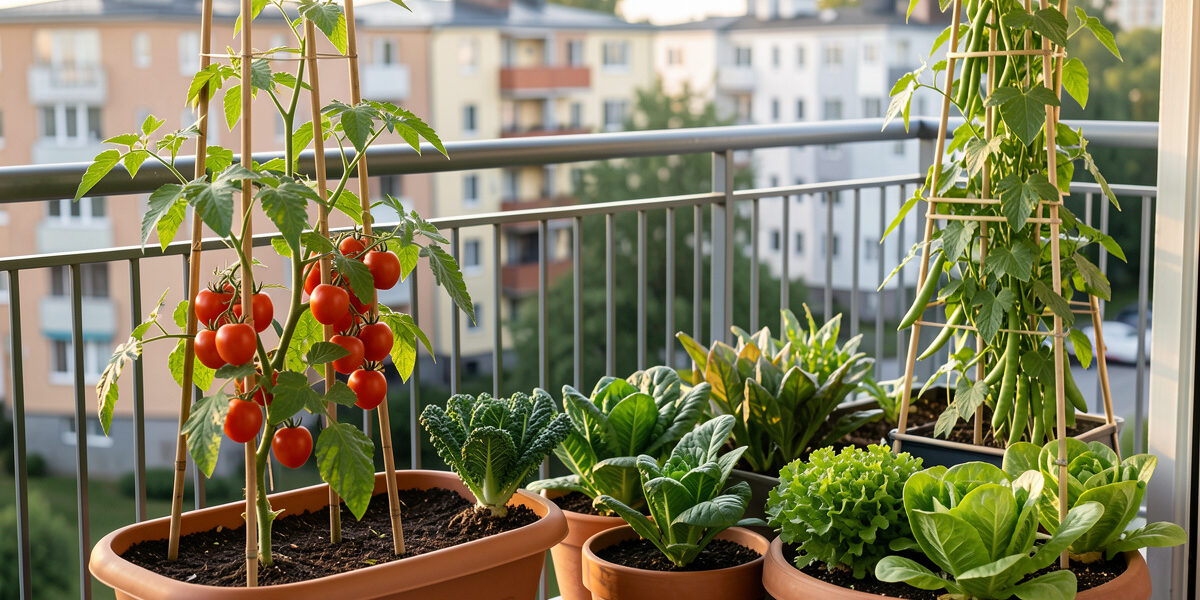
You can grow 15-20 lbs of vegetables per season on a 20-square-foot balcony by choosing compact container varieties and matching each crop to your sun exposure. The vegetables that actually work on a balcony are not the same ones that work in a ground garden — balcony success comes down to container depth, wind tolerance, and how many usable daylight hours your specific exposure gets.
On my fourth-floor Swedish apartment balcony, I have run tomatoes, peppers, leafy greens, root vegetables, beans, and herbs through several full Nordic growing seasons (mid-May to late September). The crops below are the ones that earned their container space year after year — and the ones I would skip entirely on a small balcony after learning the hard way. This guide covers what grows, what does not, and the container-sizing rules that make the difference.
Balcony Growing Conditions
Before you select a single vegetable, spend three days tracking light, wind, and temperature on your balcony. South-facing balconies get 6-8 hours of direct sun and can support tomatoes, peppers, beans, and cucumbers. East-facing (like mine) gives 4-5 hours of morning light, which is enough for leafy greens, herbs, bush peas, and radishes but marginal for fruiting crops. North-facing and heavily shaded balconies (under 3 hours of direct sun) should stick to lettuce, spinach, chard, mint, and parsley.
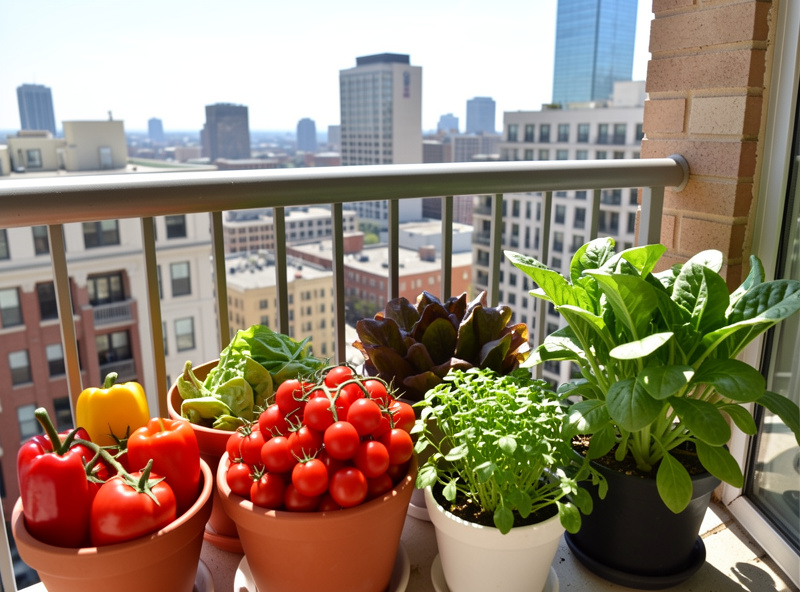
Weight is the balcony constraint most US gardening advice ignores entirely. Wet container soil weighs roughly 100 pounds per cubic foot. A single 16-inch pot of saturated soil can run 50 pounds. Three of those plus a person may exceed what your building’s balcony was engineered for. I keep most containers under 14 inches and position the single large tomato pot against the building wall where structural support is strongest. Check with building management before installing anything heavy.
Wind exposure increases with floor height. My fourth-floor balcony gets gusts that have shredded young basil leaves and flipped empty terracotta pots. Position taller plants (tomatoes, trellised cucumbers) against walls as wind breaks, and use heavier containers on exposed railing positions to buffer more delicate crops behind them.
Top Vegetables for Balcony Gardens
Tomatoes — The Balcony Superstar
Determinate and dwarf tomato varieties produce 10-20 lbs per plant in a 14-inch container. These compact types stop growing at 12-18 inches and set all their fruit in a short window — perfect for a Nordic growing season where frost returns by late September.
Best Balcony Varieties:
- ‘Patio Princess’ — 18-inch dwarf producing 3-ounce fruits, finishes in 60 days
- ‘Tiny Tim’ — 12-inch plant with cherry tomatoes, the fastest to first harvest
- ‘Tumbling Tom’ — Trailing variety for hanging baskets and railing planters
- ‘Balcony’ — Compact determinate with full-sized slicing fruits
I grow determinate cherry tomatoes in 14-inch fabric grow bags with a single bamboo stake. Fabric bags air-prune the roots, preventing the root-binding that stunts container tomatoes. Consistent watering matters more than anything else with container tomatoes — fluctuations cause blossom end rot and cracking. In July and August with Nordic 18-hour daylight, I check the tomato pot twice daily. Feed with liquid organic fertilizer every two weeks once fruiting begins.
As an Amazon Associate I earn from qualifying purchases.
Peppers — Compact and Productive
Bell peppers and hot peppers adapt well to container life. Their naturally bushy growth habit fits balconies without aggressive pruning, and they tolerate the reflected heat that balcony surfaces generate.
Recommended Varieties:
- ‘Lunchbox’ — Snack-sized peppers on 18-inch compact plants
- ‘Mohawk’ — Yellow bell reaching just 18 inches
- ‘Apache’ — Hot peppers on 12-inch plants, ornamental and productive
- ‘Carmen’ — Italian bullhorn type for grilling
Plant peppers in 12-14 inch containers in your sunniest spots. Wait until night temperatures consistently exceed 55°F (13°C) before transplanting — peppers sulk in cold soil and never fully recover. In a Nordic climate, that means late May or early June outdoors.
Leafy Greens — Shade-Tolerant Abundance
Cut-and-come-again lettuce and Asian greens produce harvestable leaves within 30-45 days and tolerate the partial shade that frustrates fruiting vegetables. On my east-facing balcony, leafy greens are the most reliable crop I grow — they do not need the intense sun hours that tomatoes and peppers demand.
High-Performing Varieties:
- ‘Salad Bowl’ — Cut-and-come-again lettuce that regrows for 8+ weeks
- ‘Bright Lights’ — Colorful Swiss chard, cold-tolerant into fall
- ‘Tokyo Bekana’ — Fast-growing bok choy, ready in 25 days
- ‘Space’ — Spinach bred specifically for containers
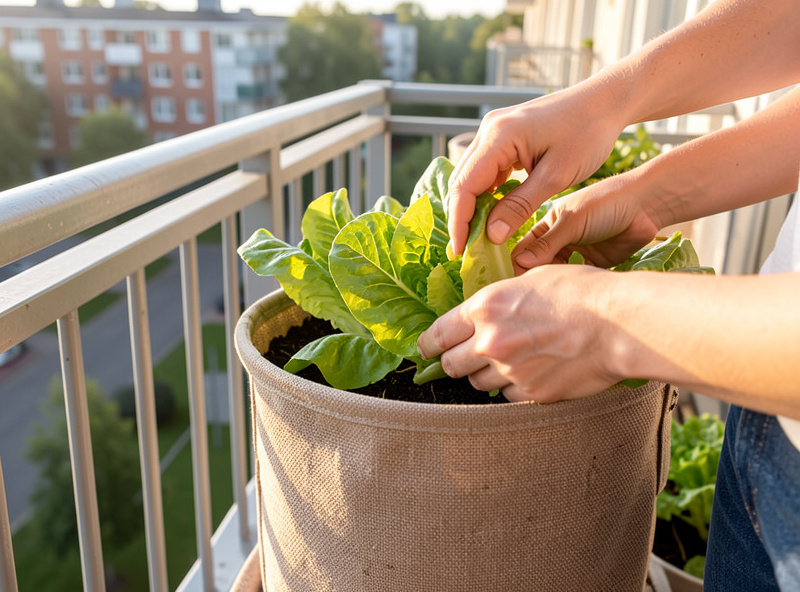
Sow seeds directly in 8-10 inch containers at 4-6 inch spacing. Harvest outer leaves continuously and the center keeps producing. I succession-sow lettuce every three weeks from April through August to keep a continuous supply through October.
Root Vegetables — Underground Success
Radishes, carrots, and beets grow surprisingly well in deep containers, producing clean roots without the rocks and clay that twist them in ground soil.
Compact Varieties:
- ‘French Breakfast’ — Oblong radishes ready in 25 days
- ‘Paris Market’ — Round carrots maturing at 2 inches, ideal for 10-inch-deep pots
- ‘Round Romeo’ — Globe beets perfect for containers
- ‘Atlas’ — Large round carrots for deeper pots
Use containers at least 10 inches deep for carrots and beets, 6-8 inches for radishes. Loose, stone-free potting mix is essential — compacted or heavy soil produces stunted, forked roots (the University of Wisconsin Extension’s container-vegetable guide is a solid reference on media and depth). I add 30% perlite to my standard container mix for root vegetable pots to keep the medium loose enough for straight taproot development.
Beans and Peas — Vertical Production
Bush beans and compact peas yield 2-3 lbs per container when grown vertically on trellises. They are nitrogen-fixers that improve the potting mix for whatever you plant in that container next.
Balcony-Friendly Varieties:
- ‘Mascotte’ — Bush beans on 16-inch plants, heavy producer
- ‘Tom Thumb’ — Peas reaching just 8 inches, no trellis needed
- ‘Golden Teepee’ — Yellow wax beans on compact bushes
- ‘Little Marvel’ — Shell peas bred for small spaces
Plant beans and peas in 12-inch containers. Install a 4-foot bamboo teepee or trellis before seeding to avoid disturbing roots later. In a Nordic climate, I sow peas directly outdoors the first week of April — they germinate in cool soil and are the earliest balcony harvest of the season.
Cucumbers — Climbing Harvests
Compact bush cucumbers and vining types trained vertically produce refreshing summer fruits. Consistent watering is the difference between sweet, crisp cucumbers and bitter, misshapen ones.
Space-Efficient Varieties:
- ‘Patio Snacker’ — Bush cucumber reaching 3 feet
- ‘Pick a Bushel’ — Compact with abundant pickling fruits
- ‘Spacemaster’ — 2-foot vines producing full-sized cukes
- ‘Salad Bush’ — Heavy yields from small plants
Grow cucumbers in 14-inch containers with sturdy trellises. Harvest daily once production begins — leaving mature fruits on the vine signals the plant to stop producing.
Vegetables to Avoid on Balconies
Some vegetables demand more space, soil volume, or growing season than a balcony can offer. I have tried and abandoned most of these over multiple seasons:
Sweet Corn: Requires large blocks for wind pollination and substantial soil. Do not bother.
Full-Sized Winter Squash: Vines spread 10+ feet. Compact summer squash like ‘Patio Star’ zucchini work in large containers instead.
Full-Sized Melons: Heavy fruits require substantial support structures and a long hot season. In a Nordic climate, they will not finish before frost.
Standard Potatoes: Need deep soil and extensive hilling. I have grown them successfully in dedicated 15-gallon potato grow bags, but they consume a large container footprint for the yield — worth it only if potatoes are a priority crop for you.
Head Cabbage: Large plants requiring significant space for a single harvest. Quick-heading Asian greens produce more food per square foot per season.
Maximizing Balcony Vegetable Yields
Intensive Planting
Increase production through square-foot gardening principles. Plant leafy greens at 4-inch spacing, bush beans at 6 inches, and compact tomatoes at 12 inches within large containers.
Succession Planting
Sow new crops every 2-3 weeks as harvesting frees up space. Follow quick radishes (25 days) with heat-tolerant lettuce, or replace spent spring peas with fall spinach. In a Nordic season, I get 3-4 succession rounds of leafy greens from the same container between May and October.
Vertical Integration
Train indeterminate tomatoes, cucumbers, and pole beans upward on trellises, saving floor space for additional containers. For a complete guide to vertical growing systems optimized for balconies, see our vertical gardening guide.
Companion Planting
Combine compatible vegetables in shared containers: tomatoes with basil, carrots with lettuce, peppers with parsley. These combinations maximize space while basil and parsley are reported to improve nearby tomato and pepper flavor and pest resistance.
Seasonal Balcony Vegetable Calendar (Nordic Climate)
Spring (April-May)
Start Indoors: Tomatoes, peppers, eggplant under grow lights in early April (I start mine under an LED bar on my microgreen shelf)
Direct Sow Outdoors: Peas, spinach, lettuce, radishes, carrots — as soon as the soil can be worked, usually mid-April
Summer (June-August)
Transplant Outdoors: Tomatoes, peppers, eggplant, cucumbers after last frost (third week of May in Stockholm)
Direct Sow: Beans, summer squash, succession greens every 2-3 weeks
Harvest: Spring peas and radishes in June; tomatoes and peppers from late July onward
Fall (September-October)
Plant: Fall lettuce, spinach, arugula, radishes by mid-August for October harvest
Harvest: Final tomatoes before the first frost (typically late September in Stockholm); last greens through October
Winter (November-March)
Outdoor balcony growing is finished. Move perennial herbs (rosemary, thyme) indoors in containers. Start planning next season in January. I start tomato and pepper seeds indoors under LED grow lights for seedlings in early March to have sturdy transplants by the May planting window.
Common Balcony Vegetable Problems
Poor Pollination
Wind-exposed upper-floor balconies may limit pollinator access. Hand-pollinate tomatoes and peppers by gently shaking plants or using a small brush to transfer pollen between flowers. I give my tomato cages a firm tap every morning during flowering — it takes 10 seconds and improves fruit set noticeably.
Heat Stress
Reflected heat from balcony surfaces can push container soil well above air temperature, damaging roots. Apply 2-inch mulch layers and use light-colored fabric grow bags that stay cooler than black plastic. Move containers into partial shade during extreme heat waves.
Pest Pressure
Aphids, spider mites, and whiteflies find balcony vegetables reliably. Inspect leaf undersides weekly; spray infestations with insecticidal soap or neem oil at first sign. The enclosed balcony environment means pest populations explode faster than in open gardens — early intervention is the only intervention that works.
Nutrient Deficiency
Yellowing lower leaves indicate hungry plants in exhausted potting mix — frequent watering leaches soluble nutrients out drainage holes faster than you might expect, and drainage holes (not a gravel layer) are what actually keep that exchange working (Illinois Extension’s container drainage guide covers the soil-physics). Apply liquid organic fertilizer every two weeks and refresh containers with new potting soil annually. I alternate fish emulsion (nitrogen for greens) and seaweed extract (micronutrients for everything) on alternating weeks.
From Balcony Vegetables to a Complete Growing System
Once your balcony vegetables are producing, they fit into a larger urban growing strategy. The container-sizing rules above scale from a single tomato pot to a full balcony food system. For the complete framework that ties each growing technique together, see our balcony gardening complete guide. For the step-by-step setup process, visit our how to create a small balcony garden guide. Budget-conscious growers find cost-saving strategies in our urban gardening beginner guide, and our common mistakes guide covers the errors I see beginners make most often.
What vegetables grow best on balconies?
Cherry tomatoes, peppers, leafy greens, radishes, bush beans, and compact cucumbers grow best on balconies. Choose determinate or dwarf varieties bred for containers rather than full-size garden cultivars. In a Nordic climate, leafy greens and root vegetables are the most reliable balcony crops because they tolerate partial shade and finish in 25-45 days.
How much sun do balcony vegetables need?
Fruiting vegetables (tomatoes, peppers, cucumbers) need 6-8 hours of direct sun. Leafy greens and herbs produce with 3-4 hours. Match crops to your exposure: south-facing for tomatoes and peppers, east-facing for lettuce and bush peas, north-facing for spinach and mint only.
What size containers do balcony vegetables need?
Tomatoes and cucumbers need 14-16 inch containers (5+ gallons). Peppers and bush beans need 12-14 inches (3 gallons). Leafy greens and herbs need 8-10 inches (1-2 gallons). Root vegetables need depth over width: 10-12 inches deep for carrots and beets, 6-8 inches for radishes.
Can you grow vegetables on a north-facing balcony?
Yes, but only shade-tolerant vegetables: lettuce, spinach, Swiss chard, arugula, mint, parsley, and chives. Avoid fruiting vegetables (tomatoes, peppers, cucumbers) on north-facing balconies — they need 6+ hours of direct sun and will produce little to nothing in shade.