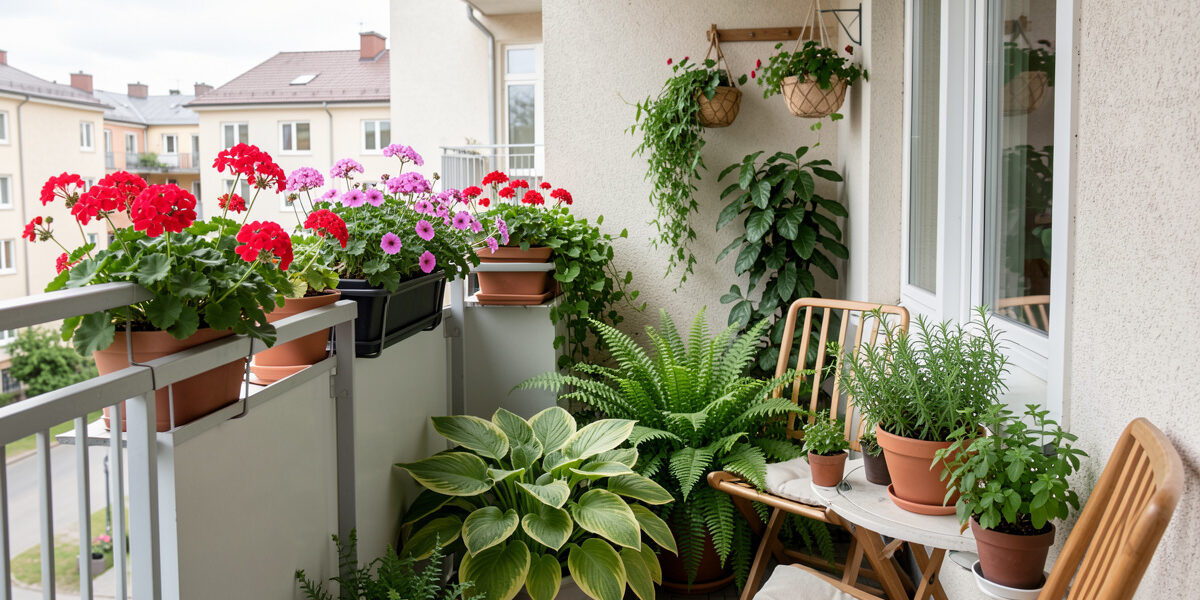
Matching plants to your balcony’s actual light conditions is the single decision that determines whether a balcony garden thrives or dies. A south-facing balcony that gets 6+ hours of direct sun can support tomatoes, peppers, Mediterranean herbs, and blooming annuals. A north-facing balcony with only bright indirect light can still grow a lush garden — but it needs entirely different plants.
On my fourth-floor Swedish apartment balcony, I have run plants through every light condition the Nordic seasons throw at them: 18-hour summer sun on the south-facing railing, deep winter shade on the north wall, and the tricky east-facing morning light that fades by noon. The plants below are the ones that earned their container space over multiple seasons in each light category. This guide sorts them by what your balcony actually gets — not by what a seed catalog promises.
Assessing Your Balcony’s Light Conditions
Before you buy a single plant, spend three consecutive days tracking sunlight on your balcony. Note where direct sun hits, at what times, and for how long. Surrounding buildings, trees, and the balcony above yours all shift the light patterns significantly.
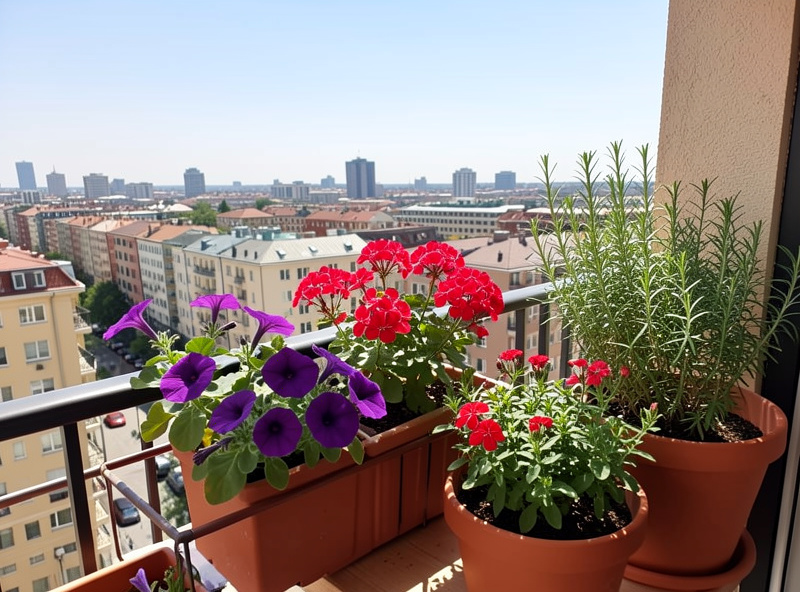
Full Sun: 6+ hours of direct sunlight, typically south-facing. This is the premium growing zone — it supports tomatoes, peppers, Mediterranean herbs, and most flowering annuals.
Partial Sun: 4-6 hours direct sun, usually east or west-facing. East-facing (like mine) gets gentle morning light; west-facing gets intense afternoon heat.
Partial Shade: 2-4 hours of morning or dappled sun. Still productive for leafy greens and shade-tolerant herbs.
Full Shade: No direct sun but bright indirect light, typically north-facing. Foliage plants and a select few edibles work here.
Nordic note: winter sun angles are dramatically lower. A balcony that gets 8 hours of direct sun in June may get 2 hours in December. Plan your permanent plantings (perennials, shrubs) for the winter light reality, not the summer abundance.
Full Sun Balcony Plants (6+ Hours Direct Sun)
South-facing balconies receive the growing energy that fruiting vegetables and Mediterranean herbs demand. These are the plants I run on my sunniest railing positions.
Flowering Plants
Petunias: Trailing varieties cascade from hanging baskets and railing planters, blooming from May through first frost. Minimal deadheading needed.
Geraniums (Pelargoniums): Classic balcony flowers that tolerate heat, drought, and wind. I keep a pair in terracotta pots on the south-facing railing every summer — they bloom reliably even when I forget to water for a day.
Marigolds: Compact annuals that repel common balcony pests. French varieties reach 6-12 inches. The scent deters aphids from nearby tomato plants — I plant them at the base of every tomato container.
Portulaca (Moss Rose): Drought-tolerant succulents with jewel-toned flowers. Perfect for hot, exposed railings where other plants crisp up by midday.
Herbs
Rosemary: Evergreen Mediterranean shrub that thrives in poor soil and intense heat. Upright varieties suit containers; I keep a single rosemary in a 12-inch terracotta pot that has survived three Nordic winters by coming indoors to a south-facing windowsill from October through April.
Lavender: Fragrant perennial requiring excellent drainage and full sun. Compact varieties like ‘Hidcote’ or ‘Munstead’ perform best in containers.
Thyme, Sage, Oregano: All three Mediterranean herbs want the same conditions: full sun, well-draining soil, infrequent deep watering. Group them in a single 24-inch trough planter for efficiency.
As an Amazon Associate I earn from qualifying purchases.
Vegetables
Tomatoes: Determinate varieties like ‘Patio Princess’ and ‘Tiny Tim’ produce 10-20 lbs per plant from 14-inch containers with consistent watering and biweekly feeding. For detailed recommendations, see our growing vegetables on your balcony guide.
Peppers and Eggplant: Both demand full sun for fruit production. Compact bush varieties suit balcony containers.
Partial Sun Plants (4-6 Hours Direct Sun)
East-facing balconies receive gentle morning sun that many plants prefer over harsh afternoon rays. West-facing spaces get intense late-day light — choose heat-tolerant varieties for those.
Flowering Plants
Impatiens: Continuous blooms in vibrant colors. Sun-tolerant varieties handle 4-6 hours; traditional types prefer protection from afternoon rays.
Coleus: Grown for spectacular foliage in burgundy, chartreuse, and coral patterns. Pinch flower spikes to maintain leaf production.
Fuchsia: Elegant pendulous flowers in pink, purple, and white. Perfect for hanging baskets on east-facing balconies.
Herbs
Basil: Heat-loving annual that needs 4-6 hours of sun. I keep my basil in a self-watering planter with a 3D-printed reservoir insert on the east-facing railing — it gets morning sun until noon, which is enough for steady leaf production without the afternoon scorch that wilts soft-leaved herbs.
Chives and Parsley: Both tolerate partial sun better than most culinary herbs. Chives return as a perennial; parsley is biennial and benefits from shade during the hottest part of the day.
Vegetables
Bush Beans: Compact plants producing 2-3 lbs per 12-inch container with 4-6 hours of sun.
Swiss Chard: Colorful stems in rainbow varieties provide months of harvestable leaves. More cold-tolerant than most vegetables — I harvest chard from my east-facing containers through October.
Partial Shade Plants (2-4 Hours Sun)
North-facing balconies or spaces shaded by buildings need plants adapted to limited direct light. These selections have performed for me on the shaded half of my balcony that only catches early-morning rays.
Flowering Plants
Begonias: Wax begonias bloom continuously in red, pink, and white with minimal sun. Tuberous varieties produce larger flowers for shaded spots.
Lobelia: Delicate trailing plants with masses of true blue flowers. Perfect for hanging baskets where other bloomers fail in low light.
Heuchera (Coral Bells): Incredible foliage in lime green to deep burgundy, with delicate flower spikes. Thrives in partial shade.
Herbs
Mint: Vigorous perennial that must be contained in its own pot — I learned this the hard way when peppermint runners circled an entire mixed trough and choked two parsley plants in a single season. Thrives in shade while producing leaves for teas and cooking.
Cilantro: Cool-season herb that bolts quickly in heat. Shade extends the harvest window significantly — on my shaded balcony positions I get an extra 3-4 weeks of cilantro before it flowers.
Lemon Balm and Chamomile: Both are aromatic perennials that tolerate partial shade while attracting pollinators when they flower.
Vegetables
Lettuce, Spinach, Arugula: Leafy greens are the most reliable shade crops. They mature in 30-50 days and avoid the bitterness that develops in full summer sun. I succession-sow lettuce every two weeks in 8-inch containers on my shaded balcony positions.
Radishes: Root vegetables maturing in 25-30 days even with limited sun, making them the fastest shade-tolerant edible.
Full Shade Plants (Bright Indirect Light Only)
Deeply shaded north-facing balconies can still support attractive plantings with shade-specialist varieties focused on foliage rather than flowers.
Foliage Plants
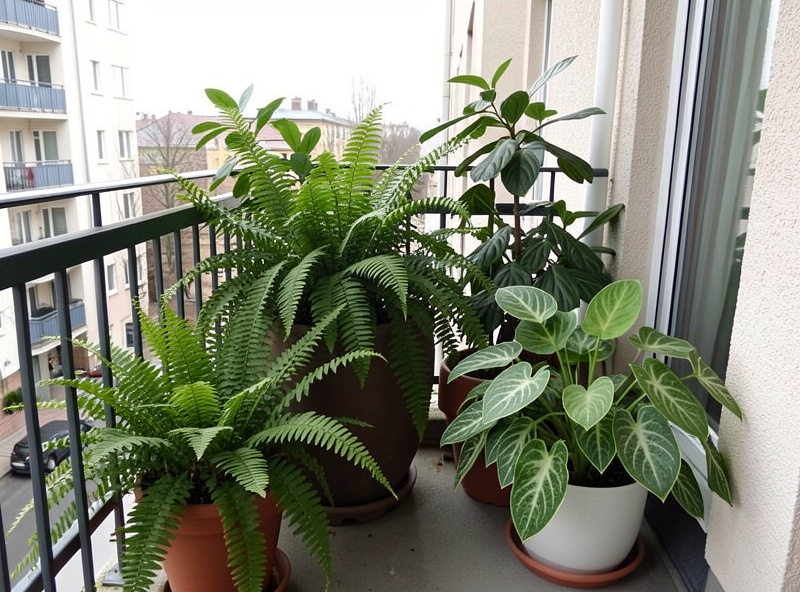
Ferns: Boston ferns and maidenhair ferns thrive in humid, shaded balcony environments. Group them together to create a woodland microclimate.
Japanese Painted Fern: Silver and burgundy fronds that create striking container specimens. Native to woodland edges, perfectly adapted to balcony shade.
Hostas: Dwarf hosta varieties thrive in large balcony containers, offering stunning foliage from spring through fall.
Universal Performers
Snake Plant, Pothos, ZZ Plant, Spider Plant: These houseplants adapt to nearly any light condition. They are not balcony plants in the traditional sense but handle the transition from indoor to shaded outdoor positions well during the summer months.
Seasonal Considerations for Nordic Balconies
Balcony light conditions change significantly with the seasons — more dramatically in northern latitudes than anywhere else. June delivers 18 hours of daylight; December brings 6 hours of low-angle grey. Your plant selection should account for both extremes.
I adjust my balcony layout seasonally: summer sun-lovers (tomatoes, peppers, basil) go on south-facing railings from late May through September. In autumn, I transition those positions to cold-hardy greens (kale, spinach) that tolerate shorter days. Hardy perennials like rosemary, thyme, and lavender come indoors to south-facing windowsills in October and go back out in May.
A Nordic Strategy for Low-Light Balconies
The single hardest thing about a Nordic balcony is not the cold — it is the dark. From November through February my south-facing railing that bakes in June gets only a few hours of low-angle grey, and the north wall might as well be a cave. No plant produces food in those conditions outdoors, so I stop pretending otherwise and run the balcony as a foliage and overwintering space instead. Hardy perennials like rosemary, thyme, and lavender come inside to a bright windowsill; the containers that held tomatoes in August get refreshed and sown with winter-density spinach and mâche that germinate slowly but tolerate the cold once the light returns.
Knowing your USDA Plant Hardiness Zone (or your local equivalent hardiness rating) tells you which perennials can realistically stay outside through your winter and which must come in. In my climate, rosemary and lavender will not survive outdoors, so they migrate inside every October — a chore, but the alternative is replacing them every spring. The University of Wisconsin Extension’s guide to growing vegetables in containers is the reference I use for the soil, drainage, and depth fundamentals that keep those overwintering containers healthy indoors and out.
The payoff of accepting the dark months instead of fighting them is that your balcony garden finally matches the climate instead of arguing with it — and the plants that do go out in May start from a stronger base because you did not kill them in January.
Container Considerations by Light Level
Full Sun: Use light-colored containers (terracotta, white plastic) that reflect heat rather than absorbing it. Black pots in full sun can cook roots on a hot July day. Self-watering containers help manage the rapid drying that intense sun causes.
Partial Shade: Standard containers work well. Monitor for overwatering — reduced evaporation means soil stays moist longer than you expect.
Full Shade: Ensure excellent drainage to prevent root rot in slowly drying soil. Elevate containers on pot feet for airflow underneath.
Balcony weight matters at every light level. Wet container soil weighs roughly 100 pounds per cubic foot. A full-sun balcony with several large tomato pots can easily exceed what your building’s balcony was engineered to support. I keep most containers under 14 inches diameter and position the heaviest ones against the building wall.
For container recommendations specific to balconies, see our urban gardening equipment guide and the complete beginner guide for site assessment and planning.
One last note on light: a balcony that looks hopeless in January can still produce well from May through September if you match the plants to the summer reality rather than the winter gloom. Most beginners give up on a north or east balcony because they judge it in March — track it through a full June day before you decide what it can and cannot grow.
From Plant Selection to a Complete Balcony Garden
The plants you choose are only one component of a productive balcony garden. For the complete framework covering container sizing, soil mixing, watering systems, and seasonal planning, see our balcony gardening complete guide. For step-by-step setup instructions, visit our how to create a small balcony garden guide.
What plants are best for apartment balconies?
Herbs, leafy greens, compact tomatoes, peppers, strawberries, and trailing flowers grow well on apartment balconies. Match each plant to your specific sun exposure: south-facing supports Mediterranean herbs and fruiting vegetables, east-facing suits leafy greens and bush peas, north-facing needs shade-tolerant varieties like mint, parsley, and ferns.
How do you choose plants for a sunny balcony?
Select heat-tolerant, sun-loving plants like basil, rosemary, tomatoes, peppers, geraniums, and petunias. Use light-colored containers (terracotta or white plastic) that reflect heat, and position the thirstiest plants where self-watering reservoirs can stretch watering intervals. In a Nordic climate, south-facing balconies get 6-8 hours of direct sun from May through September.
What plants grow well on a shady balcony?
Mint, parsley, chives, cilantro, lettuce, spinach, begonias, impatiens, and ferns all tolerate partial to full shade. Leafy greens mature in 30-50 days even with 2-4 hours of sun. North-facing balconies should focus on foliage plants and shade-tolerant herbs rather than fruiting vegetables.
How much weight can my balcony hold for plants?
Most residential balconies support 40-60 pounds per square foot. Wet container soil weighs roughly 100 pounds per cubic foot. Keep most containers under 14 inches diameter, distribute weight near walls and corners, and check with building management before installing large planters. Three large 16-inch pots of saturated soil can weigh over 150 pounds collectively.