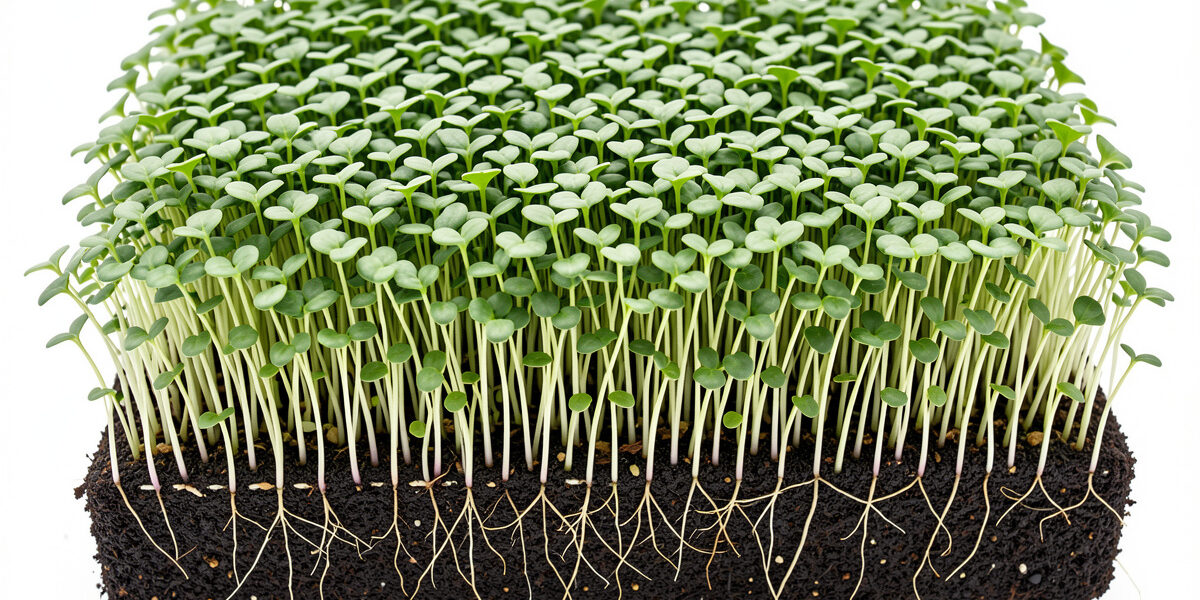
The medium you grow microgreens in matters more than almost any other decision, and it is the one most beginners get wrong straight out of the gate by reaching for a bag of standard potting mix. Microgreens have a very particular brief: hold even moisture for a week to ten days, drain freely enough to never go anaerobic, sit fine and flat so tiny seeds make good contact, and stay clean enough that you are happy cutting food directly off it. Most bagged “potting soil” fails at least two of those. After years of running trays through a Nordic winter on everything from peat blends to coir to pure hydroponic mats, I have settled on what actually works — and, just as usefully, what to stop buying.
If you are still assembling the rest of the setup, my complete microgreens guide covers trays, lighting, and timing; this one is purely about what goes in the tray.
What Microgreens Actually Want From a Medium
Microgreens are a sprint crop. They live for a week or two, draw almost nothing from the medium nutritionally because the seed carries its own food reserves, and then they are cut and gone. That changes the brief completely from growing a tomato in the same container for five months. You are not feeding a long-term root system — you are giving a dense mat of seedlings a clean, evenly damp, well-aerated surface to anchor into and shoot up from.
So the medium needs four things: a fine, level texture so small seeds germinate evenly; good water retention so the tray does not dry out and stall mid-grow; free drainage so it never turns to sour mud; and cleanliness, because you are running a knife along the soil line and do not want grit or chunky bark in your harvest. Fertility barely registers — the seed does the heavy lifting, and a clean low-nutrient medium gives you sturdier, cleaner-tasting greens than a hot, fertiliser-rich one.
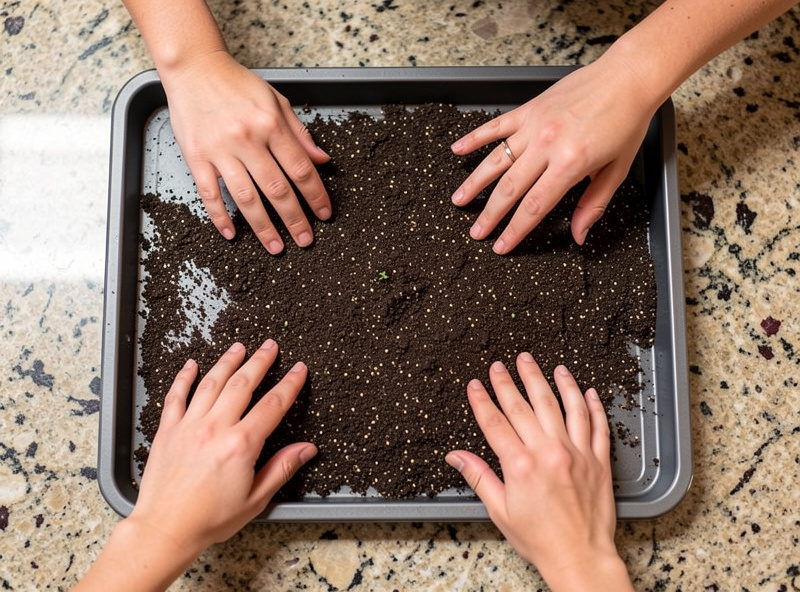
The Mediums I’ve Run, Ranked for Microgreens
There are really four categories worth your time, plus one to avoid. Here is how they stack up once you have actually grown trays on each, rather than read the bag.
| Medium | Water retention | Cleanliness at harvest | Best for | Notes |
|---|---|---|---|---|
| Fine seed-starting / coir-based mix | Excellent | Good | Most microgreens, all-rounder | My default; even, forgiving |
| Coco coir (pure, rehydrated) | Very good | Very good | Clean trays, peat-free growers | Low fertility; sustainable |
| Hydroponic grow mats (hemp/jute) | Good (needs steady watering) | Excellent — no soil at all | Fast crops, ultra-clean harvest | Pricier per tray; less buffer |
| Homemade mix (coir + worm castings + perlite) | Excellent | Good | Volume growers who tweak | Cheapest at scale; more effort |
| Standard bagged potting soil | Uneven | Poor — bark, chunks | Avoid | Compacts, drowns, gets in the harvest |
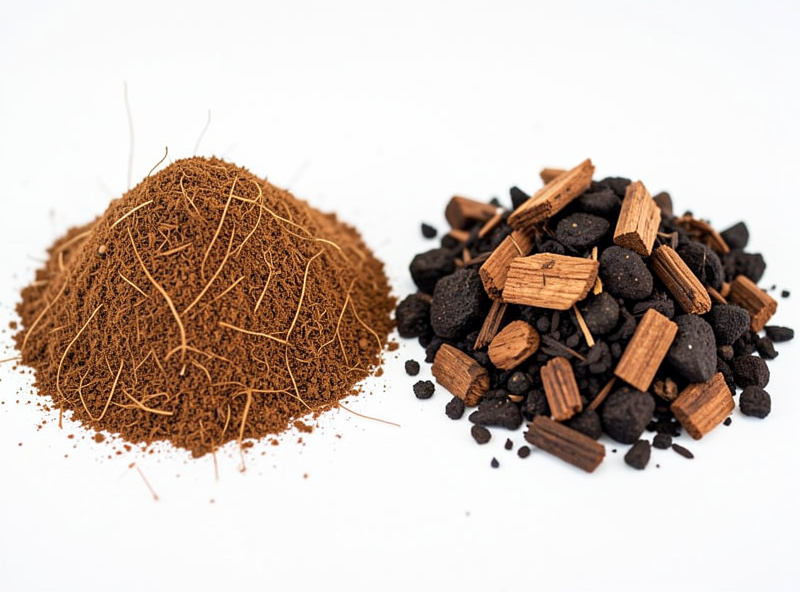
For most people most of the time, a fine seed-starting mix is the right answer. A bag of fine seed-starting mix is milled small, drains well, holds water, and is clean enough to cut off — it is the lowest-effort path to a good tray. If you would rather run a clean, peat-free medium, a block of compressed coco coir rehydrates into a tray’s worth of fine, fluffy medium for very little money and is my go-to when I want the cleanest possible harvest.
Disclosure: CityRooted is reader-supported. As an Amazon Associate I earn from qualifying purchases made through links in this article, at no extra cost to you. I only recommend mediums I actually run on my own microgreen shelf.
Why Standard Potting Soil Is the Wrong Tool
This is the mistake that costs people their first few trays, so it is worth being blunt about. Bagged potting mix is formulated for containers that hold a plant for months — it is built around chunky bark, large perlite, slow-release fertiliser, and a structure meant to resist compaction over a long season. Tip that into a shallow tray and you get an uneven, lumpy surface where small seeds fall into voids and germinate patchily, water pools in low spots and dry-stalls on high ones, and at harvest you are pulling bark fragments out of your salad. The slow-release fertiliser is also pointless here — the crop is gone before it matters — and an over-rich medium can actually encourage the damping-off that flattens a tray overnight.
The same logic applies to garden soil from outside (compacted, full of weed seeds and whatever fungal spores are in your yard) and to heavy “garden soil” bags. Microgreens want fine and clean, not rich and chunky. If you want the full reasoning on why bagged mixes behave the way they do in containers, my guide to choosing potting soil for vegetables covers the container side of that story in depth.
There is one more reason to keep the medium clean and low-nutrient that beginners discover the hard way: mould. A tray sits warm, damp, and covered for its first few days, which is exactly the environment that grows fuzzy white mould as readily as it grows greens. A rich, fertiliser-heavy potting mix feeds that mould; a clean, well-drained fine medium starves it. Half the “is this mould or is it root hairs?” panic I see from new growers traces straight back to the wrong medium plus too much water. Get the medium right and the problem mostly disappears on its own — root hairs are fine, fuzzy, and disappear when misted; true mould is web-like, spreads, and smells off.
Soil-Based vs Hydroponic Mats
The other live debate is soil versus a soilless grow mat. Mats — usually hemp, jute, or a biostrate fibre — give you the cleanest harvest imaginable, because there is literally no soil to rinse out of the roots. They are excellent for fast, small-seeded crops where you are turning trays over quickly and want a spotless cut. The trade-off is they hold less of a moisture buffer than a soil medium, so they punish you faster if you forget to water, and they cost more per tray.
Soil and coir mediums, by contrast, are more forgiving — the extra water-holding capacity buys you a margin of error on watering, which matters if you are not home to mist trays twice a day. My honest take after running both: soil or coir for the bulk of what I grow and for anything slower, mats reserved for the fast, premium, ultra-clean crops where presentation matters. Neither is wrong; they suit different rhythms.
The Homemade Mix I Keep Coming Back To
Once you are growing volume, mixing your own is the cheapest route and lets you dial the texture in. The blend I keep returning to is roughly two parts rehydrated coir for water retention and fine texture, one part fine compost or worm castings for a touch of structure and microbial life, and a small handful of perlite or fine pumice worked in for drainage so the tray never goes anaerobic at the base. Worm castings are the amendment I trust here — gentle, never hot, and they bring a living microbiology that seems to keep damping-off at bay better than a sterile mix does.
Keep the fertility low and the texture fine. Microgreens are not a crop you push with nutrients — you push them with even moisture, good light, and a clean medium, and they reward all three. Once the medium is sorted, the next variable is the light over the tray; my guide to grow lights for microgreens picks up exactly there.
Frequently Asked Questions
What is the best soil for microgreens?
A fine seed-starting mix or rehydrated coco coir is the best all-round choice. Both are milled small, drain well, hold even moisture, and are clean enough to cut a harvest off. Microgreens need a fine, level, low-nutrient medium rather than a rich, chunky potting soil.
Can I use regular potting soil for microgreens?
It is the wrong tool. Standard potting soil is built around chunky bark, large perlite, and slow-release fertiliser for long-season containers. In a shallow tray it gives an uneven surface, patchy germination, poor drainage, and bark fragments in your harvest. Use a fine seed-starting mix or coir instead.
Do microgreens need fertilizer in the soil?
No. The seed carries its own food reserves for the one to two weeks a microgreen lives, so fertility barely registers. A clean, low-nutrient medium actually produces sturdier, cleaner-tasting greens than a hot, fertiliser-rich one, and avoids encouraging damping-off.
Is coco coir good for growing microgreens?
Yes, coco coir is one of the best mediums. Rehydrated from a compressed brick it makes a fine, fluffy, peat-free medium that drains well, holds moisture, and is very clean at harvest. It is low in nutrients, which is ideal for microgreens, and inexpensive per tray.
Can you grow microgreens without soil?
Yes. Hydroponic grow mats made from hemp, jute, or biostrate fibre grow microgreens with no soil at all, giving the cleanest possible harvest. They hold less moisture buffer than soil so need steadier watering and cost more per tray, but suit fast crops and ultra-clean presentation.
How deep should the soil be for microgreens?
Shallow is fine. About 2 to 4 cm of medium in a standard 1020 tray is plenty, because microgreens are cut young and never develop a deep root system. The medium just needs to be fine, level, and evenly damp so the seeds make good contact and anchor.