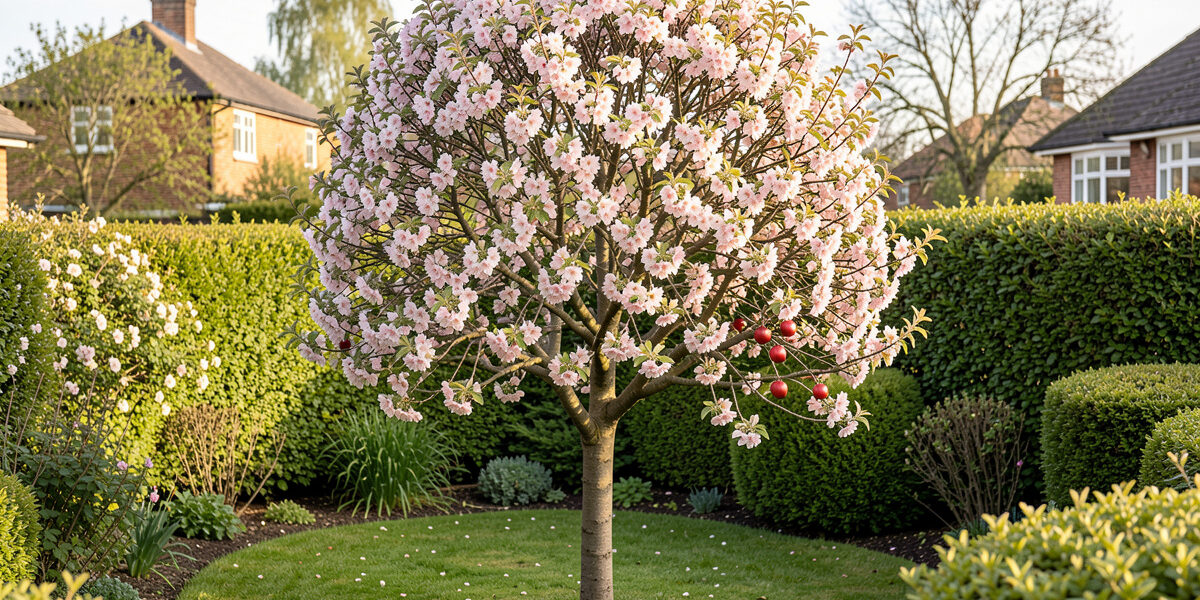
The best crab apple trees for small gardens are compact varieties like Malus Evereste and Royalty that stay under 12 feet while providing spring blossoms, summer fruit, and winter interest. These multi-season performers are ideal for urban spaces where every plant must earn its place — and in a Nordic climate, a crab apple is one of the few flowering trees that handles a zone 4 winter without complaint.
For a complete overview of all small garden trees, shrubs, and container planting methods, see my complete small garden trees and shrubs guide.
As an Amazon Associate I earn from qualifying purchases.
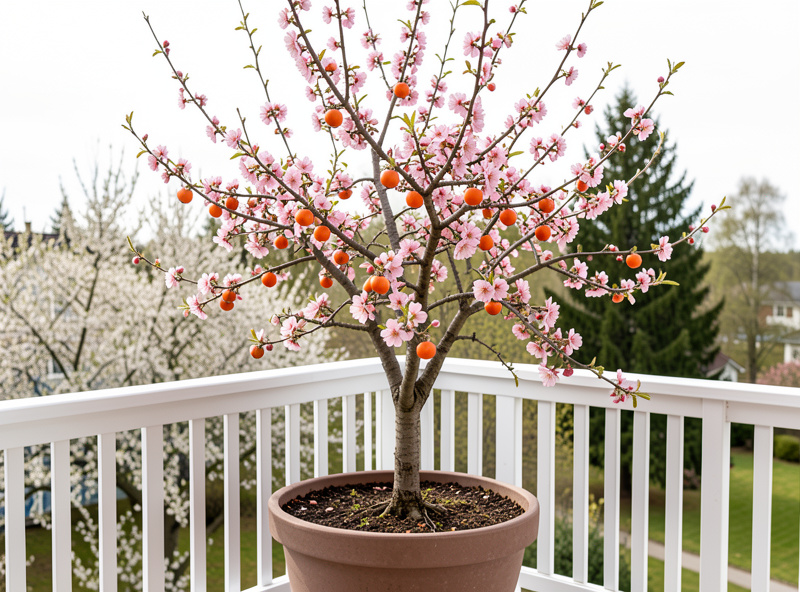
I grow two crab apples on my balcony — an Evereste in a 60 cm pot and a Butterball I keep pruned to barely head-height — and they earn their space every month of the year. Crab apples offer more than just pretty flowers. Their small, persistent fruit attracts birds through winter, while their manageable size makes them perfect for compact gardens. Modern dwarf varieties have transformed these trees into must-have plants for small-space gardeners. Unlike standard apple trees that require significant space and maintenance, crab apples provide maximum visual impact with minimal demands.
Why Choose Crab Apple Trees
Crab apples excel in small gardens because they deliver four-season interest. Spring brings masses of pink, white, or red blossoms. Summer offers attractive foliage. Fall delivers colorful fruit that persists into winter, feeding birds when other food sources disappear.
Most crab apples tolerate urban conditions including pollution, clay soil, and exposure. They require minimal pruning beyond removing dead or crossing branches, making them low-maintenance choices for busy gardeners. Their naturally compact growth habit means you will not spend weekends controlling overgrown branches.
Pollinator Magnets: Crab apple blossoms provide early-season nectar for bees and other pollinators. A single tree can support dozens of pollinator visits daily during bloom time. This makes them valuable additions to wildlife-friendly gardens.
Edible Uses: While too tart for fresh eating, crab apples excel in cooking. Their naturally high pectin content makes them ideal for jellies, jams, and chutneys, often without adding any commercial pectin. I save the Golden Hornet fruit every autumn for a small batch of crab apple jelly that lasts through winter, and the leftover pulp feeds the worm bin. Many varieties also produce excellent cider when blended with sweeter apples at roughly a 20% crab to 80% dessert ratio.
Top Crab Apple Varieties for Small Spaces
Malus Evereste
This popular variety reaches 10-12 feet and produces masses of white blossoms followed by orange-red fruit. The fruit remains on branches well into winter, creating a striking contrast against bare branches. Evereste shows excellent disease resistance and adapts to various soil conditions.
Malus Royalty
Deep purple foliage provides dramatic contrast throughout summer. Pink blossoms in spring lead to dark red fruit. This variety stays compact at 8-10 feet and makes a striking focal point, though it is prone to apple scab — grow it where air moves freely, or choose a resistant purple-leaved alternative like Prairie Fire if scab is common in your area. The purple leaves intensify in full sun.
Malus Golden Hornet
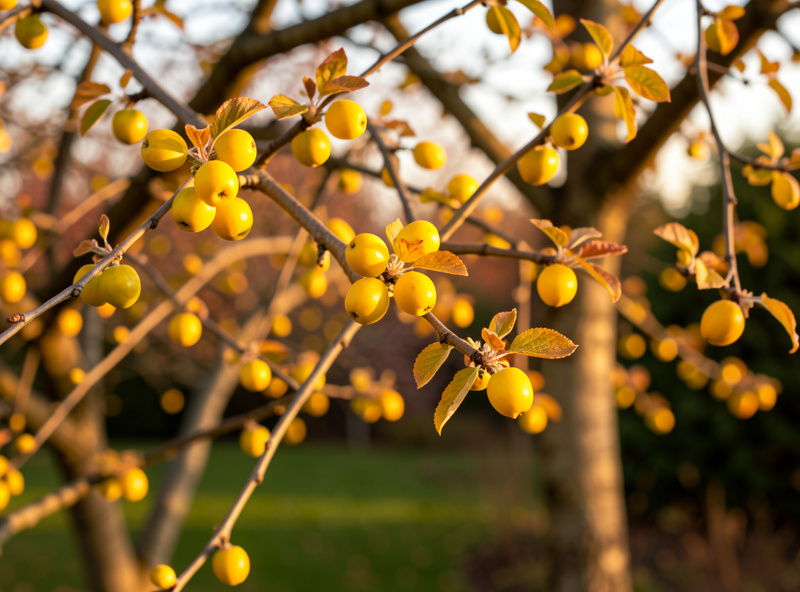
Known for its abundant yellow fruit that lasts through winter, this 10-foot variety offers white spring flowers and good disease resistance. The upright growth habit fits neatly into narrow spaces. Birds particularly favor the persistent fruit.
Malus John Downie
A classic choice for jelly-making, this 12-foot tree produces red and orange striped fruit. White blossoms cover the tree in spring. The conical shape works well in formal garden designs. Fruit ripens early, making it valuable for preserves.
Malus Butterball
Perfect for very small spaces at just 6-8 feet, this variety produces golden-yellow fruit and white flowers with excellent disease resistance. Ideal for container growing or tiny urban gardens where every inch matters.
Malus Red Sentinel
Small bright red fruit clusters persist well into winter against attractive glossy foliage. Reaches 8-10 feet at maturity. The fruit resembles miniature ornaments, creating festive winter displays without holiday decorations.
Malus Prairie Fire
This disease-resistant variety offers deep pink blossoms followed by persistent red fruit. Dark purple foliage emerges bronze in spring. Reaches 10-12 feet with an upright oval habit. Excellent scab resistance makes it ideal for humid climates.
Malus Adirondack
An upright columnar variety reaching only 8-10 feet tall and 6 feet wide. White blossoms produce small orange fruit. Perfect for narrow spaces where horizontal spread is limited. The architectural form adds vertical interest.
Crab Apple Variety Comparison
| Variety | Height | Flower Colour | Fruit Colour | Best For | Disease Resistance |
|---|---|---|---|---|---|
| Evereste | 10-12 ft | White | Orange-red | All-round performer | Excellent |
| Royalty | 8-10 ft | Pink | Dark red | Foliage contrast | Poor (scab-prone) |
| Golden Hornet | 10 ft | White | Yellow | Winter fruit + jelly | Excellent |
| John Downie | 12 ft | White | Red-orange | Preserves + cider | Good |
| Butterball | 6-8 ft | White | Golden-yellow | Smallest spaces + pots | Excellent |
| Red Sentinel | 8-10 ft | White | Bright red | Winter display | Very good |
| Prairie Fire | 10-12 ft | Deep pink | Red | Humid climates | Excellent |
| Adirondack | 8-10 ft | White | Orange | Narrow spaces | Good |
Planting and Growing Requirements
Sun requirements: Full sun produces the best flowering and fruiting. Crab apples tolerate partial shade but bloom less profusely. Aim for at least 6 hours of direct sunlight daily.
Soil conditions: Well-drained soil prevents root rot, and this matters even more in a cold climate where waterlogged roots freeze and thaw repeatedly. These adaptable trees handle clay and loam equally well but struggle in waterlogged conditions. I mix 30% horticultural grit into the planting hole for heavy Nordic clay — it is the single biggest factor in whether a young crab apple survives its first winter. Amend heavy soil with organic matter before planting.
Spacing: Plant dwarf varieties 6-8 feet apart from structures or other trees. Standard crab apples need 10-12 feet of space. Consider mature spread when positioning near pathways or patios.
Pollination: Most crab apples are self-fertile, meaning one tree produces fruit without needing a pollinator partner nearby. However, planting multiple varieties can increase fruit set and extend bloom periods.
Care and Maintenance
Young trees in the ground need roughly 15-20 litres of water a week during their first two growing seasons. Container-grown crab apples dry out faster — my balcony Evereste needs water every other day in midsummer. The leaves curl slightly before they wilt, which gives you a day’s warning if you check them. Young trees need regular watering during their first two growing seasons. Established crab apples are remarkably drought-tolerant once roots are established. Water deeply during extended dry periods.
Apply a 2-3 inch mulch ring around the base, keeping mulch away from the trunk. This retains moisture and suppresses weeds that compete for nutrients. Refresh mulch annually in spring.
Prune in late winter while trees are dormant. Remove suckers from the base and thin crowded branches to improve air circulation. Cut back any crossing or rubbing branches to prevent bark damage and disease entry points.
Seasonal Care Calendar
Late Winter (February-March): Prune before buds swell. Remove dead, damaged, or crossing branches. Thin interior growth to improve light penetration and air flow.
Spring (April-May): Apply balanced fertilizer when blossoms appear. Watch for fire blight (sudden branch dieback with blackened tips) and prune infected branches well below damage.
Summer (June-August): Water during drought stress. Monitor for aphids, spider mites, and Japanese beetles. Maintain mulch layer.
Autumn (September-November): Enjoy the fruit display. Rake fallen fruit if it creates mess on pathways. This is the ideal time to plant new trees.
Winter (December-January): Tree rests dormant. Plan next year’s pruning. Order bare-root trees for spring delivery — bare-root crab apples are cheaper and establish faster than container-grown stock.
Pest and Disease Management
Apple Scab: This fungal disease causes dark spots on leaves and fruit. As Illinois Extension puts it, the best control is simply planting disease-resistant varieties in the first place — reach for Evereste, Golden Hornet, Adirondack, or Prairie Fire rather than older scab-prone types. Rake fallen leaves to reduce overwintering spores.
Cedar-Apple Rust: Orange spots on leaves indicate this disease. Remove nearby cedar/juniper hosts if possible, or choose resistant varieties. Rarely fatal but unsightly.
Aphids: These sap-sucking insects cluster on new growth. Blast with water spray or apply insecticidal soap. Encourage ladybugs and lacewings as natural predators.
Japanese Beetles: These metallic green beetles skeletonize leaves and eat blossoms in midsummer. Hand-pick them into a bucket of soapy water early morning when they are sluggish — I do a two-minute sweep each morning during the 3-4 week peak season and it keeps the damage cosmetic rather than destructive. Milky spore applied to surrounding lawn reduces grub populations long-term, though it takes 2-3 years to build effective levels in the soil.
Design Ideas for Small Gardens
Specimen planting: Use a single crab apple as a focal point where its four-season interest can be appreciated. Position near seating areas or windows for year-round viewing pleasure.
Mixed borders: Plant crab apples among shrubs and perennials. Spring bulbs underneath provide early color before crab apple blossoms appear. Underplant with ground covers that tolerate partial shade from the tree canopy — hellebores, epimedium, and vinca all thrive under a crab apple and extend the season of interest into winter.
Container growing: Dwarf varieties like Butterball thrive in large containers — I use a 60 cm (24-inch) plastic planter for my Evereste and it has held up through three Nordic winters without cracking. A container this size weighs roughly 40-50 kg when full, so check your balcony load rating before positioning it. This setup also means precise placement on patios and the flexibility to move the tree if it outgrows the spot you first chose.
Privacy screens: Plant columnar varieties like Adirondack in a row — three trees spaced 2 m apart along a 6-7 m boundary gives you a living screen under 10 feet tall that provides privacy without consuming ground space. The winter fruit display is particularly valuable in a Nordic garden: after the leaves drop, the bare framework of branches hung with glowing orange or red fruit catches low-angle winter light in a way few other small trees can match.
Overwintering a Crab Apple in a Pot Up North
A crab apple in a container survives a Nordic winter if the pot is big enough and you protect the roots — the roots are far less cold-hardy than the top growth, and in a pot they have no surrounding ground to insulate them. On my balcony I wrap the pot itself in burlap or bubble insulation through the coldest weeks of January and February and lay a gravel or bark mulch over the crown, which keeps the rootball from freezing solid and, just as importantly, from going through repeated freeze-thaw cycles that heave and tear fine roots. A pot of at least 50-60 cm holds enough soil mass to buffer the cold; anything much smaller freezes through too fast.
The payoff is a tree that marks the whole Nordic year from a few square feet of balcony. The blossom in May is the first real sign the balcony is coming back to life, the fruit sets through summer, and the ornamental crab apples hang on the bare branches from autumn well into early winter, catching the low light long after everything else has dropped its leaves. For the widest choice of hardy small trees to grow alongside it, start with my hub guide to the 15 best trees for small gardens.
Frequently Asked Questions
What are the best crab apple trees for small gardens?
Evereste (10-12 ft), Butterball (6-8 ft), and Adirondack (8-10 ft columnar) are the top compact crab apple varieties for small spaces. All three offer excellent disease resistance and persistent winter fruit that feeds birds into the cold months.
Do crab apple trees need a pollinator?
Most crab apple varieties are self-fertile and produce fruit without a second tree. However, planting a second variety within 15 m (50 ft) increases fruit set and extends the overall bloom window, which pollinators appreciate.
How big do crab apple trees get?
Dwarf crab apples like Butterball and Adirondack stay at 6-10 feet. Standard varieties like John Downie and Prairie Fire reach 10-12 feet. When grown in a container, the pot naturally restricts the root system and keeps the tree at the lower end of its range.
Are crab apple fruits edible?
Yes, though too tart for raw eating. The high natural pectin content makes them outstanding for jellies, jams, and chutneys — no added pectin needed. Golden Hornet and John Downie are the two varieties most cider-makers and preserve cooks seek out.
Related Articles
Consider weeping crab apples for cascading forms.
Pair with Japanese maples for complementary underplanting.
Learn how to start a garden for tree placement.