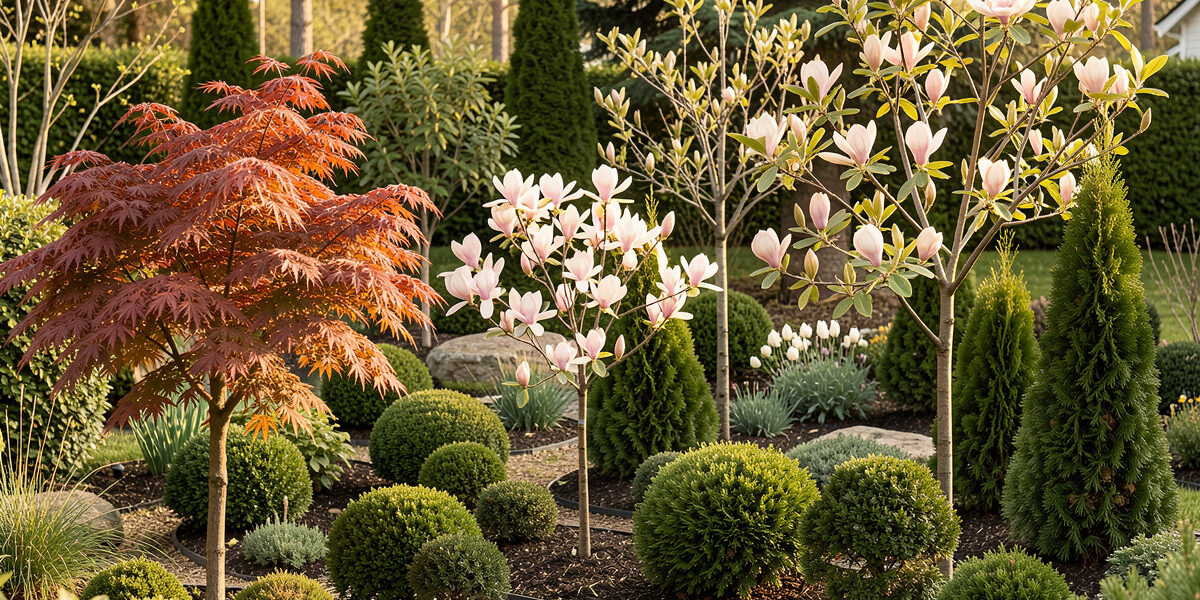
The 15 best trees for a small garden share two traits: they stay under 4-5 metres at maturity, and they earn their space with flowers, foliage, or fruit across multiple seasons. But the list most “best small trees” roundups skip is the one North-European growers actually need — which ones survive a real winter.
I garden in a cold Nordic climate, and several of the usual suspects (olive, fig, crape myrtle) simply won’t survive outdoors here without shelter. So this guide does double duty — 15 compact trees worth growing, and for each, whether it shrugs off a hard winter, needs a warm wall, or belongs in a large container you can wheel under cover. For the wider view, see my complete small garden trees and shrubs guide.
As an Amazon Associate I earn from qualifying purchases.
Why Tree Choice Matters More in a Small Garden
In a small space there’s no room for a mistake to grow out of. The wrong tree blocks light, crowds everything else, or turns into an annual pruning battle; the right one gives you shade, structure, and a long season of interest without ever overwhelming the plot. Compact trees also cope better with urban realities — limited root run, reflected heat off walls, poorer soil. And in my climate the deciding factor on top of all that is simple: will it live through February? Match the tree to your space and your winter and it’ll reward you for decades.
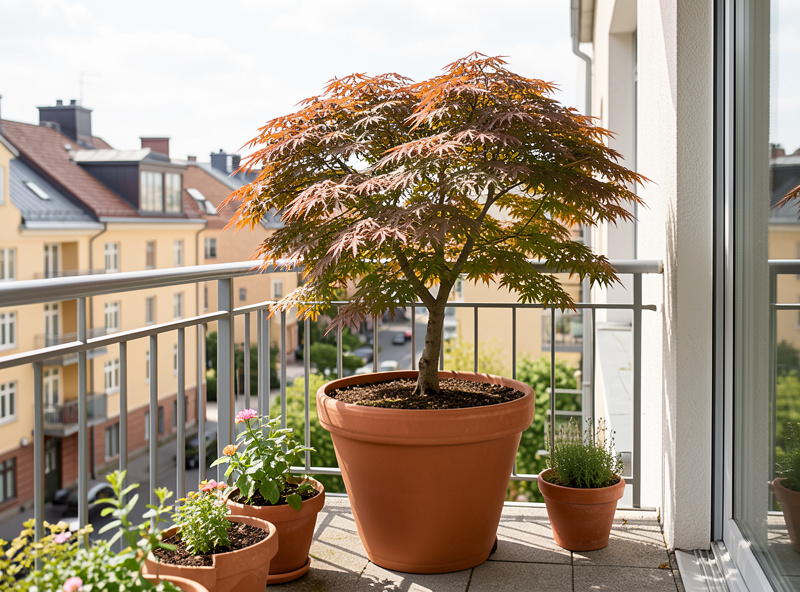
Container growers on balconies face an extra constraint the in-ground guides ignore: weight. A 60 cm pot filled with damp soil and a 3-metre tree can easily pass 80 kg. Before you buy, know what your balcony can carry — a lesson I learned the hard way when I cracked a decking plank under a potted maple I’d underestimated. Now I weigh the pot first and check the building’s load rating. For heavy specimens, look for lightweight resin planters that shed 30-40% of the weight of terracotta at the same volume.
15 Best Compact Trees for Small Spaces
1. Japanese Maple (Acer palmatum)
Reaching 3–4.5 m, with foliage in red, orange, or green and famously slow growth (just 15–30 cm a year). Prefers dappled shade and shelter from harsh wind — full afternoon sun scorches the leaves in a dry spell. The dissectum (cut-leaf) forms are even smaller, staying under 2 m and weeping beautifully over a pot edge, making them the single best choice for a container on a sheltered balcony. Hardiness: reliably hardy in cold gardens and superb in a pot. My pick of the whole list. More in my Japanese maple guide.
2. Crab Apple (Malus)
A 3–3.5 m tree that flowers in spring then carries decorative fruit into winter, feeding birds when little else does. Modern disease-resistant varieties like ‘Prairifire’ and ‘Evereste’ shrug off scab and mildew — the problems that made older crabs look ragged by August. Crab apples also pollinate eating-apple trees, so a single Malus can boost fruit set across a small garden. Hardiness: very hardy — one of the best choices for a cold climate. See my crab apple guide.
3. Star Magnolia (Magnolia stellata)
Stays under 3 m and opens fragrant white or pink star-flowers on bare branches in early spring — often the first colour in the garden. The flowers can get caught by a late frost, but that’s actually easier to manage in a small garden: a sheet of horticultural fleece draped over it the night before a forecast freeze saves the display. Hardiness: hardy, but plant where late frost won’t catch the early blooms — a north or east aspect that delays flowering slightly actually helps up north.
4. Weeping Cherry (Prunus subhirtella pendula)
Cascading branches to 3.5–4.5 m, smothered in pink or white blossom in spring — a natural focal point that reads as a living sculpture. Weeping cherries are grafted onto a straight stem, so their ultimate height is fixed by the graft point rather than the roots, which makes them more predictable in a small space than most trees. Hardiness: hardy. See weeping tree options for more.
5. Crape Myrtle (Lagerstroemia)
Compact forms reach 2–3.5 m with summer-long blooms and lovely peeling bark that reveals cinnamon-coloured wood underneath. Crepe-like flower panicles in pink, red, or white hold for weeks. Hardiness: tender — this is a hot-climate tree. In a cold garden it struggles and may not flower; grow it only in a large pot you can shelter, or skip it for something hardier.
6. Dwarf Conifers
Dwarf pines, spruces, and junipers that stay under 2 m and hold structure all year for almost no work. A well-chosen dwarf conifer — Pinus mugo ‘Mops’ (1 m), Picea glauca ‘Conica’ (2 m), or Juniperus squamata ‘Blue Star’ (60 cm) — gives the garden a backbone when everything deciduous is bare, and the blue-toned varieties look especially good against snow. Hardiness: rock-hardy and ideal for cold gardens.
7. Flowering Dogwood (Cornus florida)
Spring bracts in white or pink, red berries in late summer, and burgundy autumn colour; often stays small, especially in a container where root restriction naturally limits size. The horizontal branching habit gives it a distinctive layered look even when bare in winter. Hardiness: hardy in most cold gardens, though it likes shelter from drying wind.
8. Olive Tree (Olea europaea)
Silver-green Mediterranean charm on a compact frame — ‘Little Ollie’ is a fruitless dwarf that stays under 2 m and never makes a mess on paving. A real olive needs 200-300 chill hours below 7°C to set fruit, which a cold-climate winter delivers without effort. Hardiness: tender — will not survive a cold winter in the open ground. I grow olive the only way that works this far north: in a pot that comes into a cool, bright spot indoors for winter.
9. Fig Tree (Ficus carica)
Dwarf figs like ‘Little Miss Figgy’ fruit happily while staying under 2–3 m and take brilliantly to pots. A fig’s roots need restriction to push energy into fruit rather than foliage, which makes container growing actually preferable to open ground. The large lobed leaves give a tropical look to a balcony through summer. Hardiness: borderline — survives mild winters against a warm wall, but in a genuinely cold climate grow it in a container and move it somewhere frost-free. Restricting the roots in a pot also pushes it to fruit, which is exactly what you want in a short season.
10. Witch Hazel (Hamamelis)
Spidery, fragrant yellow-to-red flowers on bare branches in the depths of winter — Hamamelis x intermedia ‘Jelena’ opens coppery orange in January, and ‘Pallida’ is sulphur-yellow with a scent that carries across a cold garden. Underplant with snowdrops and the combination works for weeks. Hardiness: very hardy — and genuinely special in a cold garden, because it flowers when nothing else dares. One of my favourites for the north.
11. Hawthorn (Crataegus)
Spring flowers, good foliage, and berries for wildlife on a tough 3–4.5 m tree. Crataegus laevigata ‘Paul’s Scarlet’ gives double-pink flowers; Crataegus monogyna is the native common hawthorn that forms a dense barrier if pleached or kept as a hedge. Hardiness: extremely hardy and shrugs off pollution and poor soil.
12. Serviceberry (Amelanchier)
White spring flowers, edible June berries that taste like a blueberry-almond cross, fiery orange-red autumn colour; trainable as a small multi-stem tree or a single-trunk specimen. Amelanchier lamarckii is the classic small-garden pick, reaching roughly 4 m. Hardiness: very hardy — a cold-climate native that earns its place three seasons out of four.
13. Stewartia (Stewartia pseudocamellia)
Camellia-like white summer flowers with golden centres, beautiful peeling bark in shades of grey, cinnamon, and cream, plus strong red autumn colour. This is the tree you plant when you want something few neighbours will recognise — it’s underused and genuinely elegant. Hardiness: hardy but fussy — wants consistent moisture and shelter; a tree for a kinder corner of a cold garden.
14. Franklin Tree (Franklinia alatamaha)
Rare, with white late-summer flowers and red autumn colour. Extinct in the wild since 1803 — every specimen in cultivation descends from seeds collected by John Bartram. A conversation piece if you can keep it happy. Hardiness: notoriously temperamental and best left to mild, sheltered gardens — I wouldn’t gamble on it in a hard-winter plot.
15. Dwarf Apple Trees
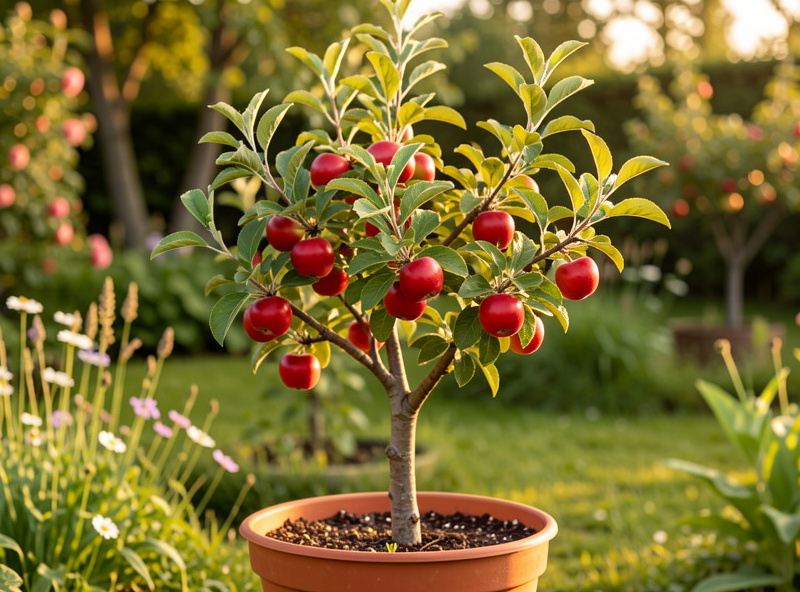
Modern dwarfing rootstocks like M27 and M9 keep apples under 2.5 m while cropping full-size fruit; columnar varieties such as ‘Scarlet Sentinel’ fruit right up the trunk on a tree barely 60 cm wide. For the smallest possible footprint, a step-over apple trained along a single low wire produces 5-10 kg of fruit from a 1.5 m run. Hardiness: hardy and productive — my top pick if you actually want food from your small tree.
Small Garden Tree Comparison: At a Glance
| Tree | Mature Height | Cold Hardy? | Container-Friendly? | Season of Interest |
|---|---|---|---|---|
| Japanese Maple | 3–4.5 m | Yes | Excellent | Spring–Autumn |
| Crab Apple | 3–3.5 m | Yes | Good | Spring + Winter fruit |
| Star Magnolia | Under 3 m | Yes (protect blooms) | Good | Early Spring |
| Weeping Cherry | 3.5–4.5 m | Yes | Fair | Spring |
| Crape Myrtle | 2–3.5 m | No (shelter needed) | Good in pot | Summer |
| Dwarf Conifers | Under 2 m | Yes | Excellent | Year-round |
| Flowering Dogwood | 3–4 m | Yes (sheltered) | Good | Spring + Autumn |
| Olive Tree | 2–3 m in pot | No (move indoors) | Excellent | Year-round |
| Fig Tree | 2–3 m | Borderline | Excellent | Summer + Autumn fruit |
| Witch Hazel | 2.5–4 m | Yes | Good | Winter |
| Hawthorn | 3–4.5 m | Yes | Fair | Spring + Autumn |
| Serviceberry | 3–4 m | Yes | Good | Spring + Summer + Autumn |
| Stewartia | 3–4 m | Yes (sheltered) | Fair | Summer + Autumn |
| Franklin Tree | 3–4 m | No | Fair | Late Summer + Autumn |
| Dwarf Apple | Under 2.5 m | Yes | Good | Spring + Autumn fruit |
Planting and Care — What I Actually Do
Site it right. Most flowering trees want full sun for good bloom; match the tree to the light you have and leave room for the mature spread — if you are building beds around your new tree, my raised beds and planters guide covers the full layout. Plant well: dig a hole twice as wide as the rootball but no deeper, and loosen the sides — in heavy soil, work in compost rather than leaving the roots in a clay bucket that holds water. The RHS advises setting the tree so the root flare — the point where the roots meet the trunk — sits level with the soil surface, never buried; planting too deep is the single most common mistake and the reason many young trees fail in their first two years. With pot-grown trees, scrape off any excess compost sitting above the root collar first, or the tree goes in deeper than it looks.
Containers are the small-garden (and balcony) answer. Most of these grow happily in a large pot — minimum ~60 cm across — and a pot is the only way I grow the tender ones, because I can wheel them under cover before the first hard frost. Use a quality mix with added grit for drainage in a large planter, and for what to fill beds and big containers with, see my best soil for raised beds guide and container gardening guide.
Stake young trees for the first year — a stake-and-tie kit with flexible ties keeps a new tree upright in wind without choking the trunk; take it off after a year so the trunk strengthens. Water deeply through the first two seasons while roots establish — roughly 15-20 litres per week for a new tree in dry weather — then mulch the base (kept off the trunk) with 5-7 cm of bark or compost to hold moisture and suppress weeds. Feed each spring with a slow-release tree and shrub feed. Most compact trees need little pruning beyond dead wood — a clean pair of bypass pruners handles almost everything. For the few that do need shaping — crab apples, hawthorns — prune in late winter while they are still dormant.
Seasonal Care, Cold-Climate Version
Spring: feed as new growth starts, prune out dead or crossing branches before the sap rises, refresh mulch. Wrap the trunks of young maples and magnolias if a late frost is forecast — the thin bark splits easily. Summer: water deeply in dry spells and watch container trees especially — they dry fast and a single missed watering in hot weather can scorch a Japanese maple’s leaf edges permanently. A soil moisture probe takes the guesswork out of deep-container watering. Autumn: ease off watering, clear fallen leaves, and plant new hardy trees now — autumn is the best planting season because the soil is still warm and the roots have weeks to settle before the ground freezes. Winter: move tender potted trees under cover, wrap young trunks with hessian or tree-guard spirals against frost cracks and rabbit damage, and check stakes after storms — and enjoy the witch hazel, which is just getting started.
One hard-won piece of advice for cold-climate tree growers: don’t rush spring feeding. I lost a young magnolia one year because I fed it in late March, a warm week followed, it pushed soft new growth, and then an April frost at -4°C killed every shoot. Now I wait until the last frost date has passed and the soil has warmed to at least 7°C before applying any fertiliser — the tree takes up nutrients far more efficiently once it’s actively growing. For fast drainage in heavy clay, I mix 30% horticultural grit into the planting hole and mound the compost slightly so water runs away from the crown rather than pooling there through a freeze-thaw cycle.
Design Ideas for Small Gardens
One real focal point: let a single Japanese maple, weeping cherry, or dwarf apple anchor the space, positioned where you’ll see it from a window or seat. Living screen: a row of narrow conifers or upright maples gives privacy without eating ground. Container stars: potted figs, olives, and maples can be moved into the spotlight in season — and the tender ones moved out of the cold. Layer it: underplant deciduous trees with spring bulbs and shade-tolerant ground cover — hellebores, epimedium, and ferns thrive under a light canopy — for a garden that works on several levels at once. Four-season plan: combine a winter-flowering witch hazel, a spring crab apple, a summer-flowering stewartia, and a dwarf conifer for year-round structure — that four-tree combination covers every month of the year in a space barely 5 × 5 m. New to all this? Start with my how to start a garden guide and raised beds setup guide, or the city-specific grow a garden in the city roadmap.
How close to the house can I plant a small tree?
Keep trees at least 2 metres (6-8 feet) from foundations. For very compact varieties under 3 metres you can plant a bit closer, around 1.5 metres, but always allow for the mature spread and root development, and avoid planting directly over underground utilities.
Can small garden trees grow in containers permanently?
Yes, many compact trees thrive in large containers for years, and a pot is the best way to grow tender trees like olive and fig in a cold climate because you can move them under cover for winter. Choose varieties on dwarfing rootstocks, use a quality gritty mix, and refresh or pot on every 2-3 years.
What is the best small tree for shade?
A Japanese maple gives lovely dappled shade without overwhelming a small space, and a weeping cherry casts cooling shade beneath its arching branches. For denser shade in a cold garden, a compact hawthorn or flowering dogwood works well.
How long until a small tree reaches mature size?
Most compact trees reach mature height in 5-10 years. Japanese maples are slow (15-30 cm a year), while a crab apple or dwarf apple fills out faster. Slow growth is a feature in a small garden, not a drawback.
Do small trees need staking?
Stake young trees for the first year after planting, especially in windy or exposed spots, using flexible ties that won’t cut into the trunk. Remove the stake after the first year so the trunk strengthens naturally.
Which small trees survive a cold winter?
The hardiest choices for cold gardens are crab apple, witch hazel, hawthorn, serviceberry, dwarf conifers, dwarf apple, Japanese maple, and star magnolia. Olive, fig, crape myrtle, and Franklin tree are tender – grow those in containers you can move under cover, or skip them for a hardier option.