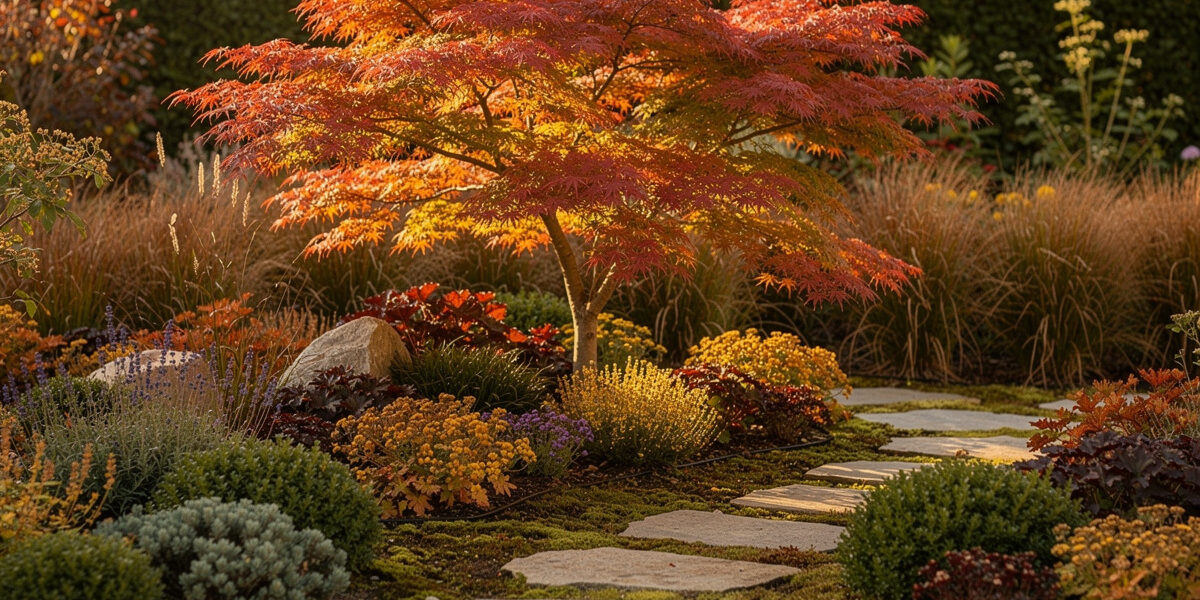
Trees and shrubs for small gardens transform limited outdoor spaces into layered, productive landscapes that provide year-round interest, privacy, and habitat. A single compact tree like a Japanese maple or crab apple adds vertical structure, seasonal color, and wildlife value to a garden that would otherwise be flat and one-dimensional. Container-grown trees and shrubs make this possible even on patios, balconies, and tiny courtyards where ground planting is not an option.
Small gardens face unique challenges that large gardens never encounter: every plant must earn its place, there is no room for mistakes, and the wrong tree can overwhelm the entire space within a few years. The key is selecting species that naturally stay compact, choosing varieties bred specifically for limited spaces, and understanding how to combine trees, shrubs, and flowering plants into a cohesive design that looks intentional rather than crowded. A well-planned small garden with the right trees and shrubs feels larger and more interesting than a large garden with poor plant selection.
As an Amazon Associate I earn from qualifying purchases.
This comprehensive hub covers every aspect of small garden trees, shrubs, and border planting: species selection for compact spaces, container growing techniques, year-round flowering strategies, and design principles that maximize visual impact in minimal space. Each section links to detailed guides for deeper instruction on specific topics.
Why Trees Matter in Small Gardens
Adding a tree to a small garden is one of the highest-impact changes you can make. Trees provide structure, scale, and permanence that herbaceous plants simply cannot match. They create a sense of maturity and establishment that makes a new garden feel decades old within just a few years of planting.
Vertical Structure and Scale
Small gardens tend to feel flat and one-dimensional when they contain only low-growing plants. A tree that reaches 8-15 feet creates a vertical layer that draws the eye upward and makes the garden feel larger than its actual footprint. This vertical dimension is especially important in urban gardens where surrounding walls and fences create a box-like feeling. A tree breaks up these hard lines and softens the transition between built structures and planted areas.
Year-Round Interest
Unlike annual flowers that bloom for a few weeks and then decline, trees provide interest across multiple seasons. Spring brings blossoms and fresh foliage. Summer offers shade and dense green canopy. Autumn delivers spectacular leaf color. Winter reveals architectural branch structure and sometimes persistent fruit or bark interest. A single well-chosen tree provides four distinct garden experiences throughout the year.
Wildlife and Environmental Benefits
Even small trees support significant wildlife. Blossoms provide nectar for bees and butterflies in spring. Berries feed birds through autumn and winter. Dense foliage offers shelter and nesting sites. Trees also improve air quality, reduce noise pollution, and shade hard surfaces that would otherwise radiate heat. A small garden with a leafy tree feels noticeably cooler on a hot afternoon than the same garden of bare paving.
Best Trees for Small Gardens
Choosing the right tree for a small garden requires understanding mature size, growth rate, and seasonal characteristics. The biggest mistake small gardeners make is planting trees that will outgrow their space within 5-10 years, requiring expensive removal or drastic pruning.
Compact Deciduous Trees
Deciduous trees lose their leaves in autumn, providing seasonal change and allowing winter sunlight through to the garden. The best compact varieties stay under 15 feet at maturity and offer multiple seasons of interest.
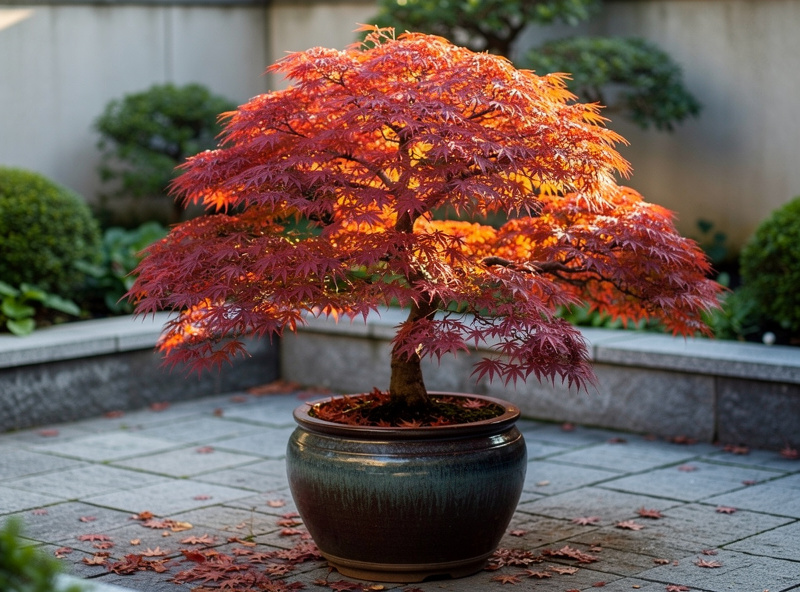
- Japanese maple (Acer palmatum): The gold standard for small gardens. Mature height 8-15 feet depending on variety. Spectacular autumn color in red, orange, and gold. Delicate foliage provides dappled shade. Thrives in partial shade and moist, well-drained soil. See my complete Japanese maple guide for variety selection and care.
- Crab apple (Malus species): Compact varieties like Red Jewel and Sargent stay under 12 feet. Spring blossoms are among the most spectacular of any small tree, followed by persistent ornamental fruit that feeds birds through winter. Disease-resistant varieties are available. See my crab apple selection guide.
- Serviceberry (Amelanchier): Multi-season interest with spring white flowers, edible summer berries, and brilliant autumn foliage. Compact varieties like Autumn Brilliance stay under 15 feet. Excellent for wildlife gardens.
- Dogwood (Cornus kousa): Compact varieties reach 10-15 feet with stunning spring bracts, attractive bark, and red autumn fruit. It is a far safer choice than the native flowering dogwood — West Virginia University Extension notes that Cornus kousa is substantially resistant to dogwood anthracnose while all Cornus florida are susceptible.
Weeping and Pendulous Trees
Weeping trees add dramatic architectural interest to small gardens. Their cascading form creates a focal point that draws attention and makes the garden feel more designed and intentional.
- Weeping cherry (Prunus pendula): Spectacular spring blossom display with cascading branches. Compact varieties like Snow Fountain stay under 15 feet. Requires full sun and well-drained soil.
- Weeping birch (Betula pendula): Elegant white bark with cascading branches. Provides year-round interest with bark, foliage, and winter silhouette. Prefers cool, moist conditions.
- Standard weeping forms: Many shrubs and small trees are available grafted onto standard (tree-form) rootstocks, creating a weeping canopy on a straight trunk. This technique works for weeping lilac, weeping redbud, and weeping mulberry.
For a comprehensive selection guide covering the best weeping trees for small spaces with specific variety recommendations, see my weeping trees for small gardens guide.
Evergreen Trees for Small Spaces
Evergreen trees provide year-round structure, privacy screening, and wind protection in small gardens. The key is selecting slow-growing varieties that will not overwhelm the space.
- Dwarf conifers: Many conifer species have dwarf varieties that grow only 1-2 inches per year. Dwarf Alberta spruce, dwarf Japanese cedar, and dwarf hinoki cypress provide dense evergreen structure in minimal space.
- Bay laurel (Laurus nobilis): Aromatic evergreen tree that can be kept under 8 feet with pruning. Provides culinary leaves and attractive glossy foliage year-round. Hardy in mild climates.
- Olive tree (Olea europaea): Architectural evergreen with silvery foliage. Container-grown olives stay compact and provide a Mediterranean aesthetic. Best in warm, dry climates.
For a complete overview of the best compact tree varieties for small gardens with mature size data and growing requirements, see my best trees for small gardens guide.
Small Tree Comparison Table
| Tree | Mature Height | Spread | Sun | Key Feature | Container Suitable |
|---|---|---|---|---|---|
| Japanese Maple | 8-15 ft | 6-10 ft | Partial shade | Autumn leaf color | Yes |
| Crab Apple (Sargent) | 8-10 ft | 8-12 ft | Full sun | Spring blossom, wildlife fruit | Yes (large pot) |
| Weeping Cherry | 10-15 ft | 8-12 ft | Full sun | Cascading spring blossom | No |
| Amelanchier | 12-15 ft | 8-10 ft | Sun to part shade | Multi-season interest | Yes (large pot) |
| Dwarf Conifer | 3-8 ft | 2-4 ft | Full sun | Year-round evergreen structure | Yes |
| Olive Tree | 6-10 ft | 4-6 ft | Full sun | Mediterranean character | Yes |
| Silver Birch (Fastigiata) | 15-20 ft | 4-6 ft | Full sun | Columnar habit, white bark | No |
Shrubs for Pots and Containers
Growing shrubs in containers extends the range of what is possible in small gardens and on balconies. Container-grown shrubs can be moved to optimize sun exposure, brought indoors for winter protection, and combined with seasonal flowers for changing displays throughout the year.
Best Shrubs for Full Sun Containers
Full sun containers present specific challenges: soil dries quickly, temperatures fluctuate more than in-ground planting, and roots are exposed to heat from container walls. The best container shrubs for full sun are drought-tolerant, heat-resistant, and have root systems that adapt well to confined spaces.
- Lavender (Lavandula): Thrives in hot, dry containers. Provides fragrant flowers, attracts pollinators, and requires minimal maintenance. Compact varieties like Hidcote stay under 18 inches.
- Rosemary (Rosmarinus officinalis): Evergreen aromatic shrub that loves hot, sunny containers. Provides culinary herbs and blue flowers. Prostrate varieties cascade beautifully over container edges.
- Dwarf buddleia: Compact butterfly bush varieties like Buzz series stay under 3 feet and produce flowers continuously from summer to frost. Attracts butterflies and hummingbirds.
- Dwarf hydrangea: Compact hydrangea varieties like Bobo and Little Lime stay under 3 feet and produce abundant flower heads. Prefer morning sun with afternoon shade in hot climates.
For detailed guidance on selecting and caring for sun-loving container shrubs, see my shrubs for pots in full sun guide.
Container Growing Techniques for Shrubs
Container-grown shrubs require different care than in-ground plants. The confined root zone means more frequent watering, regular feeding, and periodic root pruning or repotting. Use containers at least 18 inches in diameter for most shrubs — smaller containers dry out too quickly and restrict root development. Ensure excellent drainage with multiple holes, and skip the old habit of putting a layer of gravel in the bottom — Illinois Extension explains that a coarse gravel layer actually raises the saturated zone closer to the roots rather than draining them, so fill the pot with potting mix all the way down and just keep the holes clear.
Potting mix for container shrubs should be well-draining but moisture-retentive. A blend of 60% quality potting mix, 20% perlite, and 20% compost provides the right balance. Feed container shrubs with slow-release fertilizer in spring and liquid feed every 2-4 weeks during the growing season.
Winter Protection for Container Shrubs
Container-grown shrubs are more vulnerable to cold than in-ground plants because their roots are exposed to freezing temperatures from all sides. In cold climates, move containers against a south-facing wall for warmth, wrap pots in frost protection fleece or burlap for insulation, and mulch the soil surface heavily. In extreme cold, move tender shrubs to an unheated garage or shed for the winter months.
Flowers for Pots: Year-Round Color
Flowering plants in pots provide the seasonal color and visual interest that trees and shrubs alone cannot deliver. The key to successful container flower gardening is selecting varieties that bloom continuously or in succession, ensuring color throughout the growing season and ideally year-round in mild climates.
Continuous Blooming Flowers
Some flower varieties bloom continuously from spring to frost with minimal deadheading. These are the backbone of any container flower garden because they provide reliable color without gaps.
- Petunias: The most reliable continuous bloomer. Modern varieties like Supertunia and Wave series produce hundreds of flowers per plant without deadheading. Thrive in full sun containers.
- Geraniums (Pelargonium): Classic container flowers that bloom continuously in full sun. Drought-tolerant and heat-resistant. Zonal and ivy-leaved varieties offer different growth habits.
- Begonias: Excellent for shade and partial sun containers. Tuberous begonias produce large, showy flowers while wax begonias bloom continuously with minimal care.
- Calibrachoa (Million Bells): Trailing flowers that cascade over container edges. Produce thousands of small, petunia-like flowers continuously. Excellent for hanging baskets and elevated planters.
Year-Round Flowering Strategy
Achieving year-round color in containers requires planning for successive bloom periods. Spring bulbs (daffodils, tulips, hyacinths) planted in autumn provide early color. Summer annuals (petunias, geraniums, begonias) take over as bulbs fade. Autumn mums and ornamental kale extend the season. Winter interest comes from evergreen foliage plants, ornamental grasses, and in mild climates, winter-flowering plants like witch hazel and winter jasmine.
For detailed planting schedules and variety recommendations for continuous container color, see my guides on all year round flowers for pots and all year round hanging baskets.
Heat-Tolerant Container Flowers
Full sun containers in summer can reach soil temperatures of 100°F or more, killing many popular container flowers. Heat-tolerant varieties are essential for south and west-facing containers that receive intense afternoon sun.
- Lantana: Thrives in extreme heat and drought. Produces clusters of colorful flowers continuously. Attracts butterflies and hummingbirds.
- Portulaca (Moss Rose): Succulent-like flowers that love hot, dry conditions. Self-seeding and virtually maintenance-free.
- Zinnias: Heat-loving annuals that produce abundant cut flowers. Taller varieties work in large containers while dwarf varieties suit small pots.
- Verbena: Trailing heat-tolerant flowers that cascade over container edges. Bloom continuously from summer to frost.
For a comprehensive guide to heat-tolerant container flowers with variety comparisons and care instructions, see my best flowers for pots in full sun guide.
Border Plants and Small Space Landscaping
Small borders require careful plant selection to create a layered, full appearance without overcrowding. The goal is to combine plants of different heights, textures, and bloom times into a cohesive design that looks intentional and mature from the moment of planting.
Layering Principles for Small Borders
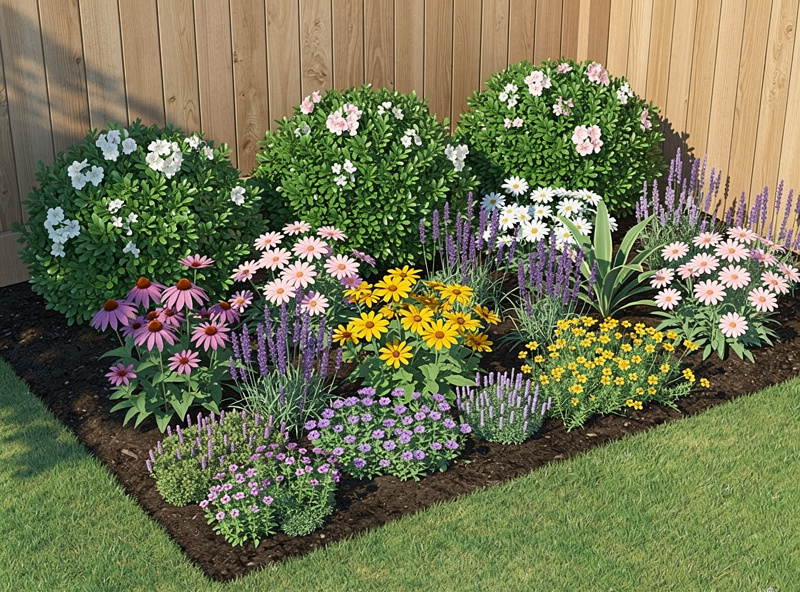
Effective border design follows a simple layering principle: tallest plants at the back (or center for island beds), medium-height plants in the middle, and low-growing plants at the front. In small borders, this means selecting plants that stay within strict size limits at maturity.
Back layer (18-24 inches): Compact shrubs, tall perennials like rudbeckia and echinacea, ornamental grasses. Middle layer (12-18 inches): Medium perennials like salvia, coreopsis, and geranium. Front layer (6-12 inches): Low perennials like alyssum, creeping thyme, and dwarf lavender.
Perennials for Small Borders
Perennials return year after year, providing increasing value as they establish and spread. The best small-border perennials are compact, long-blooming, and low-maintenance.
- Geranium (hardy cranesbill): Compact varieties like Rozanne bloom for 6+ months. Excellent ground cover that suppresses weeds.
- Heuchera (coral bells): Grown for colorful foliage rather than flowers. Compact rosettes in shades of purple, silver, and lime green provide year-round interest.
- Sedum: Drought-tolerant succulent perennials that provide late-season color. Compact varieties like Autumn Joy stay under 18 inches.
- Hostas: Shade-loving perennials with striking foliage. Compact varieties like Mouse Ears stay under 6 inches and are perfect for front borders.
For detailed border design principles and plant combinations, see my guides on small border plants for landscaping and planting schemes for small borders.
Container and Planter Design for Small Spaces
The containers you choose are as important as the plants they hold. In small gardens, containers are visible design elements that contribute to the overall aesthetic. Choosing the right containers enhances the garden’s appearance while providing optimal growing conditions for plants.
Container Material Selection
Different container materials affect plant health, maintenance requirements, and visual appearance. Terracotta and clay pots are porous, allowing roots to breathe but drying out quickly. They develop an attractive patina over time that complements traditional garden styles. Plastic and resin containers are lightweight, retain moisture well, and are available in any color or style. They are ideal for balconies where weight is a concern. Metal containers (corten steel, galvanized metal) provide a modern aesthetic and warm soil quickly in spring, but can overheat roots in full summer sun.
Size and Proportion
Container size should match both the plant’s root requirements and the space’s visual proportions. Oversized containers overwhelm small spaces while undersized containers look lost and dry out too quickly. A good rule is that container diameter should be approximately one-third the mature spread of the plant it will hold. For trees and large shrubs, use containers at least 18-24 inches in diameter. For perennials and annuals, 12-16 inch containers are sufficient.
Drainage and Watering
Every container must have adequate drainage holes — this is non-negotiable. Without drainage, water accumulates at the bottom, roots rot, and plants die. For large containers, drill additional holes if the manufacturer did not include enough. Place containers on pot feet or bricks to ensure water flows freely from drainage holes. Self-watering containers with built-in reservoirs reduce watering frequency and are ideal for busy gardeners or plants that prefer consistent moisture.
Seasonal Planting Schedule for Small Gardens
A successful small garden requires planning across all four seasons. Understanding when to plant, prune, and maintain different types of plants ensures continuous interest and healthy growth throughout the year.
Spring (March-May)
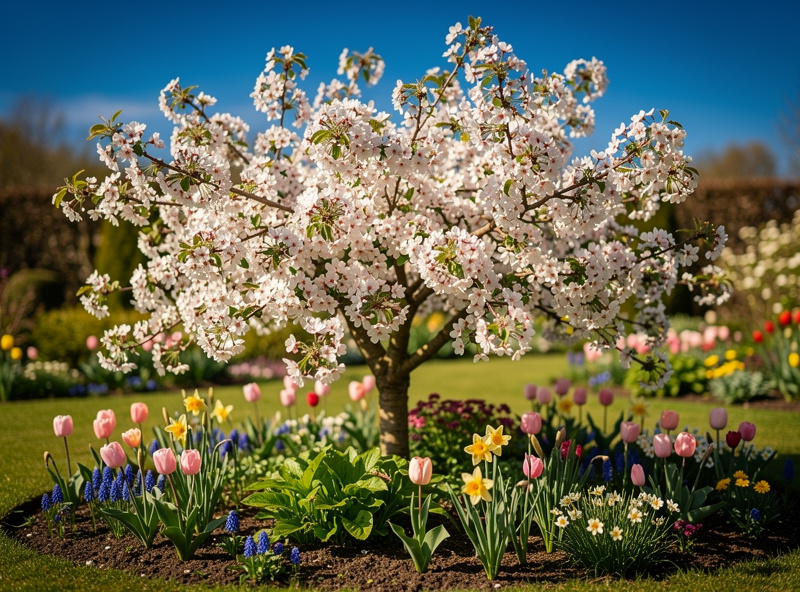
Spring is planting season for trees, shrubs, and perennials. The cool, moist conditions allow new plants to establish roots before summer heat stress. Plant bare-root trees and shrubs as soon as the ground is workable. Container-grown plants can be planted anytime during spring. Divide overcrowded perennials and replant divisions. Apply slow-release fertilizer to established trees and shrubs. Prune spring-flowering shrubs immediately after they bloom to allow time for next year’s flower buds to form.
Summer (June-August)
Summer maintenance focuses on watering, deadheading, and monitoring for pests and diseases. Container plants need daily watering during hot spells. Deadhead spent flowers to encourage continued blooming. Pinch back leggy annuals to promote bushier growth. Monitor trees and shrubs for signs of heat stress — wilting leaves that do not recover in the evening indicate insufficient water. Provide temporary shade for newly planted specimens during extreme heat waves.
Autumn (September-November)
Autumn is the second best planting season after spring. Trees and shrubs planted in autumn establish roots during the mild fall weather and are ready for vigorous growth the following spring. Plant spring-flowering bulbs (daffodils, tulips, crocus) in October-November. Clean up fallen leaves from around trees and shrubs to prevent disease carryover. Apply mulch around the base of trees and shrubs to insulate roots for winter. Take cuttings from tender perennials to overwinter indoors.
Winter (December-February)
Winter is planning and maintenance season. Prune deciduous trees and shrubs while dormant — this is the best time to see the branch structure and make informed pruning decisions. Clean and sharpen garden tools. Order seeds and plan next year’s container displays. Protect tender container plants by moving them to sheltered positions or wrapping with frost protection fabric. Check stored bulbs and tubers for rot and discard any that show signs of decay.
Small Trees Through a Nordic Growing Season
Choosing a small tree for a balcony or courtyard in a cold climate means picking something that survives the winter in a container and looks good through the four months when it has no leaves. Acer palmatum cultivars in 14-inch terracotta pots have survived three winters on my balcony with a gravel mulch and a windbreak, and the bare winter silhouette against the snow is nearly as beautiful as the autumn colour. The key is container size: a tree in a pot that is too small freezes solid and kills the roots, while a pot that is too large weighs too much for a balcony. A 14-inch pot with a Japanese maple is the sweet spot that I have settled on after several seasons of trial and error.
Hardiness Is the First Filter Up North
Almost every “best small tree” list on the internet is written for a climate two or three hardiness zones warmer than mine, and that is the single biggest reason those lists fail a Nordic gardener. Before I look at blossom colour or autumn foliage, I check whether the tree can take the winter at all — and then I check whether it can take that winter in a pot, which is a much harder test than surviving in open ground. Roots are the tender part. A tree that is rated hardy in the ground to a given zone is effectively one to two zones less hardy once its rootball sits in a container exposed to freezing air on every side, because the soil no longer buffers the cold. That is why the olive and bay laurel higher up this page carry the honest caveat that they belong to milder climates: they are beautiful, but they will not overwinter unprotected on a Swedish balcony, and pretending otherwise is exactly the kind of advice this site exists to correct.
The trees that genuinely earn their place in a cold-climate container are the fully hardy deciduous ones — Japanese maple, serviceberry, crab apple, and the tougher weeping cherries — plus dwarf conifers for evergreen structure. These shrug off a hard freeze in the ground and, with a little help, come through it in a pot as well. I would rather grow a plain but bulletproof Amelanchier that gives me flowers, berries, and fire-orange autumn colour every single year than gamble a whole season on a tender specimen that looks exotic in April and dies in January.
Container or Open Ground: Choosing for a Small Cold-Climate Plot
Most readers of this site do not have a choice between the two — a balcony or a paved courtyard means containers, full stop. But where there is a scrap of open soil, it is worth understanding the trade-off, because it changes which trees are realistic. In the ground, the root zone stays far more stable through winter and summer both: it freezes slowly and shallowly, it does not bake in July, and it holds moisture far longer between waterings. A tree in open ground up north can therefore be a touch less hardy and still survive, and it needs a fraction of the watering attention a potted tree demands in high summer, when a container on a sunny balcony can dry out completely in a single hot day.
Containers buy you the opposite set of advantages: total control over soil, the ability to move a tree into the lee of the building before a storm or under cover before the hardest freeze, and access to growing space where there is no soil at all. The cost is vigilance. A potted tree is a tree on life support — it depends on you for every drop of water and every degree of winter protection. My rule of thumb is simple: if you have open ground, plant the tree in it and reserve containers for the shrubs, herbs, and flowers that genuinely benefit from being movable; if you only have a balcony, accept the maintenance and choose the hardiest, most forgiving species on this page rather than the showiest.
Getting Any Small Tree Through Its First Winter
The first winter is the dangerous one, whether the tree is in the ground or a pot, because the roots have not yet spread and anchored. For a newly planted in-ground tree I mulch a generous circle around the base — several inches of bark or leaf mould, kept back from the trunk itself so it does not rot the bark — which insulates the root zone and buffers the freeze-thaw cycling that heaves young roots out of the soil. For a container tree the protection is more active: I move the pot tight against a sheltered, ideally south-facing wall, wrap the container itself (not the crown) in hessian or bubble insulation so the rootball does not freeze solid, and set it up off cold paving on pot feet so meltwater drains away instead of freezing around the base. The crown of a dormant hardy tree needs almost nothing; it is the roots and the graft union, if there is one, that need the care. And on every mild day through the winter I check whether a potted tree needs a little water, because container roots die of winter drought at least as often as they die of cold — the soil looks frozen and forgotten, but a dry rootball in a bright, windy February is quietly desiccating. Get the first winter right and everything after it is easier, because an established tree with a full root system is a far tougher thing than the nursery plant you started with.
Frequently Asked Questions
What is the best tree for a very small garden?
Japanese maple (Acer palmatum) is the best choice for very small gardens. Compact varieties stay under 10 feet, provide spectacular autumn color, and thrive in partial shade. Crab apple varieties like Sargent are equally excellent for full sun locations.
Can you grow trees in pots permanently?
Yes, many trees thrive permanently in containers. Dwarf conifers, Japanese maples, olive trees, and citrus trees all do well in large pots (18-24 inch diameter). Repot every 3-4 years, prune roots, and refresh the potting mix.
How do you keep shrubs small in containers?
Choose naturally compact varieties, use appropriately sized containers (not too large), prune annually after flowering, and feed moderately. Over-fertilizing and oversized containers encourage excessive growth.
What flowers bloom all year in pots?
In mild climates, combine spring bulbs, summer annuals (petunias, geraniums), autumn mums, and winter-flowering plants (witch hazel, winter jasmine). In cold climates, focus on the frost-free season and use evergreen foliage plants for winter interest.
How do you design a small border garden?
Layer plants by height: tallest at back (18-24 inches), medium in middle (12-18 inches), shortest at front (6-12 inches). Choose plants with different foliage textures and staggered bloom times for continuous interest.
Related Small Garden Trees and Plants Guides
Explore my complete small garden library for detailed instructions on every species and technique:
- 15 Best Trees for Small Gardens — Compact Varieties
- Best Crab Apple Trees for Small Gardens
- Weeping Trees for Small Gardens: Complete Selection Guide
- Acer Trees for Small Gardens: Japanese Maple Guide
- Shrubs for Pots in Full Sun: Container Gardening Guide
- All Year Round Flowers for Pots: Continuous Blooming Guide
- All Year Round Hanging Baskets: Seasonal Planting Guide
- Best Flowers for Pots in Full Sun: Heat-Tolerant Container Plants
- Small Border Plants for Landscaping: Perfect Perennials and Groundcovers
- Planting Schemes for Small Borders: Design and Layout Guide
Related Articles
Expand your small garden knowledge with these complementary guides: