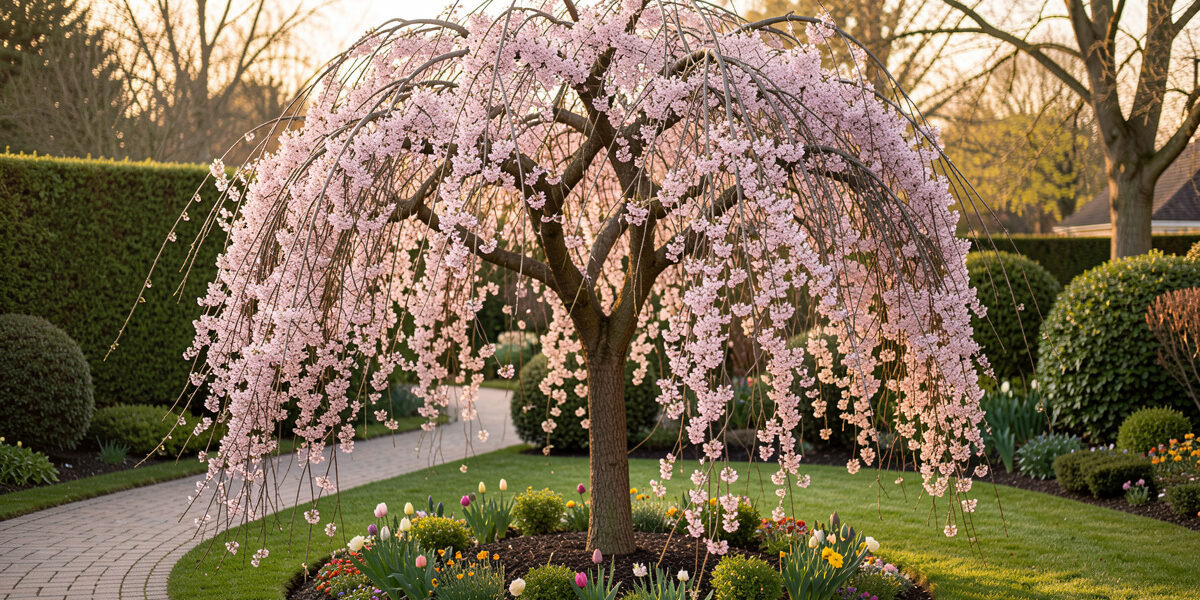
The best weeping trees for small gardens include weeping cherry, weeping pear, and weeping crab apple varieties that stay under 15 feet tall. These elegant specimens create stunning focal points with their cascading branches and seasonal blooms.
For a complete overview of all small garden trees, shrubs, and container planting methods, see my complete small garden trees and shrubs guide.
I grow three weeping trees across my balcony and a small courtyard garden bed — a Crimson Queen Japanese maple, a Snow Fountain cherry in a pot, and a weeping crab apple trained against a wall. Each one solves a different small-space problem, and together they give me cascading form from April through November. Weeping trees bring unique architecture to compact spaces. Their downward-growing branches create natural privacy screens while occupying minimal ground area. For small gardens where vertical interest matters, weeping trees deliver dramatic impact without overwhelming limited space. The cascading form adds movement and grace that upright trees cannot match.
Why Choose Weeping Trees
Weeping trees offer distinct advantages for small gardens. Their narrow canopy spreads horizontally rather than vertically, providing shade and coverage without consuming ground space. This makes them ideal for tight corners or narrow side yards where spreading trees would cause problems.
The cascading branches create intimate spaces underneath. A bench beneath a weeping tree becomes a private retreat. The arching branches frame views and create living archways that enhance garden design.
Seasonal changes in weeping trees provide year-round interest. Spring brings blossoms along cascading branches. Summer offers dappled shade. Autumn displays colorful foliage on hanging branches. Winter reveals elegant branch architecture against the sky.
As an Amazon Associate I earn from qualifying purchases.
Top Weeping Trees for Compact Gardens
Weeping Cherry (Prunus subhirtella pendula)
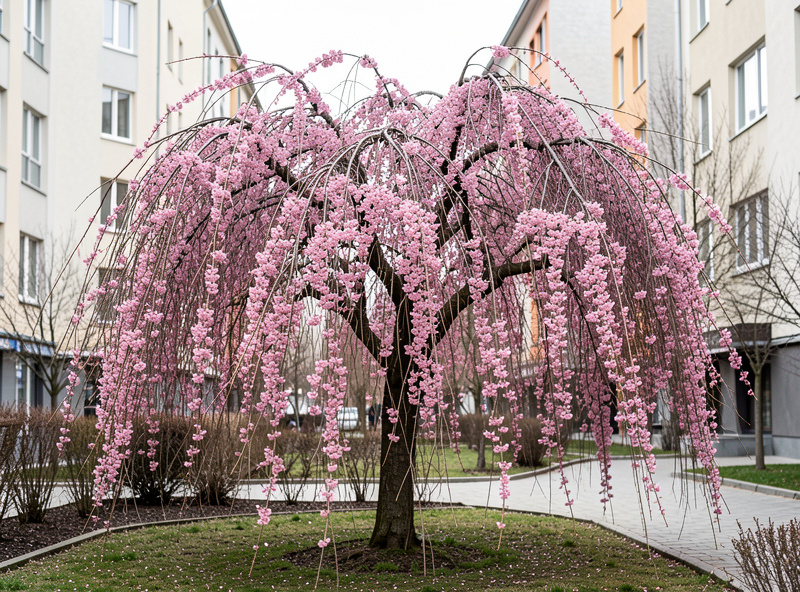
Snow Fountain is my go-to white weeping cherry — it stays under 15 feet and the blossom coverage is so complete in April that you can barely see the branches. This 12-15 foot tree produces cascades of pink or white blossoms in spring. The arching branches create a waterfall effect that works beautifully as a specimen planting. Choose from pink varieties like Pink Snow Showers or white forms like Snow Fountain.
Weeping Pear (Pyrus salicifolia Pendula)
Silver-gray foliage provides year-round interest on this 8-12 foot tree. Creamy white flowers appear in spring, followed by small inedible fruit. The narrow, weeping habit fits tight spaces while the distinctive foliage color stands out in any garden.
Weeping Crab Apple (Malus Red Jade)
This compact 10-15 foot variety offers deep pink buds that open to white blossoms, followed by persistent red fruit. The weeping form stays narrower than upright crab apples, perfect for small gardens. Fruit remains on branches well into winter, feeding birds and providing visual interest.
Weeping Japanese Maple (Acer palmatum dissectum varieties)
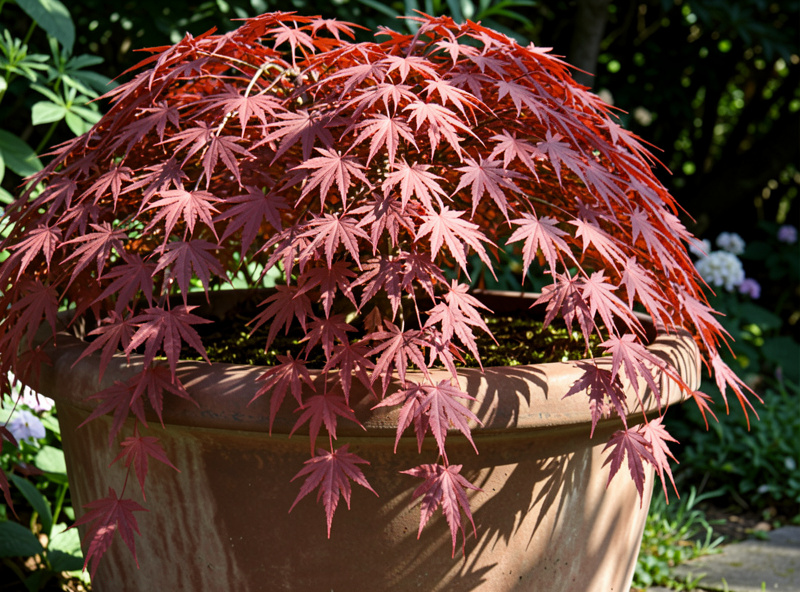
Lace-leaf varieties like Crimson Queen reach only 6-8 feet with a spreading, cascading habit, and they are my first choice for a container specimen because their shallow root system handles pot life without complaint. The dissected leaves give it a texture that looks almost like coral underwater when backlit — no upright tree comes close to that effect. Brilliant red or orange fall color provides seasonal drama. Orangeola and Viridis offer alternative color schemes.
Weeping Mulberry (Morus alba Pendula)
This unique 10-12 foot tree produces edible fruit on cascading branches. Heart-shaped leaves provide dense summer shade. The fruit production makes this both ornamental and functional for edible landscaping.
Weeping Dogwood (Cornus florida Pendula)
Reaching 8-10 feet, this variety offers white spring bracts on weeping branches. Red berries follow in late summer and autumn, attracting birds. Autumn brings burgundy-red foliage before dormancy.
Autumn-Flowering Higan Cherry (Prunus subhirtella Autumnalis)
One honest correction to the usual listicle advice: Autumnalis is often sold as a weeping cherry, but its real habit is upright-spreading with gracefully arching branchlets, and it matures far larger than anything else here — 20 to 30 feet according to the NC State Extension plant profile — so it only earns a place in a small garden if you commit to keeping it pruned to size. I include it anyway because it blooms sporadically from late fall through spring — I have seen buds open during a warm spell in November in a Swedish garden, which is an extraordinary thing in a climate where nothing else is flowering. The winter blooms are smaller and sparser than the spring flush, but the surprise factor is half the appeal. If you want a true weeping habit at a genuinely compact size, stay with Snow Fountain above.
Weeping Tree Comparison at a Glance
| Tree | Mature Size | Bloom Season | Container-Friendly? | Cold Hardy? |
|---|---|---|---|---|
| Weeping Cherry (Snow Fountain) | 12-15 ft | Early Spring | Fair | Yes (Zone 5) |
| Weeping Pear (Pendula) | 8-12 ft | Spring | Good | Yes (Zone 4) |
| Weeping Crab Apple (Red Jade) | 10-15 ft | Spring | Excellent | Yes (Zone 4) |
| Weeping Japanese Maple (Crimson Queen) | 6-8 ft | Foliage show | Excellent | Yes (Zone 5) |
| Weeping Mulberry | 10-12 ft | Spring | Fair | Yes (Zone 4) |
| Weeping Dogwood | 8-10 ft | Spring | Good | Yes (Zone 5) |
| Higan Cherry (Autumnalis — arching, not truly weeping) | 20-30 ft unless pruned | Fall-Spring | Fair | Yes (Zone 5) |
Planting and Design Considerations
Central focal point: Weeping trees excel as solitary specimens where their architecture becomes the garden centerpiece. Position them where the cascading form remains visible from key viewing areas. A weeping tree at the end of a pathway draws visitors forward naturally.
Container growing: Many weeping trees, especially Japanese maples and dwarf crab apples, thrive in large containers. This allows you to position them precisely and move them if needed. Use a minimum 24-inch container for adequate root space — lightweight resin planters weigh a fraction of what terracotta does, which matters on a balcony.
Underplanting: The space beneath weeping trees often receives dappled light. Plant shade-tolerant ground covers like hostas, ferns, or woodland flowers underneath. Spring bulbs planted beneath weeping cherries create stunning combinations when both bloom simultaneously.
Staking requirements: Young weeping trees may need staking to establish the desired arching form. Remove stakes after the first year once the tree supports itself. Improper staking can damage bark and create weak trunk development.
Growing Requirements
Light: Most weeping trees prefer full sun to partial shade. Japanese maples need afternoon shade in hot climates to prevent leaf scorch. Weeping cherries bloom best with at least 6 hours of direct sunlight.
Soil: Well-drained soil prevents root rot. Amend heavy clay with compost and coarse sand. Most weeping trees prefer slightly acidic to neutral pH. Mulch heavily to maintain consistent soil moisture.
Water: Keep soil consistently moist, especially during the first two years. Weeping trees in containers need more frequent watering than those in ground. Drought stress causes leaf drop and poor flowering.
Spacing: Allow room for the mature spread. Weeping cherries may spread 15-20 feet wide. Position at least 8 feet from structures and pathways to accommodate cascading branches.
Care and Maintenance
Water regularly during establishment, keeping soil consistently moist but not waterlogged. Mulch heavily to retain moisture and regulate soil temperature. Refresh mulch annually without piling against the trunk.
Prune carefully to maintain the weeping shape. Remove any upright shoots that emerge from the graft union immediately. These revert the tree to its non-weeping rootstock form. Thin interior branches to improve air circulation and light penetration.
Fertilize in early spring with a balanced slow-release tree fertilizer. Avoid over-fertilizing, which produces excessive soft growth prone to disease. Established trees often need no supplemental feeding if soil is reasonably fertile.
Seasonal Care
Spring: Enjoy the spectacular bloom display — a weeping cherry in full flower is the moment the garden wakes up after the Nordic winter. Deadhead spent blossoms if you prefer a tidier appearance, though this is not necessary for tree health. Monitor for aphids on new growth; a jet of water from the hose knocks them off and a single spray of insecticidal soap handles the rest if they return.
Summer: Water deeply during dry spells — at least 15-20 litres a week for an established tree in the ground, more often for containers. The dense weeping canopy sheds rain like an umbrella, so do not assume a light shower has watered the root zone. Push your finger or a soil probe 15 cm (6 inches) deep: if it comes out dry, water regardless of what the surface looks like.
Autumn: Enjoy fall foliage color. Collect fallen leaves to prevent disease overwintering. This is the ideal season for planting new weeping trees as they establish roots during cool weather.
Winter: Appreciate the elegant branch architecture. Protect young trees from frost cracks with tree wrap in harsh climates. Prune while structure is clearly visible without leaf cover.
Common Problems
Fire blight: This bacterial disease causes sudden branch dieback with blackened, shepherd’s-crook tips, especially on weeping pears and crab apples. It spreads fastest in warm, wet spring weather. Prune infected branches at least 20-30 cm (8-12 inches) below visible damage, during dry weather only, and disinfect bypass pruners with a 10% bleach solution (1 part bleach to 9 parts water) between every cut — Utah State University Extension’s fire blight guidance is blunt that skipping tool disinfection spreads the bacteria from cut to cut. I lost a weeping crab apple to fire blight one year because I pruned in damp weather and skipped the tool disinfection; now I do all pear and crab apple pruning in the driest winter window and sterilise between every branch.
Leaf scorch: Brown edges on leaves indicate drought stress or excessive sun exposure. Increase watering frequency and provide afternoon shade during heat waves.
Powdery mildew: White coating on leaves appears in humid conditions with poor air movement. Improve air circulation by thinning interior branches so wind can pass through the canopy — a weeping tree’s dense shape is exactly the environment mildew thrives in. Apply a sulphur-based fungicide only if it keeps spreading despite the improved airflow.
Getting a Weeping Tree Through a Nordic Winter
A weeping tree in a container on a Nordic balcony needs wind protection more than cold protection. The dry January wind desiccates the bare branches faster than the frozen roots can replace the moisture, and a simple burlap screen on the windward side of the pot prevents winter dieback. The weeping form looks best in winter when the bare cascading branches catch the snow and frame the balcony like a living sculpture.
The graft union is the weak point on almost every weeping tree, because the cascading top is grafted onto a straight rootstock trunk. In a pot, that union sits up in the freezing air instead of insulated by garden soil, so I wrap the trunk and union in hessian and push the container against the house wall from November on. Insulate the pot itself — bubble wrap around the sides, or the pot sunk into a larger container packed with leaves — rather than the crown, and water lightly on thaw days; container roots die of winter drought as often as they die of frost. Heavy wet snow is the one load the arching branches handle badly, so I knock it off with a broom before it freezes on.
Frequently Asked Questions
What are the best weeping trees for small gardens?
Weeping cherry (Prunus subhirtella pendula), weeping Japanese maple (Crimson Queen, 6-8 ft), and weeping crab apple (Malus Red Jade, 10-15 ft) are the top compact weeping choices. All three stay under 15 ft and deliver cascading form plus seasonal flowers and fruit.
How fast do weeping trees grow?
Most weeping trees grow 30-60 cm (1-2 ft) per year, reaching mature size in 10-15 years. Japanese maple dissectum varieties are the slowest at 15-25 cm per year — an advantage in a small garden where you do not want the tree overtaking its space.
Do weeping trees need staking?
Standard weeping trees grafted onto a straight trunk need staking for the first year after planting, using flexible ties that will not cut into the bark. Remove the stake after one year. Natural weeping forms like young birch do not need staking at all.
Can weeping trees grow in containers?
Yes — weeping Japanese maples, dwarf crab apples, and weeping pears all thrive in 60 cm (24-inch) or larger containers. Container growing is also the safest way to keep a grafted weeping tree in a cold climate, since you can move it under cover to protect the graft union from freeze-thaw damage.