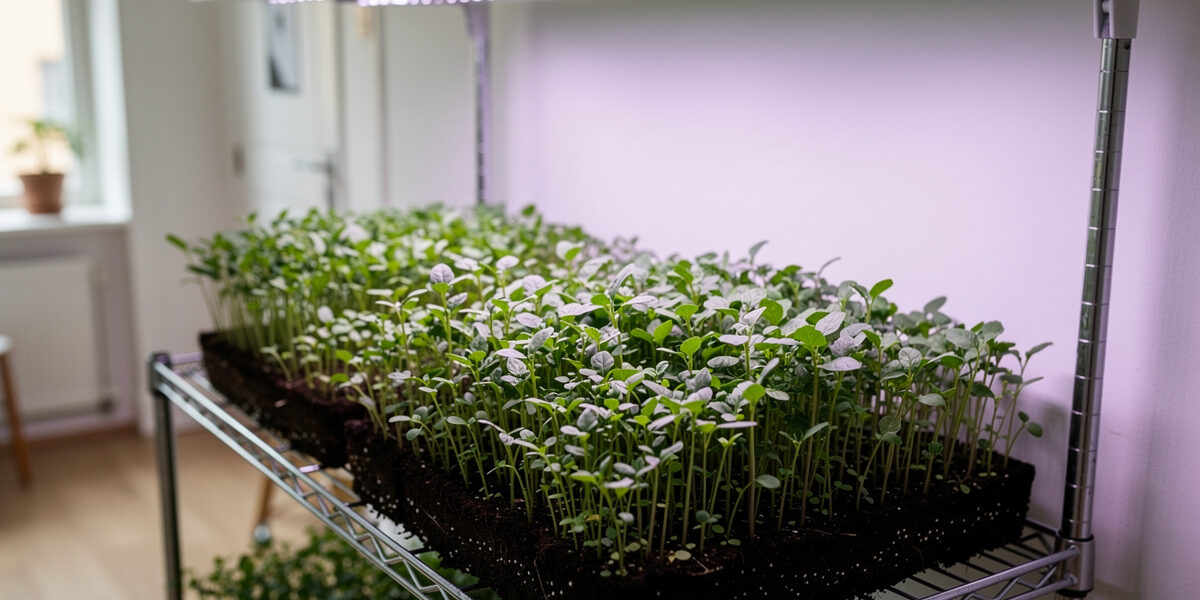
Water seedlings to keep the top centimetre of mix consistently damp but never soggy — in practice that is usually once a day, sometimes twice in warm dry air, and as little as every two or three days once true leaves appear. There is no fixed schedule: you water by checking the surface, because both drought and waterlogging kill seedlings fast.
Seedlings are the most water-sensitive stage of a plant’s whole life. Their roots are tiny and shallow, sitting in the top few centimetres of mix that dries out quickly, yet that same shallow root zone rots and triggers damping off if it stays saturated. The job is to thread the needle between those two failures, and it changes day by day as the seedling grows. I start most of my food this way indoors under lights through the dark end of a Nordic winter, so I have killed plenty of trays learning this. Below is exactly how often to water at each phase, the bottom-watering method that prevents most losses, and how indoor light and heat change the timing.
Disclosure: CityRooted is reader-supported. As an Amazon Associate I earn from qualifying purchases made through links in this article, at no extra cost to you. I only point to gear I actually use or would buy for my own garden.
How Often Should You Water Seedlings?
For most seedlings, check the mix once or twice a day and water whenever the surface is just starting to dry. That often works out to a light watering daily, but the right answer is “when the top centimetre is dry, not before.” Frequency is high but volume is low — little and often, never a heavy soak that drowns shallow roots.
The reason you check rather than schedule is that seed-starting mix in a shallow cell dries unevenly and fast under lights. A tray near a warm window or under a grow light can dry by midday and need a second top-up, while the same tray in a cool room might hold moisture for two days. The surface tells you the truth; a calendar does not. This is the same read-the-soil discipline that runs through my vegetable garden watering schedule, just at a much finer, daily resolution because seedlings have no buffer.
Watering Frequency Changes as Seedlings Grow
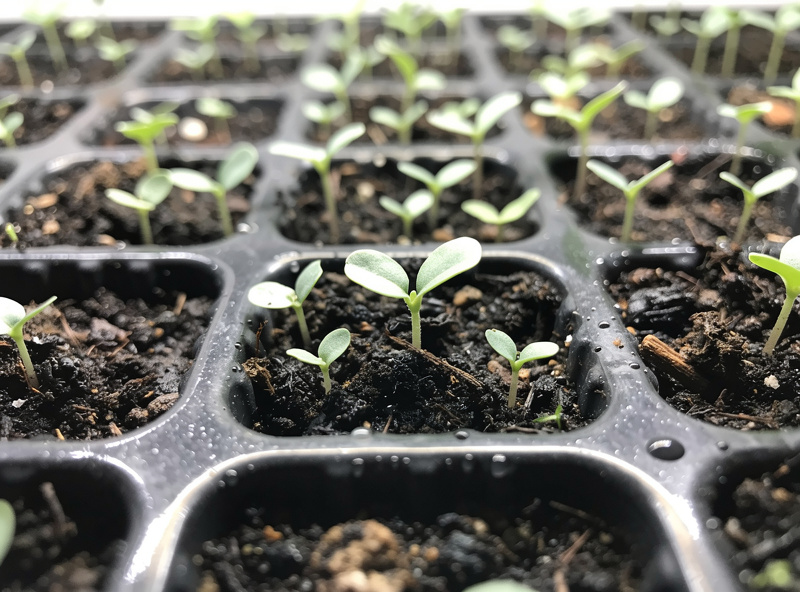
Watering needs fall as seedlings develop. Before germination the surface must stay constantly damp, often misted once or twice a day. Once cotyledons and then true leaves appear, you water less often and let the surface dry slightly between waterings to push roots down and harden the seedling against disease.
The table below maps the frequency to the stage. Treat it as a starting point you adjust by touching the mix, and lean drier rather than wetter once roots are established — a seedling that is a touch dry recovers, one that is waterlogged usually does not.
| Stage | Target moisture | Typical frequency | Method | Main risk |
|---|---|---|---|---|
| Sowing to germination | Surface constantly damp | Mist 1–2x daily | Fine mist + humidity dome | Surface drying, no sprout |
| Cotyledons emerge | Top 1 cm damp | Once daily | Bottom water | Damping off if soggy |
| First true leaves | Surface dries slightly | Every 1–2 days | Bottom water | Leggy growth if too wet/dark |
| Potting-on size | Top 2–3 cm dries | Every 2–3 days | Bottom or careful top | Drought as roots fill cell |
| Hardening off | Slightly drier than indoors | As needed, watch wind/sun | Top water, check twice daily | Fast drying outdoors |
Why I Bottom-Water Seedlings
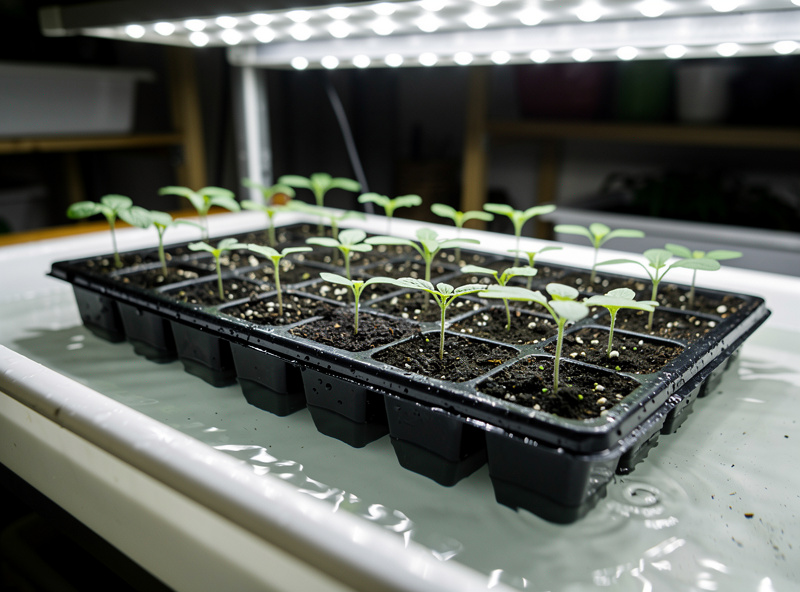
Bottom watering is the single biggest improvement most seedling growers can make. You set the cell tray or pots in a shallow tray of water for 10–20 minutes and let the mix wick moisture up from below, then drain off the excess. It keeps the surface drier, draws roots downward, and almost eliminates damping off.
Top watering a delicate seedling batters the stems, splashes soil onto leaves, and keeps the surface wet — exactly the conditions the damping off fungus loves. Bottom watering avoids all of that. I start my trays in standard 1020 cell seed starting trays with humidity dome precisely because the solid base tray underneath lets me bottom-water the whole batch at once. For the pre-germination phase a fine plant mister spray bottle keeps the surface damp without flooding the seed. The same trays and method are what I run my microgreens on, covered in detail alongside my work on starting tomato seedlings from sowing to transplant.
How Indoor Light and Heat Change the Timing
Under grow lights and on heat mats, seedlings dry out faster and need checking more often — warmth and airflow pull moisture from the shallow mix quickly. But once seeds have germinated, lower the heat and give strong light: warm, dim, wet conditions produce leggy, weak seedlings that flop, which growers often mistake for a watering problem.
This is the Nordic indoor-starts catch. From January I am germinating under a full-spectrum LED bar because the windowsill gives only a few usable daylight hours, and that bright, slightly breezy setup dries trays faster than a dim room would — so I check moisture more often, not less. After germination I pull the humidity dome to drop the surface humidity and prevent damping off. If your seedlings stretch tall and thin, the fix is more light and slightly less water, not more. My guide to growing lettuce inside covers the same light-and-moisture balance for leafy crops once they are past the seedling stage.
Reading Thirst and Overwatering in Seedlings
Seedlings tell you what they need if you watch them. Thirsty seedlings wilt and the mix surface goes pale and pulls slightly from the cell wall; overwatered seedlings damp off — the stem thins and topples at the soil line — or develop mould and yellowing. Wilting in wet mix means rot, not thirst, so check before you water.
Because the margin is so thin at this stage, I check by lifting the tray: a light tray is dry and needs water, a heavy one is still fine. A soil moisture meter with a slim probe confirms it in deeper pots once seedlings are potted on. The biggest killer indoors is the same one that takes mature houseplants up north — too much water in cool, low-light conditions — so if you are unsure, wait a day. I cover that failure mode in full in my guide to the signs of overwatering plants, and the principles apply directly to a seedling tray.
Frequently Asked Questions
How often should I water seedlings?
Check the mix once or twice a day and water whenever the top centimetre starts to dry, often a light watering daily. Frequency is high but volume is low. Once true leaves appear, water less often and let the surface dry slightly between waterings.
Should I water seedlings every day?
Often yes in the first days, but only if the surface is drying. Water by checking the top centimetre, not by the calendar. Under grow lights or on a heat mat trays dry fast and may need water twice a day; in a cool room every two days can be enough.
Is it better to bottom-water seedlings?
Yes. Setting the tray in shallow water for 10 to 20 minutes lets the mix wick moisture up from below, then drain off the excess. It keeps the surface drier, draws roots down, and greatly reduces damping off compared with top watering.
Why are my seedlings tall and floppy?
That is leggy growth, usually caused by too little light combined with warmth, not a watering issue. After germination, lower the heat, give strong bright light close to the seedlings, and water slightly less. More light and less water fixes most legginess.
How do I know if I am overwatering seedlings?
Overwatered seedlings damp off, where the stem thins and topples at the soil line, or they develop mould and yellowing. If seedlings wilt while the mix is still wet, that is rot from too much water, not thirst, so let the tray dry before watering again.
Should I keep the humidity dome on after seedlings sprout?
No. Use the dome to hold surface moisture until seeds germinate, then remove it. Leaving it on traps humidity around the stems and encourages damping off. After sprouting, give airflow and let the surface dry slightly between waterings.