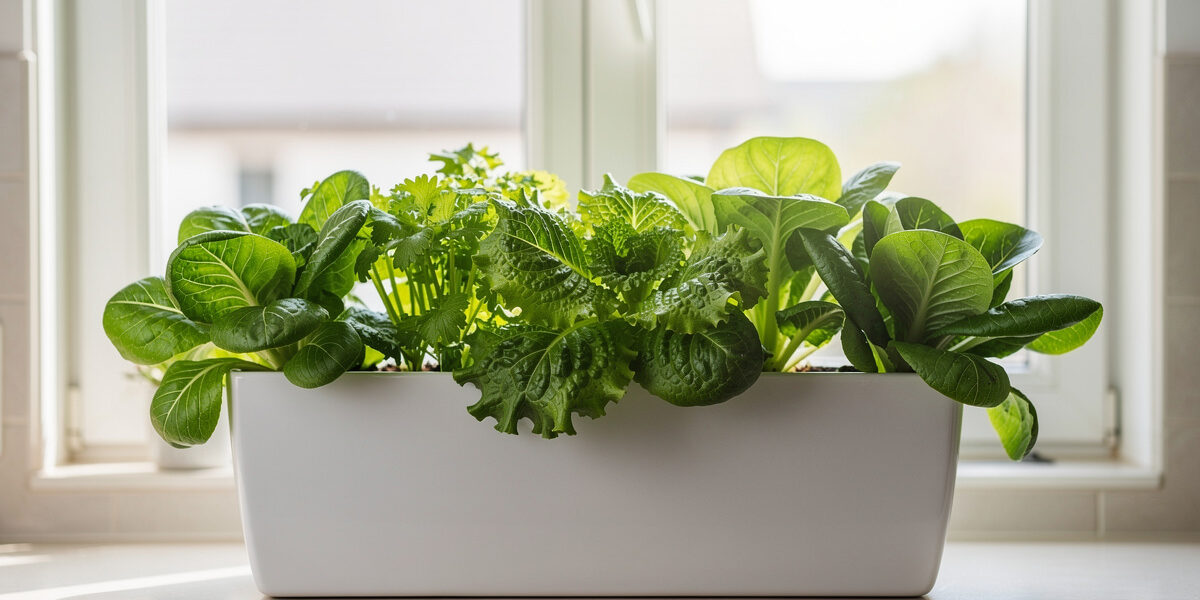
Lettuce is the easiest vegetable I grow inside, and through a Swedish winter it is the one that actually earns its shelf space. It shrugs off the low light that defeats tomatoes and peppers, fills a shallow container, and cuts its first leaves in about 30 days. You do not need a balcony or any special gear — a bright windowsill (or a single LED bar once the light gives out) and a pot with drainage holes are enough for fresh salad greens year-round. This is the full routine I run, from choosing the container to cutting the first harvest.
For a complete overview of all indoor growing methods and crops, see our complete indoor growing guide.
Why Lettuce Is Perfect for Indoor Growing
Most vegetables demand full sun, deep soil, and outdoor conditions. Lettuce breaks all those rules, which makes it ideal for apartments and small spaces:
- Low light tolerance: Lettuce needs only 4-6 hours of light per day — far less than tomatoes or peppers that require 8-12 hours
- Shallow roots: A container just 4-6 inches deep is enough, so even a window box or salad bowl works
- Cool temperature preference: Lettuce prefers 60-70°F (15-21°C) — exactly what most homes maintain year-round
- Fast growth: Harvest baby leaves in 25-30 days, full heads in 45-60 days
- Cut-and-come-again: Harvest outer leaves while the plant keeps producing new ones from the center for weeks
- Compact size: A single plant needs only 4-6 inches of space — grow a full salad in one container
Lettuce also happens to be overpriced at the grocery store relative to how cheap it is to grow. A single seed packet keeps me in salad greens for months — for roughly the price of one bagged mix from the produce aisle.
Best Lettuce Varieties for Indoor Growing
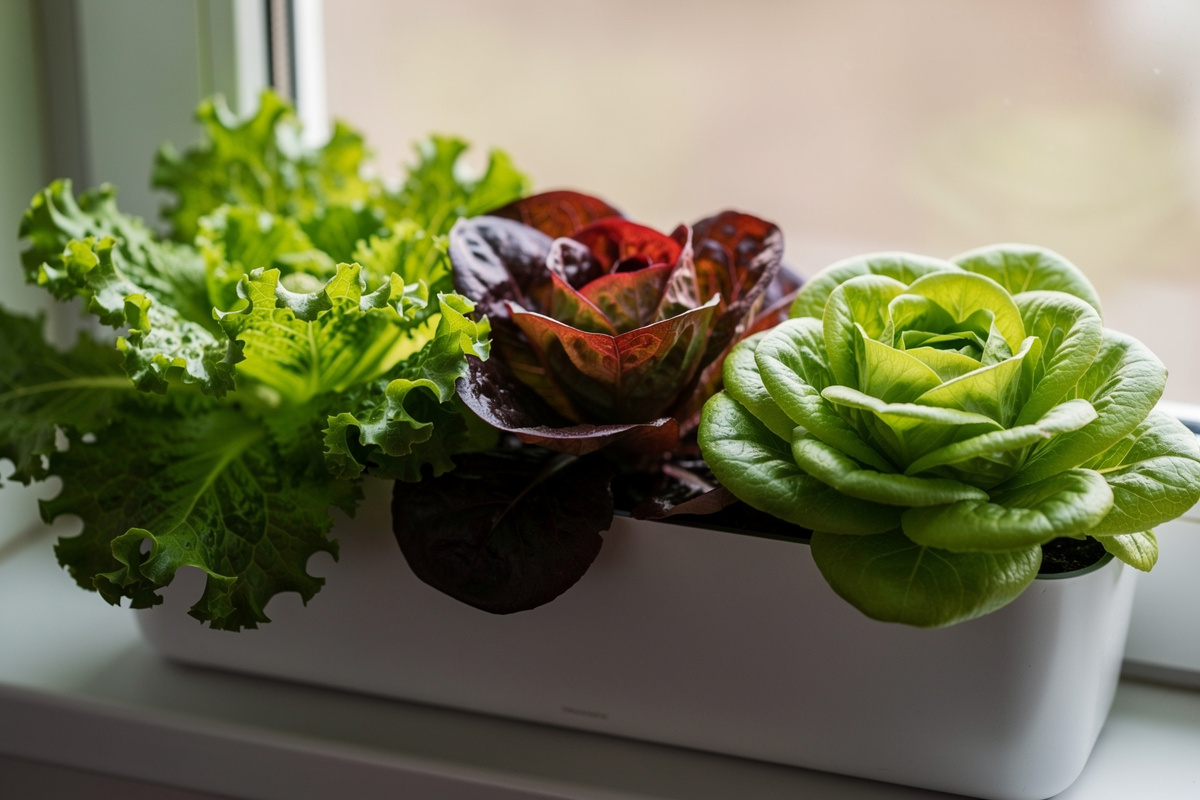
Not all lettuce types perform equally indoors. Loose-leaf varieties are the best choice because they mature fast, tolerate lower light, and let you harvest individual leaves without pulling the whole plant.
Top Varieties for Containers
- Green Salad Bowl: Classic loose-leaf with tender, mild-flavored leaves. Harvest in 28 days. Very forgiving for beginners
- Red Salad Bowl: Same easy growth as Green Salad Bowl with attractive burgundy-red leaves that add color to your salads and your windowsill
- Buttercrunch (Butterhead): Forms small, loose heads with buttery-textured leaves. Ready in 45-55 days. Excellent flavor
- Black Seeded Simpson: Fast-growing, heat-tolerant, light green frilly leaves. One of the most reliable indoor varieties
- Little Gem: Miniature romaine type that stays compact (6 inches tall). Crunchy texture, sweet flavor, perfect for small pots
- Mesclun Mix: Pre-mixed seed blends of multiple lettuce types — one pot gives you a diverse salad mix
Varieties to Avoid Indoors
Iceberg and large romaine varieties need more light, more space, and longer growing seasons to form tight heads. They frequently bolt (go to seed) indoors before producing a usable harvest. Stick with loose-leaf and small butterhead types for indoor success.
What You Need to Get Started
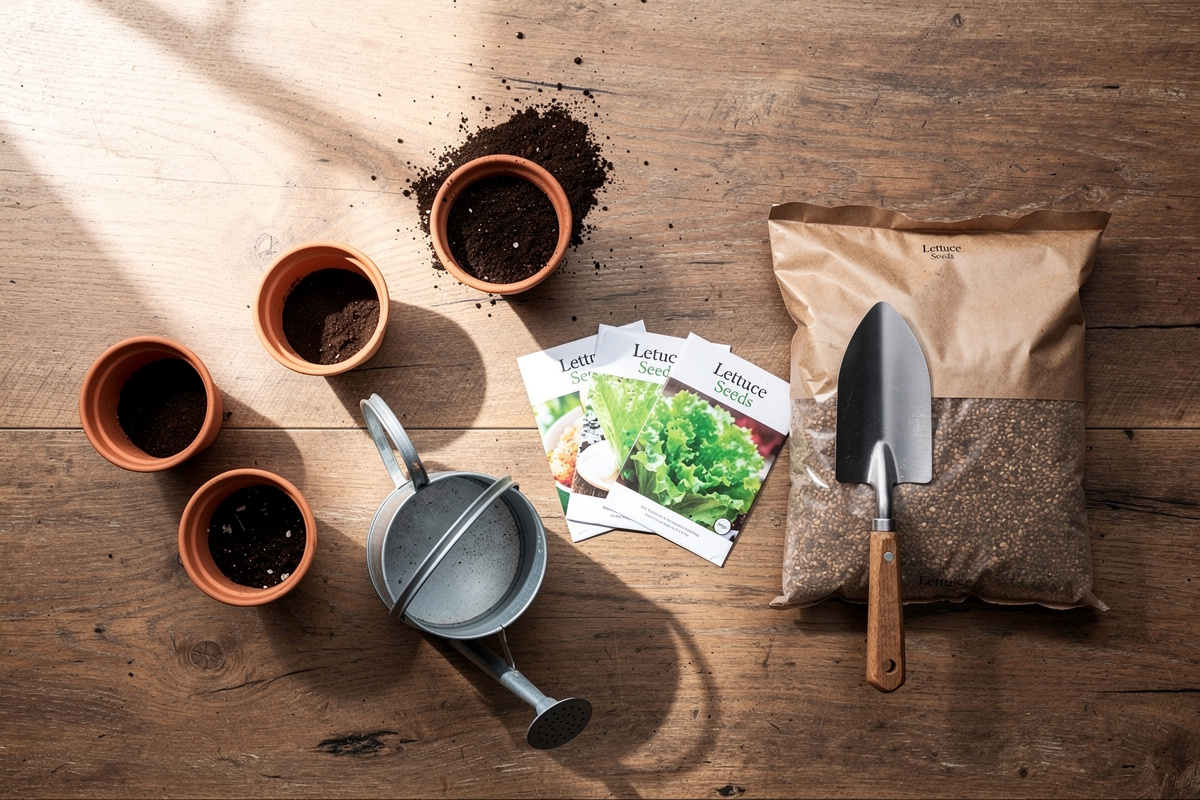
Indoor lettuce growing requires minimal supplies. You likely have most of these already:
Container
Any container at least 4 inches deep with drainage holes works. Good options include:
- Window boxes: Rectangular shape fits windowsills perfectly, grows 4-6 plants in a row
- Standard 6-8 inch pots: Good for 2-3 plants per pot
- Plastic storage containers: Drill drainage holes in the bottom — free and effective
- Fabric grow bags (1-2 gallon): Excellent drainage, stores flat when not in use
Critical rule: Every container must have drainage holes. Lettuce roots sitting in standing water rot within days. If your container lacks holes, drill or punch 4-6 holes in the bottom before planting.
Potting Mix
Use a standard indoor potting mix — not garden soil, which compacts in containers and introduces pests. A quality potting mix contains peat moss or coco coir, perlite for drainage, and enough nutrients to get seedlings started.
For the best results, choose a mix labeled for seed starting or indoor containers. These are lighter and drain better than heavy all-purpose mixes.
Seeds
Buy seeds from any garden center or online retailer. A single packet ($2-3) contains hundreds of seeds — enough for a year of continuous lettuce production. Check the packet date and use seeds within 2-3 years for best germination rates.
Light Source
A south-facing or west-facing window providing 4-6 hours of direct sunlight is ideal. East-facing windows work but may produce slower growth. North-facing windows rarely provide enough light on their own.
If your window light is weak or inconsistent, a simple LED grow light running 10-12 hours daily solves the problem completely. Lettuce requires far less light intensity than fruiting plants, so even a basic $20 LED panel works.
Watering Can
A small watering can with a gentle spout prevents washing away seeds and disturbing shallow roots. A spray bottle works well for misting newly planted seeds.
Step-by-Step: Planting Lettuce in Containers
Follow these steps and you will have lettuce sprouts within 5-7 days:
Step 1: Prepare Your Container
- Ensure your container has drainage holes
- Fill with potting mix to about 1 inch below the rim (leave space for watering)
- Moisten the soil thoroughly before planting — dry potting mix repels water, so pre-wetting ensures even moisture
- Let excess water drain completely
Step 2: Sow Seeds
- Scatter seeds evenly across the soil surface, spacing them roughly 1 inch apart
- Press seeds gently into the soil with your fingertip — do not bury them deep
- Cover with a very thin layer of potting mix (1/8 inch maximum). Lettuce seeds need light to germinate, so barely cover them
- Mist the surface gently with a spray bottle
Step 3: Create Germination Conditions
- Cover the container loosely with plastic wrap or a clear lid to hold moisture
- Place in a bright spot at room temperature (65-70°F / 18-21°C)
- Check daily and mist if the surface feels dry
- Remove the cover as soon as you see green sprouts emerging (typically 5-7 days)
Step 4: Thin Seedlings
Once seedlings have 2-3 true leaves (the second set of leaves, not the initial round seed leaves), thin them to 4-6 inches apart. This feels wasteful but overcrowded lettuce produces small, stunted leaves. Use scissors to snip unwanted seedlings at the soil line rather than pulling them — pulling disturbs the roots of the plants you are keeping.
Bonus: The thinned baby greens are edible. Add them to your first micro-salad.
Step 5: Move to Final Position
Place your container in its permanent growing spot — your best window or under a grow light. From here, daily care is simple: water when the top inch of soil feels dry, and watch your lettuce grow.
Daily Care: Watering, Light, and Feeding
Watering
Lettuce needs consistently moist (not soggy) soil. The shallow root system dries out faster than deep-rooted plants, so check daily:
- Finger test: Push your finger 1 inch into the soil. If dry, water. If moist, wait
- Water thoroughly: Add water until it drains from the bottom, then discard any water that collects in the saucer
- Morning watering: Water in the morning so leaves dry during the day — wet leaves overnight encourage fungal problems
- Avoid wetting leaves: Water the soil directly, not over the top of the plant
Indoor lettuce typically needs watering every 1-2 days depending on container size, humidity, and temperature. Smaller pots dry faster.
Light
Lettuce needs 4-6 hours of direct sunlight or 10-12 hours under a grow light. Signs your lettuce is not getting enough light:
- Pale, yellowish leaves instead of deep green
- Long, stretched stems reaching toward the window
- Slow growth after the first few weeks
- Thin, floppy leaves lacking substance
If you notice these signs, move the container to a brighter window or add supplemental lighting. Rotate the container a quarter turn every 2-3 days so all plants receive even light exposure.
Feeding
Lettuce is a light feeder, but container-grown plants benefit from occasional fertilizing since potting mix nutrients deplete within 3-4 weeks:
- Start feeding 3 weeks after planting
- Use a balanced liquid fertilizer (10-10-10 or similar) diluted to half strength
- Feed every 2 weeks during active growth
- Organic alternatives: diluted fish emulsion or compost tea
Warning: Over-fertilizing lettuce causes bitter-tasting leaves. Less is more — if in doubt, skip a feeding.
Temperature
Lettuce is a cool-season crop that performs best at 60-70°F (15-21°C). Most homes maintain this range naturally. University of Illinois Extension makes the same point for indoor growing — lettuce grows fastest in warm temperatures but is far better under cooler conditions around 65-70°F (see their indoor lettuce guide). Watch for these temperature problems:
- Above 75°F (24°C): Lettuce bolts — it sends up a flower stalk, leaves turn bitter and tough. Oregon State Extension explains that bolting is the plant’s natural response to warmth: the central stem elongates, the plant stops putting energy into leaves, and the remaining leaves go bitter (five tips for great lettuce). Keep containers away from heating vents and hot south-facing windows in summer
- Below 45°F (7°C): Growth slows dramatically. Keep containers away from cold drafts and single-pane windows in winter
Harvesting: The Cut-and-Come-Again Method
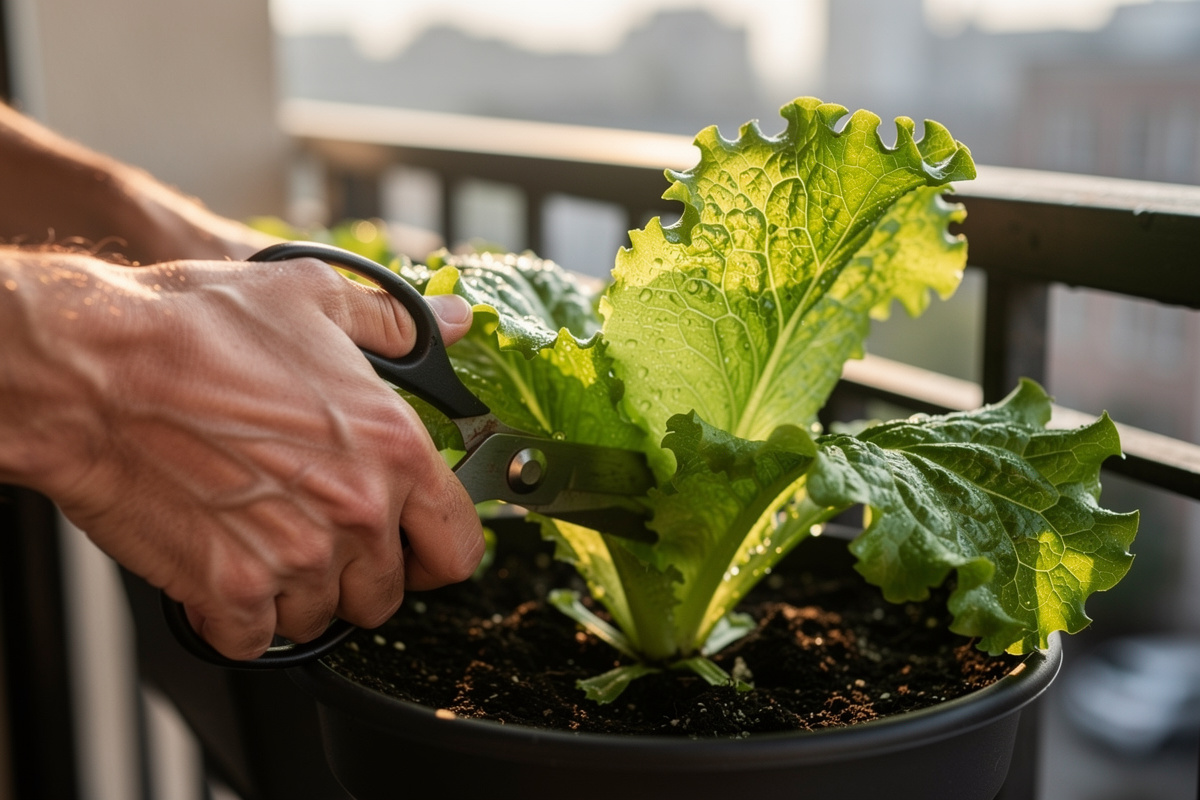
This is the part that makes indoor lettuce growing so rewarding — you can harvest from a single planting for 4-8 weeks using the cut-and-come-again method:
When to Start Harvesting
Begin harvesting when leaves reach 3-4 inches long — typically 25-30 days after planting. You do not need to wait for a full head to form. Baby leaves are tender, mild, and ready earlier.
How to Harvest
- Always pick outer leaves first. Leave the small inner leaves and the center growing point untouched
- Cut leaves with clean scissors 1 inch above the soil line
- Never remove more than one-third of the plant at a time
- Harvest in the morning when leaves are crispest
The plant responds to each harvest by pushing out new leaves from the center. A healthy lettuce plant produces 3-5 harvests before it slows down or bolts.
When to Replant
Replace your lettuce when it:
- Sends up a tall center stalk (bolting) — leaves turn bitter at this point
- Stops producing new leaves after multiple harvests
- Shows signs of disease (brown spots, wilting despite adequate water)
Succession planting tip: Start a new container every 2-3 weeks. By the time your first planting slows down, the next batch is ready to harvest. This gives you an unbroken supply of fresh lettuce.
Common Problems and Fixes
| Problem | Cause | Solution |
|---|---|---|
| Leggy, stretched seedlings | Not enough light | Move to brighter window or add grow light |
| Bitter-tasting leaves | Heat stress or bolting | Move to cooler location, harvest immediately |
| Brown, mushy leaf edges | Overwatering / poor drainage | Reduce watering, check drainage holes |
| Wilting despite wet soil | Root rot from waterlogged soil | Repot in fresh dry mix, improve drainage |
| Tiny flies around soil | Fungus gnats (overwatering) | Let soil dry between waterings, use sticky traps |
| White powdery coating on leaves | Powdery mildew (poor airflow) | Increase air circulation, space plants further apart |
| Seeds did not germinate | Buried too deep or old seeds | Barely cover seeds (1/8 inch), use fresh seeds |
| Tall flower stalk from center | Bolting (too warm or plant is done) | Harvest all remaining leaves, replant |
Indoor Lettuce Growing Calendar
One of the biggest advantages of growing lettuce inside is that you can plant any time of year. There is no growing season to follow — your home provides consistent temperature and you control the light.
| Week | What Happens | What to Do |
|---|---|---|
| Week 1 | Seeds sown | Mist daily, keep covered, room temperature |
| Week 1-2 | Sprouts emerge | Remove cover, move to light source |
| Week 2-3 | True leaves develop | Thin seedlings to 4-6 inches apart |
| Week 3-4 | Rapid leaf growth | Begin feeding every 2 weeks, water regularly |
| Week 4-5 | First harvest | Cut outer leaves when 3-4 inches long |
| Week 5-8 | Ongoing harvests | Continue cut-and-come-again, start new pot (succession) |
| Week 8-10 | Plant slows or bolts | Final harvest, compost old plant, new batch is ready |
How long does it take to grow lettuce inside?
Baby lettuce leaves are ready to harvest in 25-30 days from planting seeds. Full loose-leaf heads take 45-55 days. Butterhead varieties take 50-65 days. You can speed things up by harvesting young outer leaves as soon as they reach 3-4 inches.
Does lettuce need direct sunlight to grow indoors?
Lettuce grows best with 4-6 hours of direct sunlight from a south or west-facing window. It can tolerate indirect light but grows slower. If your windows lack direct sun, a basic LED grow light running 10-12 hours daily provides enough light for healthy growth.
What size container do I need to grow lettuce inside?
Lettuce has shallow roots and only needs a container 4-6 inches deep. A standard 6-8 inch pot holds 2-3 plants. A window box or rectangular planter is ideal for growing a full salad row. The key requirement is drainage holes.
How often do you water indoor lettuce?
Water indoor lettuce when the top inch of soil feels dry — typically every 1-2 days. Water the soil directly (not the leaves) until it drains from the bottom. Lettuce needs consistently moist soil but never soggy conditions, which cause root rot.
Why is my indoor lettuce bitter?
Bitter lettuce is caused by heat stress or bolting (flowering). Lettuce turns bitter when temperatures exceed 75°F (24°C) or when the plant reaches the end of its life cycle. Keep containers in cooler spots away from heating vents, and harvest promptly when you see a center stalk forming.
Your First Week Action Plan
- Day 1: Get a container with drainage holes and a bag of indoor potting mix
- Day 2: Buy a packet of loose-leaf lettuce seeds (Green Salad Bowl or Mesclun mix)
- Day 3: Fill container, moisten soil, scatter seeds, cover lightly, mist, place plastic wrap over top
- Day 4-7: Check daily, mist if dry, place in bright window
- Day 7-10: Sprouts appear — remove plastic wrap, start regular watering
Total cost to get started: under $10. Total time commitment: 5 minutes per day. In one month, you will be eating lettuce you grew on your windowsill.
Related Articles
- LED Lights for Growing Plants Indoors — The complete hub guide covering every fixture and setup
- Grow Lights for Tomatoes — PPFD, spectrum, and setup for fruiting crops
- Growing Plants Indoors: Complete Guide — The full indoor gardening overview
- Grow Lights for Vegetables — Indoor lighting for the full vegetable garden
- Best Light for Growing Plants Indoors — Windowsill, LED, and everything between