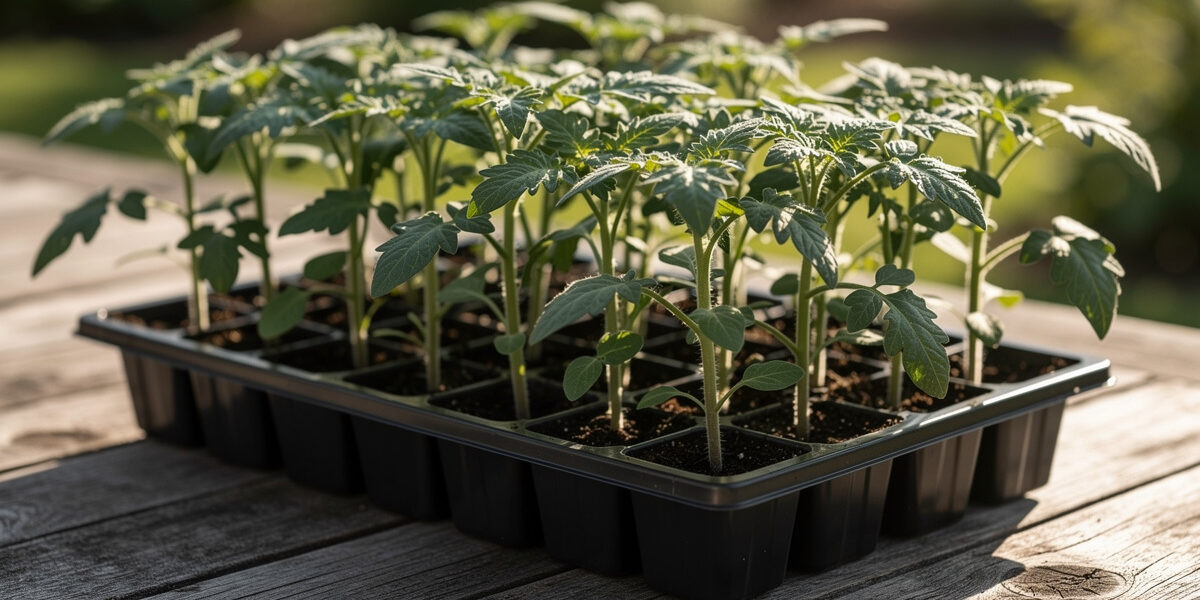
The week between “I have nice-looking tomato seedlings” and “they’re in the garden” kills more first-year tomato crops than every pest combined. Skipping the 7-to-10-day hardening-off process turns greenhouse-soft seedlings into sunscorched casualties within 48 hours of transplant. I start my tomato seeds indoors under an LED bar in late March — by mid-May the seedling shelf on my balcony is a jungle of 8-inch plants waiting for transplant day. The hardening-off week is the most nerve-wracking stretch of my growing season because I’ve lost more seedlings to impatience with the process than to any pest or disease in the years since. This guide picks up where seed-starting ends — covering the hardening-off schedule, the deep-planting trick that builds a much larger root system, and the first-week care that gets transplants past their riskiest period. If you’re still at the seed stage, start with Starting Tomato Seeds Indoors first.
Are Your Seedlings Actually Ready?
The four signals that say “ready to harden off”:
- Height: 6 to 10 inches. Smaller seedlings have insufficient leaf mass to withstand outdoor conditions. Taller ones tend to be leggy and snap in wind.
- Stem thickness: at least pencil-width at the base. Thin spindly stems indicate insufficient light during indoor growing and won’t survive the transition.
- True leaves: 3 to 4 sets minimum. The cotyledons (first round seed-leaves) plus 3 to 4 sets of true tomato leaves. Younger seedlings stall badly when transplanted.
- Color: deep, even green. Pale or yellowing seedlings are nutrient-deficient or root-bound and need correction before transplant.
Whether you grew the seedlings yourself or bought from a nursery, the readiness check is identical. Garden center seedlings often get sold too early at 4 inches tall — buy them, but pot them up to a bigger container and grow them indoors for another 2 weeks before starting the hardening process.
The 7-to-10-Day Hardening Off Schedule
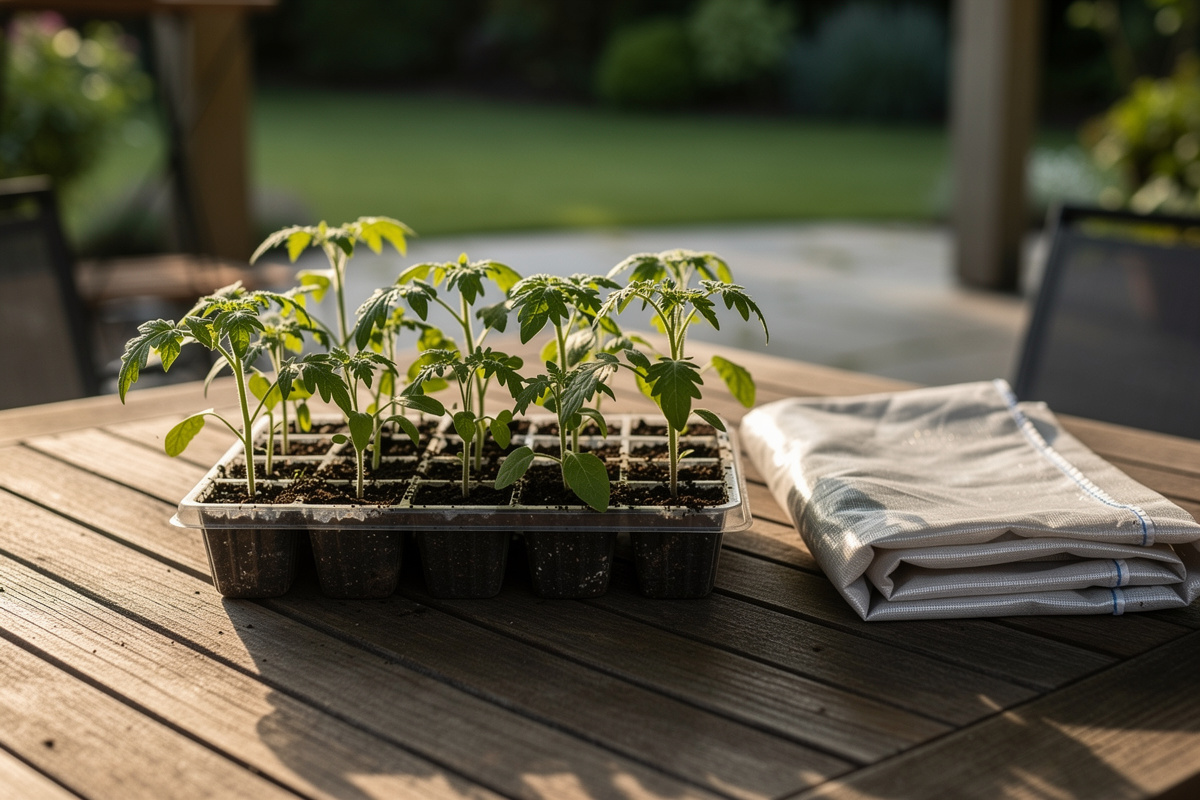
Hardening off gradually exposes indoor-grown seedlings to outdoor conditions: direct sunlight, wind, and temperature swings. The cell walls and cuticle thicken, the stem stiffens, and the plant develops the UV tolerance and water-stress resilience it needs to survive transplant.
The schedule is non-negotiable. Skip days and the seedlings will sunscald (white patches on leaves), wilt severely, or simply die.
| Day | Time outside | Light exposure | Temperature minimum |
|---|---|---|---|
| 1 | 1 hour | Shade or filtered light only | 50°F |
| 2 | 2 hours | Shade or filtered light only | 50°F |
| 3 | 3 hours | Morning sun, afternoon shade | 50°F |
| 4 | 4 hours | Morning sun, afternoon shade | 50°F |
| 5 | 5 hours | Half day full sun | 50°F |
| 6 | 6 hours | Half day full sun | 50°F |
| 7 | Full day | Full sun all day | 50°F overnight |
| 8 | Full day + night | Full exposure | 50°F overnight |
| 9–10 | Continuous outside | Full exposure | 50°F overnight |
If overnight temperatures drop below 50°F during the schedule, bring the seedlings back inside for the night and resume the next day. Tomatoes are damaged by cold even above freezing — anything under 50°F at the seedling stage stunts the plant for weeks.
Wind is part of the conditioning. A still corner doesn’t toughen seedlings the way an open patio with light breeze does. If your hardening location is sheltered, gently brush seedlings with your hand twice a day to simulate wind.
The Deep-Planting Trick (The Highest-Leverage Move at Transplant)
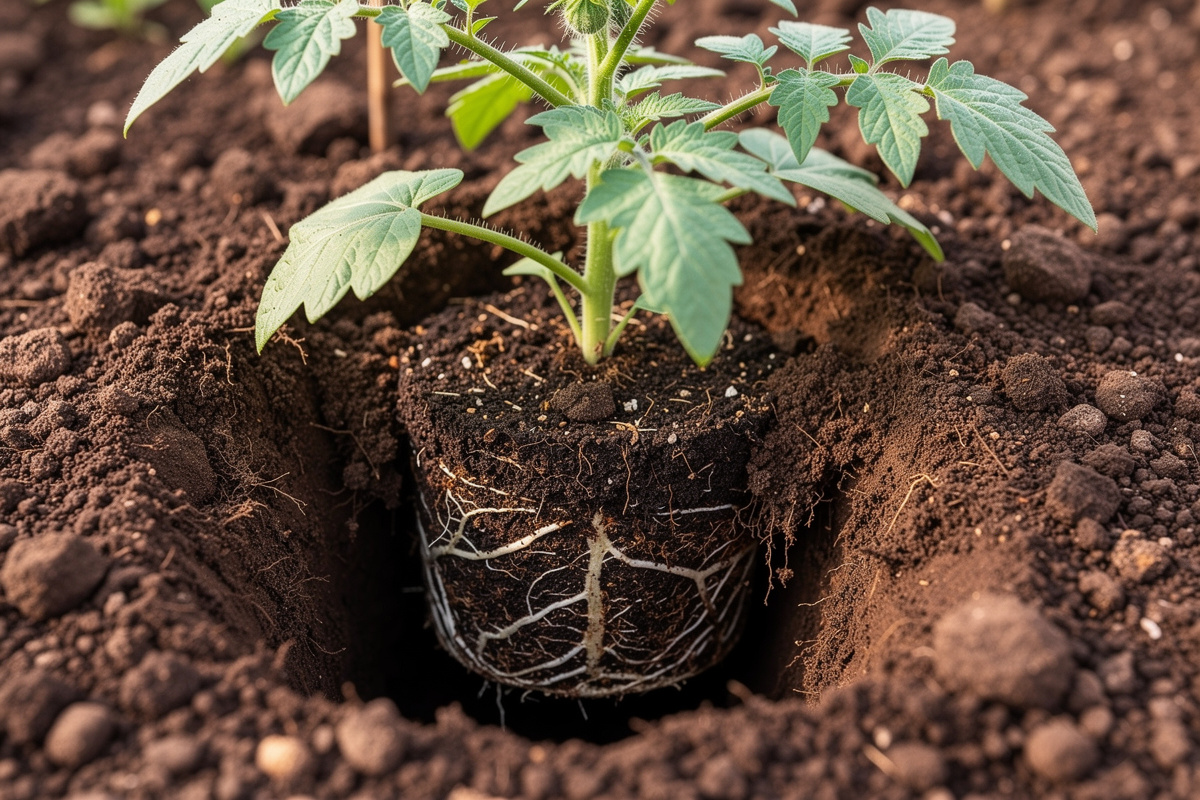
Tomatoes are nearly unique among garden vegetables in their ability to root from any buried section of stem. Burying the seedling deep — leaving only the top 4 inches of foliage above ground — lets the buried stem grow a much larger, deeper root system than a shallow-planted seedling, which pays off in drought tolerance and anchorage (Clemson Cooperative Extension).
The procedure:
- Dig a hole 8 to 12 inches deep, deeper for tall leggy seedlings, shallower for short stocky ones.
- Pinch off the lowest 2 to 4 sets of true leaves — every leaf that would end up underground has to go, or it’ll rot and invite stem disease.
- Add a tablespoon of bone meal and a tablespoon of crushed eggshell to the hole bottom for slow-release calcium. This single step prevents most cases of blossom end rot later in the season.
- Set the seedling in the hole so only the top 4 inches of foliage remains above ground. The buried stem will sprout adventitious roots within 7 to 10 days.
- Backfill with the original soil mixed with a handful of finished compost. Tamp gently — firm contact, not packed.
- Water in with 1 gallon per plant at the base. This settles the soil around the roots and provides immediate moisture.
For unusually leggy seedlings (12+ inches tall with weak stems), use the trench method: dig a horizontal trench 4 inches deep, lay the seedling on its side, gently bend the top upward, and bury the entire stem in the trench. The buried length all roots out. Within a week, the upturned tip resumes vertical growth.
Site Selection and Spacing
Where you put the seedling matters as much as how. The non-negotiables:
- 6+ hours of direct sun. Less and the plant will grow but produce poorly.
- Spacing matched to type. 24 inches for determinates, 36 inches for indeterminates, 18 inches for dwarves. If you don’t know what type you bought, see Tomato Plant Types.
- No tomato or potato bed for the past 2 to 3 years. Soil-borne disease pressure compounds.
- Soil pH 6.2 to 6.8. A $15 soil test from your local extension service is worth the cost.
For the bed prep recipe — compost ratios, drainage requirements, amendment timing — see Soil and Compost. For container or raised-bed growers, the medium recommendations are in Best Potting Soil for Tomatoes and Best Soil for Raised Beds.
Install Support Immediately
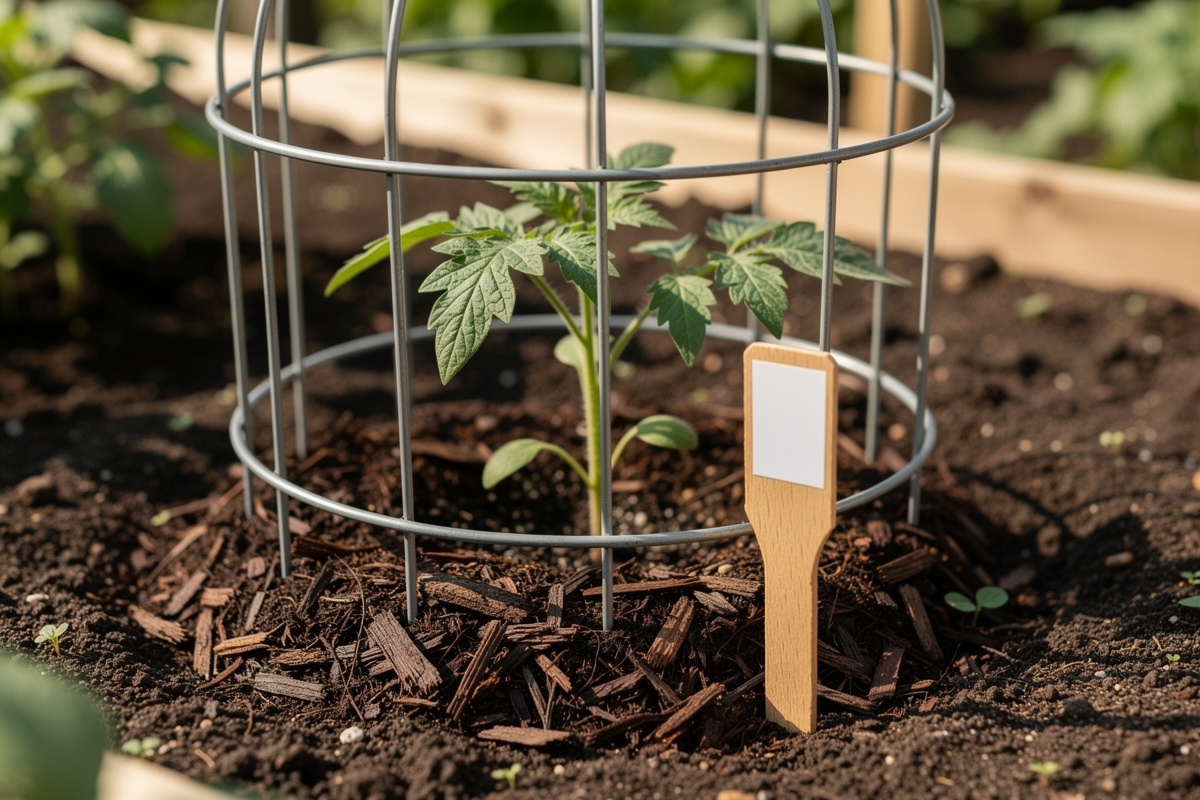
This is the most-skipped step that creates the most regret. Stakes, cages, or trellises must go in on transplant day, before the root system establishes. Driving an 8-foot stake into a 6-week-established root ball severs roots and shocks the plant — and you’ll be doing it just as the plant starts heavy fruit production, which is the worst possible timing.
The right support depends on the type:
- Determinate or dwarf: 4-foot square wire tomato cage placed over the seedling. On my balcony the cages drop right into the fabric grow bags — the bag contains the roots and the cage contains the canopy, no extra hardware needed.
- Indeterminate (single-stake training): 8-foot stake driven 18 inches deep within 4 inches of the stem. Full method in Staking Tomatoes: Single-Stake Method.
- Indeterminate (multi-plant trellis): Florida weave or A-frame structure installed before any plant goes in the bed. Full structures comparison in Trellis for Tomatoes.
The First Week After Transplant
The newly transplanted seedling has lost some root mass and is rebuilding root-soil contact. Treat it accordingly:
- Water deeply on day 1, day 3, and day 5. 1 gallon per plant each time, at the base. Skip overhead watering — wet leaves invite disease, and the seedling’s roots are not yet wide enough for sprinklers to help anyway.
- No fertilizer for the first 2 weeks. Bone meal in the planting hole is enough. Adding nitrogen now causes a foliage burst at the expense of root development.
- Provide temporary shade if temperatures exceed 85°F in the first 5 days. A piece of shade cloth or even an inverted laundry basket during peak afternoon prevents wilt.
- Watch for cutworms. These soil-dwelling caterpillars sever seedling stems at the soil line overnight. A 3-inch cardboard collar around each seedling base prevents them.
- Don’t panic if the seedling wilts mid-day. Some midday wilt during week 1 is normal as the root system rebuilds. Wilt that persists into morning means a real problem — usually root damage or disease.
By the end of week 2, the plant should show visible new growth — fresh leaf nodes at the tip and a deeper green color throughout. From here, it’s a normal-care tomato season. Mulch goes on around week 3 once soil has fully warmed; weekly suckering for indeterminates begins around week 4. The full season-long playbook is in Tomato Plant: Complete Outdoor Growing Guide. On my Nordic balcony I transplant in the third week of May — late enough that the overnight lows stay above 50°F, early enough that the plants have July and August to set and ripen fruit. The fabric grow bags warm up faster than in-ground soil, which buys me an extra 7 to 10 days of root activity in the spring shoulder season compared to a friend’s in-ground bed 20 miles inland.
The hardening-off week is tedious — moving trays in and out, checking the clock, watching the overnight forecast — but I’ve learned to treat it as the quality gate it actually is. A seedling that survives 7 days of graduated outdoor exposure will handle the rest of the season. One that gets rushed into the ground on a warm Saturday in May will struggle for weeks and never catch up. Grab a set of sturdy tomato cages and install them on transplant day — not six weeks later when the plant is already sprawling. That one habit will eliminate the most common post-transplant regret I hear from every new grower I talk to. As an Amazon Associate I earn from qualifying purchases.
Hardening Off in a Nordic Spring
Hardening off tomato seedlings on a Swedish balcony means a full seven- to ten-day transition. I start by setting the trays outside for one hour on an overcast afternoon when the temperature is above 10 degrees C, and add an hour of outdoor time and an hour of direct sun each day. The wind is the real variable — a stiff April gust can snap a 10-inch seedling at the stem, so I position the trays against the balcony wall with a chair blocking the windward side for the first four days.
The final overnight hardness test is the moment of truth: leave the seedlings out on a mild night in late May, check them at sunrise, and if they are still standing upright and green they are ready for their permanent pots.
Frequently Asked Questions
Can I skip hardening off if my seedlings are already strong?
No. Greenhouse and indoor-grown seedlings have not developed UV tolerance, regardless of how robust they look. Even a single afternoon of unhardened full sun causes sunscald — bleached white patches on leaves that never heal and severely set the plant back. The 7-day minimum applies to every indoor-grown seedling.
How deep should I plant a tomato seedling?
Bury the seedling so only the top 4 inches of foliage remain above ground. Pinch off all leaves that would end up underground. Tomato stems root from any buried section, and deep planting builds a much larger, deeper root system than shallow planting.
What if my seedlings are leggy and weak-stemmed?
Use the trench planting method instead of vertical. Dig a horizontal trench 4 inches deep, lay the seedling on its side, bend the top gently upward, and bury the entire stem. The buried length will root out and the upturned tip resumes vertical growth within a week.
How long does transplant shock last?
With proper hardening off and deep planting, transplant shock should be minimal — visible new growth by day 7 to 10. Severe wilt that persists past day 5 indicates root damage, disease, or the seedling was not properly hardened. Without hardening off, transplant shock can stunt plants for 3+ weeks.
Should I water tomato seedlings before transplanting?
Yes. Water the seedling tray thoroughly 1 to 2 hours before transplanting. Moist root balls slip out of cells without breaking, and the wet roots make better immediate contact with garden soil. Do not transplant from bone-dry containers.
Can I transplant tomato seedlings on a hot sunny day?
Avoid it. Transplant in late afternoon, on an overcast day, or just before a rain. The seedling needs time to recover and rebuild root contact without immediate heat stress. If you must transplant on a hot sunny day, provide afternoon shade for the first 3 to 5 days.