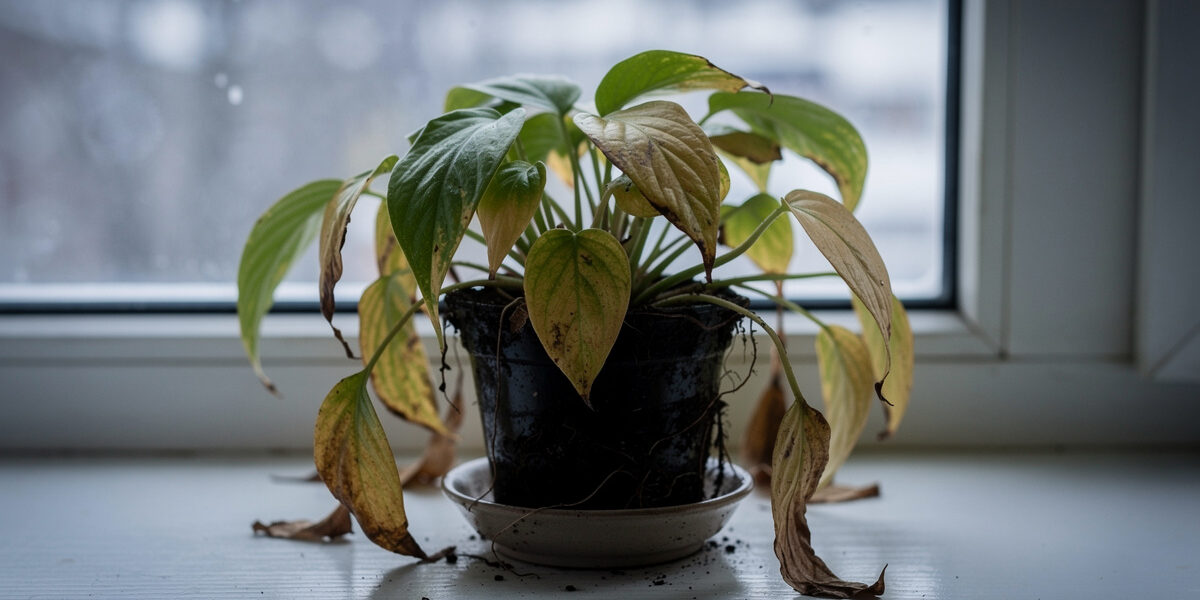
The clearest signs of overwatering plants are yellowing lower leaves, soft mushy stems, soil that stays wet for days, a sour smell, and wilting even though the pot is damp. It is the opposite mistake to drought, and in a cool, low-light Nordic apartment it kills far more plants — soggy, oxygen-starved roots simply rot.
This trips up almost every grower who cares, because the instinct when a plant looks sad is to water it — and an overwatered plant looks a lot like a thirsty one. Both wilt. The difference is what is happening at the roots: drought-stressed roots are dry and crisp, while overwatered roots are drowning, because waterlogged soil has no air gaps and roots need oxygen as much as they need water. Below is how to read each symptom correctly, the finger-and-pot tests that tell overwatering from underwatering in seconds, why this is the number-one container killer up north, and exactly how to rescue a plant that has gone too wet.
Disclosure: CityRooted is reader-supported. As an Amazon Associate I earn from qualifying purchases made through links in this article, at no extra cost to you. I only point to gear I actually use or would buy for my own garden.
The Telltale Signs of Overwatering
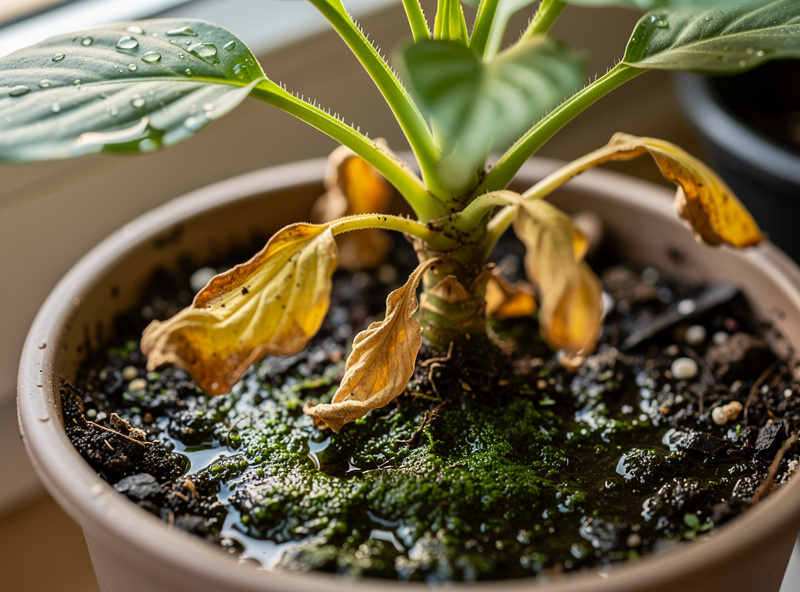
Overwatering shows up first in the leaves and soil. Look for yellowing that starts on the lower, older leaves; limp or mushy stems near the soil line; leaves that wilt despite damp soil; soft brown patches; mould or algae on the surface; and a persistent sour, swampy smell from the pot. Together these point to roots that are suffocating.
The reason these symptoms cluster is simple: roots sitting in airless, waterlogged soil cannot take up oxygen, so they stop functioning and begin to rot. A rotting root system cannot move water to the leaves, which is why an overwatered plant wilts exactly like a thirsty one even as the soil stays wet — the plant is effectively dying of thirst in a puddle. Edema, where leaves develop blister-like bumps from cells bursting with excess water, is another classic tell. If you understand the full watering picture first, these signs read clearly; my complete garden watering guide lays out how much water plants actually need so you can spot the excess.
Overwatering vs Underwatering: Telling Them Apart
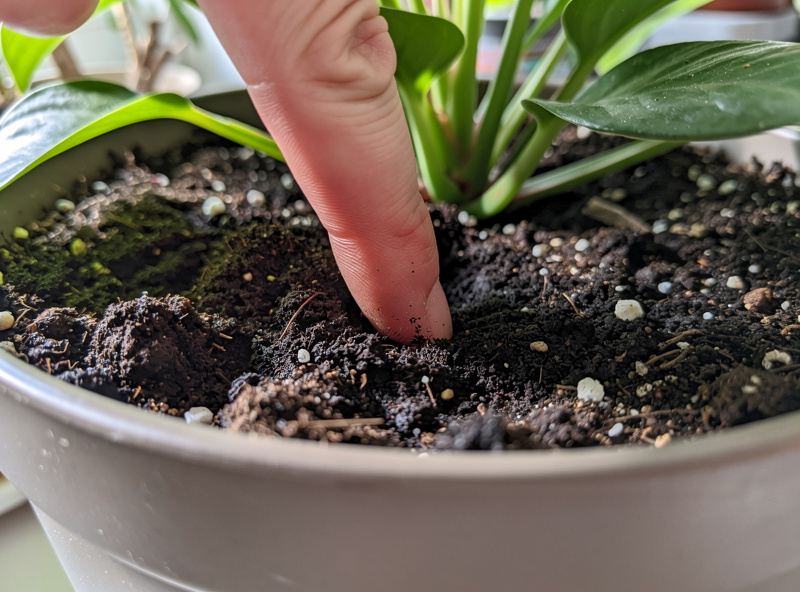
Because both cause wilting, you diagnose by feel, not by looks. Push a finger 3–5 cm into the soil: if it is wet and cool yet the plant droops, that is overwatering; if it is bone dry and the leaves are crisp and papery, that is underwatering. Wet soil plus a sad plant almost always means too much water.
The leaves themselves give a second clue. Overwatered leaves go soft, yellow, and limp and fall off easily; underwatered leaves go dry, brown, and crispy at the edges and crumble. Overwatered soil stays dark and dense for days and may smell sour; dry soil pulls away from the pot wall and sheds water off the top when you finally do water. The table below is the quick reference I keep in my head.
| Symptom | Overwatering | Underwatering | Quick test |
|---|---|---|---|
| Leaf colour | Yellow, lower leaves first | Brown, crispy edges | Look at oldest leaves |
| Leaf texture | Soft, limp, mushy | Dry, papery, brittle | Squeeze gently |
| Soil feel | Wet, dense, cool for days | Dry, cracked, pulls from pot | Finger 3–5 cm down |
| Smell | Sour, swampy | Neutral or dusty | Sniff the soil surface |
| Stem base | Soft, brown, mushy | Firm, sometimes shrivelled | Press near soil line |
| Pot weight | Heavy, stays heavy | Very light when lifted | Lift the container |
Why Overwatering Is the Top Container Killer Up North
In a Nordic apartment, overwatering is deadlier than drought because everything slows water loss: cool indoor temperatures, low winter light, short days, and minimal airflow all mean soil stays wet far longer than the same pot would in a warm, bright, breezy climate. A weekly watering routine that suits July can drown the same plant in November.
This is the trap behind most copied watering advice. A schedule written for a sunny US windowsill assumes fast evaporation; my January windowsill gets four usable daylight hours and the soil barely dries between waterings. Plants also grow slowly or go dormant in low light, so they drink less — yet the instinct is to keep watering on the same calendar. The fix is to water by the soil, not the day, especially in the dark months. My vegetable garden watering schedule is built around reading the soil and the season precisely to avoid this, and it scales down to a single windowsill pot.
What Actually Causes Overwatering
Overwatering is rarely just “too much water at once” — it is usually a drainage or container problem. Pots without drainage holes, dense compacted soil, oversized containers holding too much wet soil for small roots, and saucers left full of standing water all keep roots wet long after you have stopped watering. The water has nowhere to go.
The biggest single culprit I see is bagged “potting soil” used straight in pots: it compacts, holds too much water, and drowns roots. A light, open mix with perlite or pumice for air gaps fixes most overwatering before it starts. Containers matter too — breathable fabric grow bags let excess moisture evaporate through the walls and air-prune roots, and unglazed terracotta plant pots wick moisture out the same way, both far more forgiving than sealed plastic in a cool flat. For the full breakdown of mixes, drainage, and pot choice, see my complete container gardening guide.
How to Rescue an Overwatered Plant
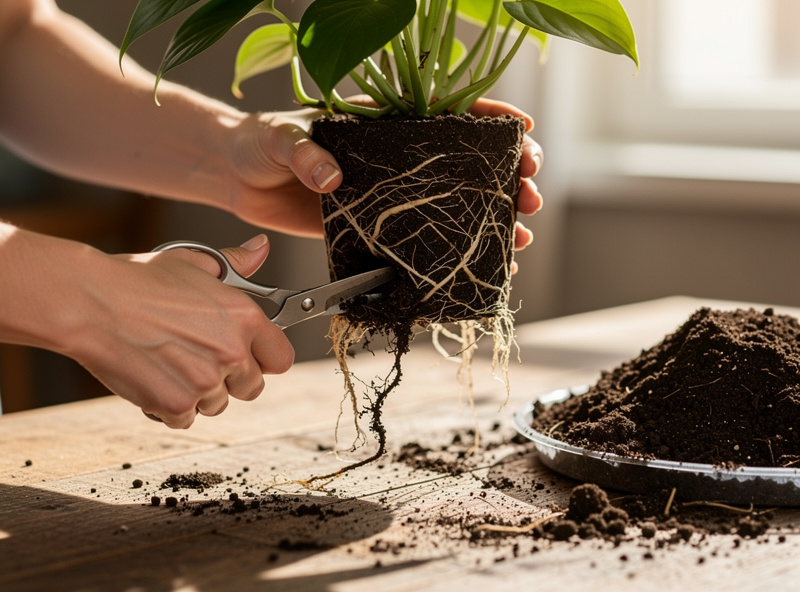
You can often save an overwatered plant if you act before the roots fully rot. Stop watering immediately, move it somewhere bright and airy, and let the soil dry out. If it smells sour or the stem base is mushy, unpot it, trim away any black slimy roots, and repot into fresh, fast-draining mix in a clean container with drainage holes.
Healthy roots are firm and white or tan; rotted roots are brown, black, soft, and smell foul — cut those off with clean scissors before they spread. After repotting, water sparingly and only once the top few centimetres dry. To stop guessing, a cheap soil moisture meter pushed to root depth tells you when the pot is actually dry rather than just dry on top, which is the single most common reason people overwater. If chronic wetness is your problem, switching the thirstiest plants to a controlled system like a DIY self-watering planter or a wicking bed removes the human error entirely by letting the plant draw only what it needs.
Frequently Asked Questions
What are the first signs of overwatering a plant?
The earliest signs are yellowing of the lower, older leaves and soil that stays wet for days. Soon after come soft mushy stems, wilting despite damp soil, a sour smell, and sometimes mould on the surface. All point to roots starved of oxygen.
How do I tell overwatering from underwatering?
Feel the soil 3 to 5 cm down. Wet, cool soil with a drooping plant means overwatering; bone-dry soil with crispy, papery leaves means underwatering. Overwatered leaves are soft and yellow; underwatered leaves are dry, brown, and brittle.
Can an overwatered plant recover?
Often yes, if caught before the roots fully rot. Stop watering, move it somewhere bright and airy, and let the soil dry. If the stem base is mushy, unpot it, trim away black slimy roots, and repot into fresh fast-draining mix with drainage holes.
Why does my overwatered plant look like it needs water?
Rotting roots cannot move water to the leaves, so the plant wilts exactly like a thirsty one even though the soil is wet. Always check soil moisture before watering a drooping plant; watering a waterlogged plant makes the rot worse.
Why do plants overwater so easily indoors in winter?
Cool temperatures, low light, short days, and little airflow all slow evaporation, so soil stays wet far longer than in summer. Plants also grow slowly and drink less in low light. Water by the soil, not a fixed calendar, in the dark months.
How do I stop overwatering my plants?
Use pots with drainage holes, a light open mix with perlite, and breathable containers like fabric or terracotta. Empty saucers after watering, and check the soil 3 to 5 cm down with a finger or moisture meter before each watering instead of watering on a schedule.