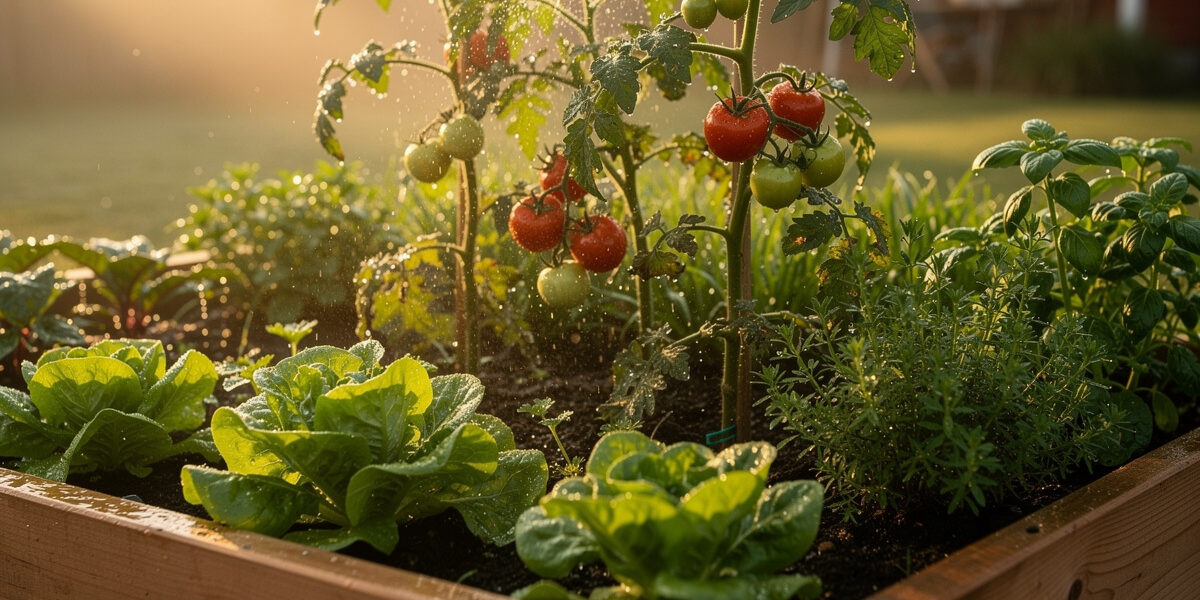
A vegetable garden watering schedule is really a rule for depth, not days: water deeply two to three times a week so the top 15 cm of soil dries between sessions. In my Nordic balcony beds that means roughly 20 litres per square metre, adjusted up in July heat and nearly to zero in a wet Swedish spring.
I stopped watering by the calendar years ago. A fixed “every morning” routine either drowns seedlings in May or starves fruiting tomatoes in a dry August week. What actually works is a schedule pinned to two things you can read off the plant and the soil: growth stage and weather. Below is the exact framework I run across containers, raised beds, and the few in-ground rows I get up here, plus the watering rhythm for each crop stage so you can build your own plan instead of copying a number off a US gardening site written for a climate you do not live in.
Disclosure: CityRooted is reader-supported. As an Amazon Associate I earn from qualifying purchases made through links in this article, at no extra cost to you. I only point to gear I actually use or would buy for my own garden.
How Often Should You Water a Vegetable Garden?
Most established summer vegetables want deep watering two to three times a week, totalling about 25 mm (one inch) of water including rain. Frequency rises with heat, sandy soil, and containers; it drops in cool, cloudy, or rainy spells. Daily shallow sprinkling is the most common mistake I see.
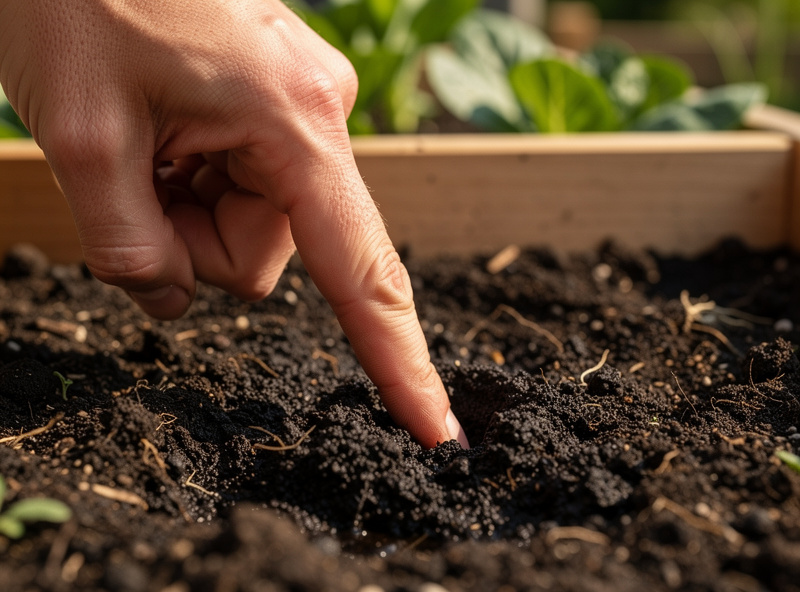
The reason depth beats frequency is roots follow water. When you wet only the top 2 cm every day, roots stay shallow and the plant collapses the first time you skip a session. Soak to 15–20 cm and let the surface dry, and roots dive down where the soil stays cool and damp far longer. I check by pushing a finger in to the second knuckle; if it is dry at the fingertip, I water, and if it is still cool and damp, I wait another day. A cheap soil moisture meter removes the guesswork for anyone who finds the finger test unreliable, especially in deep raised beds where the surface lies about what is happening at root level.
Watering by Growth Stage
Watering needs change dramatically across a plant’s life. Seeds and seedlings want frequent light moisture; established plants want infrequent deep soaks; fruiting and heading crops want the steadiest supply of all. Matching water to stage is what turns a vague routine into a real schedule.
At the seed and germination stage, the top centimetre must stay consistently damp, which often means a fine misting once or even twice a day until sprouts appear. Once seedlings have their true leaves, I back off to every day or two and start letting the surface dry slightly to push roots down and avoid damping off. Through the vegetative stretch you move to deep soaks two to three times a week. The critical window is flowering and fruiting: inconsistent water here causes blossom-end rot on tomatoes, splitting, and bitter cucumbers, so this is where steadiness matters most. For my balcony tomatoes I lean on a DIY self-watering planter with a 3D-printed reservoir insert precisely because it smooths out the supply when I am away for a weekend.
A Vegetable Watering Schedule by Crop and Stage
There is no single number, but there is a defensible starting grid. The table below is the baseline I work from for a temperate, short-season climate, then adjust by weather. Treat the litres as “per plant per session” for containers and “per square metre” for beds; cut everything if it has rained.
| Crop | Seedling stage | Vegetative stage | Fruiting / heading stage | Key risk if uneven |
|---|---|---|---|---|
| Tomatoes | Daily light mist | Deep, 2x/week | Deep, 3x/week, very steady | Blossom-end rot, splitting |
| Lettuce & leafy greens | Daily, shallow | Every 2 days | Every 1–2 days (prevents bolting) | Bitterness, bolting |
| Cucumbers & squash | Daily light mist | Deep, 2–3x/week | Deep, 3x/week | Bitter, misshapen fruit |
| Beans & peas | Every 2 days | 2x/week | Deep at flowering, 2–3x/week | Dropped flowers, tough pods |
| Carrots & root crops | Daily until germinated | Deep, 1–2x/week | Steady, 2x/week | Splitting, forking |
| Herbs (basil, parsley) | Daily, shallow | Every 2–3 days | As needed, avoid soggy roots | Root rot if overwatered |
Containers Need a Different Schedule Than Beds
Containers dry out two to four times faster than ground or raised beds because they have less soil mass and far more exposed surface relative to volume. In a Nordic July a 10 litre pot in full sun can need water daily; the same crop in a deep raised bed might go three or four days. Your schedule has to fork by where the plant grows.
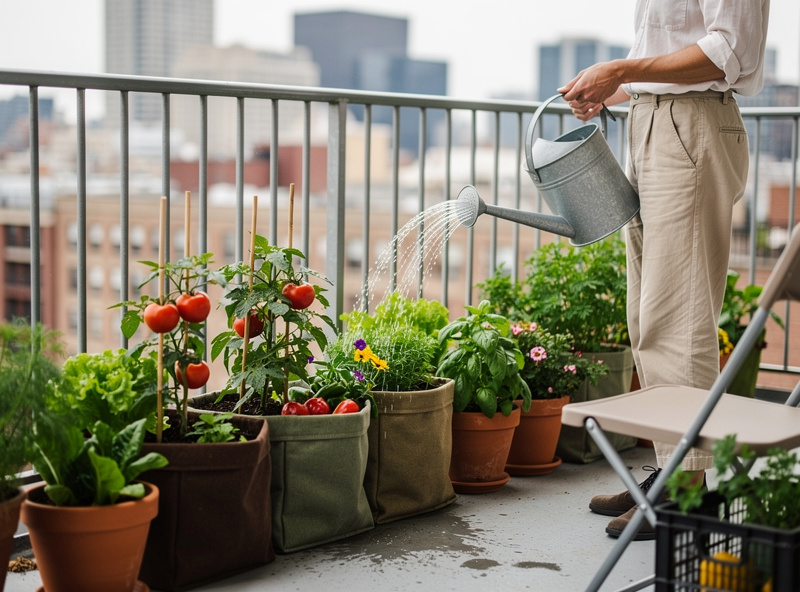
This is the single biggest reason copied watering advice fails on a balcony. The US homestead channels picture in-ground rows; my reality is fabric grow bags and pots on a wind-exposed balcony rail where the wind pulls moisture out as fast as the sun. For those I either water daily in high summer or, better, switch the thirstiest crops to a wicking or reservoir system. If you grow mostly in pots, read my complete container gardening guide alongside this schedule, and for the structural side of bigger plantings the raised beds and planters guide covers depth and drainage, which directly change how often you water.
Adjusting the Schedule for Weather and Season
Weather overrides the calendar every time. A rule I trust: skip a scheduled watering after 10 mm or more of rain, add a session during any stretch above 25 C, and water early in heatwaves so plants enter the hot afternoon already topped up. In spring and autumn up north, cool soil and low evaporation can cut the schedule in half.
The best time of day is early morning. Watering at dawn means the soil charges up before the day’s heat, foliage dries quickly to limit fungal disease, and you lose far less to evaporation than a midday soak. Evening is my second choice but I keep water off the leaves to avoid mildew overnight. A simple garden hose timer automates that pre-dawn window so the bed is watered before I am even awake, which matters in a Nordic summer when sunrise is closer to 04:00. For a fuller treatment of timing, soil checks, and method choice, my complete garden watering guide is the hub this schedule sits under.
Delivering Water Efficiently So the Schedule Sticks
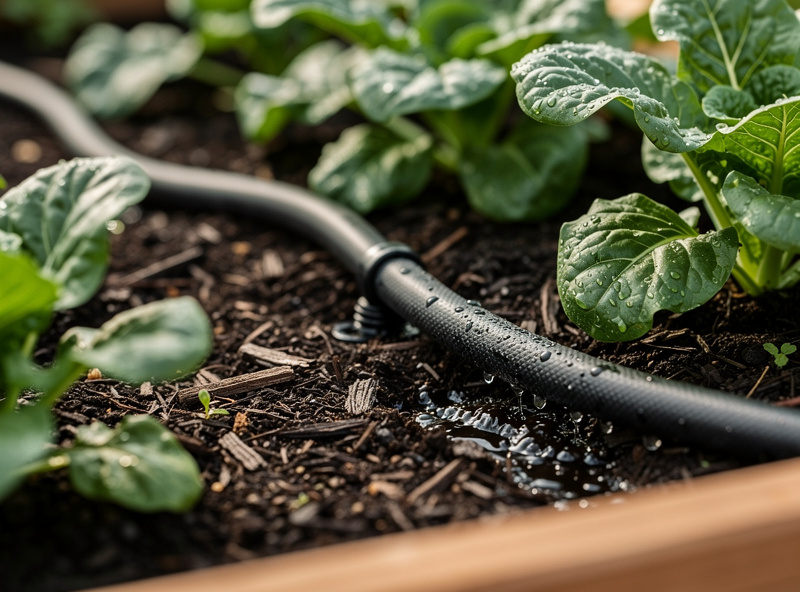
A schedule only works if watering is easy enough that you actually do it. Drip lines, soaker hoses, and reservoir planters cut both your time and the water wasted to evaporation by 30–50% versus overhead spraying, and they deliver water to the root zone where it counts rather than the leaves where it invites disease.
For beds, I run a soaker hose snaked between plants on a timer; it turns “deep watering two to three times a week” into something automatic. For a hands-off balcony setup, a gravity or solar drip system pays off fast, and I have sized one out fully in my guide to solar-powered drip irrigation. If you are on a compact balcony with mains pressure, the tidy Gardena balcony watering setup is the cleanest plug-and-play route I have tested.
Common Scheduling Mistakes I See
The three errors that wreck a watering schedule are daily shallow watering, watering on a fixed clock regardless of rain, and treating containers and beds the same. Each one shows up as the same symptoms: wilting despite watering, shallow roots, and crops that fail at the fruiting stage when they need water most.
The fix for all three is the same shift in mindset: water the soil to a depth, then read the soil and the sky before the next session instead of obeying a number. Wilting at midday in full sun is not always thirst — many plants droop to protect themselves and recover by evening, so check the soil before you reach for the can. Overwatering, especially in containers, kills more vegetables up here than drought does, because cold wet soil starves roots of oxygen and invites root rot long before a Nordic gardener ever runs short of water.
Frequently Asked Questions
How often should I water my vegetable garden?
Most established summer vegetables want deep watering 2 to 3 times a week, about 25 mm of water total including rain. Increase in heat, sandy soil, and containers; reduce in cool, cloudy, or rainy weather. Avoid daily shallow sprinkling.
Is it better to water vegetables in the morning or evening?
Early morning is best. The soil charges before the day’s heat, foliage dries fast to limit fungal disease, and evaporation loss is lowest. Evening is acceptable but keep water off the leaves to avoid overnight mildew.
How do I know if I am overwatering my vegetables?
Signs include yellowing lower leaves, soft mushy stems, a sour soil smell, and wilting even though the soil is wet. In containers, overwatering starves roots of oxygen and causes root rot, which kills more plants in cool climates than drought.
How much water do container vegetables need compared to beds?
Containers dry 2 to 4 times faster than beds because of low soil mass and high exposed surface. In high summer a 10 litre sunny pot may need water daily, while the same crop in a deep raised bed can go three or four days.
Should I water vegetables when it is going to rain?
Skip a scheduled watering after 10 mm or more of rain. Check the soil 10 to 15 cm down first; if it is still damp at that depth, wait. Overwatering on top of rain is a common cause of root rot and split fruit.
Do tomatoes need a different watering schedule than leafy greens?
Yes. Tomatoes want deep, very steady water at fruiting to prevent blossom-end rot and splitting. Leafy greens want more frequent, shallower watering to stay tender and avoid bolting. Match the schedule to each crop’s critical stage.