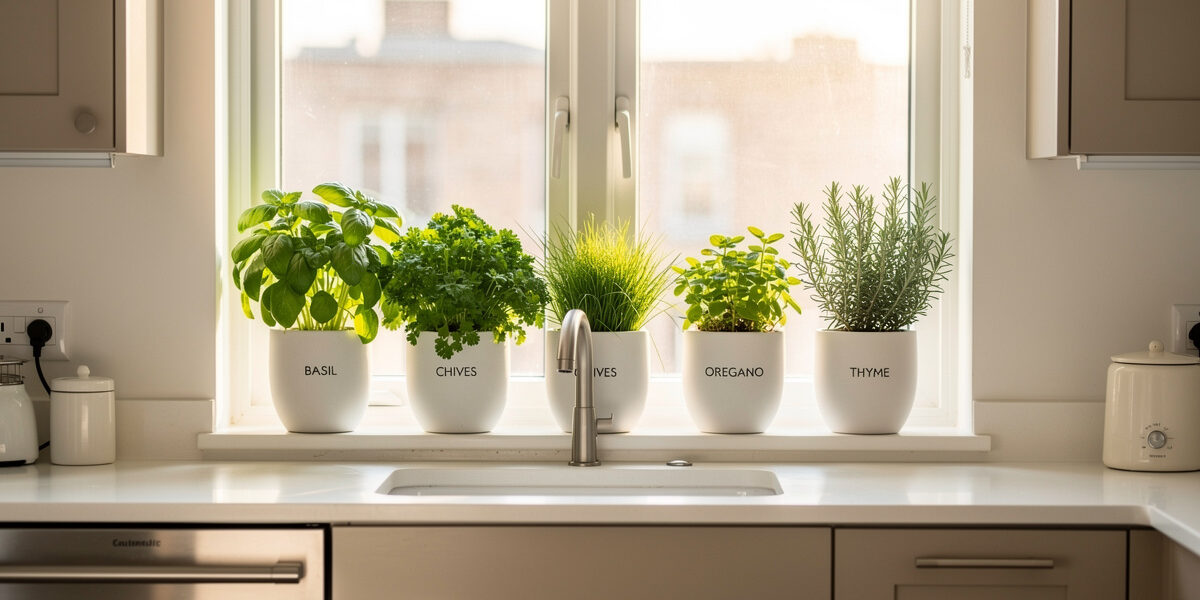
An indoor herb garden is a layout problem before it is a growing problem. Once you have the right setup — light source, container drainage path, surface that tolerates spilled water, and 3 to 4 inches of vertical headroom above the canopy — most herbs grow themselves. This guide focuses on the physical buildout: choosing between window, kitchen, and wall layouts; comparing pre-built kit systems against DIY container setups; and the design rules that keep the garden looking good for years rather than months. For the species-by-species growing technique (light hours, watering frequency, transplanting cues), the canonical reference is Growing Herbs Indoors: Complete Container Guide; this guide complements it from the design angle.
Three Indoor Herb Garden Layouts That Actually Work
Successful indoor herb gardens fall into three layout categories. Pick the one your space and budget supports, then commit to its specific design rules:
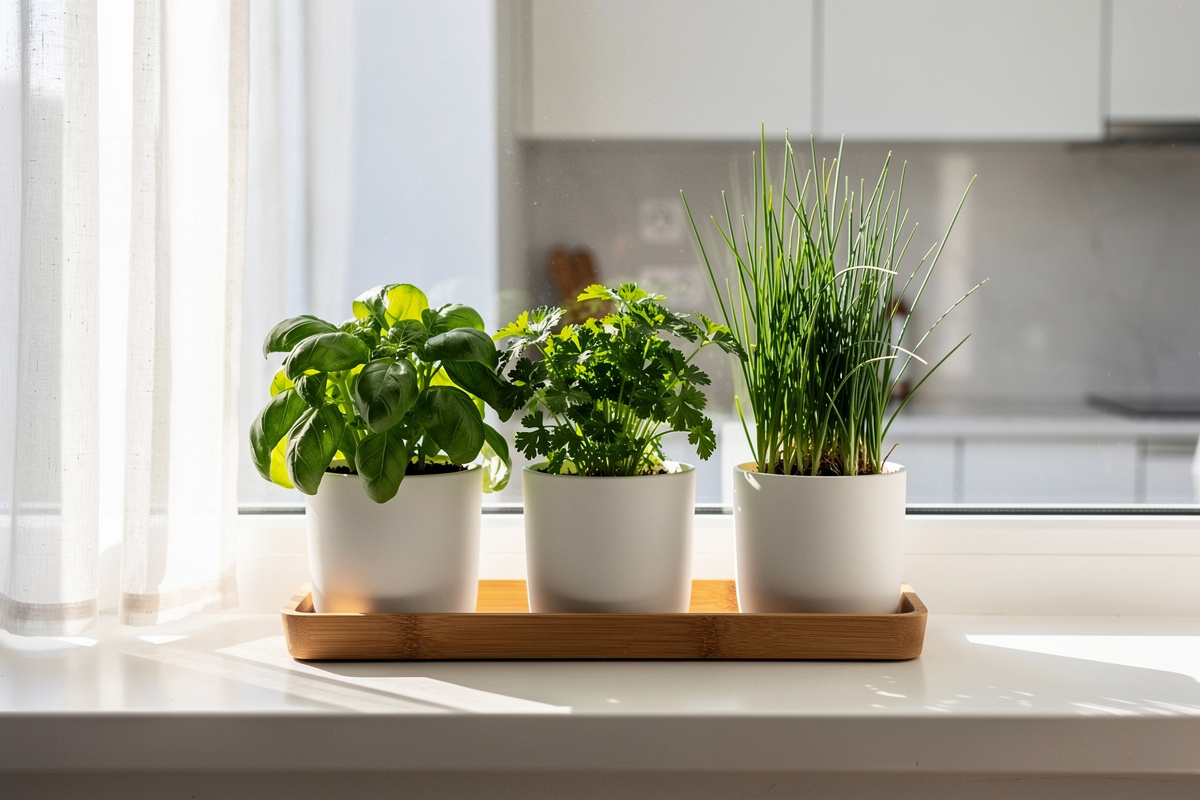
- South-facing window box (1-3 ft of window sill): Cheapest setup. 4 to 6 herbs in 4 to 6 inch pots arranged in a single tray. Works year-round in zones 7+ at the latitude where 6 hours of direct south-window sun is realistic.
- Countertop kit with built-in light (12 to 24 inch footprint): Hydroponic or soil-based pre-built systems. Light is integrated, water is automated. Best for renters and households with no good window orientation.
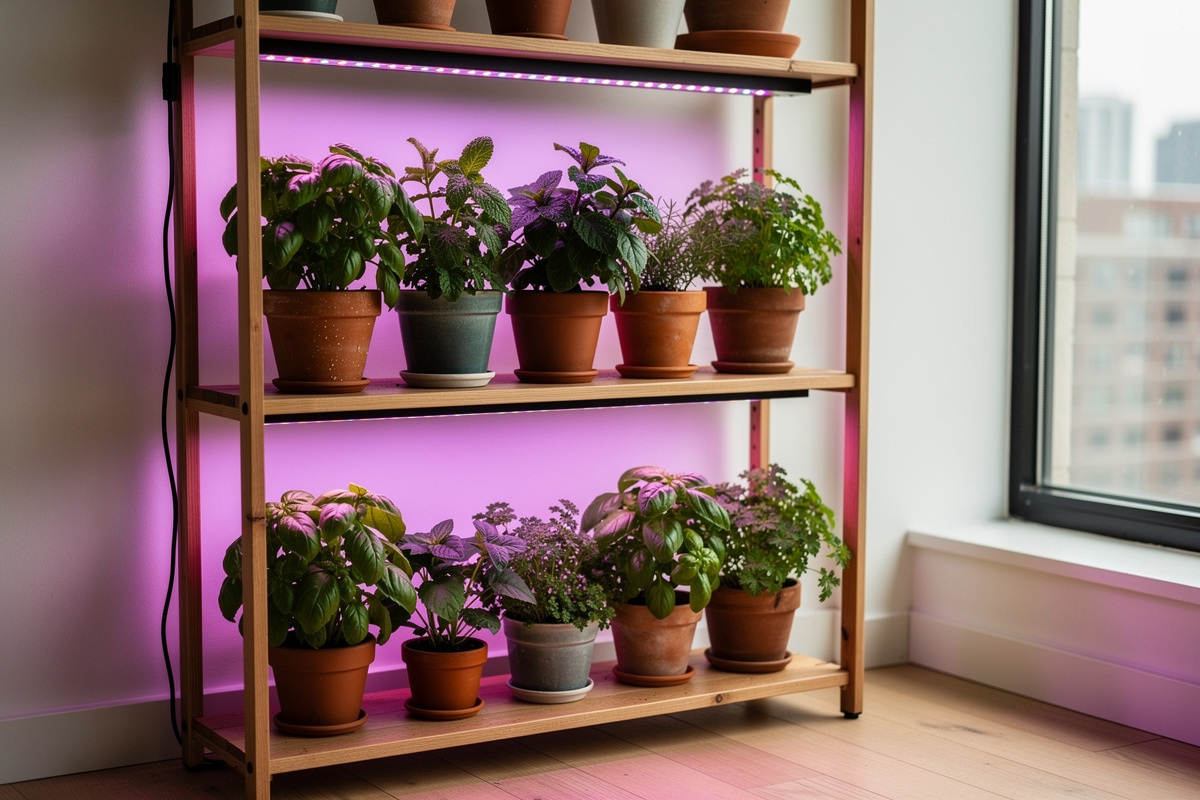
- Vertical wall garden or shelf rack with grow lights (3 to 6 sq ft of wall): Maximum capacity. 12 to 20 herbs across 2 to 3 shelves with full-spectrum LEDs. Highest ongoing energy cost but produces the most herb volume per square foot.
The most common mistake is choosing the layout that looks best in product photos rather than the one that fits your actual light situation. A $200 wall garden in a north-facing apartment produces less than a $0 sunny window sill. Before any purchase, measure direct sun hours at the spot you plan to use — held a phone camera level at the surface, count the hours from when direct rays hit until they leave. If the answer is under 4, you need supplemental lighting regardless of which layout you choose.
Pre-Built Kit Systems vs DIY Container Setup
Indoor herb garden kits range from $40 plastic countertop hydroponic units to $300 LED-equipped wood cabinets. The cost split between buying versus building yourself is sharper than most product reviews admit. Here is how the two approaches compare across the variables that matter:
| Variable | Pre-Built Kit (e.g., AeroGarden, Click & Grow) | DIY Container Setup |
|---|---|---|
| Upfront cost | $40-$300 | $15-$80 (containers + tray + LED if needed) |
| Light included | Yes (LED, automated) | No (window or add $30-$80 LED bar) |
| Watering | Automated (hydroponic) or self-watering reservoir | Manual (twice weekly) |
| Herb variety | Limited to manufacturer’s seed pod range | Any seed or transplant available |
| Replacement cost (annual) | $30-$60 in proprietary seed pods | $5-$15 in seeds or transplants |
| Footprint | Fixed (12-18 inches typical) | Flexible — match your space |
| Best for | Renters, low-time households, no sunny window | Hands-on gardeners, sunny windows, mixed herb selection |
The honest verdict: if you have a south-facing window with 6+ hours of sun, DIY beats kits on every metric except convenience. If you don’t have that window, a kit pays for itself in 18 to 24 months versus the cost of a separate LED grow light plus self-watering containers — and looks better doing it.
Choosing Containers and Tray Systems
Container choice is the single most influential decision for indoor herb success after light. The targets:
- Volume: 6 inch (1 quart) minimum for annuals like basil and parsley. 8 inch (2 quart) minimum for perennials and rosemary. Mint always gets its own 10 inch container — never share.
- Drainage: Bottom drainage holes are non-negotiable. Catch tray underneath, not a sealed cachepot. Standing water at the root zone kills indoor herbs faster than any pest.
- Material: Glazed ceramic or plastic for moisture-loving herbs (basil, parsley, chives). Unglazed terracotta for Mediterranean herbs (rosemary, sage, thyme, oregano) — the porous walls breathe and prevent root rot.
- Tray: A single waterproof tray under all containers prevents the slow watermark damage on shelves, sills, and counters that ruins surfaces over a few seasons.
The matching-pots rule for visual cohesion: pick one material and one color across the whole setup. A row of seven matching white ceramic pots reads as deliberate design; a mix of mismatched containers reads as a junk drawer. This is also the cheapest design rule — the pots cost the same either way.
Light Sources and Placement Rules
Indoor herbs need 12 to 16 hours of useable light per day to match the leaf production of an outdoor garden. Three options to deliver it:
- South-facing window: Free but variable. In US zones 6+, a south-facing window provides 4 to 6 hours of direct sun in summer, 2 to 4 hours in winter. Workable for a small basil-and-chive setup; insufficient for rosemary or sage long-term.
- Full-spectrum LED grow bar: $30 to $80 for a 12 to 24 inch unit. Mount 6 to 8 inches above the canopy on a timer set for 14 hours per day. Pulls roughly $5 per month in electricity.
- Combination (window + supplemental LED): The setup that produces the highest herb yield per dollar. Window provides ambient daytime light; LED kicks in for 4 to 6 evening hours to extend photoperiod.
For the technical breakdown of light intensity (PAR/PPFD numbers, lumens per herb, distance-to-leaf calculations) and the day-by-day growing routine, the Growing Herbs Indoors: Complete Container Guide covers that ground in depth. This guide stays focused on the physical placement and design.
Kitchen Layout: Counter, Wall, and Hanging Setups
The kitchen is where the herbs get used, so it is the obvious indoor location — but it is also the hardest design environment. Steam, oil splatter, swinging cabinets, and limited counter real estate all push back on the garden. The four kitchen-specific design rules:
- Keep herbs at least 3 feet from the cooktop. Oil splatter coats leaves with residue that does not wash off and shortens harvest viability.
- Avoid placing herbs directly under upper cabinets. The 8 to 12 inches of clearance is not enough for plants to grow vertically without bumping the cabinet bottom.
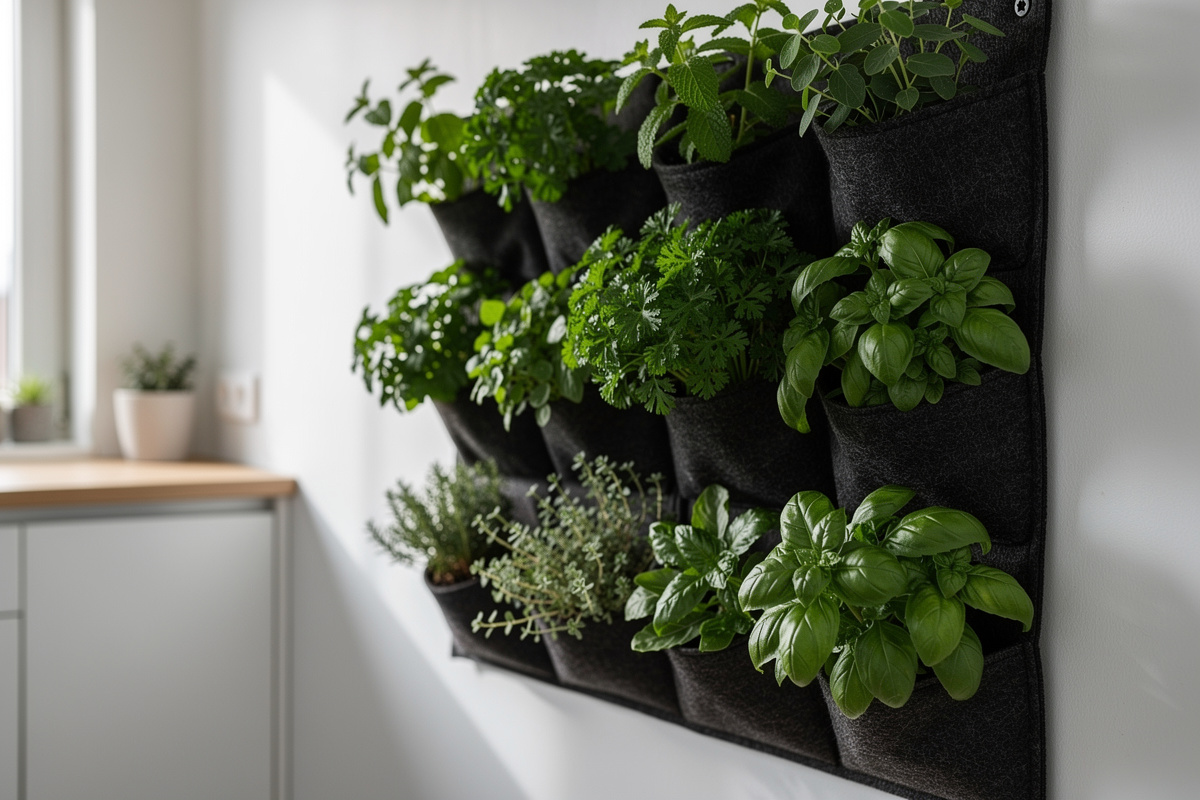
- Wall-mounted vertical planters work best between cabinets and counter. The 18-inch vertical strip most kitchens have between countertop and upper cabinets fits a slim vertical planter perfectly.
- Hanging planters above the sink double as natural humidity zones. The steam from washing and dishwashing helps shade-tolerant moist-soil herbs (parsley, chives, mint) thrive.
If your kitchen genuinely has no usable space, the next best location is the room with the most south or southwest light — usually a living room or bedroom window. Keep the setup neat and the catch tray maintained, and a 6-pot living room herb shelf reads as decor rather than agriculture.
Window Sill Layout: The Cheapest Reliable Setup
A south-facing window sill is still the highest-yield indoor herb garden per dollar invested. The full materials list:
- One waterproof tray sized to fit the sill (Amazon “boot tray” search returns dozens of $10-$20 options).
- Six matching 4 to 6 inch ceramic or plastic pots with drainage holes.
- 3 to 4 quarts of indoor potting mix (NOT garden soil — too dense, drains poorly indoors).
- One small spray bottle for misting basil leaves during dry winter air.
- Nursery transplants or seed packets of the chosen herbs.
Total budget: $35 to $60 the first year, falling to $10 to $20 in subsequent years for replacement seeds and an occasional new pot. Compared to even the cheapest pre-built kit at $40, the window sill setup wins on capacity (6 herbs vs 3 to 4 in entry-level kits) and on flexibility (any herb you want, not just what fits the kit’s seed pod system).
Vertical Wall and Shelf Rack Designs
Vertical setups are the highest-volume indoor herb option but the most demanding to design well. The two approaches:
- Wall-mounted vertical planter: 4 to 8 individual pockets stacked on a single wall mount. Best for renters (one wall anchor) and herbs with shallow root systems (basil, parsley, chives, oregano). Not deep enough for rosemary or bay laurel.
- Free-standing shelf rack with grow lights: 2 to 3 shelves in a 4-foot tall metal or wood frame. LED grow bars mounted under each shelf illuminate the shelf below. Holds 12 to 20 herb pots and produces a harvest equivalent to a 4×4 ft outdoor bed. Best for serious indoor gardeners with $150 to $250 to invest.
For the broader vertical gardening principles (load-bearing, irrigation, drainage management) the dedicated reference is Vertical Gardening: Complete Guide. Most of those rules transfer directly to indoor herb walls; the main difference is the indoor versions need more frequent leaf misting because heated indoor air dries plants faster than outdoor exposure.
Avoiding the Common Indoor Herb Garden Design Mistakes
Five design mistakes account for the majority of indoor herb gardens that look great in month one and depressing by month four:
- Putting all the herbs in one giant trough. Sharing a single planter forces all the plants onto the same watering schedule. Mediterranean herbs and moisture-loving herbs cannot share a container — one will always be wrong.
- Choosing the prettiest pots over functional ones. No drainage holes means no indoor herb survives more than 2 months. If you fall in love with a sealed pot, drill it or use it as a cachepot around a properly-drained inner pot.
- Skipping the catch tray. Even careful watering produces drainage. After a few months without a tray, the surface underneath shows watermarks, mold, or wood rot.
- Mixing herbs and decor plants in the same setup. Pothos and philodendrons want very different conditions than culinary herbs. Mixing them forces compromise that disappoints both.
- Buying too many herbs at once. Six pots is plenty for a starter setup. Twelve is too many to maintain attention to in the first year. Add to the garden over time as your watering routine becomes second nature.
The deeper companion-planting rules that apply outdoors mostly do not apply indoors — herbs in separate pots are not interacting with each other root-to-root. The exception is mint, peppermint, and tarragon, which all spread aggressively even by air-layering nearby pots. Quarantine these to the bottom shelf away from other plants. For the outdoor companion rules, see Companion Planting for Basil and the parent Herb Garden: Complete Outdoor Growing Guide.
Frequently Asked Questions
What is the best indoor herb garden setup for a small apartment?
A south-facing window sill with 6 matching 4-6 inch pots on a waterproof tray costs $35 to $60 and outperforms most pre-built kits on capacity and flexibility. If no sunny window is available, a $50 to $100 countertop hydroponic kit with built-in LED is the next best option.
How much sun does an indoor herb garden need?
Twelve to sixteen hours of useable light daily. A south-facing window provides 4 to 6 hours of direct sun and is workable for basil and chives. Mediterranean herbs (rosemary, sage, thyme) need supplemental LED lighting in nearly every indoor setting because window light alone falls short year-round.
Are pre-built indoor herb garden kits worth the money?
Kits like AeroGarden and Click and Grow are worth it if you have no sunny window or no time for manual watering. They cost $40 to $300 upfront plus $30 to $60 annually in proprietary seed pods. With a south-facing window, a $35 DIY container setup beats any kit on capacity, herb variety, and long-term cost.
Can I grow herbs indoors year-round?
Yes, with proper light. Annual herbs (basil, cilantro, dill) need replanting every 6 to 12 months as they bolt. Perennials (oregano, thyme, sage, mint, chives) continue producing for 2 to 5 years indoors with consistent light and 6 to 8 inch container volume. Reduce light hours to 10 daily in winter to let perennials rest.
What containers work best for an indoor herb garden?
Six inch glazed ceramic or plastic pots for moisture-loving herbs (basil, parsley, chives), unglazed terracotta for Mediterranean herbs (rosemary, sage, thyme, oregano). All pots need bottom drainage holes and a shared waterproof tray underneath. Mint and peppermint always go in their own 10 inch container — never shared.
Where should I put an indoor herb garden in the kitchen?
At least 3 feet from the cooktop to avoid oil splatter on leaves, and not directly under upper cabinets where 8 to 12 inches of clearance restricts vertical growth. Wall-mounted vertical planters between counter and upper cabinets fit the typical 18-inch vertical strip well. Hanging planters above the sink benefit from natural humidity.
How is an indoor herb garden different from growing herbs in containers outdoors?
Indoor herbs need supplemental light in most settings, more frequent leaf misting due to dry heated air, and stricter container size minimums (no smaller than 6 inches) because indoor air slows root development. Outdoor container herbs in the same pot sizes will be larger and more productive. Growing technique details for indoor specifically live in the Growing Herbs Indoors guide.