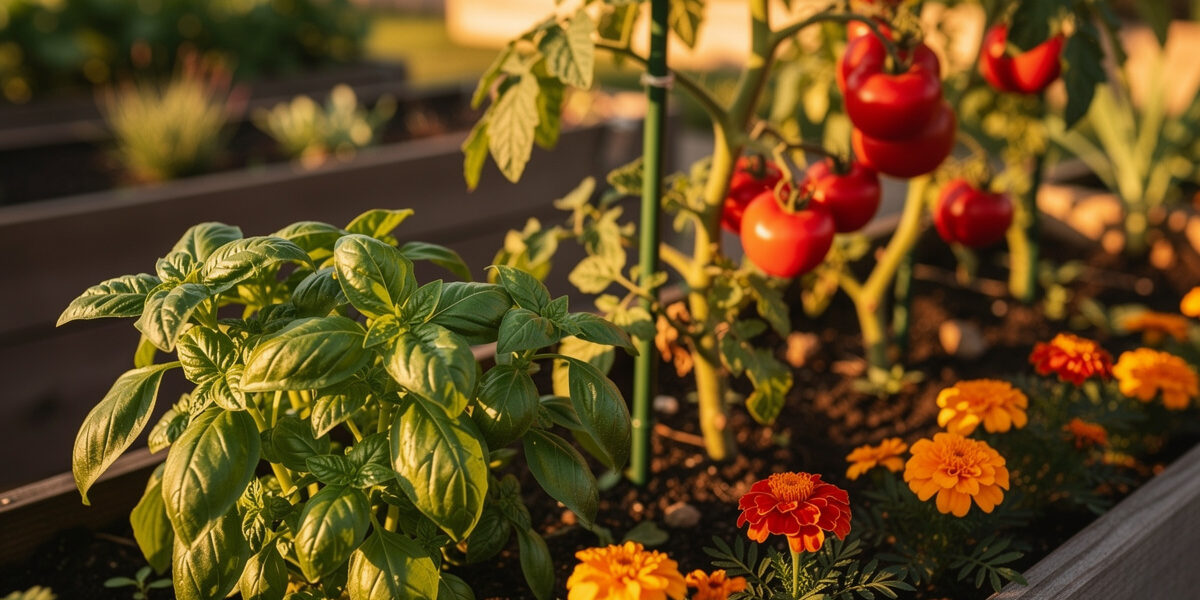
Basil is the most companion-planted herb in the home garden, and a few of its pairings have genuine research behind them, while others remain traditional lore. Field trials have found measurably fewer hornworm eggs and less leaf damage on tomato beds interplanted with aromatic herbs like basil, and basil paired with peppers is credited with reducing aphid colonization. The bad pairings are equally evidence-based — basil planted near sage or rue produces stunted growth from soil-moisture conflicts and possible allelopathic effects. This guide ranks the 12 most-discussed basil companions: six worth the bed space, six to skip or separate, with the spacing and reasoning behind each. For the broader companion-planting framework, the parent herb-bed planning guide is Herb Garden: Complete Outdoor Growing Guide.
As an Amazon Associate I earn from qualifying purchases.
How Basil Companion Planting Actually Works
Three real mechanisms drive basil’s effects on neighboring plants. Understanding which one is at play matters more than memorizing pairings:
- Volatile oil masking. Basil’s strong essential oils (linalool, eugenol, methyl chavicol) mask the scent compounds that pests use to find target plants. This is why basil reduces aphid and whitefly pressure on tomatoes, peppers, and lettuce.
- Beneficial insect attraction. Basil flowers attract honeybees, native bees, and predatory wasps. The pollinator boost benefits any neighbor that needs cross-pollination (cucumbers, squash, eggplant). Predatory wasps eat caterpillars on adjacent plants.
- Soil and water competition. Bad companions either share basil’s root zone and nutrient demands (other heavy feeders), or have incompatible water preferences (Mediterranean herbs that want dry soil cannot share a bed with basil’s even-moisture preference).
The mechanism that does not hold up reliably: chemical “allelopathy” between unrelated plants. Most claims that one plant chemically suppresses another’s growth (outside of black walnut and a handful of similar examples) do not survive controlled testing.
The Six Best Companion Plants for Basil
1. Tomatoes
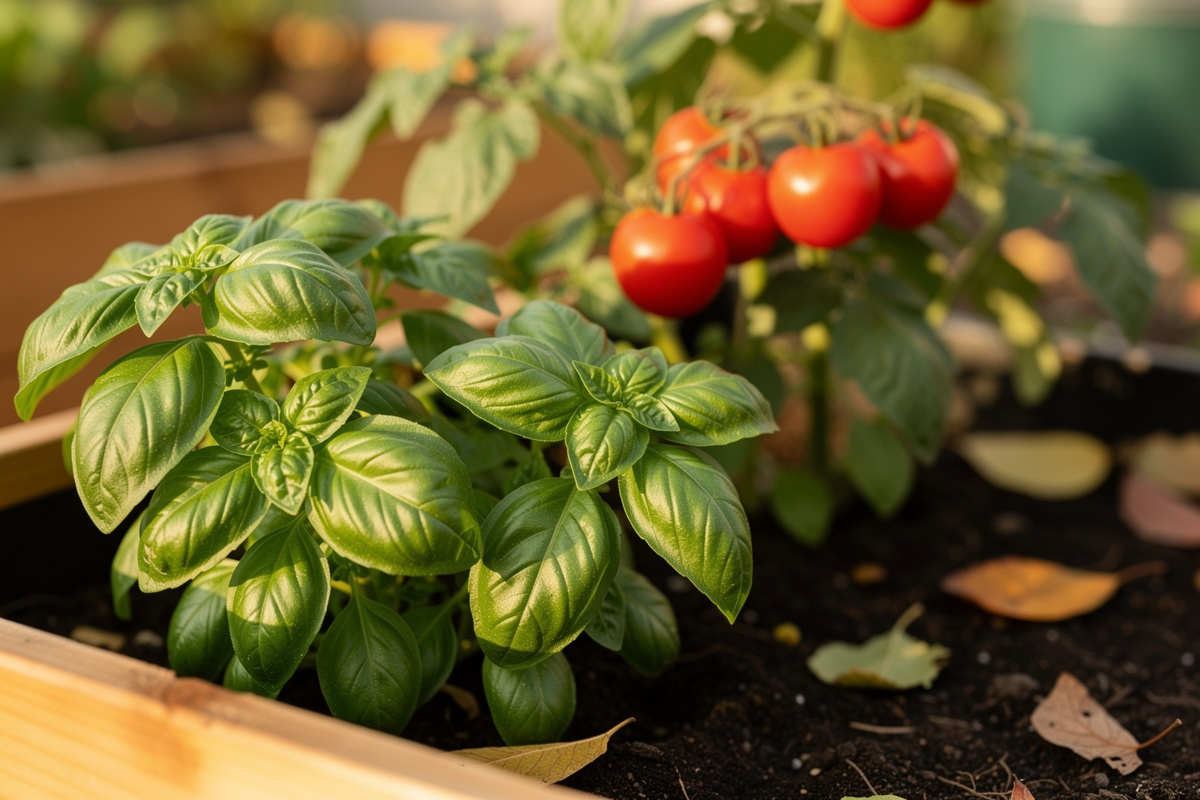
The classic pairing, and the one with the strongest research behind it. Basil’s volatile oils are credited with deterring tomato hornworms, whiteflies, and aphids, and field trials report fewer hornworm eggs and less leaf damage on tomato beds interplanted with basil (Penn State Extension). The pairing is also a kitchen win — both crops peak at the same time and pair in dozens of recipes.
Spacing: 1 basil per tomato, 12 to 18 inches from the tomato base. Don’t crowd — both crops need their own root zone. For the full tomato-bed planning context including basil placement, see Companion Planting for Tomatoes: 12 Best and Worst Pairings.
2. Peppers (Sweet and Hot)
Same volatile-oil mechanism as tomatoes — basil reduces aphid colonization on peppers and may suppress thrips. Peppers also share basil’s heat and water preferences, making the pairing stress-free in the bed.
Spacing: Plant 1 basil per 2 to 3 peppers, 8 to 12 inches from the pepper bases. Bush basil (smaller cultivars like Spicy Globe) fits better in pepper beds than tall sweet basil.
3. Lettuce and Other Leafy Greens
Basil’s volatile oils reduce aphid pressure on lettuce, the lettuce family’s main pest. Lettuce also benefits from the partial afternoon shade tall basil casts in mid-summer — extending the pre-bolt harvest window by 1 to 2 weeks in zones 7+.
Spacing: Interplant lettuce around the south or southwest perimeter of basil. The lettuce gets afternoon shade as basil reaches mature height in July.
4. Marigolds (French Marigolds Specifically)
French marigolds (Tagetes patula) release chemicals from their roots that suppress root-knot nematodes — microscopic soil pests that damage basil roots. The effect is modest in a single season but compounds if you plant marigolds in the same bed annually for 2 to 3 years.
Spacing: Border the bed perimeter with French marigolds, plus 1 marigold every 4 feet between basil clumps. Use French marigolds, not African (Tagetes erecta) — only French marigolds have the nematode-suppressing trait.
5. Asparagus
Basil repels asparagus beetles, the main pest on asparagus crops. The pairing works because asparagus is a perennial bed that’s already established when basil goes in each spring — basil’s volatile oils provide pest pressure relief during the asparagus harvest window.
Spacing: 4 to 6 basil plants distributed through a 50 sq ft asparagus bed. Plant after asparagus harvest finishes (late June) so basil doesn’t shade developing spears.
6. Borage
Underrated companion. Borage flowers attract bumblebees (which pollinate adjacent crops effectively) and predatory wasps that eat caterpillars on basil. Borage also adds calcium and potassium to surrounding soil as it decomposes.
Spacing: 1 borage plant per 6 to 8 basil plants. Borage self-seeds aggressively — pull volunteers in subsequent years if you don’t want it taking over.
The Six Plants to Keep Away From Basil
1. Sage
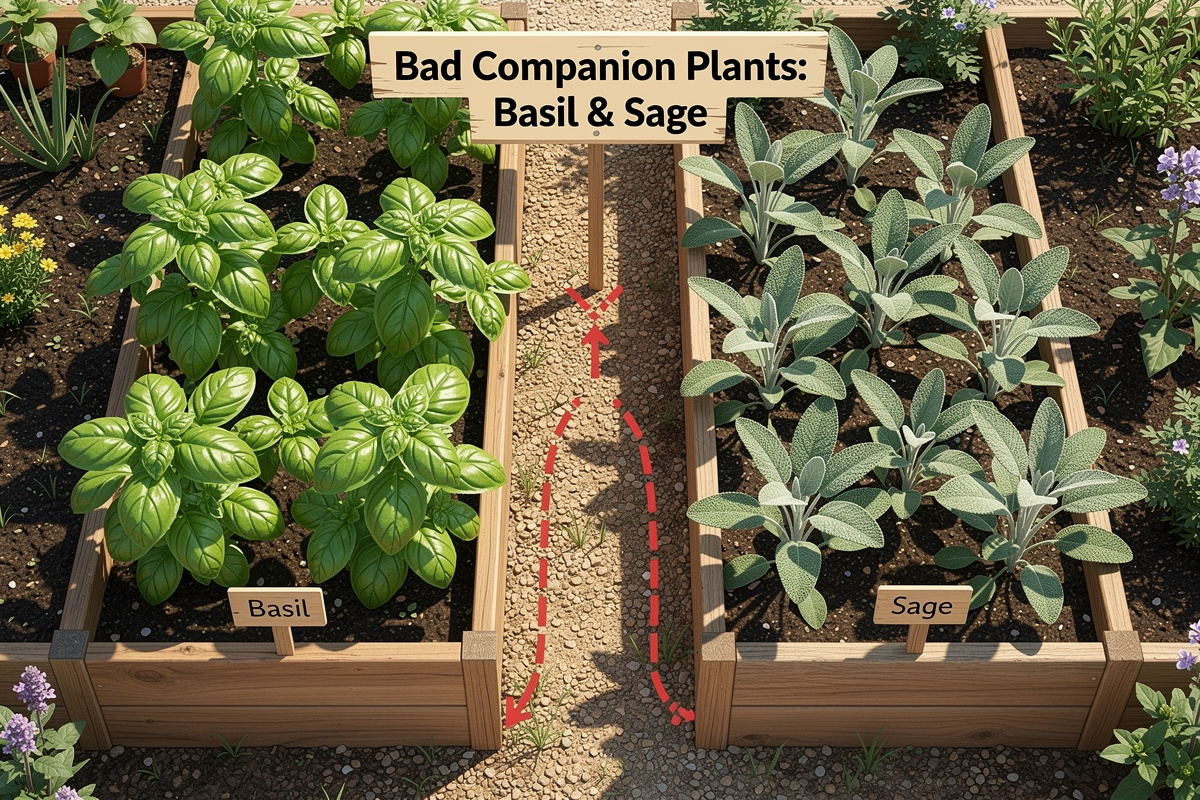
Sage and basil share the same family (Lamiaceae) but have completely incompatible water preferences. Sage wants dry, gritty Mediterranean soil; basil wants even moisture. Planting them together forces compromise that disappoints both — basil suffers in the dry soil, sage rots in the moist soil.
Minimum distance: 4 feet, ideally a different bed entirely. The full sage growing context is in Growing Sage: Mediterranean Perennial Herb Guide.
2. Rue
Rue (Ruta graveolens) genuinely suppresses basil growth — one of the few documented allelopathic relationships between common garden herbs. Rue releases compounds from roots and leaves that stunt basil within 2 to 3 feet. Skip rue entirely if you grow basil; if you must have rue, plant it in a separate bed at least 6 feet away.
Minimum distance: 6 feet, separate bed strongly preferred.
3. Cucumbers (in tight spacing)
Cucumbers benefit from basil’s pollinator-attracting flowers, but cucumbers have aggressive vining habits that crowd basil out at close spacing. The pairing works only if cucumbers are trellised vertically — interplanted at ground level, cucumber vines smother basil within 4 weeks.
Spacing: Cucumbers on a vertical trellis, basil 18+ inches from the trellis base. With cucumbers grown horizontally on the ground, keep basil at least 4 feet away.
4. Fennel
Fennel produces compounds that suppress neighboring plants, including basil. Fennel also attracts swallowtail butterfly caterpillars that occasionally cross to basil if fennel is defoliated. The pairing is bad in both directions.
Minimum distance: 4 feet, ideally a separate bed.
5. Thyme (Tight Quarters)
Like sage, thyme is a Mediterranean herb with dry-soil preferences that conflict with basil’s moisture needs. Thyme is more tolerant than sage of the moisture mismatch but still produces weaker flavor when forced into basil’s water schedule. The pairing works in a large bed where each gets its own zone; it fails in tight quarters.
Spacing: 3+ feet apart with a clear soil-moisture gradient between them. For more on thyme placement, see Lemon Thyme Plant: Variegated Cultivar Growing Guide.
6. Cabbage Family (Brassicas)
Brassicas (cabbage, broccoli, cauliflower, kale, Brussels sprouts) are heavy feeders that compete directly with basil for nitrogen in the same root zone. Cabbage moth caterpillars also occasionally cross to basil if their preferred crop is defoliated.
Minimum distance: 4 feet, ideally a separate bed entirely.
Companion Planting Comparison Table
| Plant | Pairing | Mechanism | Spacing from Basil |
|---|---|---|---|
| Tomatoes | Best | Pest repellent (hornworm, whitefly, aphid) | 12-18 in |
| Peppers | Best | Pest repellent (aphid, thrips) | 8-12 in |
| Lettuce | Good | Pest repellent + afternoon shade | 12-18 in (perimeter) |
| French marigolds | Good | Nematode suppression (compounds) | Border, 4 ft intervals |
| Asparagus | Good | Pest repellent (asparagus beetle) | Distributed through bed |
| Borage | Good | Pollinator attraction, soil minerals | 1 per 6-8 basil |
| Sage | Avoid | Incompatible water preferences | 4+ ft, separate bed |
| Rue | Avoid | Allelopathic — actively suppresses basil | 6+ ft, separate bed |
| Cucumbers (ground) | Caution | Crowding (works if trellised vertically) | 4+ ft if not trellised |
| Fennel | Avoid | Allelopathic plus pest crossover | 4+ ft |
| Thyme | Caution | Water preference mismatch | 3+ ft with moisture gradient |
| Brassicas | Avoid | Nutrient competition, pest crossover | 4+ ft, separate bed |
Practical Bed Layout: Putting Companion Rules to Work
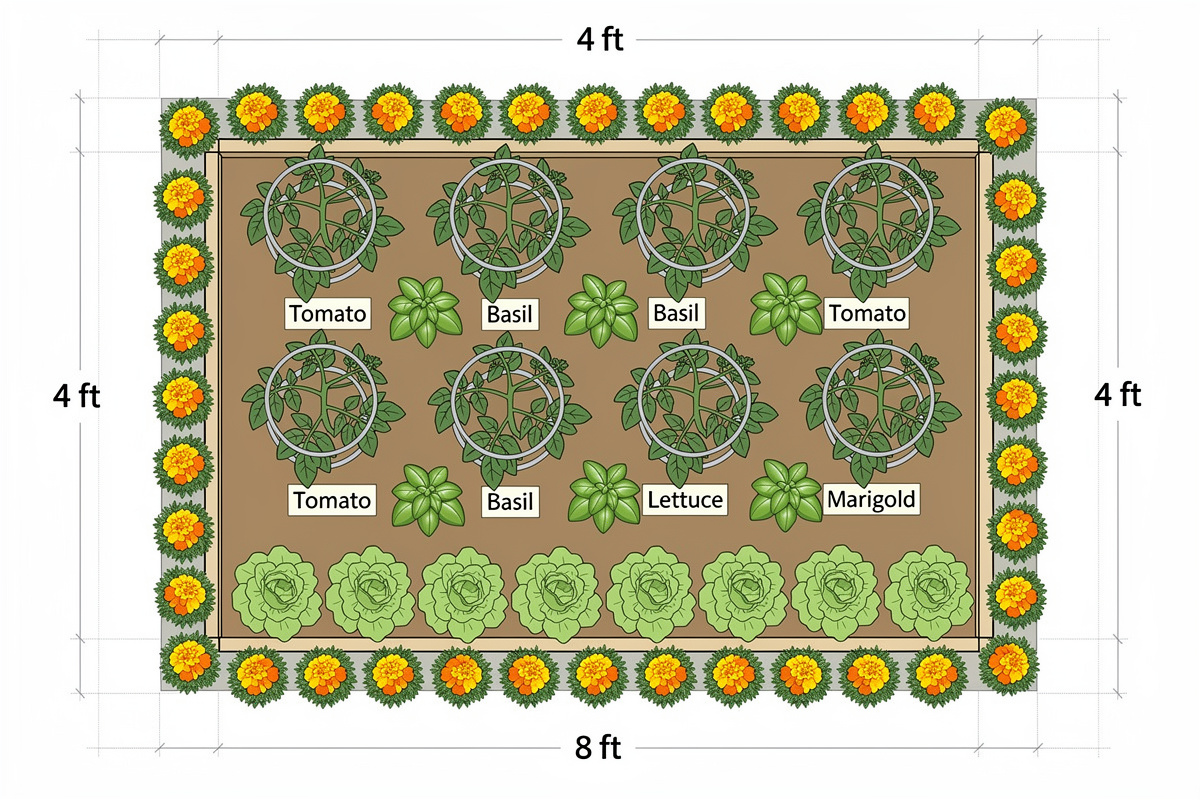
The companion rules turn into a simple bed layout. For a typical 4×8 ft summer vegetable bed:
- Center column: 3 to 4 tomato plants at 24 inch spacing.
- Between tomatoes: 1 basil plant per tomato, 12 to 18 inches from the tomato base.
- South-side perimeter: Lettuce border (gets afternoon shade as plants mature).
- Bed perimeter: French marigolds every 4 feet.
- One corner: 1 borage plant for pollinator attraction.
- Adjacent bed: Sage, thyme, oregano in their own dry-side perennial setup. See Oregano Planting: Mediterranean Perennial Setup for that bed’s plan.
Common Companion-Planting Mistakes
Five frequent companion-planting errors:
- Crowding “best companions” too tight. Basil and tomatoes work together at 12 inch spacing, not at 4 inch spacing. Both still need their own root zone.
- Treating “Mediterranean herbs” as one group with basil. Sage, thyme, oregano, and rosemary all want dry soil; basil wants even moisture. They cannot share a bed without compromise.
- Using African instead of French marigolds. Only French marigolds (Tagetes patula) suppress root-knot nematodes. African marigolds are decorative only.
- Skipping the trellis on cucumbers. Ground-grown cucumbers smother basil within 4 weeks. Trellising fixes the problem and adds vertical garden space.
- Expecting companion planting to replace pest management. Basil reduces hornworm pressure noticeably, not completely. Companion planting is one tool among several — not a substitute for scouting.
Cold-Climate Basil Companion Timing
In a short-season Nordic climate, basil starts indoors under a grow light in March and transplants to the balcony in June. The companion plants go into the same planter because they all want full sun and well-drained soil. By August the basil has doubled in size and the oregano beneath it acts as a living ground cover, keeping the basil roots cool on the handful of genuinely hot days the season delivers before the light starts fading in September.
Basil is the most cold-sensitive plant on the balcony and the first to show stress when temperatures dip below 10C at night. I keep a row cover ready for the first cold snap in September, which usually buys an extra two to three weeks of harvest before the plants blacken and collapse overnight.
Frequently Asked Questions
What grows best with basil?
Tomatoes are the best documented companion (field trials report fewer hornworm eggs and less leaf damage). Peppers, lettuce, French marigolds, asparagus, and borage also pair well. The mechanism is usually basil’s volatile oils repelling pests or attracting pollinators.
What should I not plant near basil?
Avoid sage and thyme (Mediterranean dry-soil preferences clash with basil’s moisture needs), rue (genuinely allelopathic — suppresses basil growth), fennel (allelopathic plus pest crossover), brassicas (nitrogen competition), and ground-grown cucumbers (crowding). Most need 4 to 6 feet of separation; rue and brassicas should be in a separate bed entirely.
Does basil really repel pests on tomatoes?
Yes, with some documented effect. Field trials report fewer hornworm eggs and less leaf damage on tomato beds interplanted with basil. The mechanism is volatile oils (linalool, eugenol) masking the scent compounds hornworm moths use to find tomato plants. Basil also reduces whitefly and aphid pressure modestly.
How close to a tomato should I plant basil?
12 to 18 inches from the tomato base. Closer crowds the root zones; farther reduces the volatile-oil pest-repellent effect. Plant 1 basil per tomato as the standard ratio. For closer spacing, use bush basil cultivars (Spicy Globe, Greek mini) rather than tall sweet basil.
Can I plant basil with mint or sage?
No, in both cases. Mint spreads aggressively and crowds basil out within a season. Sage prefers dry Mediterranean soil that conflicts with basil’s even-moisture needs. Keep mint contained to a separate pot and put sage in its own dry-side perennial bed at least 4 feet from basil.
Do marigolds really help basil?
French marigolds (Tagetes patula specifically) suppress root-knot nematodes through compounds released from their roots. The effect is modest in a single season but compounds if you plant marigolds in the same bed for 2 to 3 consecutive years. African marigolds (Tagetes erecta) do not have this nematode-suppressing trait — get the variety right.
What insects does basil attract?
Flowering basil attracts honeybees, native bees, predatory wasps, and lacewings. The predators eat caterpillars and aphids on neighboring plants, extending basil’s pest-repellent benefit beyond direct contact. To get the pollinator and predator benefit, allow some of your basil plants to flower rather than pinching every flower bud.