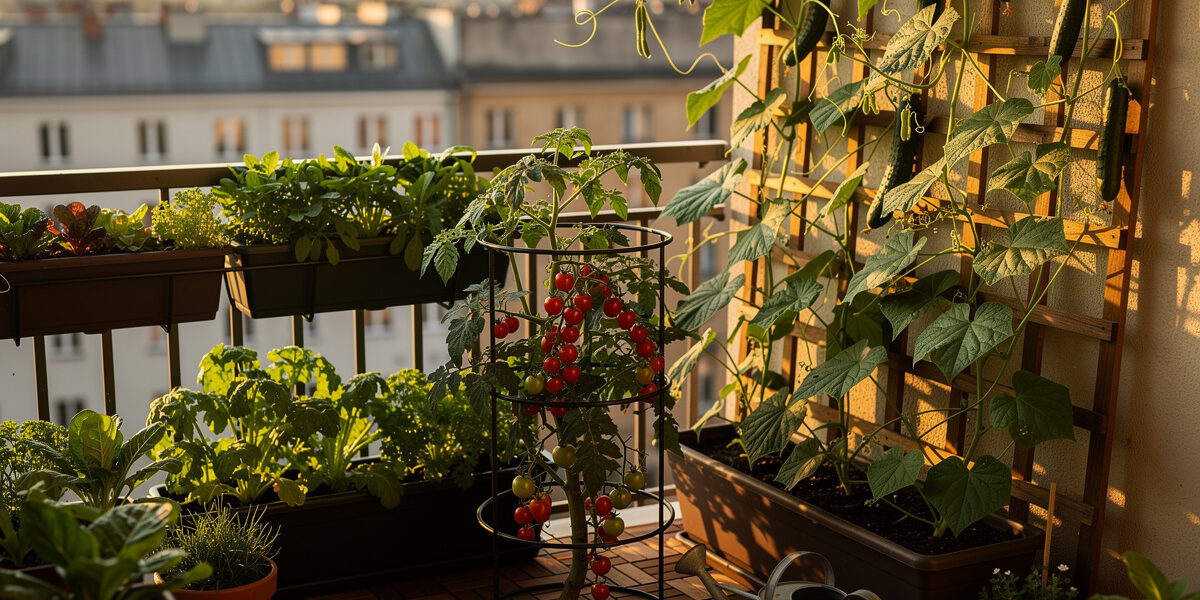
A vertical garden for renters grows food upward using freestanding and no-drill systems — A-frame trellises, tension-rod panels, stacking towers, and over-the-railing planters — so you can grow far more in a small rented space without putting a single hole in a wall or risking your deposit. In my rented Swedish flat the rule is simple: nothing permanent, nothing that leaves a mark. Everything below works inside that rule.
Space is the limiting factor for most renters. A typical balcony gives you 30-60 square feet — barely enough for a few containers grown the flat, horizontal way. Growing up multiplies that several times over by using the vertical dimension your lease never mentions. A single 6-foot freestanding trellis provides 12-18 square feet of growing surface in a 2-square-foot footprint, and when you move out it comes with you. That is the difference between a couple of herb pots and actually supplementing your grocery shopping.
This guide covers vertical growing the way a renter has to do it: freestanding and no-drill systems, the crops that earn their place, projects you can build and unbuild, and how to anchor everything safely on a balcony without anchoring it to the building. For the broad introduction to the topic — owner-friendly mounted systems included — see our vertical gardening 101 guide. For balcony-specific layouts, the balcony gardening hub goes deeper, and vertical is one of 15 layouts in our small space garden ideas roundup.
Why Vertical Gardening Works for Renters
Vertical gardening is not just a space-saving trick — for renters it removes the three things that usually kill a balcony garden: not enough room, damage you cannot undo, and a setup you cannot take with you. Growing up solves all three at once while genuinely improving conditions for many crops.
Space Multiplication Without Square Footage
A horizontal garden produces food per square foot of floor. A vertical garden produces food per square foot of air — and even the smallest rental has far more vertical room than usable floor. A 4×6 foot balcony that holds 4 containers flat can support 2-3 freestanding trellises producing the equivalent of 20+ square feet of flat garden. For a renter with only a railing and a metre of floor, growing up is often the only way to harvest anything meaningful.
No Permanent Damage, No Lost Deposit
This is the section the standard guides skip. Drilling masonry, screwing brackets into siding, or bolting a planter to a balcony wall can all come out of your deposit when you leave. Every system in this guide is freestanding, tension-mounted, or hangs over a railing — no anchors, no holes, no patching plaster on moving day. A freestanding A-frame and an over-railing planter do the same job as a wall-mounted system while leaving the wall exactly as you found it.
It Moves With You
Renters move. A garden screwed to a wall stays behind; a freestanding tower, a leaning trellis, or a set of railing planters folds down and goes in the moving van. Build for portability from the start — bolted joints instead of glued, lightweight frames, containers you can empty — and three years of accumulated growing setup survives the next lease instead of becoming the landlord’s problem.
Better Growing Conditions
The horticultural advantages are real on top of the renter ones. Plants grown vertically get far better air circulation: leaves dry faster after rain or watering, cutting fungal disease pressure substantially. Fruit that hangs in the air stays clean — no soil-contact rot on cucumbers or squash, no slug damage on the bottom tomatoes. And everything sits at waist-to-eye height, so you harvest at peak ripeness instead of missing overripe fruit hidden in ground-level foliage.
Freestanding and No-Drill Vertical Systems
There are several approaches to growing up, and for renters the deciding question is never just cost or crop — it is “can I install this without touching the building, and can I take it apart again?” The systems below all pass that test.
Freestanding Trellis Systems
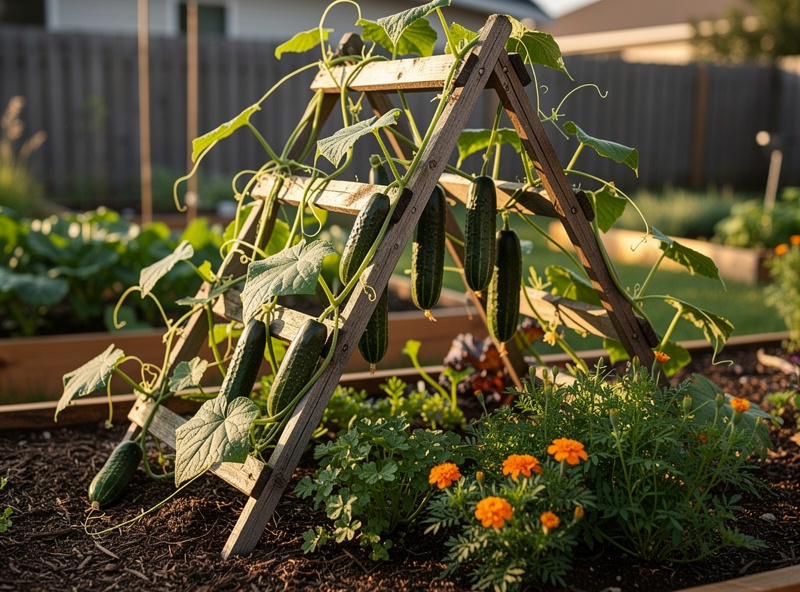
Trellises are the most versatile vertical structure, and the freestanding ones are made for renters. A-frame trellises stand on their own weight and work on any balcony or patio — no wall needed. Leaning “ladder” trellises rest against a wall without fixings, held by gravity and a wide base. Both support climbing plants (cucumbers, beans, peas) that do the work of climbing themselves once you point them at the frame.
Materials range from bamboo and cedar to steel and PVC. Cedar A-frames last 5-10 years and fold flat for storage or moving; steel lasts 15+ years and carries heavier crops; PVC is cheapest but turns brittle after 2-3 seasons of UV. For a renter I lean cedar — light enough to carry, sturdy enough for a full cucumber load, and it ages gracefully on a balcony.
As an Amazon Associate I earn from qualifying purchases.
Tension-Rod and Over-Railing Planters
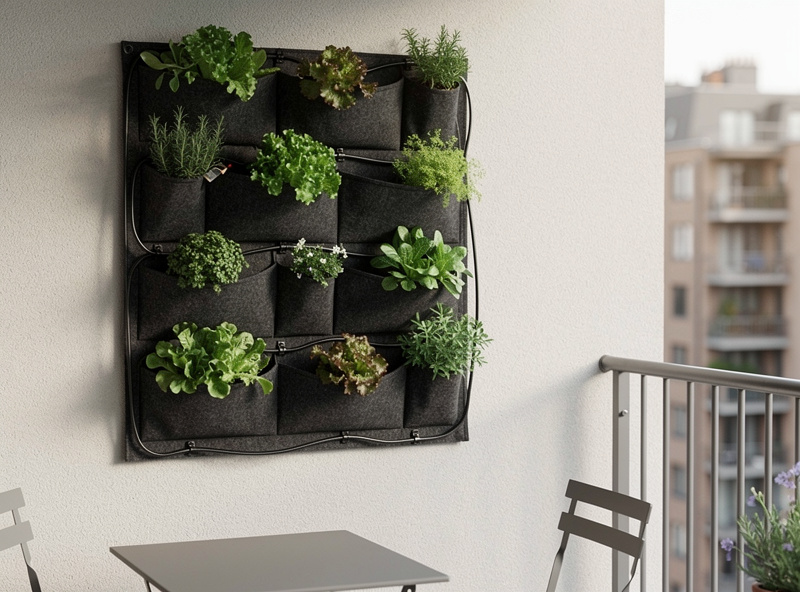
This is where renters replace wall-mounted systems without the wall. A spring-tension rod wedged between balcony floor and ceiling (or between two side walls) becomes a no-drill vertical support for pocket planters and trailing plants. Over-the-railing planters simply hook over the top rail and need no fixings at all — ideal for herbs, lettuce, strawberries, and trailing nasturtiums. Both give you the wall-garden look with zero holes.
Stacking Towers and Tiered Planters
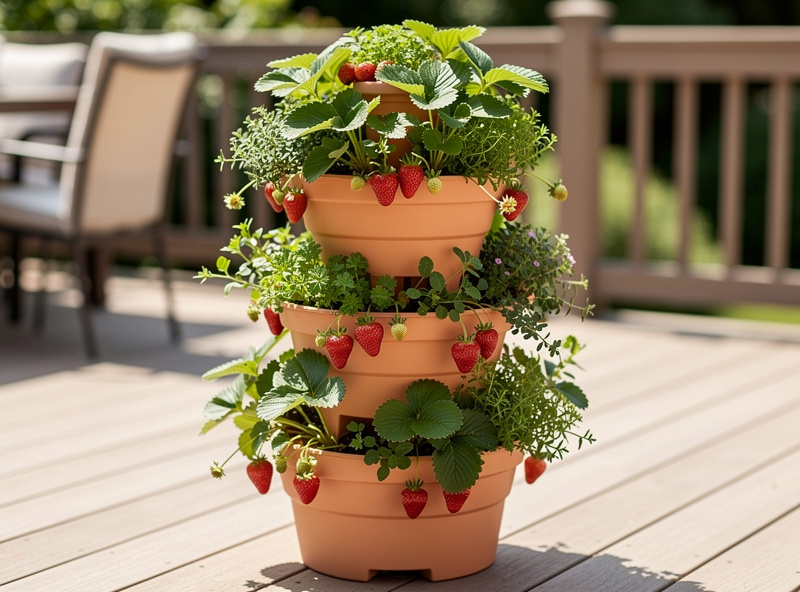
Tower gardens grow plants in vertically stacked containers, multiplying production in a tiny footprint and standing entirely on the floor — nothing to mount. Stackable garden tower planters for strawberries and herbs, tiered corner planters, and self-watering column systems all work well for a renter because they are completely portable; you can wheel a tower indoors before the first Nordic frost or carry it to the next flat intact.
Vertical System Comparison
| System | Cost | Best Crops | Space Needed | Renter-Friendly? |
|---|---|---|---|---|
| A-Frame Trellis | $15-25 | Beans, cucumbers, peas | 2×4 ft floor | Yes — freestanding, folds flat |
| Leaning Ladder Trellis | $20-40 | Cucumbers, climbing flowers | 1×3 ft floor | Yes — no fixings, gravity-held |
| Tension-Rod Pockets | $30-60 | Herbs, lettuce, strawberries | Floor-to-ceiling gap | Yes — no drilling |
| Over-Railing Planter | $15-40 | Herbs, lettuce, trailing greens | Railing only | Yes — hooks over, no fixings |
| Stacking Tower | $50-150 | Strawberries, herbs, lettuce | 2×2 ft floor | Yes — fully portable |
| Pallet Garden (freestanding) | $0-20 | Herbs, flowers, succulents | 3×4 ft leaning | Yes — leans, no mounting |
No-Drill Mounting: Vertical Gardens That Protect Your Deposit
The single biggest renter mistake is reaching for a drill. You almost never need one. Here is how to put a vertical garden on a balcony while leaving every wall untouched — and what to use instead of screws.
Tension Rods Instead of Wall Brackets
A heavy-duty spring-tension rod (the kind rated for shower-curtain-plus loads, or a purpose-made tension pole) wedges floor-to-ceiling and holds 10-20 pounds of pocket planters with no fixings. Set it 4-6 inches out from the wall so trailing plants have room, and check the tension monthly — temperature swings loosen them. Two rods plus a horizontal dowel between them creates a full no-drill panel.
Over-Railing and S-Hook Systems
Balcony railings are a renter’s best anchor because they are already there. Over-railing planter boxes hook straight over the top rail. S-hooks and railing brackets (the clamp-on type, not the screw-on type) hang pots, baskets, and even a lightweight trellis from the rail. Keep loads to what the railing can carry and position the weight on the inside of the rail, never cantilevered out over the edge.
Freestanding Frames and Leaning Structures
When you need height without a railing, a freestanding frame is the answer: an A-frame, a folding plant ladder, or a weighted pole stand. Anything that leans — a pallet, a ladder trellis, a lattice panel — should rest at a stable angle with its base weighted (a paver or a filled planter at the foot) so it cannot slide or tip. No part of it ever touches a screw.
When Adhesive Hooks Are (and Aren’t) Enough
Removable adhesive hooks tempt every renter, but treat them as decoration-grade only. They hold a single light pot of herbs at most, fail in heat and humidity, and a falling planter off a balcony is a serious problem. Use them for a trailing pot at chest height over the floor — never above the railing, never for anything that gains weight as it grows.
Best Crops for a Vertical Renter Garden
Not every plant earns a spot on limited vertical real estate. The best vertical crops climb naturally, hang their fruit cleanly, or stay compact in pockets and towers. Choosing well matters more when every inch is rented.
Top Performers
- Cucumbers: The premier vertical crop. Vines climb a freestanding A-frame readily, fruit hangs clean, and yields run well above ground growing for the same footprint. Compact bush types suit towers; vining types cover a full trellis. See our complete cucumber vertical growing guide.
- Pole beans: Naturally climbing and continuously productive when picked. A single 6-foot freestanding trellis feeds a small household through the season.
- Peas: Cool-season climbers perfect for a short Nordic spring and autumn. Sugar snap and snow peas are the most productive vertically.
- Cherry tomatoes: Indeterminate varieties climb 6-8 feet with support; compact determinate types fit tower planters and tension-rod cages.
Reliable in Pockets and Towers
- Strawberries: Thrive in towers and over-railing planters, fruit hanging clean. For winter cultivation under LED, see our growing strawberries indoors guide.
- Herbs: Basil, mint, oregano, and thyme grow happily in tension-rod pockets and railing boxes, harvested at waist height.
- Lettuce and greens: Ideal for towers and stacked planters — multiple cut-and-come-again harvests from a tiny footprint.
- Nasturtiums: Trailing edible flowers that cascade from railing planters while pulling aphids off everything nearby.
Skip These Vertically
- Root vegetables: Carrots, radishes, and potatoes need depth, not height (radishes are the one exception in a deep tower).
- Large squash and pumpkins: Fruit too heavy for any renter-grade freestanding support without slings and reinforcement.
- Corn: Wind-pollinated and needs block planting — pointless on a single trellis.
Planning a Vertical Garden in a Rented Space
A productive vertical garden comes down to light, weight, and spacing. The decisions you make before you build determine whether the balcony feeds you or just looks busy.
Light and Orientation
Position freestanding structures to catch the most sun. Run trellises north-south so both faces get even light through the day; an east-west trellis shades its own north side and noticeably drops production. On a balcony you often can’t choose the wall, so choose the spot — pull the freestanding frame to wherever the sun actually lands, which is a freedom mounted systems don’t give you. North-facing balconies still grow lettuce and herbs well.
Spacing and Density
Vertical setups tolerate higher density than flat beds because airflow is better and roots compete less, but overcrowding still cuts yields. Space trellis cucumbers 12-18 inches apart, pole beans 4-6 inches, tomatoes 18-24 inches. In pockets and railing boxes, give herbs 6-8 inches and lettuce 4-6 inches. For full crop-by-crop spacing and yield numbers, see our vertical vegetable garden layout and yield guide.
Weight and Wind on a Balcony
This is where renters get caught out. A mature cucumber trellis with wet foliage and fruit can weigh 30-50 pounds, and a balcony has both a load limit and serious wind exposure. Keep heavy freestanding structures low and wide-based, weight the feet of anything that leans, and never hang growing weight off the outside of a railing. In a gusty spot, use open lattice or mesh that lets wind through rather than solid panels that catch it like a sail.
DIY Projects You Can Build and Unbuild
Building your own freestanding structures saves a good chunk over pre-made systems and lets you size them to your exact balcony — and, just as important for a renter, you can take them apart again. These three are renter classics.
Folding A-Frame Trellis ($15-25)
The most versatile freestanding structure. Two lattice panels hinged at the top with a 2×2 frame give 8-12 square feet of growing surface in a 2×4 foot footprint, fold flat against a wall for storage, and pack down for moving day. An afternoon build with basic tools, no wall required.
Leaning Pallet Garden ($0-20)
A reclaimed pallet becomes a vertical planter that leans, not mounts. Staple landscape fabric to the back and bottom, fill with a light potting mix (the University of Wisconsin Extension’s container-growing guide covers the media fundamentals I use here), plant through the slats, and lean it against the wall at a stable angle with a weighted base. Free if you source the pallet, and it produces 12-18 planting pockets without a single screw in the wall.
Gutter Herb Rack ($20-40)
Vinyl gutters mounted on a freestanding wooden frame (not the wall) make a striking, lightweight herb garden. Each 8-foot run holds 8-10 herbs; stack 3-4 runs at 12-inch intervals on an A-frame back. Excellent drainage, easy to move, and entirely self-supporting. For five more freestanding builds with full materials lists, see our DIY vertical garden projects guide.
Training and Pruning Vertical Plants
Vertical plants need guidance to climb productively instead of tangling into a mess. A few minutes of training a week is the whole job.
Training Climbers
Plants climb in different ways: tendril climbers (cucumbers, peas, beans) wrap around thin supports 1/4-1/2 inch across; twining stems (pole beans) spiral up poles and string; clingers attach to rough surfaces. Match the support to the mechanism — thin netting or string for tendrils, vertical poles for twiners — and nudge new growth in the right direction every few days.
The Weave Method for Tomatoes
Tomatoes don’t climb on their own, so use the basket-weave: stand a stake each side of the plant and run twine horizontally at 8-inch intervals as it grows, each new course catching the stems. It supports unlimited height and is the standard commercial technique — and it works fine clipped to a freestanding frame on a balcony.
Pruning for Production
Direct energy into fruit, not foliage. Remove tomato suckers below the first flower cluster, thin cucumber vines to 2-3 main stems for airflow and bigger fruit, and pinch bean tips once they reach the top of the trellis to push side branching and more flowers.
Seasonal Strategy in a Cold Climate
Vertical gardens shift through the year, and in a short-season climate like mine the timing matters even more than the structure.
Spring
Set up freestanding structures early, while you can still move them around to find the light. Cool-season climbers — peas, snap peas — go up first; warm-season crops follow once the last frost date passes — look yours up from your USDA Plant Hardiness Zone. Peas crop for 6-8 weeks before summer heat ends them; pull the spent vines and slot cucumbers or beans straight into the same trellis to double the season’s yield per frame.
Summer
Peak production. Cucumbers, pole beans, and tomatoes crop continuously when picked every 2-3 days — let them over-mature and the plant stops setting new fruit. Elevated plants dry fast, so expect daily watering in a heat wave and mulch the container tops to hold moisture. The airflow that prevents disease becomes your biggest advantage in humid weeks.
Fall and Winter
Vertical setups stretch the season 2-4 weeks because elevated plants stay warmer on cool nights and dry faster after autumn rain. Slot in bush beans and cool-season greens for an autumn cut. As things wind down, strip and compost spent vines, wipe frames with a mild bleach solution to kill overwintering spores, and — the renter’s advantage — fold the freestanding structures down and store them indoors so they last for years and survive the next move.
Troubleshooting a Balcony Vertical Garden
Growing up on a rented balcony has its own failure modes. Catch these early and you avoid both crop loss and an awkward conversation with the landlord.
Wind Tipping Freestanding Structures
Without wall anchors, freestanding trellises rely on base width and weight alone — and a balcony catches more wind than a sheltered garden. Widen the base, weight the feet with a paver or a filled planter, and switch to permeable lattice or mesh in exposed spots so the structure leaks wind instead of catching it. Never trust a tall, narrow, unweighted frame on a high balcony.
Uneven Watering in Towers
Top plants dry out faster than bottom ones because they get more sun and air, and in towers water runs straight through to the lowest tier. Water from the top and let it percolate, or add a simple drip line with an emitter per tier, and check the upper plants daily in hot weather.
Overloaded Railings and Hooks
A single mature cucumber vine with fruit can add 20-30 pounds; wet foliage adds more. Over-railing planters and clamp hooks have real limits — keep loads conservative, position weight inside the rail, and build any freestanding support for twice the load you expect. A planter that fails over a balcony edge is the one renter mistake with consequences beyond a lost crop.
Frequently Asked Questions
Can I have a vertical garden without drilling holes?
Yes. Freestanding A-frame trellises, stacking towers, tension-rod pocket panels, and over-the-railing planters all install with no fixings at all. Renters can build a full vertical garden using gravity, tension, and railings instead of screws, leaving every wall untouched.
Will a vertical garden damage my rental deposit?
Not if you avoid permanent fixings. Skip wall brackets and masonry screws, and use freestanding or tension-mounted systems that leave no holes. Treat adhesive hooks as light-duty only — a single small pot over the floor, never over the railing.
What is the best vertical system for a small rented balcony?
A freestanding A-frame trellis with cucumbers or pole beans is the easiest start: no mounting, it folds flat for moving, and the plants climb themselves. Budget $15-25 in materials and expect a first harvest in 50-60 days.
How much space does a vertical garden need?
As little as 2-4 square feet of floor. A freestanding trellis 4 feet wide and 6 feet tall gives 24 square feet of growing surface in a 2×2 foot footprint — far more production than the same floor area grown flat.
Can I take a vertical garden with me when I move?
Yes, if you build for it. Use bolted joints over glued ones, lightweight frames, and emptyable containers. Freestanding towers, folding trellises, and railing planters all pack down and travel, so years of setup move to the next flat instead of staying behind.
Related Vertical Gardening Guides
Explore the rest of our vertical growing library for deeper instruction on each system and crop:
- Vertical Gardening 101: The Complete Guide to Growing Up (Not Out)
- Vertical Vegetable Garden: Crops, Layout, and Yield Guide
- DIY Vertical Garden: 5 Budget-Friendly Projects Step by Step
- Growing Cucumbers Vertically: Trellis, Training, and Harvest Guide
Related Articles
Expand your small-space growing knowledge with these complementary guides: