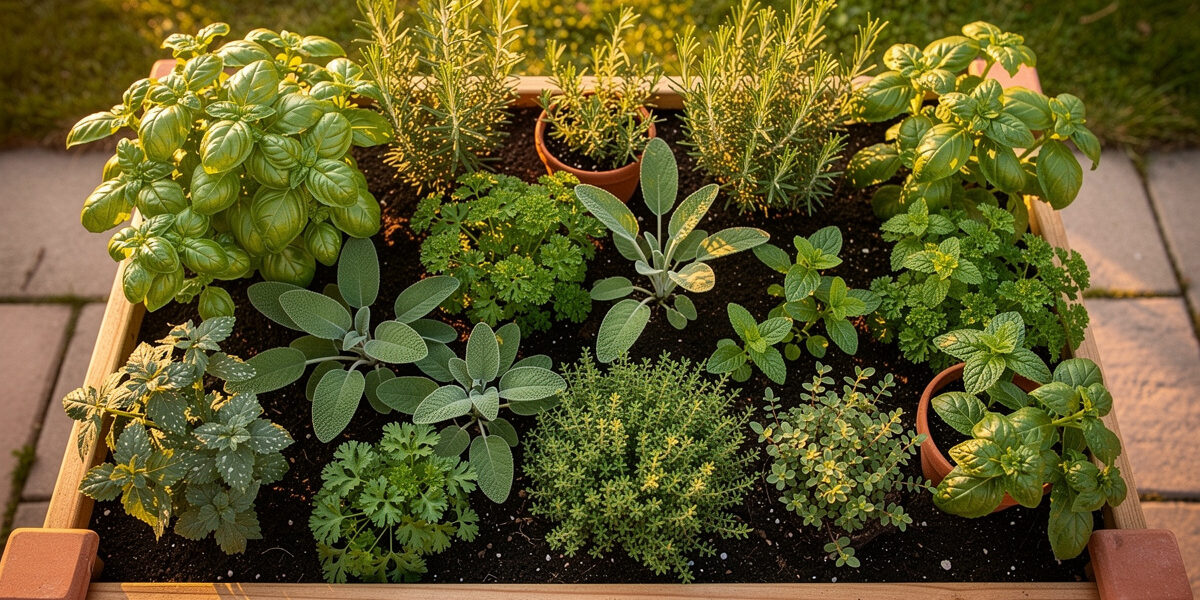
Learning how to grow your own herbs at home in 2026 takes about 30 days from seed to first harvest, costs around $42 for a five-plant starter setup, and pays itself back roughly four times over before the first frost. The single requirement most beginners get wrong is sunlight: nearly every culinary herb needs at least six hours of direct light per day, and the cheapest fix for a dim apartment is a 24-watt full-spectrum LED panel running on a $9 timer.
This guide is the practical, no-fluff playbook used at CityRooted: which 12 herbs actually thrive for first-year growers, the soil pH and NPK numbers that matter, how much basil one plant really yields, and the exact pest fixes for the four problems that wreck herb gardens. Every recommendation below has a number, a measurement, or a named product behind it — because vague advice is what costs you a dead rosemary in November.
1. Why Grow Your Own Herbs in 2026 (the Real Math)
Grocery basil sells in 0.5-ounce clamshells for around $3.50 and lasts 4 to 7 days in the fridge. A single basil plant in an 8-inch pot produces roughly 8 to 12 ounces of fresh leaves over a 16-week growing season — about 24 store clamshells, or $84 retail value, from one plant that cost $4 at a nursery. Across a typical five-pot starter (basil, parsley, chives, thyme, rosemary), the season-one return is between $310 and $360 in retail-equivalent value against a $42 setup cost.
The compounding kicks in year two. Three of those five plants — chives, thyme, and rosemary — are perennials that return for free, dropping your year-two cost to roughly $14 (replacement basil and parsley starts) for the same yield. A 2025 RHS gardener survey found that 90% of new growers rate herbs the easiest edible category to start with, and the cost-payback math is the reason: nothing else in the kitchen has this kind of dollar-for-dollar return.
Beyond cost, fresh herbs carry 2 to 8 times the volatile-oil concentration of dried supermarket equivalents. That is why a homegrown basil leaf tastes assertive and a desiccated jar of “basil” tastes like cardboard. You are not just saving money — you are eating a measurably different ingredient.
The flavor difference comes from a class of compounds called terpenes — the same molecules that make a fir forest smell like a fir forest. In basil they are mostly linalool and eugenol; in rosemary, cineole and camphor; in mint, menthol. Terpenes degrade in three ways: heat, oxygen, and time. A basil leaf cut and refrigerated loses around 40% of its terpene load within 5 days. The same leaf cut and used within 30 minutes is at peak flavor — and that 30-minute window is what separates a homegrown herb from anything you can buy.
2. Indoor, Container, or In-Ground — Pick Your Setup First
Setup choice is the single decision that dictates everything downstream — light, soil, watering frequency, even which herbs will work. Pick before you buy a single seed.
Indoor windowsill works best for households that cook with herbs daily and want them within arm’s reach of the cutting board. South-facing windows in the Northern Hemisphere give the strongest indoor light, but even there you usually get 4 to 5 hours of direct sun in winter, which is below the 6-hour minimum. A supplemental LED is mandatory between November and February in most of the US and EU. Our indoor herb garden setup guide covers layouts for kitchens, bathrooms, and home offices, and the indoor container growing guide covers pot sizes for each herb.
Outdoor containers are the highest-yield option for renters, balcony gardeners, and anyone with poor native soil. Container herbs grow in optimized potting mix instead of fighting clay or sand, and you can move pots to chase the sun. Minimum container size is 8 inches in diameter and 8 inches deep for most herbs; mint, lemongrass, and rosemary need 12-inch pots minimum. See our balcony herb garden ideas guide for 12 tested layouts that fit on small terraces.
In-ground beds make sense once you are growing more than 8 herbs at once or want a permanent perennial bed. They require the most setup work — bed prep, drainage check, weed-cloth or edging — but they deliver the largest harvests because root systems are unconstrained.
3. The 12 Easiest Herbs to Grow at Home
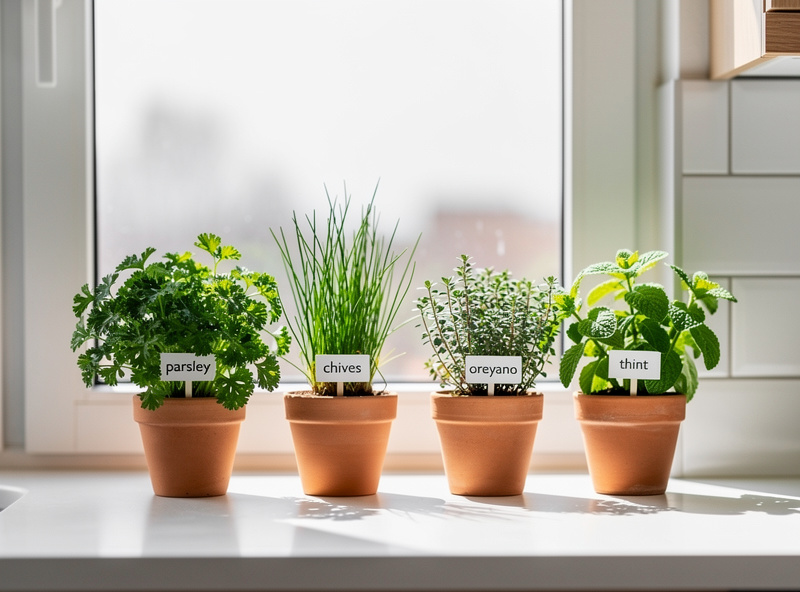
Every gardening guide repeats the same five-herb starter list. This expanded 12-herb table includes the difficulty rating used at our trial gardens (1 = effortless, 5 = needs experience), realistic first-season yield, sun requirement, and the single most common reason each one fails for beginners.
| Herb | Type | Difficulty (1-5) | Sun (hrs/day) | Year-1 yield (1 plant) | #1 cause of failure |
|---|---|---|---|---|---|
| Basil | Annual | 2 | 6-8 | 8-12 oz fresh | Cold soil at planting (under 60°F) |
| Chives | Perennial | 1 | 4-6 | 4-6 oz fresh | Letting it flower too early |
| Parsley (flat-leaf) | Biennial | 2 | 4-6 | 6-10 oz fresh | Slow germination panic (takes 21 days) |
| Mint | Perennial | 1 | 4-6 | 1-2 lb fresh | Planting in-ground without a barrier |
| Thyme | Perennial | 2 | 6-8 | 3-5 oz fresh | Overwatering — it hates wet roots |
| Rosemary | Perennial | 3 | 6-8 | 4-8 oz fresh | Wet potting mix and zone-7 winters |
| Oregano | Perennial | 2 | 6-8 | 4-6 oz fresh | Heavy clay soil with poor drainage |
| Sage | Perennial | 2 | 6-8 | 3-5 oz fresh | Crowding — sage needs 18 inches |
| Cilantro | Annual | 2 | 4-6 | 3-4 oz before bolting | Heat-bolting in summer |
| Dill | Annual | 2 | 6-8 | 4-6 oz fresh + seeds | Transplanting (direct-sow only) |
| Lemon balm | Perennial | 1 | 4-6 | 8-12 oz fresh | Self-seeding into the lawn |
| Tarragon (French) | Perennial | 3 | 6-8 | 2-4 oz fresh | Buying Russian tarragon by mistake |
If this is your first season, plant five from the difficulty-1-or-2 group: chives, basil, mint (in a pot), thyme, and parsley. Add rosemary in year two once you understand watering. Detailed care guides exist for sage, dill, lemon balm, bay laurel, and lavender if you want to go deeper on individual species. Rosemary is the one Lamiaceae herb most likely to fail over winter without preparation — the growing rosemary guide covers overwintering moves that keep it alive in zone 6 and colder.
4. The Plant-Family Framework Most Guides Skip
Herbs from the same botanical family share watering, soil, and pruning needs — which means you can group them in pots and treat them identically. Four families cover 90% of culinary herbs.
Lamiaceae (the mint family) includes basil, mint, oregano, thyme, rosemary, sage, marjoram, and lemon balm. They share square stems, opposite leaves, and a strong response to “tip pinching” — removing the top growth doubles the bushiness within two weeks. Most prefer slightly alkaline soil (pH 6.5 to 7.5) and respond badly to high-nitrogen fertilizer (it dilutes the essential oils that give them flavor).
Apiaceae (the carrot/parsley family) includes parsley, dill, cilantro, fennel, chervil, and lovage. They have hollow stems, umbrella-shaped flower heads, and fine taproots — which is why they hate transplanting. Direct-sow them where you want them to grow.
Asteraceae (the daisy family) includes tarragon, chamomile, calendula, and yarrow. These tolerate poorer soils and double as pollinator-attractors when allowed to flower.
Amaryllidaceae (the onion family) includes chives, garlic chives, and Welsh onion — the most forgiving herbs in the entire kitchen, productive even in 4 hours of light.
Knowing the family of every herb you plant means you stop fighting individual care sheets and start grouping by shared needs.
5. USDA Hardiness Zones — Which Herbs Survive Your Winter
Perennial herbs only return year after year if your minimum winter temperature stays above their cold tolerance. Most online guides skip this entirely; here is the actual table.
| Herb | USDA hardy zones | Min winter temp | Overwintering action |
|---|---|---|---|
| Chives | 3-10 | -40°F | None — fully hardy |
| Mint | 3-9 | -40°F | Mulch 2-3 inches over crown |
| Thyme | 4-9 | -30°F | Mulch in zones 4-5 |
| Oregano | 4-9 | -30°F | Mulch in zones 4-5 |
| Sage | 4-9 | -30°F | Avoid wet winter feet |
| Lavender (English) | 5-9 | -20°F | Sharp drainage, no mulch on crown |
| Tarragon (French) | 4-8 | -30°F | Mulch — and divide every 3 years |
| Rosemary | 6-10 | -10°F | Bring indoors in zone 5 and below |
| Bay laurel | 8-10 | 10°F | Container only outside zone 8 |
| Lemongrass | 9-11 | 20°F | Annual or indoor in zone 8 and below |
| Basil | Annual | 50°F (will die) | Replant each spring |
| Cilantro | Annual | 20°F (cold-hardy) | Direct-sow spring and fall |
If you live in zone 6 or colder and want rosemary, treat it as a movable container plant: outdoors May to October, indoors under a south window from November to April. Lemongrass works the same way — it is a tropical perennial that 90% of US gardeners grow as a one-season plant. For zone-by-zone outdoor garden planning, our balcony gardening guide covers cold-frame and protected-balcony strategies.
6. Soil, pH, and the NPK Schedule Nobody Mentions
Herb soil failure looks like yellowing leaves, leggy stems, and weak flavor — and it is almost always either a pH problem or wrong nitrogen ratio. The fix is simple once you know the numbers.
Target pH: 6.0 to 7.0 for most culinary herbs; Mediterraneans (rosemary, thyme, lavender, oregano, sage) prefer 6.5 to 7.5 — slightly more alkaline than vegetables. A $14 soil pH meter ends the guesswork. Adjust acidic soil with garden lime at 1 lb per 25 sq ft per 0.5 pH point. Adjust alkaline soil with elemental sulfur at the same rate.
Container mix recipe: 60% high-quality potting soil, 25% perlite or pumice for drainage, 15% finished compost for slow nutrient release. Add 1 tablespoon of garden lime per gallon of mix for Mediterranean herbs. Our dedicated best soil for herbs guide covers ready-made products and bagged-mix amendments.
The NPK rule herb growers break: herbs do not want lawn-level nitrogen. High N produces fast, leafy, water-rich growth that tastes like wet paper. Use a 3-1-2 or 5-5-5 balanced organic fertilizer at half the package rate, applied every 4 to 6 weeks during active growth. Stop fertilizing 4 weeks before any harvest you plan to dry — late nitrogen weakens essential-oil concentration. Mediterranean herbs need even less; one feeding at planting and one mid-season is enough.
Drainage check: after watering, the top 1 inch of soil should be visibly dry within 3 to 5 days for most herbs. Standing wet for more than a week means your mix has too much organic matter and not enough perlite.
The compost question: homemade or bagged worm castings deliver a slow-release nitrogen-phosphorus-potassium ratio of approximately 1-0-0 to 5-5-3 depending on input materials, plus the soil-microbiome benefits commercial fertilizers cannot replicate. One handful per 8-inch pot at planting and again mid-season covers most herbs entirely without any synthetic fertilizer. Mediterraneans need even less — too much compost makes them lush, weak, and prone to powdery mildew. If your compost smells sour or ammonia-heavy when applied, it is not finished and will burn herb roots; let it cure another 4 to 6 weeks before using.
7. Sunlight, Grow Lights, PPFD, and DLI Targets
“Six hours of sun” is the rule of thumb but the real measurement gardeners need is DLI — Daily Light Integral, the total photons a plant receives in 24 hours. Herbs want a DLI between 12 and 25 mol/m²/day. A south-facing window in summer delivers around 5 to 8; outdoors at 40° latitude in June, around 35 to 45.
Grow-light specs that work: a single 24-watt full-spectrum LED bar (4000K to 6500K color temperature) hung 12 to 18 inches above the plants delivers approximately 200 to 400 µmol/m²/s of PPFD — exactly what culinary herbs want. Run it 12 to 14 hours per day on a $9 mechanical timer; never run grow lights 24 hours, since herbs need a dark cycle for hormone regulation. Under those settings the energy cost is roughly $0.40 per month per panel at US average electricity rates.
Sun-tolerance map by herb: rosemary, thyme, oregano, sage, lavender, and basil need full sun (6+ hours direct). Parsley, mint, chives, cilantro, and lemon balm tolerate part shade (4 to 6 hours). No common culinary herb thrives in true shade — if your space gets less than 4 hours, supplementing with LED is required, not optional.
For deeper indoor lighting strategy our grow lights for vegetables guide and best indoor plant lighting guide compare specific LED panels by wattage, spectrum, and PPFD output.
8. Watering, the Finger Test, and Water Quality
More herbs die from overwatering than from drought. Soft-stemmed herbs (basil, parsley, mint, cilantro) want soil consistently moist 1 inch below the surface. Woody Mediterraneans (rosemary, thyme, oregano, sage, lavender) want the top 2 inches to dry out fully between waterings — they evolved on dry Greek hillsides and root rot is their #1 killer.
The finger test beats every meter: push one finger straight down into the soil to the second knuckle (about 2 inches). If the soil clings to your skin, do not water. If it comes out clean and dry, water until liquid runs out the drainage holes. Container herbs in summer typically need this check every 2 to 3 days; in-ground herbs often need it only every 5 to 7 days.
Water quality matters more than most guides admit. Municipal tap water in the US averages 0.5 to 4 ppm chlorine, which suppresses soil microbes that herbs depend on. Letting tap water sit uncovered for 24 hours dissipates the chlorine completely and is free. Chloramine (used in some cities) does not evaporate — a $20 carbon filter on the kitchen tap removes both. Ideal irrigation pH is 6.0 to 7.0; ideal hardness is 50 to 150 ppm.
Time of day: water in the morning so leaves dry before sundown — wet foliage overnight is the entry point for powdery mildew on basil and mint.
How to read the plant for water stress: the symptoms of overwatering and underwatering look almost identical at first glance — wilting, yellowing lower leaves, leaf drop. The diagnostic difference is the soil. Wilted plant + dry soil = underwatered, water immediately. Wilted plant + wet, smelly soil = overwatered, stop watering and let it dry to bone-dry before resuming. Basil reveals stress fastest (visible droop within 4 to 6 hours of running dry); rosemary is the slowest tell and often shows nothing until roots are already gone. Container herbs in clay pots dry 2 to 3 times faster than the same herb in plastic — a useful lever for chronic overwaterers.
9. Seeds vs. Transplants vs. Cuttings — A Decision Tree
Each propagation method has herbs it suits and herbs it ruins. Choosing wrong is the most common cause of “I tried but everything died” beginner experiences.
Direct-sow from seed works for dill, cilantro, parsley, chervil, calendula, chamomile, and borage — all Apiaceae or Asteraceae herbs with delicate taproots that resent transplanting. Sow when soil temperature reaches 60 to 70°F. Most germinate in 7 to 21 days; parsley is the slow one and will test your patience. Our growing from seed indoors guide walks through soil-block and cell-tray techniques.
Buy as transplants for basil, oregano, sage, thyme, marjoram, tarragon, and lemon balm. These take 6 to 12 weeks from seed to harvestable size — slower than most beginners want. A $4 nursery start is ready to harvest within 2 to 3 weeks. Pick stocky plants with no yellowing lower leaves and gently tug a stem; if the whole rootball lifts, the plant is rootbound and will struggle.
Propagate from cuttings for mint, rosemary, lemon balm, oregano, and thyme. Cut a 4-inch non-flowering stem in spring, strip the lower leaves, and place the stem in a glass of water. Roots appear in 7 to 14 days for soft-stemmed herbs and 3 to 6 weeks for woody ones. Pot up when roots reach 1 inch. This is how you get unlimited free plants from one starter.
Never start from grocery-store herbs in a clamshell — those are hydroponically grown for shelf weight and almost never transition to soil successfully.
10. The Succession Planting Calendar That Keeps You in Fresh Herbs
Annual herbs run out. The cilantro you planted in April will bolt to seed in June, and a single basil plant peaks at week 12 then slows. Succession planting means starting a new round on a schedule so you always have young, vigorous plants in production.
Cilantro: re-sow every 2 to 3 weeks from early spring through late summer. In hot climates, skip June through August (it will bolt within 10 days) and resume in September for a fall crop.
Basil: start a new plant every 4 weeks if you cook with it daily; every 8 weeks for casual use. Pinch flower buds aggressively — once basil flowers, leaf production drops 60% and flavor turns bitter within 10 days.
Dill: direct-sow every 3 weeks. Allow one plant to flower late in the season for seeds you can save and re-sow next year (one plant produces 2,000 to 5,000 seeds).
Parsley: sow once in spring; one plant produces all season. Sow a second batch in late summer for an overwintering crop in zones 7+.
Perennials (mint, oregano, thyme, sage, rosemary, chives) do not need succession — they regenerate themselves indefinitely and can be divided every 3 to 4 years to multiply your stock.
11. The Companion-Planting Matrix for Herbs
Herbs can attract pollinators, repel pests, or sometimes inhibit each other. The matrix below covers the pairings that actually matter, drawn from RHS and university extension trials.
| Herb | Best companions | Avoid near | Specific benefit |
|---|---|---|---|
| Basil | Tomatoes, peppers, oregano | Rue, sage | Repels thrips and tomato hornworm |
| Chives | Carrots, roses, apples | Beans, peas | Deters carrot rust fly and aphids |
| Mint | Cabbage, tomatoes | Parsley, chamomile | Repels cabbage moth and ants |
| Rosemary | Cabbage, beans, carrots | Basil, mint | Repels cabbage moth and bean beetle |
| Sage | Cabbage, carrots, strawberries | Cucumbers, basil | Repels cabbage moth and carrot rust fly |
| Thyme | Cabbage, eggplant, strawberries | None notable | Attracts hoverflies (aphid predators) |
| Oregano | Beans, peppers, tomatoes | None notable | Attracts pollinators when allowed to flower |
| Dill | Cabbage, lettuce, onions | Carrots, tomatoes | Hosts parasitic wasps that eat hornworm |
| Cilantro | Spinach, lettuce, peppers | Fennel | Attracts hoverflies and predatory wasps |
| Lavender | Roses, vegetables (border) | Mint | Repels moths, fleas, mosquitoes |
The pairing rule for mixed herb pots: Mediterraneans together (rosemary, thyme, oregano, sage), moisture-lovers together (basil, parsley, mint, chives), never the two groups in the same container. Their water needs are too different to compromise on.
12. Pruning, the One-Third Rule, and Bolting Prevention
Pruning is harvesting plus shaping. Done right, herbs respond by branching out and producing more leaves than if left alone. The single rule: never remove more than one-third of any plant in a single cut.
Pinching tip growth on basil, mint, and oregano: as soon as a stem has 6 to 8 leaf pairs, cut just above the second pair from the bottom. Two new shoots emerge from that node within 10 days. A basil plant pinched 4 to 5 times across a season produces 3 times the leaves of an unpinched plant.
Hard prune woody Mediterraneans (rosemary, thyme, sage, oregano) once in spring before new growth begins. Cut back to 4 to 6 inches above the soil, removing all woody, leafless stems. This forces new growth from the base and prevents the plant from going hollow and woody by year three.
Bolting is when annual herbs shift from leaf-producing to flower-and-seed mode, triggered by day length, heat, or stress. Once a plant bolts, leaf flavor degrades within 10 to 14 days. Prevention by herb:
- Cilantro: grow in spring and fall; afternoon shade in summer; plant slow-bolt varieties like “Calypso” or “Santo”
- Basil: pinch flower buds the moment you see them; never let one open
- Dill: harvest aggressively; succession-sow to keep replacement plants coming
- Parsley: bolts in year two as a biennial — replace plants annually if you only want leaves
13. Harvesting Technique and What Each Plant Actually Yields
The best time to harvest most herbs is mid-morning, after the dew has evaporated but before the sun draws essential oils out of the leaves. That is when oil concentration peaks. For drying or preserving, harvest just before flower buds open — that is the volatile-oil maximum point.
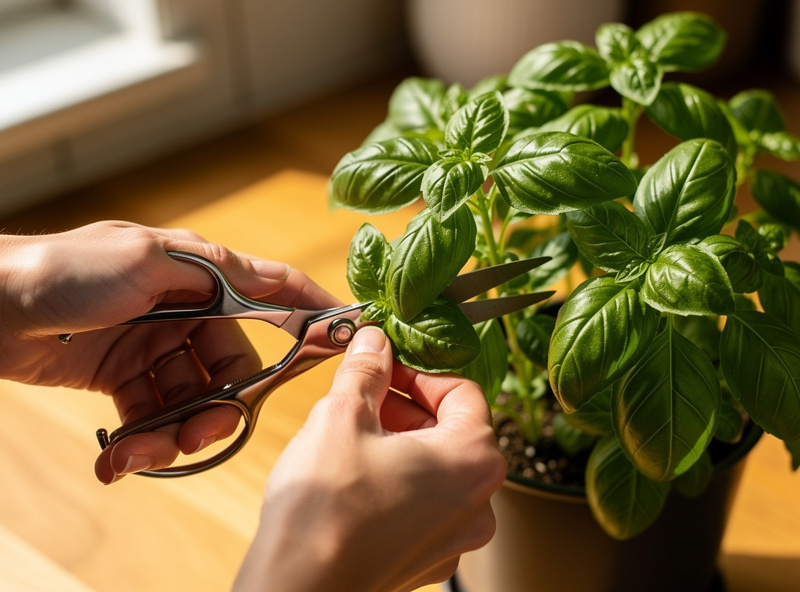
Use sharp scissors or pruners, not your fingers — tearing damages stems and invites disease. Cut just above a leaf node, not in the middle of bare stem. The plant branches from the cut point.
Realistic year-one yields per plant in an 8-to-12-inch container:
- Basil: 8 to 12 oz fresh leaves over 16 weeks (~$60 to $90 retail)
- Mint: 1 to 2 lb fresh leaves over 24 weeks (~$120 to $200 retail)
- Parsley: 6 to 10 oz fresh leaves continuously over 28 weeks
- Chives: 4 to 6 oz fresh, harvested 4 to 6 times across the season
- Rosemary (year 1): 4 to 8 oz fresh; doubles in year 2 once established
- Thyme: 3 to 5 oz fresh; year 2 yield is roughly 5 to 8 oz
- Sage: 3 to 5 oz fresh leaves year 1
- Oregano: 4 to 6 oz fresh year 1; mature plant yields 12+ oz
For mint and oregano, in-ground plants yield 3 to 5 times more than container plants because root systems are unconstrained. If you have the space, those two perennials reward in-ground planting more than any other.
14. Drying, Freezing, and Fresh-to-Dried Conversion
Three drying methods, each with a use case. Pick by herb type and how much you need to preserve.
Air-drying works for hard-stemmed herbs (rosemary, thyme, oregano, sage, bay laurel). Bundle 6 to 8 stems with twine, hang upside-down in a dark, well-ventilated room at 60 to 80°F. Drying time: 10 to 14 days. Crumble leaves off stems and store in airtight glass jars away from light.
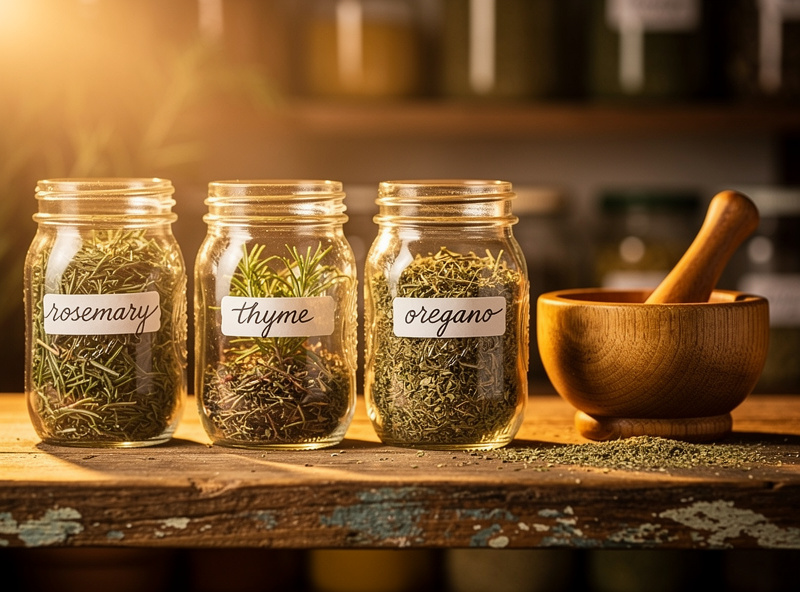
Dehydrator is fastest and best for soft herbs (basil, parsley, mint, chives, cilantro). Run at 95 to 115°F for 1 to 4 hours. Higher temperatures destroy volatile oils — never use 135°F+ on herbs. A basic 5-tray dehydrator costs $40 to $60 and pays for itself in one summer.
Freezing preserves flavor better than drying for soft-leaved herbs. Chop fresh herbs, pack into ice-cube trays, top with olive oil or water, freeze. Pop out a cube into cooked dishes year-round. Frozen herbs keep 6 to 12 months.
Fresh-to-dried conversion ratios when substituting in recipes:
- Soft herbs (basil, parsley, cilantro, dill, mint): 3 fresh : 1 dried
- Hard herbs (rosemary, thyme, oregano, sage): 4 fresh : 1 dried
So 1 tablespoon dried oregano equals 4 tablespoons fresh — a useful conversion when scaling a recipe up or down. Properly dried, herbs retain peak flavor for 6 to 12 months and are usable for up to 3 years before they fully fade.
15. Pest and Disease Troubleshooting Matrix
Four problems cause 80% of herb losses. Here is the exact symptom-to-fix table.
| Problem | Symptom | Most affected | Fix | Prevention |
|---|---|---|---|---|
| Aphids | Sticky leaves, curled new growth, ant traffic | Mint, basil, dill | Strong water spray daily for 5 days; insecticidal soap if persistent | Plant chives or marigolds nearby; encourage ladybugs |
| Powdery mildew | White dusty coating on leaves, especially upper surfaces | Mint, basil, sage | Remove affected leaves; spray 1:9 milk-to-water solution weekly | Morning watering; 8-12 inch spacing for airflow |
| Root rot | Lower leaves yellow, plant wilts even when soil is wet, black mushy roots | Rosemary, thyme, lavender | Repot in fresh dry mix; remove rotted roots; reduce watering 50% | Sharp drainage; let top 2 inches dry between waterings |
| Spider mites | Fine webbing under leaves; tiny pale dots; bronze-colored leaves | Rosemary, basil indoors | Spray underside of leaves with strong water 3 days running; neem oil weekly | Increase humidity; mites thrive in dry indoor air below 40% RH |
| Whiteflies | Tiny white moths fly up when leaves disturbed; sticky leaves | Basil, indoor herbs | Yellow sticky traps; insecticidal soap on leaf undersides | Quarantine new plants 7 days before adding to collection |
| Damping-off | Seedlings collapse at soil line, fall over and die | All seedlings | No cure once it starts — discard tray | Sterile seed mix; bottom watering only; chamomile-tea drench |
Skip synthetic pesticides on culinary herbs entirely. The list above uses only food-safe, OMRI-listed solutions — water, soap, milk, neem, and biological controls. Anything you spray on a leaf you will eventually eat.
The prevention philosophy that matters more than any spray: healthy plants in proper conditions almost never get hit hard by pests or disease. Aphids prefer over-fertilized, nitrogen-rich tender growth; root rot only takes hold in soggy, poorly drained mix; powdery mildew thrives where airflow is restricted and leaves stay damp. Fix the underlying condition (right NPK ratio, sharp drainage, 8 to 12 inches between plants for airflow) and most pest pressure disappears without ever picking up a spray bottle. The single most effective pest-prevention tool in an herb garden is a daily 30-second walk-through to catch problems at 5 affected leaves rather than 500.
16. Year-Round Herb Garden Maintenance Calendar
Herb gardens have predictable seasonal jobs. Print this and stick it inside the garden shed.
March–April: Direct-sow cilantro, dill, parsley, chervil. Start basil indoors 6 weeks before last frost. Hard-prune perennials. Top-dress beds with 1 inch of finished compost.
May: Transplant warm-season herbs (basil, oregano, marjoram) outdoors after last frost. Start succession sowings of cilantro and dill. First feeding of perennial herbs.
June–July: Pinch basil flower buds weekly. Harvest aggressively — herbs in active growth can take it. First major drying batch of thyme and oregano just before flowering. Mulch to retain moisture; check drip irrigation.
August: Heat-stress watch on cilantro and parsley — afternoon shade or replace with heat-tolerant alternatives like Thai basil and shiso. Major harvest and preservation window.
September: Sow fall cilantro and parsley. Take cuttings of perennials you want to multiply. Begin tapering fertilizer.
October: Bring tender perennials (rosemary in zone 6-, lemongrass, bay) indoors before night temps drop below 45°F. Final outdoor harvest of basil before first frost.
November–February: Indoor herbs only. Run grow lights 12 to 14 hours/day. Reduce watering 50%. Watch indoor pests (spider mites, fungus gnats) closely — dry indoor air encourages them.
17. The Real $42 Beginner Cost Breakdown
Most “growing herbs is cheap” guides give a vague claim and no math. Here is the itemized list for a five-plant, year-one starter setup.
- Five 4-inch nursery starts (basil, parsley, chives, thyme, rosemary): $4 each = $20
- Five 8-inch terracotta pots with saucers: $3 each = $15
- One 8-quart bag of premium potting mix: $7
Total: $42
Optional additions for the same setup:
- 24-watt full-spectrum LED grow bar (for indoor windowsills with poor light): +$28
- $9 mechanical timer for the LED: +$9
- Soil pH meter: +$14
- 5-tray dehydrator for preserving harvests: +$45
The full kit including LED, timer, and pH meter comes to $93 — and it produces $310 to $360 of retail-equivalent fresh herbs in season one. Year two cost drops to roughly $14 because three of the five plants (chives, thyme, rosemary) are perennials that return for free. By year three, with cuttings propagated from your originals, ongoing cost is essentially zero.
For deeper urban-gardening cost strategy our vertical gardening guide covers stacking systems that quadruple growing area in the same footprint.
18. Frequently Asked Questions
What are the easiest herbs to grow at home for beginners?
Chives, mint, basil, parsley, and thyme are the most beginner-friendly. All five tolerate inconsistent watering, recover from over-pruning, and produce harvestable leaves within 4 to 8 weeks. Mint and chives are nearly impossible to kill outdoors.
How do I start a herb garden as a complete beginner?
Buy five 4-inch nursery starts, five 8-inch pots, and one bag of premium potting mix for about 42 dollars total. Place pots where they get at least 6 hours of direct sun, water when the top inch of soil is dry, and harvest by pinching tips weekly.
How much sun do herbs need to grow?
Most culinary herbs need 6 to 8 hours of direct sun daily. Mint, parsley, chives, cilantro, and lemon balm tolerate 4 to 6 hours of direct light. Below 4 hours, supplemental LED lighting at 200 to 400 micromoles PPFD is required for healthy growth.
Can I grow herbs indoors without direct sunlight?
Yes, with a full-spectrum LED grow light running 12 to 14 hours per day at 12 to 18 inches above the canopy. A single 24-watt LED panel adequately lights three to four 8-inch herb pots. Energy cost runs about 40 cents per month per panel.
How often should I water my herb plants?
Use the finger test: push a finger 2 inches into the soil. Water only if it comes out dry. Soft herbs like basil and parsley need water every 2 to 3 days in summer. Mediterranean herbs like rosemary and thyme prefer the top 2 inches to dry fully between waterings.
What is the best soil for herbs?
A mix of 60 percent quality potting soil, 25 percent perlite for drainage, and 15 percent finished compost. Target pH 6.0 to 7.0 for most culinary herbs and 6.5 to 7.5 for Mediterranean herbs like rosemary and lavender. Add 1 tablespoon garden lime per gallon of mix for Mediterraneans.
Do herbs need fertilizer to grow well?
Yes, but lightly. Use a balanced 3-1-2 or 5-5-5 organic fertilizer at half the package rate every 4 to 6 weeks during active growth. High-nitrogen fertilizer produces lush leaves with weak flavor. Stop fertilizing 4 weeks before any harvest you plan to dry.
When should I harvest fresh herbs for the best flavor?
Harvest mid-morning after dew evaporates but before midday sun draws out essential oils. For drying, harvest just before flower buds open, when volatile oil content peaks. Never remove more than one-third of any plant at one time.
How do I dry herbs at home?
Air-dry hard herbs (rosemary, thyme, oregano, sage) by hanging bundles in a dark, ventilated room at 60 to 80 degrees Fahrenheit for 10 to 14 days. Dehydrate soft herbs (basil, parsley, mint) at 95 to 115 degrees for 1 to 4 hours. Never exceed 135 degrees.
Which herbs come back every year?
Mint, chives, thyme, oregano, sage, rosemary, lemon balm, tarragon, lavender, and bay laurel are perennials in their hardy zones. Basil, dill, cilantro, and chervil are annuals that must be replanted each spring. Parsley is biennial, replaced yearly for best leaf flavor.
Can I grow all herbs together in one container?
Only if they share watering needs. Group Mediterranean herbs (rosemary, thyme, oregano, sage) in one pot and moisture-loving herbs (basil, parsley, mint, chives) in another. Mixing the two groups guarantees one half thrives while the other rots or dries out.
How long do herb plants live?
Annual herbs live one season (3 to 6 months active growth). Biennial parsley runs 2 years before bolting. Perennials vary: basil dies in winter, but rosemary and sage live 8 to 15 years; lavender 10 to 12 years; mint indefinitely with division every 3 to 4 years.
19. Related CityRooted Herb Guides
Each guide below dives deeper on a specific herb or technique covered briefly in this hub. Read in any order — they are independent and self-contained.