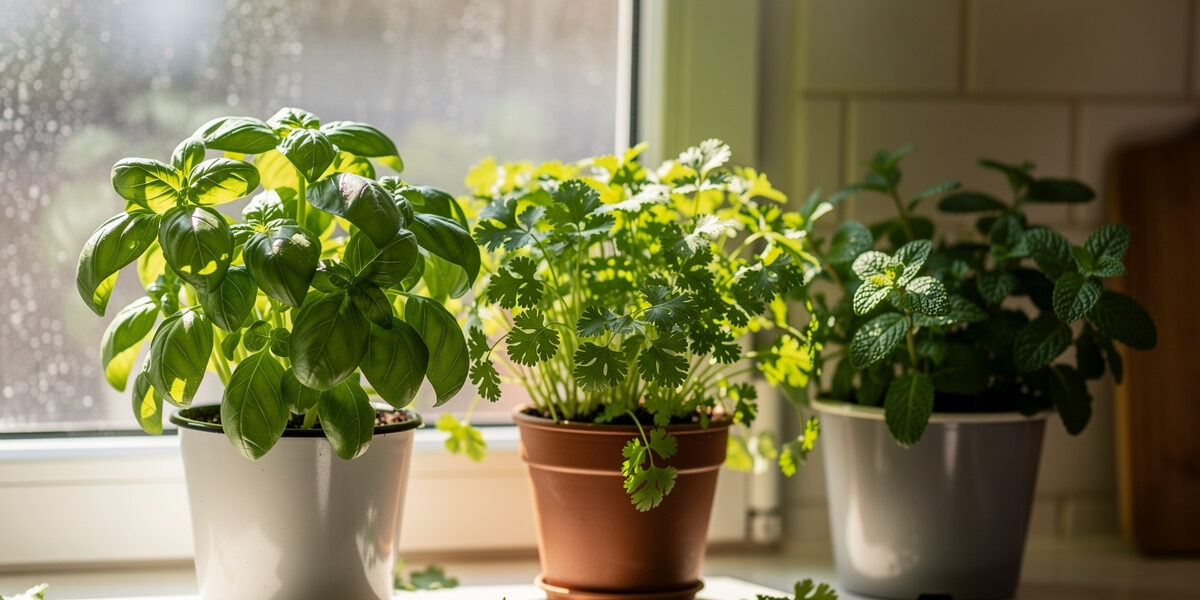
Fresh herbs from your own indoor garden taste dramatically better than anything from a grocery store — and they cost a fraction of the price. A single basil plant produces more leaves in a month than you would buy in a year of store purchases. Herbs are also among the easiest crops to grow indoors, requiring minimal space, basic equipment, and very little maintenance — the windowsill herb shelf is the part of my indoor setup that runs most reliably through a Nordic winter. Penn State Extension makes the same case, noting that herbs can be grown indoors as year-round houseplants or just through the winter to protect tender ones like rosemary and basil (Growing Herbs Indoors, Penn State Extension). This guide covers everything you need to grow a productive indoor herb garden on a windowsill, countertop, or under a grow light.
For a complete overview of all indoor growing methods and crops, see our LED lights for growing plants indoors guide for lighting specifics and our complete indoor growing guide.
Why Grow Herbs Indoors?
Herbs are the ideal indoor crop for several reasons. They are compact, fast-growing, and most varieties tolerate lower light levels than fruiting crops like tomatoes or peppers. You can harvest herbs continuously — the more you pick, the more they produce — which means a single plant provides months of fresh ingredients.
Key advantages of indoor herb growing:
- Cost savings: A $3 basil plant produces $50+ worth of fresh leaves over a growing season
- Superior flavor: Freshly harvested herbs have significantly more essential oils than store-bought herbs that have been refrigerated for days
- Year-round availability: Indoor growing eliminates seasonal gaps — fresh herbs in January, not just July
- Minimal space: Six herb varieties fit on a single windowsill or a 60 cm shelf under a grow light
- Low maintenance: Most herbs need watering every 2 to 3 days and occasional feeding — far less attention than fruiting crops
- No pesticides: You control exactly what goes on your herbs — no chemical residues
Best Herbs for Indoor Growing
Not all herbs perform equally well indoors. Some thrive on a windowsill with minimal light, while others need strong supplemental lighting to stay productive. Here is a practical breakdown of the best indoor herb varieties.
| Herb | Light Needs | Difficulty | Harvest Time | Best Use |
|---|---|---|---|---|
| Basil | High (6-8 hours sun or grow light) | Easy | 3-4 weeks from transplant | Pasta, salads, pesto, Thai cooking |
| Parsley | Moderate (4-6 hours sun) | Easy | 4-6 weeks from transplant | Garnish, soups, sauces, tabbouleh |
| Cilantro | Moderate (4-6 hours sun) | Moderate | 3-4 weeks from seed | Salsa, curries, Mexican and Asian cooking |
| Mint | Low to moderate (3-5 hours sun) | Very easy | 2-3 weeks from cutting | Tea, cocktails, desserts, lamb dishes |
| Chives | Moderate (4-6 hours sun) | Easy | 4-6 weeks from transplant | Eggs, potatoes, soups, cream cheese |
| Thyme | High (6-8 hours sun or grow light) | Easy | 6-8 weeks from transplant | Roasted meats, vegetables, bread |
| Oregano | High (6-8 hours sun or grow light) | Easy | 6-8 weeks from transplant | Pizza, pasta, Mediterranean cooking |
| Rosemary | High (6-8 hours sun or grow light) | Moderate | 8-10 weeks from cutting | Roasted meats, bread, focaccia |
| Dill | Moderate (4-6 hours sun) | Easy | 4-5 weeks from seed | Fish, pickles, salads, dips |
For beginners, start with basil, parsley, mint, and chives. These four are the most forgiving, fastest to harvest, and cover the widest range of cooking applications. Once you are comfortable with these, add thyme, oregano, and cilantro to expand your indoor herb garden. Basil is the highest-yield starter — our growing basil guide covers pot sizing, pinching schedule, and the light threshold that prevents the leggy stretching most beginners run into.
Container Selection for Herbs
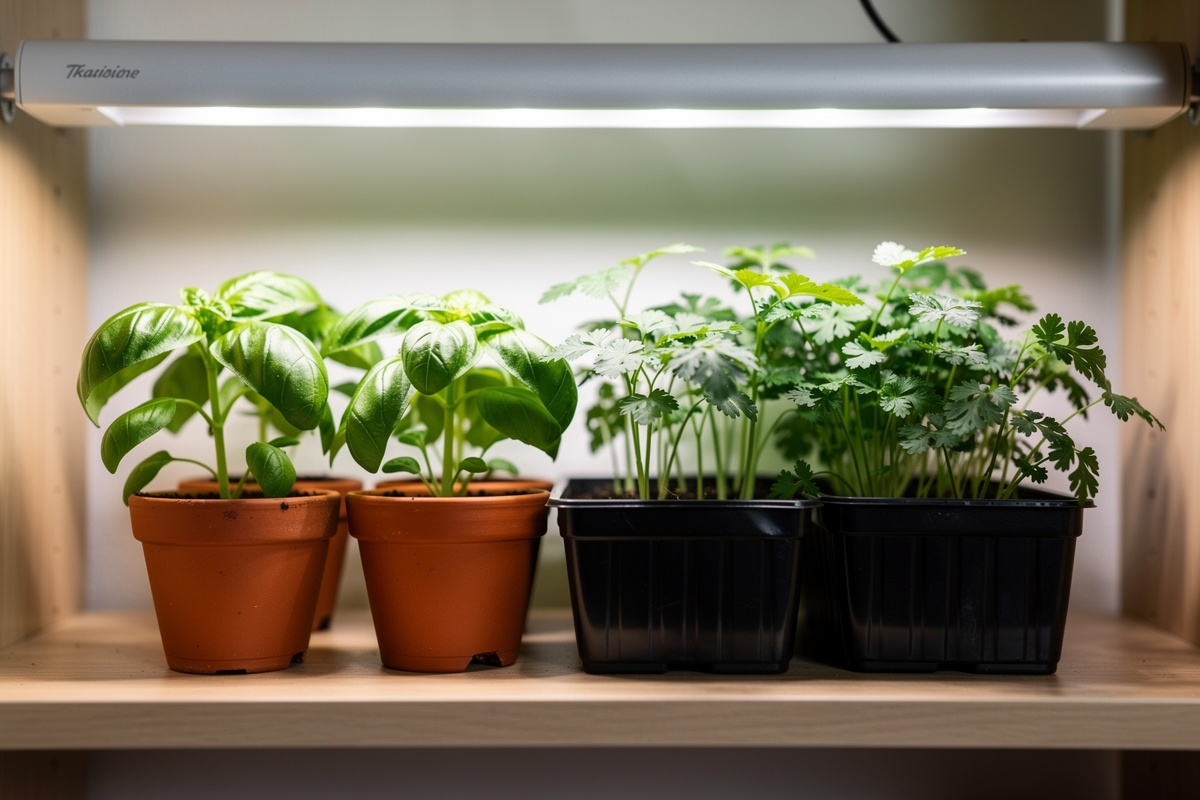
Herbs have modest root requirements, which means almost any container with drainage works. The key is matching container size to the herb’s mature root system. Oregon State Extension’s container-planting guidance applies the same logic — match the container to the crop’s root needs so the plant stays productive rather than stunted (Container Planting, OSU Extension [PDF]).
Container Sizes by Herb
| Herb | Minimum Pot Size | Ideal Pot Size | Notes |
|---|---|---|---|
| Basil | 15 cm (6 inches) | 20 cm (8 inches) | Fast grower, benefits from larger pot |
| Parsley | 15 cm (6 inches) | 20 cm (8 inches) | Deep taproot, needs depth |
| Cilantro | 15 cm (6 inches) | 20 cm (8 inches) | Deep taproot, do not transplant |
| Mint | 12 cm (5 inches) | 15 cm (6 inches) | Spreads aggressively — keep contained |
| Chives | 12 cm (5 inches) | 15 cm (6 inches) | Clump-forming, stays compact |
| Thyme | 12 cm (5 inches) | 15 cm (6 inches) | Shallow roots, tolerates smaller pots |
| Oregano | 15 cm (6 inches) | 20 cm (8 inches) | Spreading habit, benefits from width |
| Rosemary | 15 cm (6 inches) | 20-25 cm (8-10 inches) | Woody shrub, needs room to grow |
| Dill | 15 cm (6 inches) | 20 cm (8 inches) | Deep taproot, needs depth |
Individual pots vs. combined planters: Each herb should have its own container. Herbs have different water needs — mint likes constant moisture, while rosemary and thyme prefer to dry out between waterings. Planting them together in one container means some will always be unhappy. A windowsill herb garden with 4 to 6 individual pots is the most practical setup.
Soil Mix for Indoor Herbs
Herbs need well-draining potting mix that does not stay waterlogged. Heavy, moisture-retentive soil causes root rot, especially in Mediterranean herbs like rosemary, thyme, and oregano.
Standard herb mix: 70% quality potting mix and 30% perlite or coarse sand. This provides good drainage while retaining enough moisture for most herbs.
Mediterranean herb mix (rosemary, thyme, oregano, lavender): 50% potting mix, 30% perlite, and 20% coarse sand or small gravel. These herbs evolved in rocky, dry conditions and need excellent drainage to thrive indoors.
Avoid: Garden soil (compacts in containers), heavy peat-based mixes without perlite, and soil from outdoor beds that may contain weed seeds or pests.
Starting Herbs: Seeds vs. Cuttings vs. Store Plants
You can start an indoor herb garden three ways, each with different timelines and success rates.
From Store-Bought Plants (Fastest)
The quickest path to fresh herbs is buying small plants from a garden center or grocery store. Repot them into slightly larger containers with fresh potting mix within a week of bringing them home — the tiny plastic pots they come in dry out within hours and stunt growth.
Tip: When repotting, gently loosen the root ball and trim any circling roots. Water thoroughly after repotting and keep out of direct sun for 2 to 3 days while roots adjust to the new container.
From Cuttings (Free and Reliable)
Many herbs root easily from stem cuttings — basil, mint, oregano, and rosemary are the easiest. Cut a 10 cm stem just below a leaf node, remove the lower leaves, and place in water. Roots appear in 1 to 2 weeks. Once roots are 2 to 3 cm long, transplant into potting mix.
This method is essentially free and produces a mature plant faster than starting from seed. It is also the best way to propagate a favorite herb variety that you cannot find at stores.
From Seeds (Most Variety)
Starting from seed gives you access to varieties not available as plants — Thai basil, lemon basil, Italian large-leaf parsley, and Vietnamese cilantro. Seeds are inexpensive and a single packet produces dozens of plants.
Sow seeds in small starter pots or seed trays with moist seed starting mix. Most herb seeds germinate in 7 to 14 days at 18 to 24°C. Cilantro and dill have taproots and should be sown directly into their final containers — they do not transplant well.
Light Requirements
Light is the most important factor for productive indoor herbs. Without adequate light, herbs grow leggy, produce fewer leaves, and lose flavor intensity.
South-facing windowsill: Provides 6 to 8 hours of direct sun — enough for basil, parsley, cilantro, mint, and chives. The ideal location for an indoor herb garden without supplemental lighting.
East or west-facing window: Provides 3 to 5 hours of direct sun — sufficient for mint, chives, and parsley. Basil and Mediterranean herbs will struggle without supplemental light.
Under grow lights: A full-spectrum LED panel positioned 20 to 30 cm above the herbs and run for 12 to 14 hours per day produces excellent results for all herb varieties. Even a modest 20 to 40 watt LED panel covers a full windowsill herb garden. For a complete guide to choosing and positioning grow lights, see our grow lights for vegetables guide.
Herbs need less intense light than fruiting crops — 100 to 200 PPFD at the canopy is sufficient for most varieties. Basil and Mediterranean herbs benefit from 200 to 300 PPFD for maximum leaf production and essential oil content.
Watering and Feeding
Overwatering is the most common cause of indoor herb death. Herbs in containers need less water than outdoor plants because there is no wind or direct sun to accelerate evaporation. The key is consistent moisture without waterlogging.
Watering by Herb Type
| Herb | Watering Frequency | Soil Moisture | Signs of Overwatering |
|---|---|---|---|
| Basil | Every 2-3 days | Consistently moist, not soggy | Yellowing leaves, wilting despite wet soil |
| Parsley | Every 2-3 days | Consistently moist | Yellowing lower leaves |
| Cilantro | Every 2-3 days | Consistently moist | Yellowing, bolting (premature flowering) |
| Mint | Every 1-2 days | Always moist — mint loves water | Rarely overwatered, tolerates wet conditions |
| Chives | Every 3-4 days | Allow top 2 cm to dry between waterings | Yellowing tips, mushy stems |
| Thyme | Every 4-5 days | Let soil dry out between waterings | Root rot, black stems at soil line |
| Oregano | Every 4-5 days | Let soil dry out between waterings | Root rot, leaf drop |
| Rosemary | Every 5-7 days | Let soil dry completely between waterings | Needle drop, root rot, musty smell |
| Dill | Every 2-3 days | Consistently moist | Yellowing, wilting |
Feeding Indoor Herbs
Herbs are light feeders compared to fruiting crops. Over-fertilizing produces fast-growing but flavorless leaves — the essential oils that give herbs their taste and aroma are actually stress compounds that plants produce more of under mild nutrient limitation.
Feeding schedule: Apply a diluted liquid fertilizer (half strength) every 3 to 4 weeks during active growth. Use a balanced formula (10-10-10) or a formula slightly higher in nitrogen for leafy herbs like basil and parsley. Mediterranean herbs (rosemary, thyme, oregano) need even less — feed every 6 to 8 weeks at quarter strength.
Do not fertilize: Newly repotted plants (wait 2 weeks), plants that are flowering or going to seed, or plants showing signs of stress (yellowing, wilting, pest damage).
Harvesting Techniques
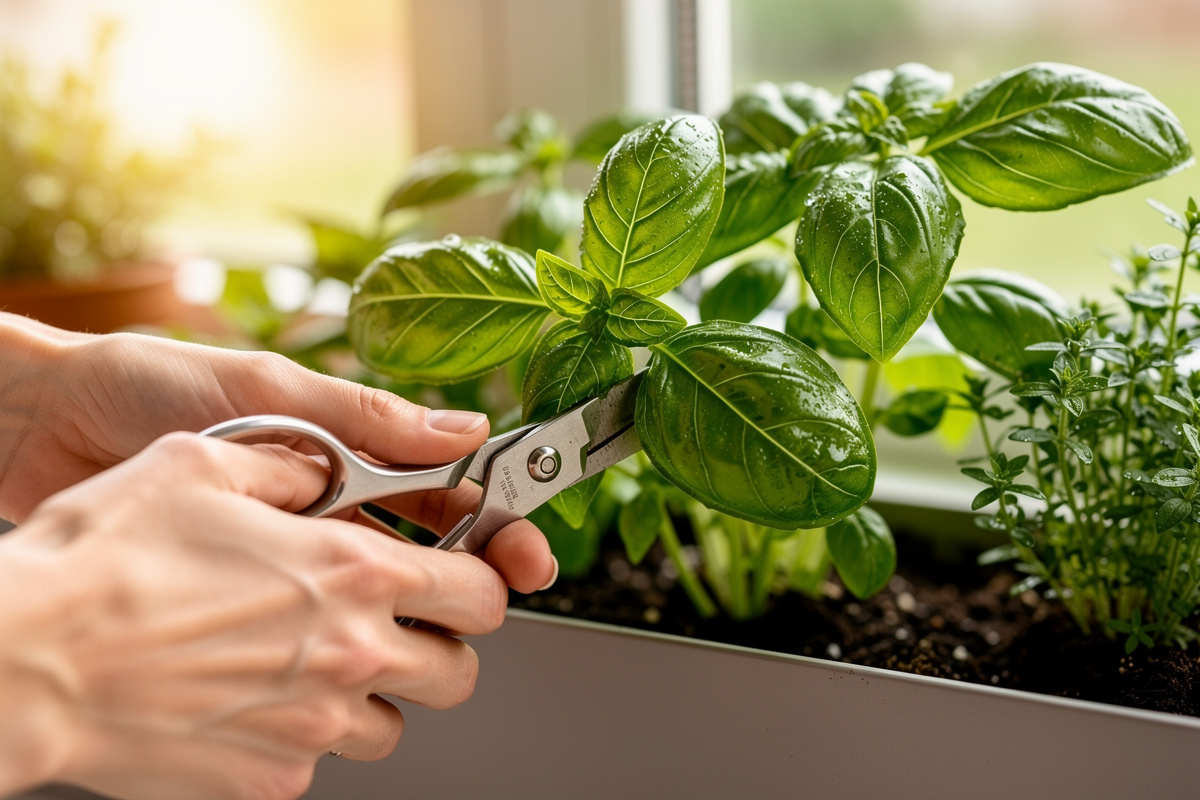
Proper harvesting keeps herbs productive and prevents them from going to seed prematurely — which is when flavor declines and the plant stops producing new growth.
Harvesting by Herb Type
Basil: Pinch off the top set of leaves just above a leaf node. This encourages the plant to branch and produce two new stems from that point. Never remove more than one-third of the plant at once. Harvest in the morning when essential oil content is highest.
Parsley: Cut outer stems at the base, leaving the center growth point intact. The plant produces new stems from the center continuously. Parsley can be harvested weekly once established.
Cilantro: Cut outer leaves at the base or harvest the entire plant when it reaches 15 cm tall. Cilantro bolts (flowers and goes to seed) quickly in warm conditions — succession planting every 2 to 3 weeks ensures a continuous supply.
Mint: Cut stems at any point — mint is nearly indestructible. Regular harvesting keeps the plant compact and bushy. Pinch off flower buds to maintain leaf production.
Chives: Cut leaves 2 to 3 cm above the soil line. The plant regrows from the base and can be harvested every 2 to 3 weeks. Chive flowers are also edible and make attractive garnishes.
Thyme, oregano, rosemary: Snip stems as needed, cutting just above a leaf node. These woody herbs recover slowly — harvest no more than one-third of the plant at a time. They produce best when harvested regularly but lightly.
Common Problems and Solutions
| Problem | Most Affected Herbs | Cause | Solution |
|---|---|---|---|
| Leggy, stretched growth | All herbs | Insufficient light | Move to sunnier location or add LED grow light |
| Yellowing leaves | Basil, parsley, cilantro | Overwatering or poor drainage | Reduce watering frequency, ensure drainage holes are clear |
| Wilting despite wet soil | Basil, parsley | Root rot from waterlogged soil | Repot in fresh well-draining mix, reduce watering |
| Bolting (premature flowering) | Cilantro, dill, basil | Heat stress or mature plant | Harvest immediately, succession plant new seeds, keep cool |
| Powdery mildew | Basil, oregano | High humidity, poor airflow | Improve ventilation, avoid overhead watering, remove affected leaves |
| Fungus gnats | All herbs in moist soil | Overwatering, organic soil | Let soil dry between waterings, use yellow sticky traps |
| Woody, tough stems | Rosemary, thyme, oregano | Age, insufficient light | Prune regularly to encourage new growth, increase light |
Preserving and Storing Fresh Herbs
When your herb garden produces more than you can use fresh, there are several preservation methods that maintain flavor far better than store-bought dried herbs.
Refrigeration (1-2 weeks): Trim stems and place in a glass with 2 cm of water, like a bouquet. Cover loosely with a plastic bag and refrigerate. Change water every 2 days. Basil should stay at room temperature — cold damages its leaves.
Freezing (6-12 months): Chop herbs and freeze in ice cube trays with water or olive oil. Pop out cubes and store in freezer bags. Frozen herbs retain more flavor than dried herbs and are ready to drop directly into cooking.
Drying (6-12 months): Hang herb bunches upside down in a warm, dry, dark space for 1 to 2 weeks. Mediterranean herbs (rosemary, thyme, oregano) dry particularly well. Store dried herbs in airtight containers away from light.
Indoor Herb Garden: Quick Start Checklist
1. Choose 4 starter herbs: Basil, parsley, mint, and chives cover the widest range of cooking needs and are the easiest to grow.
2. Get containers: 15 to 20 cm pots with drainage holes — one per herb. Do not combine herbs in one container.
3. Prepare soil: 70% potting mix, 30% perlite. For Mediterranean herbs, add extra sand or gravel for drainage.
4. Source plants: Buy small plants from a garden center for immediate harvest, or start from cuttings or seeds for variety and cost savings.
5. Position: South-facing windowsill is ideal. If light is insufficient, add a 20 to 40 watt LED grow light for 12 to 14 hours daily.
6. Water: Check every 2 to 3 days. Water when the top 2 cm of soil feels dry. Mediterranean herbs need less water than leafy herbs.
7. Feed: Diluted liquid fertilizer every 3 to 4 weeks at half strength. Less for Mediterranean herbs.
8. Harvest: Start harvesting once plants are established. Regular harvesting encourages bushier growth and prevents flowering.
For growers interested in exploring a soil-free method that can produce herbs even faster with less watering, our comparison of hydroponic vs soil herbs on SmartHydroLab covers the full breakdown.
What are the easiest herbs to grow indoors?
Basil, mint, parsley, and chives are the easiest herbs to grow indoors. They tolerate a range of light conditions, recover quickly from harvesting, and are forgiving of minor watering mistakes. Basil and mint grow particularly fast — you can start harvesting within 2-3 weeks of planting. Mint is nearly indestructible and will grow in almost any indoor condition.
How much light do indoor herbs need?
Most herbs need 4-8 hours of direct sunlight per day. South-facing windowsills provide the best natural light. If your space gets less than 4 hours of direct sun, supplement with a full-spectrum LED grow light for 12-14 hours daily. Mediterranean herbs like rosemary, thyme, and oregano need the most light (6-8 hours), while mint and parsley tolerate lower light levels (3-5 hours).
How often should I water indoor herbs?
It depends on the herb. Leafy herbs like basil, parsley, and cilantro need watering every 2-3 days when the top 2 cm of soil feels dry. Mediterranean herbs like rosemary, thyme, and oregano need watering every 4-7 days — let the soil dry out completely between waterings. Mint needs the most water and should be kept consistently moist. Overwatering is the most common cause of indoor herb death.
Can I grow multiple herbs in one container?
It is not recommended. Different herbs have different water and soil needs — mint likes constant moisture while rosemary needs to dry out between waterings. Planting them together means some will always be unhappy. Each herb should have its own container. The exception is herbs with identical needs, such as basil and parsley, which can share a larger container if necessary.
Why is my indoor herb plant leggy and stretched?
Leggy, stretched growth is almost always caused by insufficient light. The plant is reaching toward the light source, producing long weak stems with sparse leaves. Move the plant to a sunnier location (south-facing window) or add an LED grow light positioned 20-30 cm above the plant. Pinch back the leggy growth to encourage bushier new growth from the base.
Related Articles
- Grow Lights for Vegetables: Indoor Setup Guide — Choosing and positioning grow lights for herbs
- Container Gardening: Complete Guide — Fundamentals of growing in pots and planters
- Indoor vs Outdoor Urban Gardening — Comparing growing methods and environments
- Vertical Gardening: Systems, Methods, and Setup Guide — Maximize space with vertical herb gardens
- Hydroponic Herbs vs Soil Grown — Compare soil vs hydroponic herb growing on SmartHydroLab