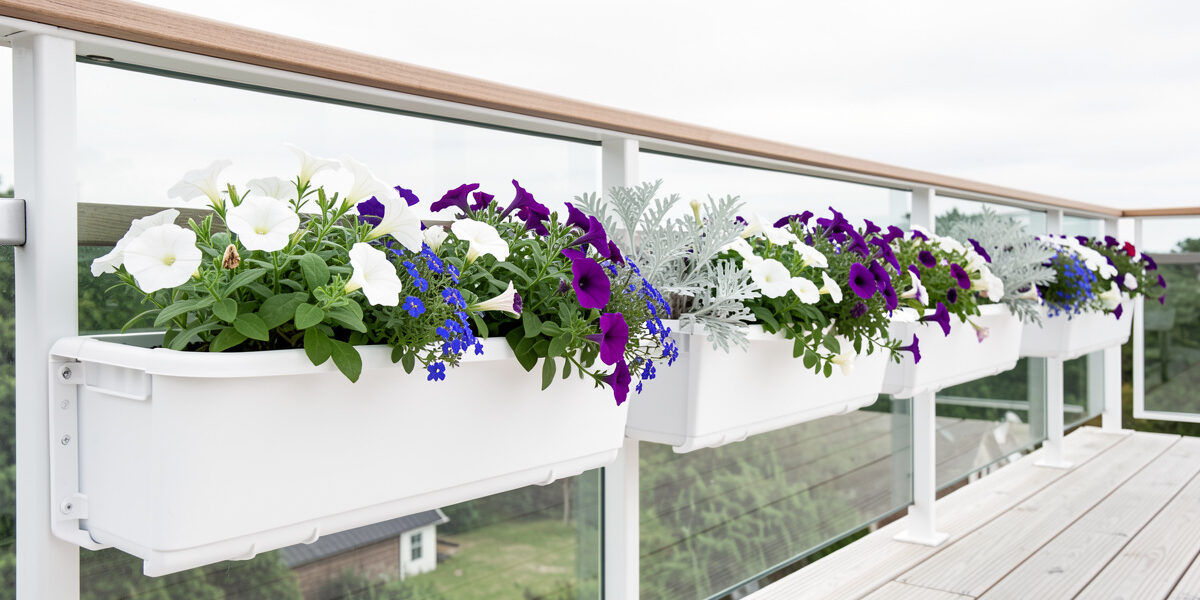
White flower boxes bring a clean, classic look to deck railings and pair easily with any exterior colour scheme. On my Swedish apartment balcony, I chose white railing planters specifically because they reflect heat better than dark plastic — the soil inside stays several degrees cooler on a July afternoon, which matters for the basil and parsley that sulk when roots overheat.
However, not all white railing planters maintain their crisp appearance. Some yellow, fade, or stain within a single season, while others resist the elements beautifully for years. This guide identifies the genuinely superior white flower boxes that hold their aesthetic appeal while delivering functional growing performance. For the wider picture, see my complete raised beds and planters guide.
As an Amazon Associate I earn from qualifying purchases.
Challenges of White Railing Planters
White presents unique maintenance challenges that demand thoughtful material selection. UV exposure degrades white pigments faster than darker colours — cheap plastic planters may yellow within months while quality UV-stabilised resins maintain brightness for years. The difference lies in pigment quality and the UV inhibitors added during manufacturing.
White also shows every water stain, soil splash, and mineral deposit. Self-watering systems and proper drainage reduce staining, but material choice determines cleaning ease: smooth surfaces wipe clean while textured plastics trap stains in their grooves. And while white reflects heat benefiting root health, some white materials (particularly lower-quality thin plastics) may still absorb excessive warmth. Double-walled or insulated designs address this concern.
Best White Flower Boxes for Deck Railings
These are planters I have run or have seen hold up through multiple seasons of Nordic weather. The material quality — not the brand name — is what determines whether a white planter stays white or yellows into cream within two years.
1. Lechuza Balconera White Railing Planter
Dimensions: 20″ or 28″ L x 8″ W x 8″ H | Railing Fit: 2-6 inches | Material: Premium polypropylene | Self-watering: Yes, 1.5L reservoir
The Lechuza Balconera white railing planter‘s German engineering delivers arguably the finest white railing planter available. The brilliant gloss-white finish resists UV degradation through proprietary pigment technology. After three years of exposure, Lechuza planters maintain showroom brightness while competitors yellow. The self-watering system includes a water-level indicator, preventing both drought stress and the overwatering stains common with white planters. A substrate separator keeps soil above the water line, maintaining a clean appearance.
Best for: Those wanting premium aesthetics with minimal maintenance and watering convenience.
2. Mayne Fairfield White Railing Planter
Dimensions: 36″ L x 11″ W x 10″ H | Railing Fit: 2.5-4 inches | Material: Double-walled polyethylene | Self-watering: Yes, sub-irrigation
The Mayne Fairfield white railing planter series offers cottage-garden charm in brilliant white that resists yellowing through UV-stabilised polyethylene. The subtle wood-grain texture provides visual interest while remaining easy to clean. Double-wall construction creates insulation protecting roots, while the self-watering sub-irrigation system prevents the water stains that plague simpler white planters. Available in multiple sizes for various railing lengths.
Best for: Traditional aesthetics wanting white planters with authentic cottage-garden styling.
3. Keter Easy Grow White Planter
Dimensions: 44″ L x 19″ W x 30″ H (includes legs) | Mounting: Leg-mounted, not hook style | Material: Rattan-look resin | Self-watering: Yes, 2.5 gallon reservoir
The Keter Easy Grow white planter‘s elevated design features white rattan-textured resin that maintains its bright appearance despite weather exposure. The leg-mounted design provides exceptional stability for porches and decks with appropriate flooring. The 2.5-gallon self-watering reservoir extends intervals between watering while the water gauge prevents overfilling that causes stains. The elevated design brings plants to a comfortable working height while the white finish brightens shaded deck areas.
Best for: Decks with floor space for leg-mounted planters wanting elevated growing at waist height.
4. TRC Recreation White Deck Railing Planter
Dimensions: 24″ L x 12″ W x 8″ H | Railing Fit: 2-6 inches | Material: UV-resistant polypropylene | Self-watering: No, drainage holes only
TRC Recreation offers affordable white planters surprisingly resistant to yellowing. The marine-grade UV stabilisation designed for boat applications translates to exceptional outdoor durability. Thick walls resist cracking and warping, maintaining clean lines. While lacking self-watering, the effective drainage system prevents waterlogging stains. The matte white finish minimises glare in sunny locations while remaining easy to clean with soap and water.
Best for: Budget-conscious buyers wanting genuine white planters without premium pricing.
5. Windowbox.com PVC White Railing Planter
Dimensions: Custom sizes 24-60″ | Railing Fit: Custom bracket options | Material: Cellular PVC (AZEK) | Self-watering: Optional insert
For custom applications or specific sizing, cellular PVC planters offer paintable white surfaces that never fade, rot, or yellow. The PVC material accepts paint, allowing future colour changes or refreshes. Custom brackets accommodate any railing dimension while the material machines like wood for custom modifications. Though pricier than off-the-shelf options, these planters last decades with proper care — Iowa State Extension’s guidance on raised-bed materials notes that PVC and composite lumber are among the longest-lasting options for outdoor garden structures.
Best for: Custom sizing requirements or those wanting paintable surfaces for future flexibility.
Maintaining White Planter Brightness
White planters require periodic cleaning to maintain appearance. A weekly rinse with a hose removes dust and debris before it bakes on. Monthly, wash with mild soap and a soft brush to lift the grime that dulls the surface. For stubborn mineral stains or algae, a seasonal deep clean with a diluted bleach solution (1:10 ratio) restores the original brightness without damaging UV-stabilised plastics.
Preventing discolouration is cheaper than cleaning it. Use quality potting mix to reduce soil splashing onto the planter sides. Apply a thin mulch layer to prevent direct soil contact with the white walls. Avoid over-fertilising, which causes mineral buildup that shows as white crusts on bright surfaces. Clean drainage saucers regularly to prevent algae growth, and position planters to minimise water staining the deck below.
To extend colour life through UV management, choose locations with afternoon shade when possible, apply automotive UV-protectant sprays annually, and store planters indoors during the off-season. On my balcony, I bring the white resin planters inside by late November — the Nordic winter UV is low, but the freeze-thaw cycling stresses the plastic and the grime that accumulates over winter is harder to remove in spring than if the planter had been stored clean.
Material Comparison: What Actually Stays White
The material matters more than the brand. After running several white planters side by side on the same railing through the same seasons, the performance splits cleanly by material type:
| Material | Yellowing resistance | Typical lifespan | Cleaning ease |
|---|---|---|---|
| Cellular PVC | Never yellows; paintable | 20+ years | Excellent (smooth surface) |
| UV-stabilised polypropylene (Lechuza-grade) | 5+ years bright | 10-15 years | Excellent |
| Double-walled polyethylene (Mayne-grade) | 4-5 years | 8-12 years | Good (slight texture) |
| Standard polypropylene (budget) | 2-3 years before yellowing | 5-7 years | Fair (stains set in) |
| Painted wood | Depends on paint quality | 3-5 years between repaints | Requires repainting |
The takeaway: cellular PVC is the permanent solution if you can afford it, UV-stabilised polypropylene is the sweet spot for most buyers, and budget plastics are false economy — you will be replacing them in three years when they turn yellow.
Planting Design with White Planters
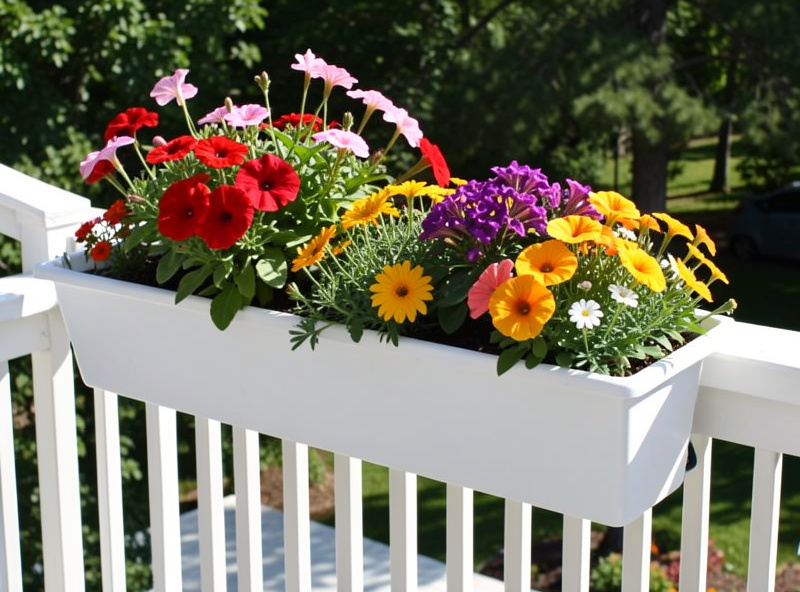
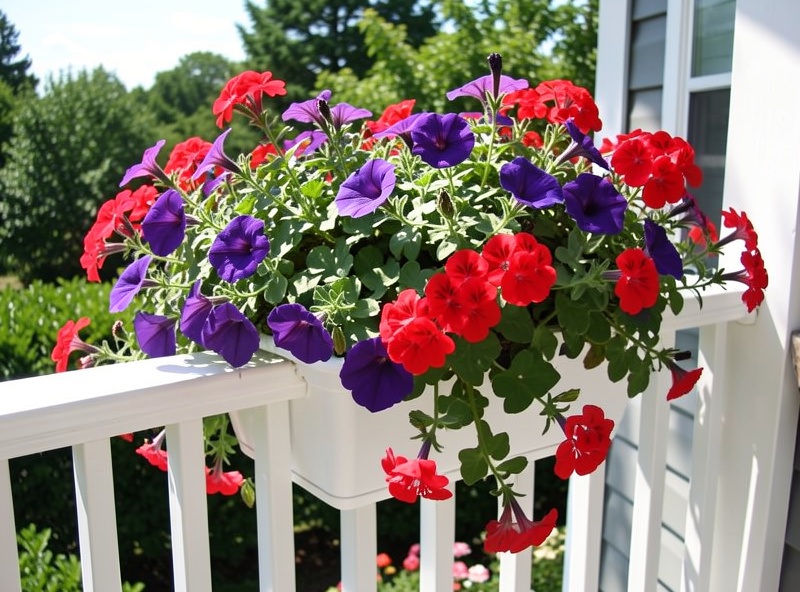
White planters create stunning backdrops for various colour schemes. Classic green — white with herbs, ferns, and leafy greens — produces a crisp, clean aesthetic. Bold and bright works beautifully: white makes red geraniums, purple petunias, and orange portulaca pop against the neutral background. For a softer look, pastel pink, lavender, and pale yellow blend elegantly with white. And a monochromatic white-on-white scheme — white alyssum, white geranium, white bacopa in a white planter — creates serene sophistication that works particularly well on contemporary balconies.
Smooth white surfaces also pair beautifully with textural plantings. Soft fuzzy lamb’s ear, spiky dracaena spikes, trailing ivy or sweet potato vine, and wispy ornamental grasses all create pleasing tactile contrast against the clean planter surface. The planter disappears visually and the plant texture takes centre stage.
White planters adapt to any season. In spring, fill them with pastel pansies, primroses, and forced bulbs. In summer, switch to bold annuals and trailing vines. In autumn, ornamental kale, mums, and asters carry the colour through October. In winter, evergreen cuttings, birch branches, and winterberry keep the white planter looking intentional even when the growing season is over — Wisconsin Extension’s container gardening guidance covers the soil depth and drainage fundamentals that underpin all of these seasonal plantings.
The Nordic Advantage of White Planters
Up here, white planters have a practical advantage that goes beyond aesthetics. In a climate where the growing season is short and the sun is low, white surfaces reflect available light back up onto the plant foliage — effectively increasing the light each plant receives without adding a single watt of supplemental lighting. On my north-facing balcony section, where direct sun is limited to a couple of hours in early afternoon, the white planter walls bounce enough reflected light onto the basil to keep it from going leggy the way it does in dark-coloured containers in the same position.
The heat reflection works in both directions. In summer, white walls keep the root zone cooler, which extends the productive window for cool-season crops like lettuce and spinach that bolt the moment the soil warms past their comfort zone. In the shoulder seasons — late April and late September — that same reflection concentrates what little solar warmth is available, nudging the soil temperature up a degree or two compared to dark planters in the same light. It is not a dramatic effect, but in a short Nordic season, every degree and every reflected lumen adds up to real growing time.
Installation and Bracket Considerations
White planters suit a range of railing types. Against white or light-coloured railings they create a cohesive, unified look. Against dark railings — black powder-coated steel or dark stained wood — they provide dramatic contrast that draws the eye. On natural wood railings they brighten the tones, and against wrought iron they soften the industrial lines.
Bracket colour matters more than people realise. White or light grey brackets maintain a cohesive appearance that lets the planter read as a single clean shape. Stainless steel brackets add a modern accent that complements contemporary architecture. Black brackets create harsh dark lines against the white planter body and break the visual continuity — avoid them unless the railing itself is black and the bracket disappears against it.
Before purchasing, measure your railing width at the top rail and the thickness of the material. Choose planters with brackets that span your dimensions with at least half an inch of adjustment range on each side. A bracket that barely grips when empty will slip when you add twenty pounds of wet soil and a full-grown basil plant. On my railing, I test every bracket with a firm downward push before loading — if it shifts under hand pressure, it will shift under wind. I also add a secondary zip-tie around the rail post as backup, because the cost of a planter full of wet soil hitting the ground below is always higher than the cost of a few cable ties and two minutes of installation time.
Connecting to Complete Garden Design
White flower boxes integrate beautifully with broader garden aesthetics. For comprehensive porch and deck gardening guidance, see my deck rail planters guide covering security and stability considerations. Explore complementary plant strategies in my balcony plants guide for colours that harmonise with white containers. For equipment supporting beautiful container gardens, review my equipment recommendations. And for the complete framework covering container sizing, soil mixing, and seasonal planning, see my balcony gardening complete guide.
Related Articles
- Balcony Gardening: The Complete Guide
- How to Create a Small Balcony Garden
- Growing Vegetables on Your Balcony
- 12 Balcony Herb Garden Ideas
- Best Plants for Apartment Balconies
What are the best white flower boxes for deck railing?
Look for UV-resistant white vinyl, cellular PVC, or premium polypropylene that won’t yellow over time. Ensure adequate drainage and secure mounting brackets. Lechuza and Mayne Fairfield are top performers for colour retention.
How do you keep white flower boxes from yellowing?
Choose UV-stabilised materials. Clean regularly with mild soap and water. Apply a UV-protective spray annually to maintain the white finish. Store planters indoors during the off-season to prevent freeze-thaw grime buildup.
How long do white vinyl flower boxes last?
Quality UV-stabilised white vinyl or cellular PVC flower boxes last 10-15+ years. They resist rot, insect damage, and weathering. Cellular PVC can be repainted indefinitely, extending lifespan further. Clean annually to maintain appearance.