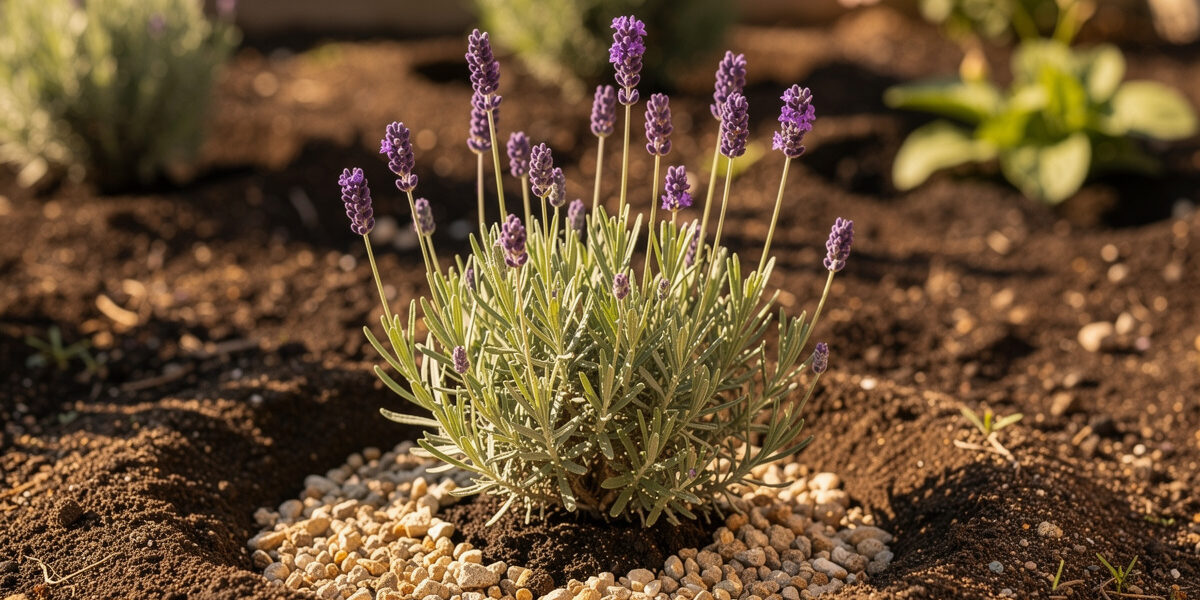
Planting English lavender successfully requires alkaline soil with a pH between 6.5 and 7.5, a south-facing position receiving at least 6 hours of direct sun, and soil drainage fast enough that water passes through the root zone within 15 minutes. When these three conditions are met, English lavender (Lavandula angustifolia) establishes within one growing season and produces fragrant purple flower spikes for 10 to 15 years.
English lavender is the hardiest and most versatile species in the lavender family. Unlike Spanish or French types that struggle below zone 7, English cultivars survive winter temperatures down to -20F in USDA zone 5. They are also the only lavender species suitable for culinary use because their lower camphor content produces a sweet floral flavor rather than the medicinal taste found in other species. This guide covers the precise planting depth, spacing, timing, soil preparation, and first-year care that determines whether your English lavender thrives or dies before its second season.
English lavender (Lavandula angustifolia) is the lavender to plant if you garden anywhere cold or wet — varieties like ‘Hidcote’ and ‘Munstead’ shrug off a hard winter that would kill the tender French and Spanish types outright. Get it right and one plant flowers for a decade or more on near-total neglect. Two things decide success: sun and drainage — a south-facing spot and soil so free-draining the water vanishes in minutes. You can raise it from seed, but it’s slow, so most of us start with young plants. Here’s exactly how I plant it.
A quick note: some links below are affiliate links — if you buy through them I may earn a small commission at no extra cost to you. I only point to things I’d use myself. Details on my disclaimer page.
Best English Lavender Varieties for Home Gardens
Hidcote and Munstead are the two most widely planted English lavender cultivars, and for good reason. Both mature at 12 to 18 inches tall, produce dense flower spikes in mid-summer, and tolerate cold down to -20F. The key difference is color intensity: Hidcote produces deeper violet-purple flowers while Munstead leans toward a lighter blue-purple with slightly earlier bloom timing.
For small spaces, balcony containers, or edging pathways, compact varieties like Little Lady (8 to 10 inches) and Thumbelina Leigh (6 to 8 inches) offer full lavender fragrance in a fraction of the footprint. These dwarf types also work well in balcony herb gardens where space is limited.
For culinary-focused gardeners, Royal Velvet produces the sweetest flavored buds among English varieties, with noticeably lower camphor than Hidcote. Betty’s Blue offers exceptionally long stems ideal for cutting and drying. Melissa is a unique pink-flowering English lavender that adds color variation to an all-purple planting without sacrificing hardiness or fragrance.
When to Plant English Lavender
Plant English lavender in spring, 2 to 4 weeks after your last frost date, when soil temperature at 4-inch depth reaches at least 60F. Spring planting gives roots 5 to 6 months to establish before winter dormancy, which is critical because first-year winter kill rates reach 30% for lavender planted after September in zones 5 and 6.
In zones 7 and warmer, fall planting between September and October is also viable because winters are mild enough for continued root growth. However, spring planting still produces stronger first-year growth because the plant benefits from a full growing season of warmth and light.
Avoid planting during summer heat waves. Transplanting when daytime temperatures exceed 90F stresses roots that are already adjusting to a new environment. If you purchase nursery plants in summer, keep them in their pots in a partially shaded location and water regularly until temperatures moderate in early fall or wait until the following spring.
Soil Preparation for English Lavender
English lavender dies from waterlogged roots faster than from cold, drought, or any pest. The single most important step before planting is ensuring drainage speed: water must pass through the root zone within 15 minutes of application. Test your drainage by digging a 12-inch hole, filling it with water, and timing how long it empties.
If your soil drains within 15 minutes, amend lightly by mixing in a 2-inch layer of coarse perlite or horticultural grit to the top 8 inches. If drainage takes longer than 30 minutes, either build a raised bed at least 12 inches tall or create a mounded planting area 6 inches above grade.
The ideal planting mix is 60% mineral material (coarse sand, perlite, or fine gravel) and 40% organic matter (compost or aged bark). For container planting, combine equal parts potting soil, coarse perlite, and coarse sand, then add one tablespoon of garden lime per gallon of mix. Choosing the right soil for herbs makes the difference between lavender that barely survives and lavender that thrives.
Check soil pH before planting. English lavender prefers pH 6.5 to 7.5. Most garden soils east of the Mississippi run acidic at pH 5.5 to 6.0. Add agricultural lime at 5 pounds per 100 square feet to raise pH by roughly 0.5 points. Test again after 30 days before planting.
How to Plant English Lavender Step by Step
Proper planting depth and crown position prevent the crown rot that kills more English lavender plants than any other single cause. Follow these steps precisely for each plant.
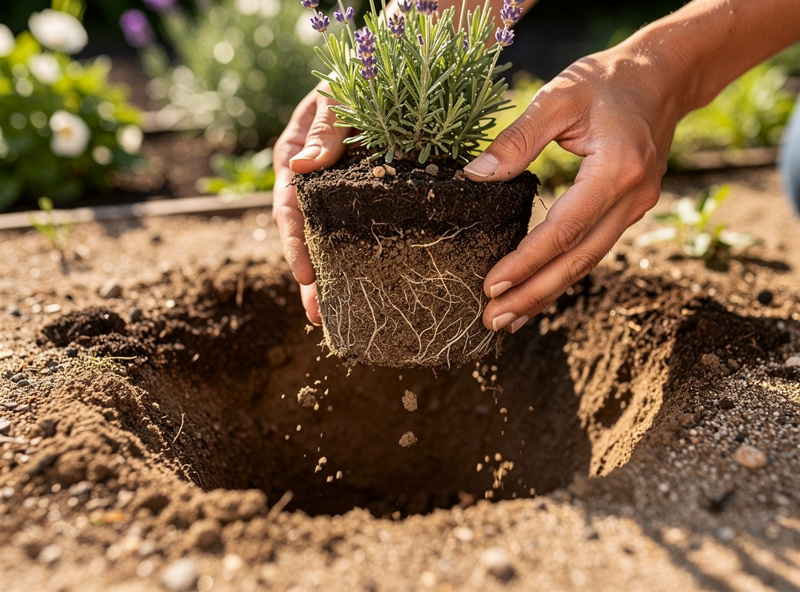
Dig a hole twice the width of the root ball but only as deep as the root ball height. English lavender roots spread horizontally rather than driving deep, so width matters more than depth. Score the sides of the hole with a garden fork to break any glazing that could trap water against the roots.
Remove the plant from its nursery pot and gently loosen the outer roots, especially any circling roots at the bottom. Place the root ball in the hole so the crown sits approximately half an inch above the surrounding soil level. Backfill with your amended soil mix, firming gently but not compacting. The slightly elevated crown position prevents water from pooling at the base where it causes rot.
Water deeply immediately after planting, saturating the entire root zone. Apply a 2-inch layer of pea gravel or crushed stone mulch in a ring around the plant, keeping the gravel 1 inch away from the stem. Never use bark or wood chip mulch on lavender because organic mulches trap moisture against the crown.
Spacing English Lavender
Space English lavender plants 12 to 18 inches apart for a dense hedge or border effect. For individual specimens with maximum airflow, increase spacing to 24 inches. Dwarf varieties like Little Lady can be planted as close as 8 to 10 inches for tight edging along pathways.
Cramped spacing restricts air circulation around the crown, which invites fungal diseases especially in humid climates east of the Rockies. If your area receives more than 40 inches of rainfall annually, err toward the wider end of the spacing range. In dry western climates, the tighter spacing produces a solid lavender hedge that fills in within 2 growing seasons.
For container growing, plant one English lavender per pot with a minimum pot diameter of 12 inches and depth of 12 inches. Terracotta pots are strongly preferred over plastic because they breathe and wick moisture away from the root zone. Every pot must have at least one drainage hole and should sit on pot feet rather than flat on a saucer.
First-Year Watering Schedule
First-year watering is the most critical care task because English lavender roots need consistent moisture to establish while being vulnerable to overwatering. The balance point is keeping roots moist but never saturated during the establishment phase.
Week 1 after planting: Water deeply every 2 to 3 days. Week 2 through 4: Water deeply once per week. Month 2 through 4: Water every 10 to 14 days. Month 5 onward: Water only during dry spells exceeding 2 weeks without rain.
By the second growing season, established English lavender in the ground typically needs no supplemental irrigation except during extreme drought lasting 3 or more weeks. Container lavender dries out faster and needs watering year-round when the top 2 inches of soil feel completely dry to the touch.
Always water at the soil level, never overhead. Wet foliage promotes botrytis (gray mold) and other fungal infections. Drip irrigation or a watering can directed at the base is ideal. Morning watering is best because any splash moisture on leaves dries quickly in the day’s heat.
Pruning English Lavender the Right Way
Annual pruning is the single most important maintenance task for English lavender longevity. Unpruned plants become woody and bare at the base within 3 to 4 years, splitting open and eventually dying. Properly pruned English lavender maintains a dense, rounded mound shape for 15 or more years.
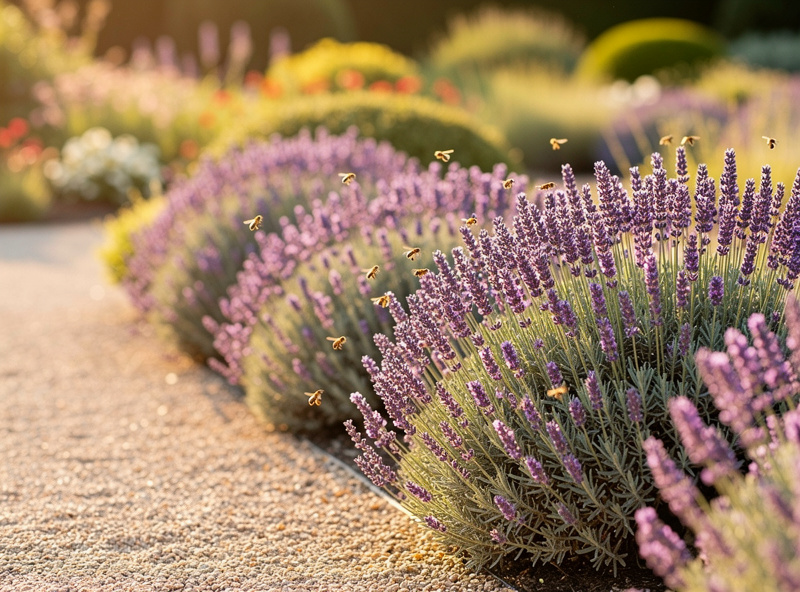
The primary pruning happens immediately after the main flowering flush ends, typically in late July or August. Cut the entire plant back by one-third of its total height, shaping it into a neat dome. Always cut into green leafy growth and never into old bare wood because English lavender cannot regenerate shoots from woody stems.
A secondary light trim in early spring removes any winter-damaged branch tips and tidies the plant shape before new growth accelerates. Keep this spring trim to no more than 1 to 2 inches. Heavy spring pruning removes flower buds that formed on last season’s growth, resulting in a season with no blooms. For more detail on pruning and year-round lavender maintenance, see the comprehensive growing lavender guide.
Common Problems When Planting English Lavender
Root rot from overwatering or poor drainage kills more English lavender than every other problem combined. Symptoms include sudden wilting of entire branches despite moist soil, mushy brown roots, and a sour smell from the root zone. There is no cure once root rot establishes. Pull and destroy affected plants immediately to prevent spread to neighboring lavender.
Leggy, sparse growth with few flowers indicates insufficient sunlight. English lavender planted in partial shade produces tall, floppy stems searching for light instead of compact, dense mounds loaded with flower spikes. If your site receives fewer than 6 hours of direct sun, relocate the plant or remove competing shade sources.
Winter kill in zones 5 and 6 is almost always caused by wet soil freezing around roots rather than air temperature. Ice crystals in saturated soil physically shear root tissue. Prevent winter kill by stopping all watering after September, maintaining gravel mulch around the crown, and ensuring drainage remains excellent heading into winter. Avoid fall pruning that stimulates tender new growth vulnerable to frost damage.
Yellowing lower leaves during the growing season typically signal overwatering. Check soil moisture before assuming a nutrient deficiency. In roughly 80% of yellowing cases, the solution is to water less frequently rather than to add fertilizer.
Companion Plants for English Lavender
English lavender pairs naturally with other drought-tolerant Mediterranean herbs and perennials that share its soil and water requirements. The best companions include rosemary, thyme, oregano, sage, and santolina. These plants create a cohesive herb garden bed that pollinators visit heavily throughout the growing season.
Avoid planting English lavender next to moisture-loving herbs like basil, mint, or cilantro. Their watering needs are fundamentally incompatible, and the extra moisture required by these herbs will damage lavender roots. Similarly, avoid placing lavender next to heavily mulched vegetable beds where organic matter creates acidic, wet conditions.
For ornamental pairings, English lavender looks striking alongside creeping thyme as a ground cover, echinacea for height contrast, or ornamental grasses for textural variety. Cat owners might consider planting catnip nearby since both thrive in similar conditions and create a fragrant, pollinator-friendly garden corner.
Harvesting English Lavender
Harvest English lavender when approximately one-third of the buds on each flower spike have opened. At this stage, essential oil concentration peaks at 1.5 to 3% by dry weight. Waiting until all buds open reduces oil content by roughly 20% and causes buds to shatter and drop during drying.
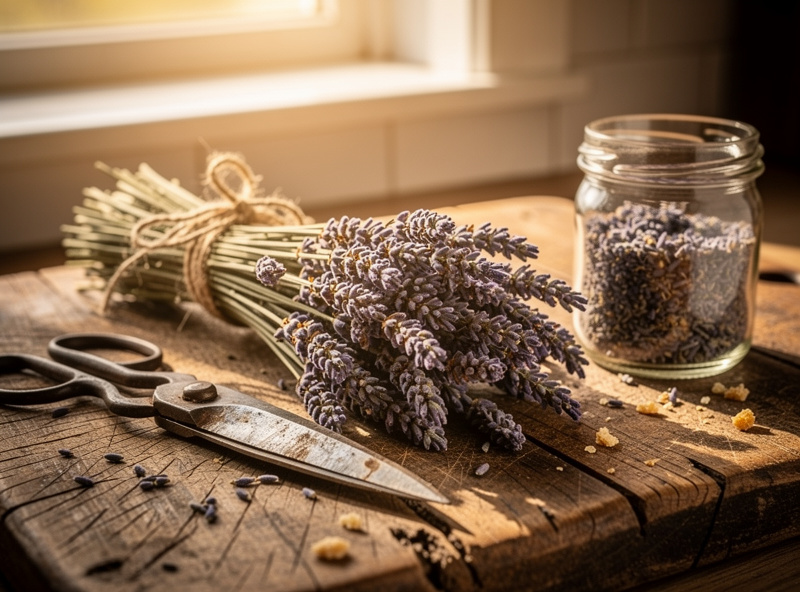
Cut stems in the morning after dew evaporates but before midday heat. Use sharp pruners and cut 2 to 3 inches into the green leafy growth below the flower spike, which also serves as your summer pruning cut. Bundle 20 to 30 stems with rubber bands and hang upside down in a dark, warm, well-ventilated room for 2 to 4 weeks.
Dried English lavender buds retain full fragrance for 1 to 2 years stored in sealed glass jars away from light. For culinary use, strip dried buds from stems and use sparingly. One teaspoon of dried English lavender buds is sufficient to flavor an entire batch of shortbread, lemonade, or herbal tea. The flavor intensifies during cooking, so restraint produces better results than generosity.
Frequently Asked Questions
How deep should I plant English lavender?
Plant English lavender so the crown sits half an inch above the surrounding soil level. Setting the crown at or below grade causes water pooling and crown rot, the number one killer of otherwise healthy lavender plants.
Can English lavender survive winter in zone 5?
Yes. English lavender varieties like Hidcote and Munstead survive temperatures down to -20F in USDA zone 5. Winter kill is usually caused by wet frozen soil, not cold air. Ensure excellent drainage and use gravel mulch.
How long does English lavender take to grow?
Nursery transplants flower within 60 to 90 days of spring planting. Seed-grown English lavender takes 90 to 180 days to reach transplant size and typically does not bloom until its second year.
Should I deadhead English lavender?
Deadheading spent flower spikes encourages a lighter second flush in some English varieties. However, the main pruning after flowering serves the same purpose and also shapes the plant, making separate deadheading unnecessary.
Why is my English lavender not flowering?
Non-flowering English lavender usually receives too little sunlight, too much nitrogen fertilizer, or was pruned too hard in spring. Flower buds form on previous season growth, so heavy spring pruning removes potential blooms.
Can I grow English lavender indoors?
English lavender grows indoors only with a south-facing window plus supplemental grow lights providing 12 or more hours of daily light. Even with ideal indoor conditions, it rarely matches outdoor vigor or flower production.