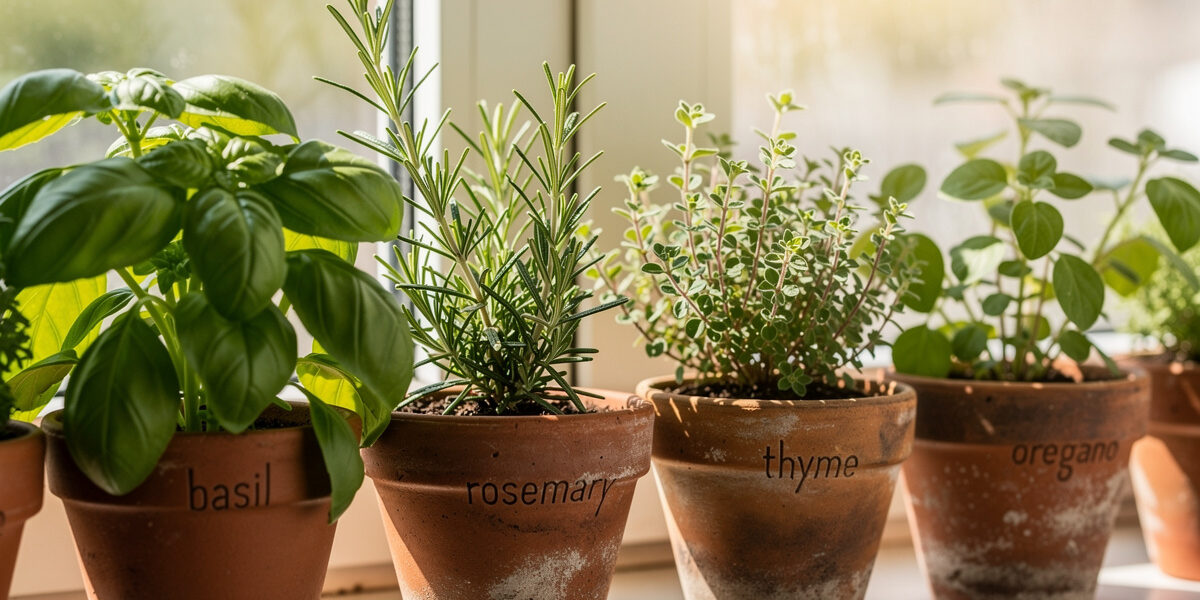
Herbs grown for culinary use require soil that balances drainage, nutrition, and pH differently than ornamental plants or heavy-feeding vegetables. Mediterranean herbs like rosemary, thyme, and oregano evolved on rocky, sandy hillsides with sharp drainage and near-neutral pH. Overwatering and over-rich soil noticeably dilute the aromatic oils that give culinary herbs their flavor — the reason lean, gritty soil so often produces the most fragrant plants. This guide provides soil formulas for basil, mint, cilantro, and all major culinary herbs.
As an Amazon Associate I earn from qualifying purchases.
Herb Soil Requirements by Category
Herbs divide into three categories based on their native soil conditions. Mediterranean herbs (rosemary, thyme, oregano, sage, lavender) need fast-draining, low-nitrogen soil with high mineral content. Tender herbs (basil, cilantro, parsley, mint) want consistent moisture and moderate fertility. Root herbs (garlic, ginger, turmeric) need loose, rich soil with excellent drainage.
Matching soil to herb type prevents flavor dilution. Overfed basil produces lush leaves with weak aroma. Underwatered rosemary develops strong flavor but growth slows. Indoor herb gardening requires even faster drainage than outdoor growing because evaporation rates are lower.
Mediterranean Herb Soil Mix
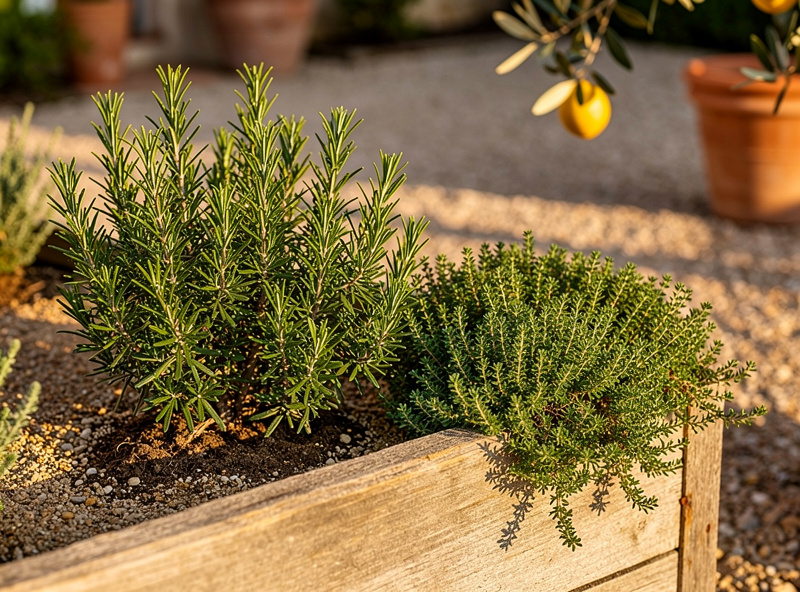
Rosemary, thyme, oregano, sage, and lavender evolved in conditions of poor, rocky soil with excellent drainage and full sun exposure. These herbs produce the highest essential oil concentrations when slightly stressed. Overwatering and rich soil reduce flavor intensity and can kill these plants through root rot.
Mediterranean herb mix: 50% coarse sand or poultry grit, 30% potting soil, and 20% perlite. This creates fast-draining conditions where these herbs thrive. Add 1 tablespoon of agricultural lime per gallon of mix to raise pH to 6.5-7.0, mimicking their native alkaline conditions. Succulent-style drainage works perfectly for this herb category.
Tender Herb Soil Mix
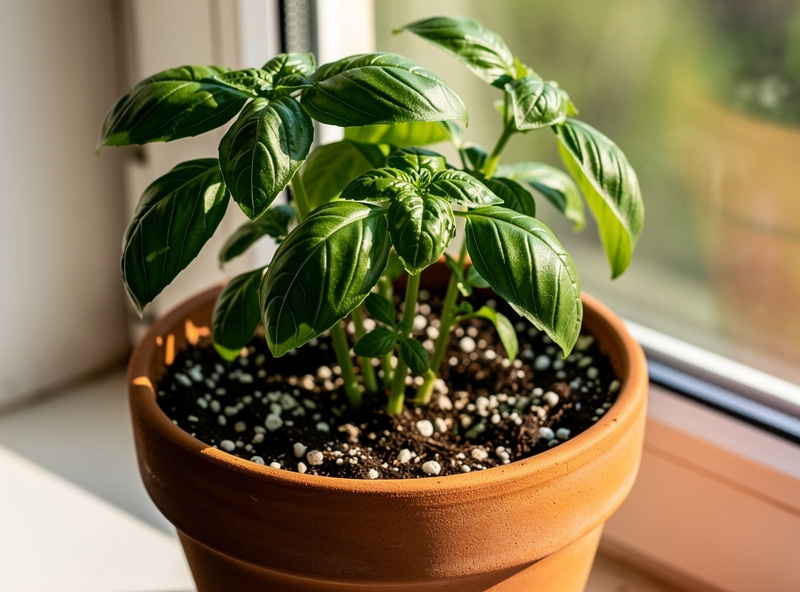
Basil, cilantro, parsley, chives, and mint need more moisture than Mediterranean herbs but still require good drainage. These herbs originated in forest margins and stream banks where soil stayed moist but never waterlogged. The goal is consistent moisture without saturation — Iowa State University Extension recommends a well-drained potting mix (or potting mix, peat, and perlite in equal parts) for container herbs across the board.
Tender herb mix: 40% potting soil, 30% peat moss or coco coir, 20% perlite, and 10% compost. This retains moisture while allowing excess to drain. Basil especially suffers when soil dries completely between waterings, developing tough leaves with reduced essential oils. Container vegetable soil formulas work well for basil and parsley. Cilantro is particularly sensitive to soil temperature — cool, moisture-retentive mix delays bolting; my growing cilantro guide covers the soil prep and succession-sowing schedule that keeps it producing through summer.
Root Herbs: Garlic and Ginger
The third category earns its own mix because the harvest happens underground. Garlic and ginger both want loose, rich, deep soil that a bulb or rhizome can expand through without fighting — I run roughly 50% potting soil, 25% compost, and 25% perlite, in the deepest containers I can spare. Garlic is the Nordic-friendly one: hardneck varieties planted in October in a deep pot overwinter outdoors happily and size up through the long daylight of early summer, as long as that generous perlite share keeps the winter wet moving through. Ginger is the opposite bet — a tropical plant that treats a Swedish summer as a mild inconvenience — so mine sprouts indoors in early spring and only holidays outside in July. In both cases the failure mode is the same: dense, soggy soil that rots the very part you planned to eat.
Mint: A Special Case
Mint is uniquely aggressive and tolerates more moisture than other herbs. It also spreads through underground runners and will take over any container or garden bed if given ideal conditions. The best approach contains mint in pots with standard herb soil, restricting its spread while maintaining adequate moisture.
For mint, use 50% potting soil, 30% compost, and 20% perlite. This holds moisture longer while still draining adequately. Sink the pot into the bed with its rim standing above the soil line so the runners cannot escape over the edge, and always keep drainage holes so the roots never sit waterlogged.
Overwintering: The Soil Decides Who Survives
Up here the herb year has a hard edge, and which plants greet you again in April is decided less by cold-hardiness charts than by drainage. Thyme, oregano, chives, and mint are all perfectly capable of surviving a Swedish winter outdoors — established plants shrug off deep frost in open ground — but the same plants die routinely in pots, and almost never from the cold itself. The killer is winter wet: months of rain, snowmelt, and refreeze in a pot with mediocre drainage rot the crown long before spring. My overwintering pots get the mix shifted one step leaner in autumn — an extra share of grit worked into the surface, a gravel mulch over the crown so wet snow never sits against the stems — and the pots come up off the floor onto pot feet so the drainage holes never seal against ice. Since adopting that routine, my potted thyme survival has gone from a coin flip to near-automatic.
Rosemary is the exception that proves the rule: genuinely not reliable through a Nordic winter outdoors, so mine commutes. In October it moves to the coolest bright window in the apartment — the common guidance of a cool, light spot somewhere around 5-12°C matches my experience exactly — where the lean, sandy mix it already lives in becomes its winter insurance. In cool, dim conditions the plant barely drinks, so a moisture-retentive mix would keep the roots wet for weeks at a stretch. In the sharp-draining mix, a small watering every couple of weeks is enough, and the plant idles quietly until it goes back out after the last frost.
Indoor Herb Soil and the Fungus Gnat Problem
Nobody warns you about this when you move herbs indoors for the winter: a few weeks after the pots come in, tiny black flies start drifting up from the soil every time you water. Fungus gnats breed in the top layer of constantly moist, organic-rich potting media — UC’s integrated pest management program identifies overwatered container media as the classic source, with the larvae living in the top few centimetres and unable to survive in dry soil. Basil pots kept lush and moist on a warm windowsill are effectively a nursery for them.
The fix is built into the soil strategy rather than sprayed on afterward. Letting the top couple of centimetres dry out between waterings breaks the breeding cycle on its own for mild cases; watering from the bottom — standing the pot in a tray and letting the mix wick upward — keeps the surface dry while the roots stay supplied, which suits every herb in this guide anyway. For stubborn infestations I top-dress the pots with a centimetre of coarse sand, which dries instantly and gives egg-laying females nowhere to work, and yellow sticky cards knock down the adults. It is the same lesson as everything else in herb growing: the drier, leaner regime that concentrates flavor also happens to starve out the pests that thrive on soggy organic matter.
Soil pH for Herbs
Most culinary herbs prefer slightly acidic to neutral soil (pH 6.0-7.0). Exceptions include lavender and rosemary, which prefer slightly alkaline conditions (pH 6.5-7.5). Test soil pH monthly when growing herbs in containers, as peat-based mixes naturally acidify over time.
Lower pH with sulfur if needed, raising it with agricultural lime. The difference of 0.5 pH units significantly affects nutrient availability. Maintaining proper pH ensures herbs can absorb the nutrients they need for healthy growth and essential oil production.
| Herb Category | pH Range | Soil Moisture | Drainage |
|---|---|---|---|
| Mediterranean (rosemary, thyme) | 6.5-7.5 | Low | Very Fast |
| Tender (basil, cilantro) | 6.0-7.0 | Medium | Fast |
| Root (garlic, ginger) | 6.0-7.0 | Medium | Fast |
| Mint | 6.0-7.0 | High | Medium |
Fertilizing Herbs Properly
Heavy fertilization reduces essential oil concentration in herbs, diluting their flavor. This is especially true for Mediterranean herbs, which evolved in nutrient-poor conditions. For container herbs, apply diluted liquid fertilizer at half the recommended strength every 4-6 weeks during active growth.
Overfertilized basil produces large, pale leaves with weak aroma. Underfertilized herbs grow slowly but develop more concentrated flavors. If herbs show yellowing leaves, add a light dose of balanced fertilizer. Otherwise, minimal feeding produces the strongest-flavored herbs. Compost provides sufficient nutrients for most herb growing situations.
From Supermarket Pot to Real Plant
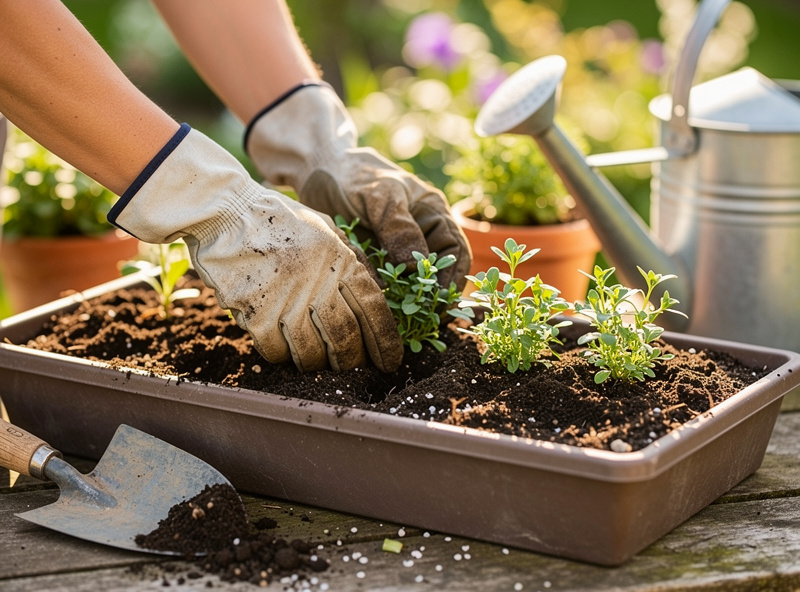
The potted basil from the grocery store is not one plant — it is often dozens of seedlings sown thick into a small plug of peat, engineered to look lush on the shelf and to be used up within a week or two. Treat it like a plant and it collapses; treat it like a tray of seedlings and it becomes a summer’s worth of basil. When one comes home with me, it gets watered well, slid out of its pot, and gently pulled apart into three or four smaller clumps, each with its own share of roots. Each clump goes into its own pot of the tender-herb mix above, and after a few days of sulking in indirect light they take off — the crowding and the exhausted plug were the only things holding them back.
Garden-centre perennial herbs need a milder version of the same intervention. A rosemary or thyme raised in soft nursery peat and dropped straight into a lean, gritty mix experiences a rough transition — the root ball holds water while the surrounding mix sheds it, so water either bypasses the plug entirely or drowns it. I tease the outer roots loose, shake off what peat comes away easily, and settle the plant so the gritty mix makes real contact with the roots rather than wrapping a wet peat core. One season later the roots have committed fully to the lean mix, and the plant behaves like it grew there from a cutting.
Herb Soil Mix for a Nordic Balcony
Mediterranean herbs on a balcony through a Nordic summer want the opposite of what most garden advice recommends: lean, sharp-draining soil with no added fertiliser. A mix of two parts coarse sand to one part compost in an unglazed terracotta pot has produced the most aromatic rosemary, thyme, and oregano I have grown. The lean soil stresses the plants just enough to concentrate the aromatic oils without tipping into drought damage, and the terracotta wicks moisture away from the roots in a way plastic pots never do.
Fertilising Herbs: Less Is More
Herbs in rich soil grow lush and leggy with thin flavor. I add a half-handful of worm castings to each herb pot in spring, and that is the only feeding they get all season. The rosemary that has lived in the same pot for three years on nothing but spring castings and a gravel mulch is the most vigorous and most aromatic plant on the balcony — and it has never seen a drop of liquid fertiliser.
Frequently Asked Questions
What is the best soil for growing herbs?
Mediterranean herbs need 50% sand, 30% potting soil, 20% perlite for fast drainage. Tender herbs need 40% potting soil, 30% peat moss, 20% perlite, 10% compost for moisture retention. Match soil to herb type.
Can I use regular potting soil for herbs?
Standard potting soil works for tender herbs like basil and parsley with added perlite for drainage. Mediterranean herbs like rosemary and thyme need extra drainage with 50% sand or grit added.
How often should I water herbs in containers?
Mediterranean herbs water when soil is completely dry, typically every 7-10 days. Tender herbs like basil water when top inch feels dry, typically every 2-3 days. Overwatering kills more herbs than underwatering.
Why are my herb leaves losing flavor?
Flavor loss comes from overfertilization, overwatering, or insufficient light. Reduce fertilizer by half, water less frequently, and ensure herbs receive 6+ hours of direct sun. Stressed herbs develop more concentrated essential oils.
Do herbs need fertilizer in containers?
Herbs need minimal fertilization compared to vegetables. Apply diluted balanced fertilizer at half strength every 4-6 weeks during active growth. Too much fertilizer produces lush growth with weak flavor.
What pH do culinary herbs need?
Most herbs prefer pH 6.0-7.0. Lavender and rosemary prefer slightly alkaline conditions at pH 6.5-7.5. Test soil monthly and adjust with lime or sulfur as needed.
Can I grow herbs in the same pot together?
Only grow herbs with similar water needs together. Mediterranean herbs (rosemary, thyme, oregano) should not share pots with tender herbs (basil, cilantro). Mint should always be grown alone in its own container.