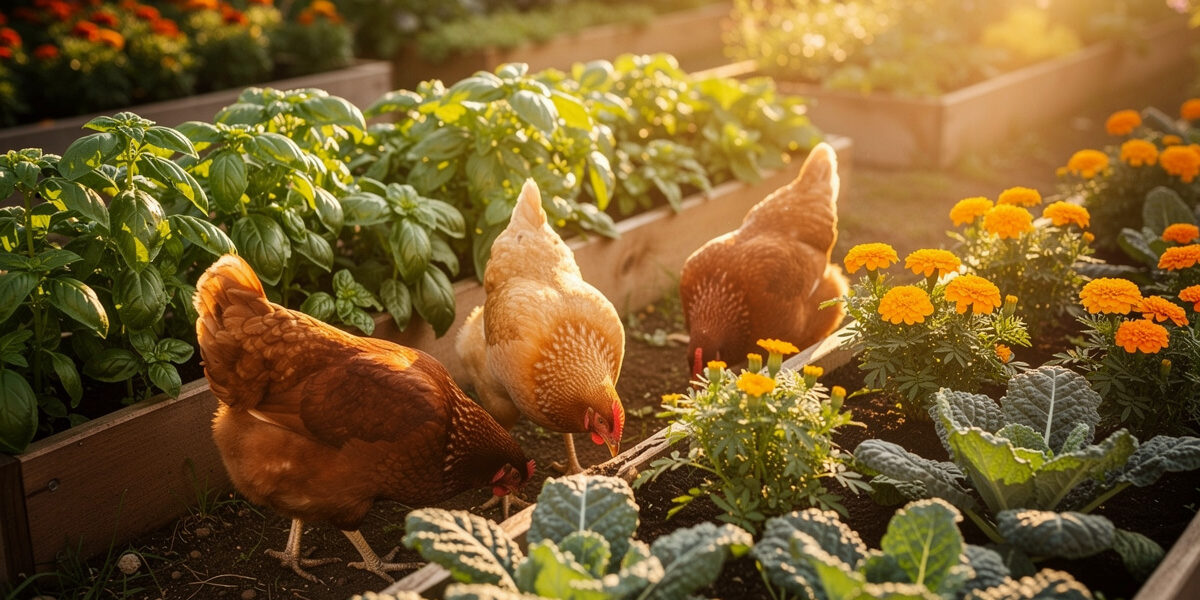
Kale, winter squash, sunflowers and soft herbs keep a flock foraging all season. But raw potatoes, avocado pits and dried beans can kill a 4 lb hen within hours. The list of right and wrong plants is short — learn both and a modest garden bed takes a real bite out of your flock’s daily feed bill.
This guide walks you through the plant choices I use in my garden-to-coop setup — the raised bed nearest the coop — why each one belongs in (or out of) the run, the quantities that are safe, and how to scale a herb-and-vegetable bed that genuinely offsets feed cost. The goal is not to replace a complete pellet ration — it is to let the garden carry part of the load, the way it already does for my kitchen.
Why Garden Plants Belong in a Chicken’s Diet
A laying hen eats roughly 1/4 pound (110 g) of feed per day. Supplementing part of that intake with fresh greens, herbs and kitchen scraps improves yolk colour and gives the flock the natural foraging behaviour that pellet-only diets suppress — as long as the treats stay modest and a complete, balanced ration still does the heavy lifting.
The catch: chickens lack the enzymatic tools many mammals use to process naturally occurring alkaloids, glycosides and cyanogenic compounds. A pig will shrug off a green potato; a 4 lb hen will not. The list below is filtered through that constraint, not through “what other animals eat”.
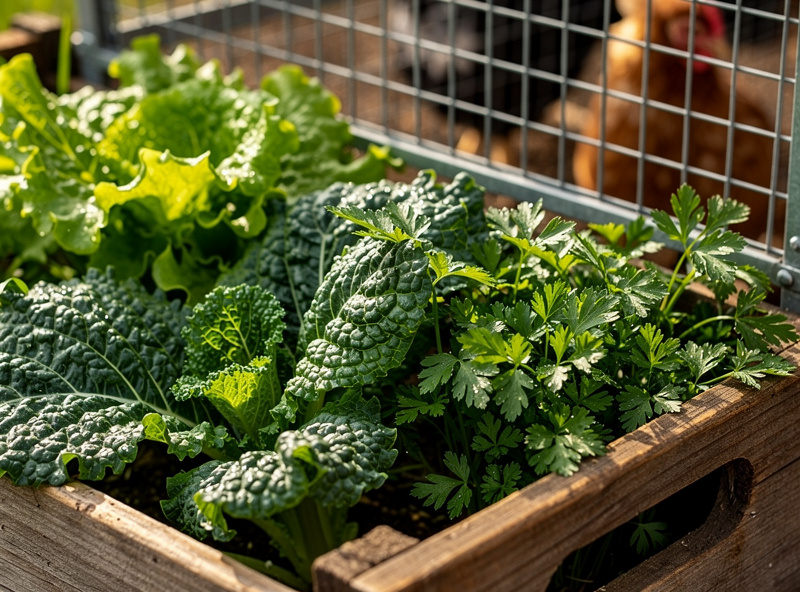
7 Garden Plants Chickens Love (and That You Can Grow Easily)
1. Leafy Greens — Kale, Chard, Lettuce, Spinach
The single most useful crop for a backyard flock. Hens will strip a kale leaf down to the midrib in seconds. Spinach should be limited to two small leaves per bird per day because of oxalic acid, but kale, chard and looseleaf lettuce can be fed daily without restriction. I grow a 4 ft by 8 ft kale-and-chard bed specifically for the run; one bed feeds my 6 hens through the entire growing season with weekly cuts. See my raised beds and planters guide for the bed dimensions I use.
2. Cucurbits — Squash, Pumpkin, Cucumber, Zucchini
Pumpkin and winter squash are the highest-value autumn crop for chickens. The flesh is rich in vitamin A, the seeds contain cucurbitacin (sometimes credited with mild anti-parasitic properties, though it is no substitute for a proper wormer), and a single 8 lb pumpkin will keep 6 hens busy for an afternoon. Slice the pumpkin in half, scoop nothing, and let the flock work it down to a clean shell. Zucchini gluts in July and August work the same way.
3. Brassicas — Broccoli, Cabbage, Brussels Sprouts
Hang a whole cabbage from the run roof at chicken-eye height with twine and you create what poultry keepers call a “cabbage tetherball” — entertainment plus nutrition. Broccoli leaves and stems (the parts most cooks discard) are dense with calcium and vitamin K, both of which contribute to eggshell formation. The same cabbage variety that fills my raised bed is the one that goes into my sauerkraut crock come autumn — the garden feeds more than just the hens.
4. Herbs — Oregano, Thyme, Mint, Parsley, Basil
Oregano essential oil has been studied in poultry as a natural alternative to antibiotic growth promoters. In a backyard context, growing a perennial oregano-and-thyme bed near the run gives hens daily access to the volatile oils that this research has looked at for gut health. Mint deters flies and rodents around the coop. My full guide to the herbs I grow for both the kitchen and the flock lives in the outdoor herb garden guide.
5. Sunflowers
Black-oil sunflower seeds (BOSS) are the highest-fat treat most keepers feed. Growing a 6 ft row of mammoth sunflowers along the south fence gives you 1-2 lb of seed per head come September, plus shade for the run during the hottest weeks. Hens eat the seeds, the leaves and eventually peck the dried head clean.
6. Berries — Strawberries, Raspberries, Blueberries
Berries are nature’s training treat. A handful of strawberries works as well as scratch grain for recall training, and the fresh greens add variety to their diet. The trick is netting: an unprotected strawberry bed is a flock buffet, not a harvest. Run a 1/2 inch hardware cloth tunnel over the bed if you free-range.
7. Marigolds and Calendula
Marigold petals are the cheapest legal yolk-colour booster on the market. The xanthophyll pigments in Tagetes and Calendula petals deepen yolks from pale yellow to deep orange in 7-10 days of regular feeding. Plant a single 4 ft row of French marigolds in the spring vegetable bed; deadhead petals into the run twice a week.
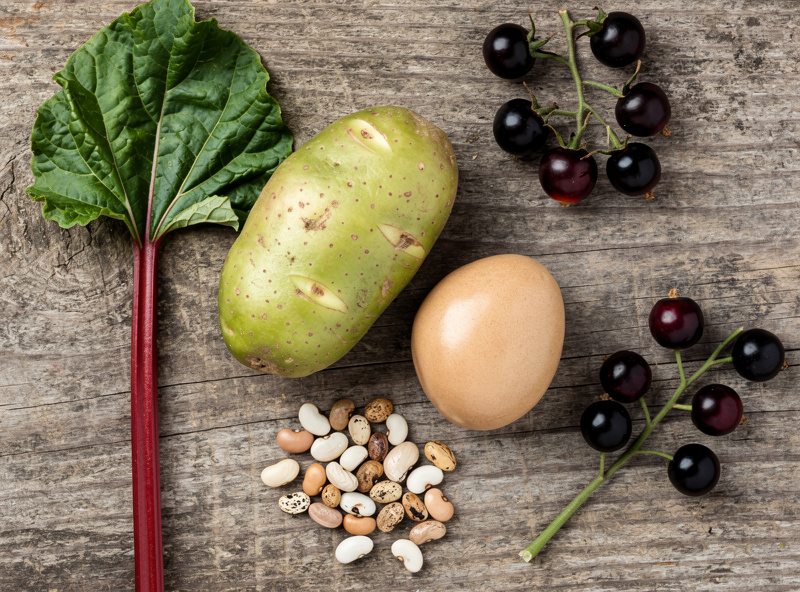
5 Garden Plants You Should Never Feed Chickens
1. Raw or Green Potatoes (and All Nightshade Greenery)
The green parts of potato plants — leaves, stems, sprouts and any potato that has turned green in the sun — contain solanine, a glycoalkaloid that causes neurological symptoms and can be fatal at relatively low doses for a 4 lb bird. Cooked potato flesh that is fully white is fine; everything else from the nightshade family (tomato leaves, pepper leaves, eggplant leaves) is a no.
2. Avocado Pit and Skin
The persin in avocado pits and skins targets cardiac muscle in birds. The flesh itself is borderline safe in tiny amounts, but the margin is small and the risk of pit access in a compost-fed scenario makes “no avocado, ever” the safer rule.
3. Dried or Raw Beans
Uncooked kidney beans, lima beans and most other dried legumes contain phytohaemagglutinin, a lectin that is acutely toxic to birds. Cooking destroys it; raw or dried does not. A spilled bag of dried beans in the run is the single most common preventable poisoning in backyard poultry.
4. Rhubarb Leaves
Rhubarb stalks are fine for humans; the leaves contain enough oxalic acid to crash a hen’s calcium balance and cause acute kidney damage. If you grow rhubarb, fence the bed and compost the leaves where the flock cannot reach.
5. Onions, Garlic Greens (in Quantity), and Anything Mouldy
Onions in volume cause haemolytic anaemia in chickens via thiosulphate. Small amounts of garlic are actually beneficial (commonly added to water for parasite resistance), but onion tops, scallion bulbs and chive flowers should not be a primary feed item. Mouldy bread, mouldy compost and mouldy garden waste are the other silent killer — aspergillus spores cause chronic respiratory disease that is hard to reverse.
Before you free-range anywhere new, it is worth reading a veterinary reference like the Merck Veterinary Manual’s poisonings-in-poultry overview. Treat the toxic-plant list the way a parent treats the household poison-control number.
How to Introduce Garden Scraps Safely
Three rules cover 95% of safe scrap feeding. First, never make scraps more than 25% of total daily intake — a complete layer ration still has to do the heavy lifting on protein and calcium. Second, introduce one new plant at a time so you can spot a bad reaction (lethargy, watery droppings, reduced laying). Third, always give scraps in the morning; dropping a pile of greens into the run at sunset attracts rats overnight. The first season I did this, I tossed whole kale plants — roots and all — straight into the run. The hens ignored the leaves completely and spent the afternoon scratching the root soil into a dust-bath crater. Now I strip leaves at the kitchen counter and carry only greens out to the coop.
For a flock of 4-6 hens, the practical rhythm is one large handful of mixed greens per bird in the morning, kitchen scraps after dinner (with the remainder removed before dark), and a whole-vegetable “puzzle” once a week — a half pumpkin, a hanging cabbage, a sunflower head. If you want to take the timing and portioning out of your hands entirely, the SmartCoopHQ guide to automatic chicken feeder types and schedules covers gravity, treadle and timed-dispense systems that pair well with a garden-to-coop forage rhythm. The key principle is the same in either case: treats and forage are extra, not the meal.
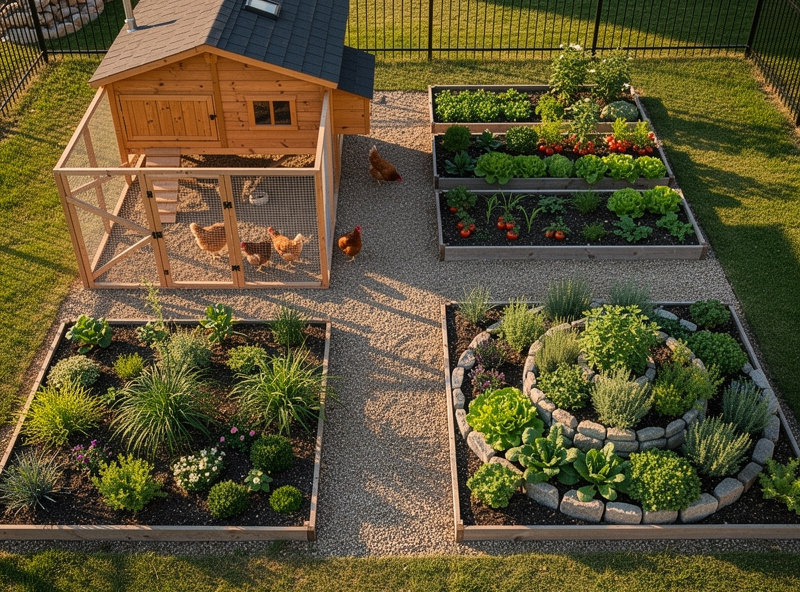
A Garden Layout That Feeds the Coop
The best garden-to-coop layouts treat the run as one zone of the garden, not a fortress at the back of it. I grow three concentric rings: an inner ring of high-traffic forage (kale, chard, herbs) within 10 ft of the run gate; a middle ring of cucurbits and brassicas that can spare leaves and outer fruit; and an outer ring of berry bushes and sunflowers that the flock only reaches under supervision.
Soil is the link that ties the loop together. Chicken manure composted for at least six months is one of the highest-quality garden amendments available — but raw manure burns roots. The full composting protocol, including the carbon-to-nitrogen ratios that prevent the smell most keepers struggle with, is in my soil and compost guide. Pair that with my best compost for the vegetable garden recommendations and the tomato companion planting guide for varieties that won’t be devastated if a hen escapes.
If I were starting a garden-to-coop bed from scratch tomorrow, I would plant the kale and chard first — six starts in a 4-by-8 bed — and let everything else follow from there. The oregano, the sunflowers, and the pumpkin patch all build on the leafy-green base. In a short Nordic season I lean hardest on kale and chard precisely because they keep cutting well into the cold weeks after the tomatoes and squash have given up, which is exactly when the flock most appreciates something green that did not come out of a bag. That single bed is the difference between chickens that forage all day and chickens that stand at the run fence waiting for pellets.
Frequently Asked Questions
What plants do chickens love most?
Leafy greens (kale, chard, lettuce), winter squash and pumpkin, brassicas like cabbage and broccoli, soft herbs (oregano, thyme, parsley), sunflower seeds, berries, and marigold petals. These deliver the highest nutrition-per-square-foot in a small backyard garden.
How much garden produce can chickens safely eat per day?
Roughly 15 to 25 percent of total daily intake. For a 4 pound hen eating 0.25 pounds of feed per day, that is about 1 to 2 ounces of fresh plant matter per bird, given in two small servings rather than one large pile.
Are tomatoes safe for chickens?
Ripe red tomato fruit is safe in small amounts. Tomato leaves, stems and unripe green tomatoes contain solanine and tomatine and should never be fed. Always remove vines and clippings from the run.
Can chickens eat avocado?
No. The pit and skin contain persin, which damages cardiac muscle in birds. The flesh has a small amount too, and the margin between safe and toxic is narrow enough that the safer rule is no avocado of any part, ever.
Do garden herbs really change egg quality?
Yes. Marigold and calendula petals deepen yolk colour within 7 to 10 days. Oregano has been studied as an antibiotic alternative in poultry research. Effects are real but require regular feeding, not occasional sprinkles.
How do I keep chickens from destroying my whole garden?
Use the three-ring layout: forage crops nearest the run, sacrifice crops in the middle, and netted berries plus sunflowers furthest out. Half-inch hardware cloth over berry beds and a fenced compost area solve 90 percent of the destruction problem.
Knowing which plants are safe around the coop is as important as knowing which ones to keep away. I keep a printed list taped inside the feed bin, and every new volunteer plant near the run gets identified before the hens have a chance to sample it.