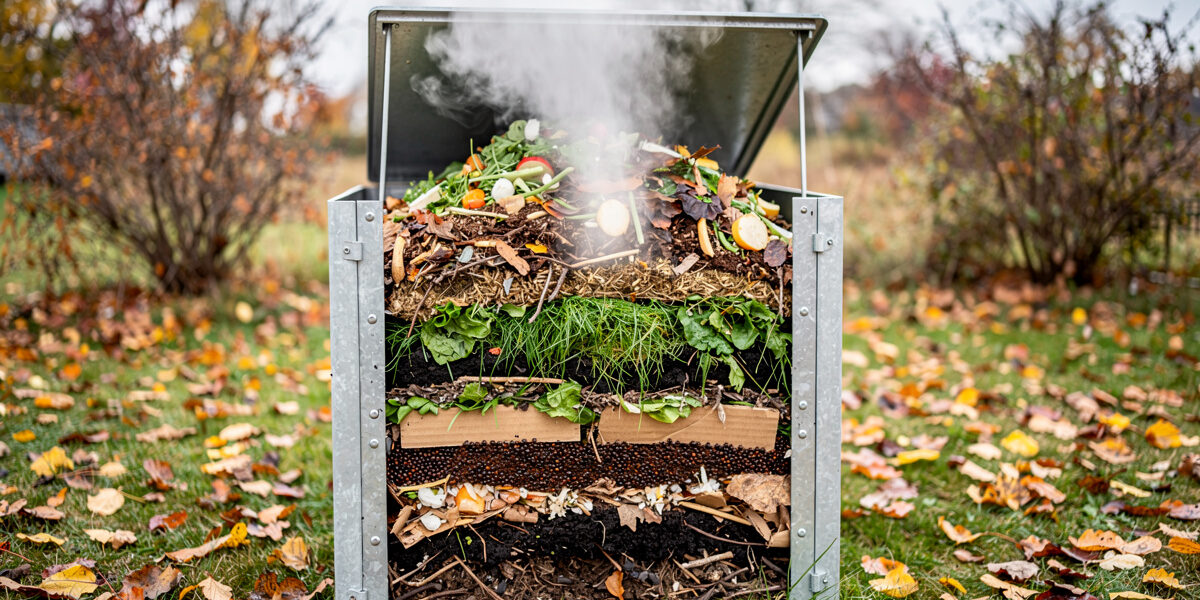
Compost is the foundation of vegetable garden fertility. It adds beneficial microorganisms that unlock soil nutrients, improves soil structure for better drainage and aeration, and provides slow-release nutrition that feeds plants throughout the growing season. Vegetable gardens that get an annual compost amendment consistently outproduce the same beds left unfed, season after season. This guide covers compost types, application rates, and techniques specific to vegetable gardens.
As an Amazon Associate I earn from qualifying purchases.
Why Compost Transforms Vegetable Gardens
Compost contains millions of bacteria, fungi, and actinomycetes per gram that break down organic matter into plant-available nutrients. These microorganisms create humus, a stable form of organic matter that improves soil structure for 5-10 years. Humus acts as a sponge, holding many times its own weight in water while also providing cation exchange sites that retain nutrients against leaching.
Synthetic fertilizers provide immediate nutrition but degrade soil health over time. Gardens relying solely on synthetic fertilizers develop compacted subsurface layers, declining water infiltration, and decreasing biological activity. Compost reverses this decline by feeding the soil food web that makes nutrients available to plant roots in balanced, sustained amounts.
Hot Composting vs Cold Composting
Hot composting reaches temperatures of 130-160F and produces finished compost in 30-90 days. This rapid decomposition kills weed seeds and pathogens while preserving beneficial microorganisms. Achieving hot temperatures requires a carbon-to-nitrogen ratio of 25-30:1, adequate moisture (50-60% moisture content), and regular turning every 3-4 days to provide oxygen.
Cold composting simply layers organic materials and lets them decompose over 6-12 months. This slower process requires less labor but does not reach temperatures high enough to kill weed seeds or aggressive perennial roots like bindweed or quackgrass. Cold compost works well for leaves and yard waste but requires more attention if using kitchen scraps that might attract pests.
Carbon-to-Nitrogen Ratio Explained
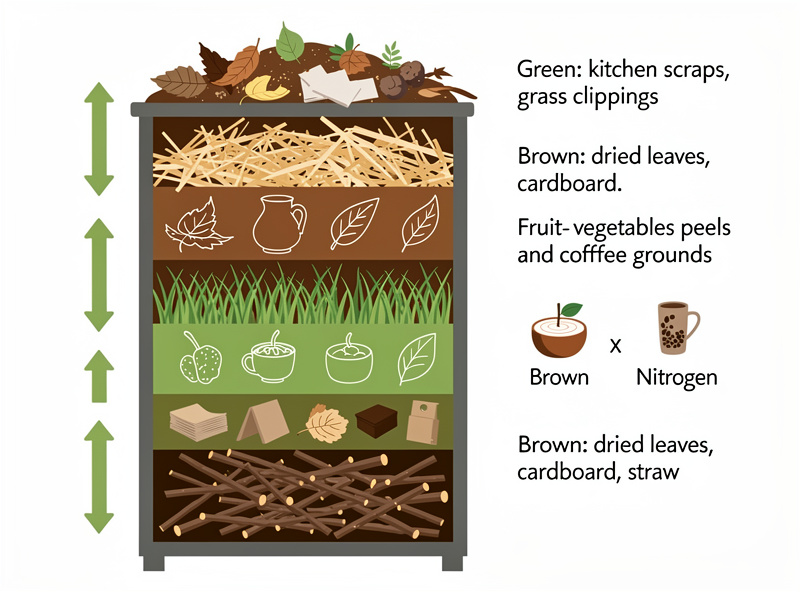
The carbon-to-nitrogen ratio determines decomposition speed and nitrogen availability. Materials with high carbon content (leaves, straw, cardboard) decompose slowly and can tie up nitrogen if mixed in excess. Materials with high nitrogen content (kitchen scraps, grass clippings, manure) decompose quickly and heat up piles fast.
Achieve the ideal 30:1 ratio by combining roughly 2-3 parts brown materials (by volume) to 1 part green materials — the balance Cornell’s composting research identifies as the sweet spot for microbial activity. Dry leaves have a C:N ratio of 60-80:1. Straw is 40-80:1. Kitchen scraps are 15-25:1. Grass clippings are 15-25:1. Coffee grounds are 20:1. Layer materials in your bin, keeping each layer 4-6 inches thick for proper aeration and moisture distribution.
Troubleshooting a Pile That Refuses to Cook
Every composting problem I have ever had came down to one of four causes, and after enough seasons of poking thermometers into reluctant piles I can usually diagnose by smell and squeeze alone. A pile that just sits there cold is almost always too small — below roughly a cubic metre there simply is not enough mass to insulate the microbial heat, which is the fundamental handicap of small-space composting and the reason my balcony-scale piles never hit true hot-compost temperatures until I consolidated everything into one bin instead of two half-full ones.
The other three are moisture and balance problems. Squeeze a handful: if nothing dampens your palm, the pile is too dry and the microbes have gone dormant — water it as you turn. If it drips, it is waterlogged and drifting anaerobic, which announces itself with a sour, swampy stink; fork in dry browns like shredded cardboard or autumn leaves and turn for air. A sharp ammonia smell is the opposite signal — nitrogen surplus from too many greens, typically a big dump of grass clippings — and more browns plus a turn lets the excess gas off and rebalances the ratio. None of these failures ruin anything. Compost is the most forgiving process in the garden; the pile always gets there eventually, the fixes just decide whether “eventually” means August or next June.
Best Compost for Vegetables
Not all compost is equal for vegetable production. Fresh manure-based compost may contain salts and pathogens. Wood chip compost ties up nitrogen during decomposition. The best vegetable garden compost comes from mixed sources: yard waste, kitchen scraps, and some animal manure aged at least 6 months.
Finished compost should be dark and crumbly, with an earthy smell. If it still looks like original materials, it is not ready. Immature compost can harm plant roots and introduce pathogens. For raised bed gardens, apply 2-3 inches of finished compost annually and work it into the top 6 inches of soil.
The Contaminated-Compost Trap: Persistent Herbicides
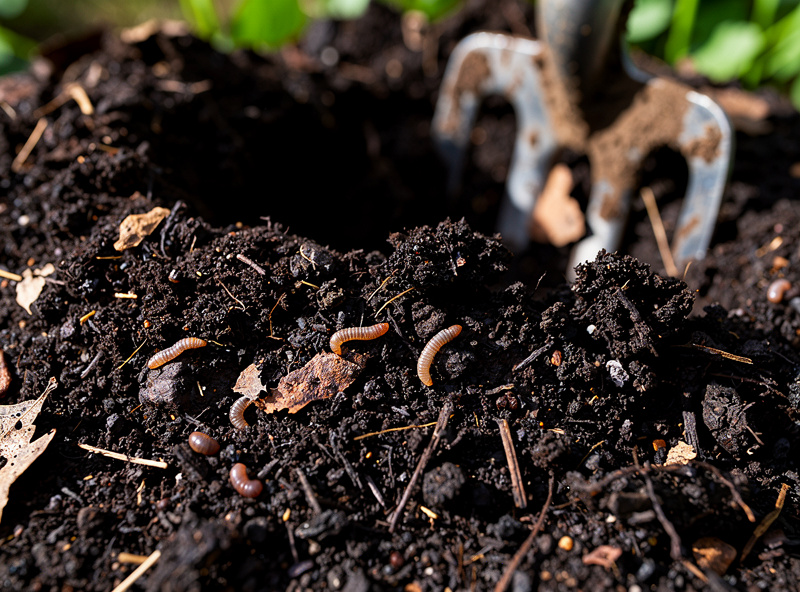
The scariest compost failure is one you cannot see, smell, or fix by turning: persistent herbicide carryover. A family of pasture herbicides — aminopyralid and its relatives — survives digestion in grazing animals and survives the composting process itself, so it rides into vegetable gardens inside apparently well-rotted horse or cattle manure, contaminated straw, and even grass clippings from treated lawns. NC State Extension’s herbicide carryover guide documents the damage pattern: tomatoes, beans, peas, and lettuce respond with twisted, cupped, fern-like new growth, poor germination, and misshapen fruit, and the residues can stay active in a manure pile for years rather than weeks.
This matters double for small-space growers, because we buy our inputs instead of producing them. My rule since learning about this: any new batch of manure compost or bagged product I have not used before gets a bioassay before it goes near the beds. The test costs nothing — plant a few pea or bean seeds in pots of the suspect compost and a few in known-good mix, and compare after two to three weeks. Distorted, cupped seedlings in the test pots mean that batch becomes fill for ornamental pots, never food beds. Straw mulch deserves the same suspicion, since treated hayfields are a common source. It sounds paranoid until the first time you watch someone’s entire tomato season collapse from one trailer-load of free stable manure.
Application Rates for Vegetable Gardens
General application rate is 1 inch of compost per 6 inches of soil depth, or approximately 3 cubic yards per 1,000 square feet annually. For raised beds, apply 2-3 inches annually as a top dressing or soil amendment. For in-ground gardens, apply 1-2 inches and work it into the top 8-12 inches of soil before planting.
Excessive compost creates problems. More than 4 inches applied at once can overwhelm soil biology and temporarily lock up nitrogen. High compost soils may have excessive phosphorus that inhibits micronutrient uptake. Herbs generally need less compost than vegetables, so adjust application rates based on what you are growing.
| Compost Type | NPK Ratio | Best Use | Curing Time |
|---|---|---|---|
| Yard Waste | 1-1-1 | General soil building | 3-6 months |
| Kitchen Scraps | 2-1-2 | Nitrogen boost | 2-4 months |
| Manure | 1-1-1 to 3-1-2 | Fruiting vegetables | 6-12 months |
| Vermicompost | 5-1-3 | Seedlings, containers | Ready immediately |
Vermicomposting: Worm Castings for Vegetables
Vermicomposting uses red wiggler earthworms to process kitchen scraps into worm castings, one of the most nutritionally dense soil amendments available. Worm castings hold several times the plant-available nitrogen, phosphorus, and potassium of ordinary garden soil, along with a rich load of beneficial microbes that help the soil food web tick over.
A worm bin processes roughly 1 pound of scraps per square foot of bin surface per week once the population matures. For a 4-square-foot bin, expect to process about 4 pounds of kitchen waste weekly. Worm castings are ready when they are dark, crumbly, and no longer recognizable as original materials — my worm castings guide covers how I harvest and use them. They work exceptionally well in container gardens where they provide balanced nutrition without salt buildup.
Compost Timing for a Short Growing Season
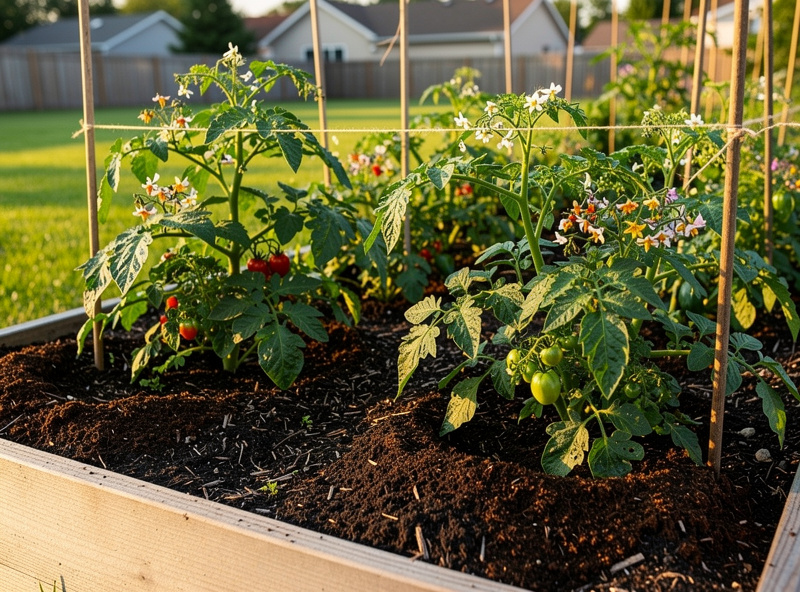
In a climate where the frost-free season runs only about 16 weeks, the compost has to be ready when the plants need it and not a month later. A hot pile that reaches around 55°C within the first week finishes in 8 to 10 weeks, which means a pile started in May is ready by late July — exactly when the tomatoes want a mid-season boost. I run two piles: one started in May for July-August feeding, and one started in July that overwinters and finishes for the following spring.
Composting Through the Nordic Winter
From November to March my outdoor pile is a frozen monument. Decomposition does not stop entirely — the core of a big, insulated pile keeps ticking over — but at balcony scale the biology effectively hibernates, and no amount of turning restarts a pile at -10°C. The trick is to stop fighting it and split the operation: outdoors goes dormant, and the worm bin takes over inside.
My winter loop runs through that bin. Red wigglers process the kitchen scraps at room temperature all winter, the castings feed the seed-starting and container mixes in March, and nothing goes to waste during the five months the pile is frozen. Scraps that exceed the bin’s appetite still go out to the pile — freezing actually helps, since burst cell walls decompose faster in spring — but they get buried under a cap of autumn leaves I stockpile in sacks every October. Those bagged leaves are the most valuable thing I collect all year: guaranteed browns for balancing the nitrogen-heavy spring surge, insulation for the pile, and bedding for the worms. When the thaw comes, the winter’s frozen additions plus a thick brown layer plus warming weather produce the fastest, hottest compost start of the season — the May pile I mentioned above owes most of its speed to material that spent the winter freeze-cycling.
Composted Manure vs Plant-Based Compost
Composted manure is the most common bagged compost and it works for heavy feeders like tomatoes and squash, but the salt content builds up faster in container soil than it does in open garden beds. I use plant-based compost made from kitchen scraps and garden waste in my containers because the salt load is negligible and the microbial diversity feels broader. The tomatoes in plant-based compost may put on slightly less leafy bulk, but the fruit is just as good, and the soil recycles cleanly into the following year without needing to be flushed of accumulated salts.
Frequently Asked Questions
What is the best compost for vegetable gardens?
Mixed-source compost from yard waste, kitchen scraps, and aged manure produces the most balanced nutrition for vegetables. Look for dark, crumbly compost with an earthy smell. Avoid fresh manure compost or compost that still shows recognizable materials.
How much compost should I add to my vegetable garden?
Apply 2-3 inches of compost annually to raised beds, working it into the top 6 inches of soil. For in-ground gardens, apply 1-2 inches and work into the top 8-12 inches. This rate maintains soil organic matter at 5-7 percent.
Can I use fresh compost on vegetables?
Fresh or immature compost can harm plant roots and introduce pathogens. Only apply fully finished compost that is dark, crumbly, and no longer shows original materials. If compost smells sour or ammonia-like, it needs more curing time.
What is the carbon to nitrogen ratio for composting?
The ideal ratio is 30 parts carbon to 1 part nitrogen. Achieve this by combining 3 parts brown materials like dried leaves or straw with 1 part green materials like kitchen scraps or grass clippings by volume.
How long does hot composting take?
Hot composting produces finished compost in 30-90 days when the pile reaches 130-160F, has a 30:1 carbon-to-nitrogen ratio, 50-60 percent moisture, and is turned every 3-4 days. Cold composting takes 6-12 months.
Is worm casting better than regular compost?
Worm castings are more nutritionally concentrated than regular compost, with higher available nitrogen, phosphorus, and potassium. They also contain beneficial microorganisms and plant growth hormones. Use worm castings for seedlings and containers, regular compost for garden beds.
Can I add compost to my garden every year?
Yes, annual compost application is the foundation of sustainable vegetable gardening. Apply 2-3 inches each spring to maintain soil organic matter and replace nutrients consumed by the previous crop. Over 3-5 years, this builds soil quality dramatically.