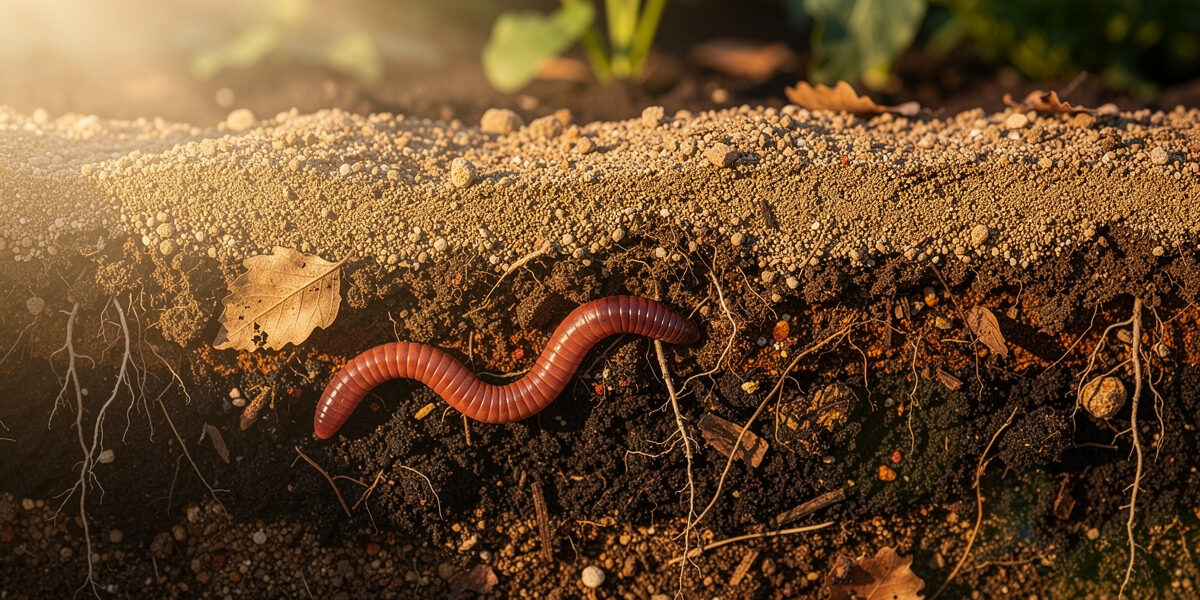
Get the soil right and everything else — watering, feeding, pest resistance — gets easier. The ideal vegetable growing medium contains 5-7% organic matter by volume, drains at 1-2 inches per hour, and sits in a pH range of 6.0 to 7.0 where all primary nutrients stay available to roots.
I grow in containers on a balcony through short Nordic seasons, and the soil mix is the one thing I have learned you cannot cheap out on. Here is everything I have figured out about soil and compost — from pH testing and amendments to the worm bin that feeds my containers — broken down into sections you can use whether you are filling raised beds, mixing potting soil for containers, or maintaining houseplants indoors.
As an Amazon Associate I earn from qualifying purchases.
Understanding Soil Types: The Foundation of Plant Health
Soil is classified into three primary types based on particle size: sand, silt, and clay. Sandy soil drains quickly but does not retain nutrients well. Clay soil holds moisture and nutrients but can become compacted. Silt falls between the two. Most garden soils are a combination of all three, often called loam when balanced correctly. The ideal garden loam contains 40% sand, 40% silt, and 20% clay, providing both drainage and nutrient retention.
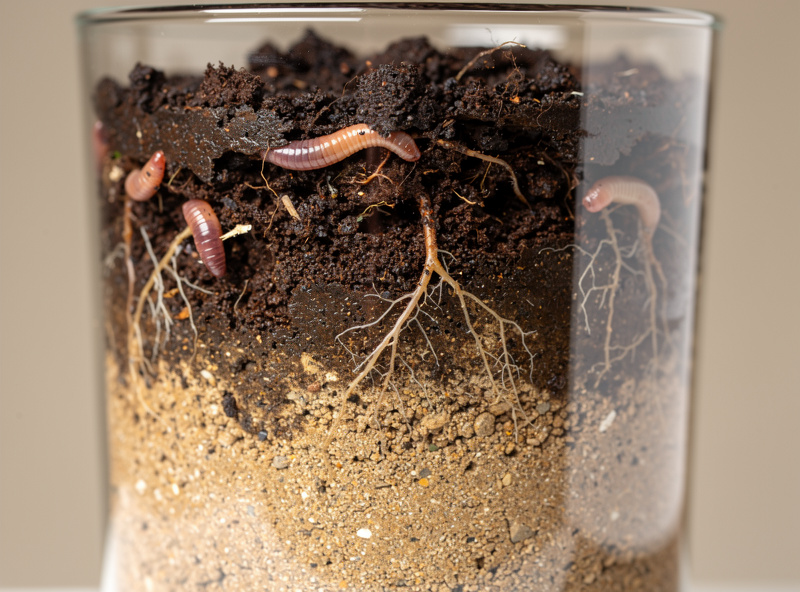
Understanding your soil type helps you amend it correctly. Clay soil amended with coarse sand and compost becomes workable within 2-3 seasons. Sandy soil improved with vermiculite and organic matter holds noticeably more water between waterings. You can determine your soil type with a simple jar test: fill a quart jar one-third full with soil, add water to the top, shake vigorously, and let it settle for 24 hours. The sand layer settles first at the bottom, followed by silt, with clay remaining suspended longest on top.
On my balcony I have learned this the hard way: the same bagged mix that grew perfect lettuce produced twisted, forked carrots because it was too dense for taproots. Different plants thrive in different soil types. Root vegetables like carrots and potatoes perform best in sandy loam because the loose soil allows roots to expand without resistance. Heavy feeders like tomatoes and squash prefer clay loam that retains moisture and nutrients throughout the growing season. Leafy greens like lettuce and spinach thrive in silt loam with its balanced moisture retention and drainage.
Soil pH and Nutrients: The Chemical Foundation
Soil pH measures acidity on a scale from 0 to 14, with 7.0 being neutral. Most vegetables thrive between pH 6.0 and 7.0, where nutrients are most available. When soil drops below pH 6.0, plants struggle to absorb nitrogen, phosphorus, and potassium even if these nutrients are present. Above pH 7.5, iron, manganese, and zinc become less accessible despite their presence in the soil.
Three primary nutrients drive plant growth: nitrogen (N), phosphorus (P), and potassium (K). Nitrogen fuels leafy green growth and is often the first nutrient depleted in heavily planted soils. Phosphorus supports root development and flowering. Potassium strengthens overall plant health and disease resistance. A standard vegetable garden fertilizer with an NPK ratio of 10-10-10 provides balanced nutrition, while tomatoes benefit from slightly higher phosphorus (5-10-10) to support fruit development.
Secondary nutrients matter equally for optimal plant health. Calcium strengthens cell walls and prevents blossom end rot in tomatoes. Magnesium is the central atom in chlorophyll molecules, making it essential for photosynthesis. Sulfur contributes to protein synthesis and helps plants resist cold temperatures. Regular composting naturally replenishes these secondary nutrients as organic matter decomposes into humus.
Organic Matter and Compost: The Garden Black Gold
Organic matter is the single most important amendment for any soil type. It improves drainage in clay soil by creating spaces between clay particles. It increases water retention in sandy soil by acting as a sponge. It provides a food source for beneficial soil microorganisms that convert nutrients into forms plants can absorb. Soil in the 5-7% organic matter range holds water noticeably better than soil sitting at 2-3% — you feel the difference in how many days a container goes between waterings.
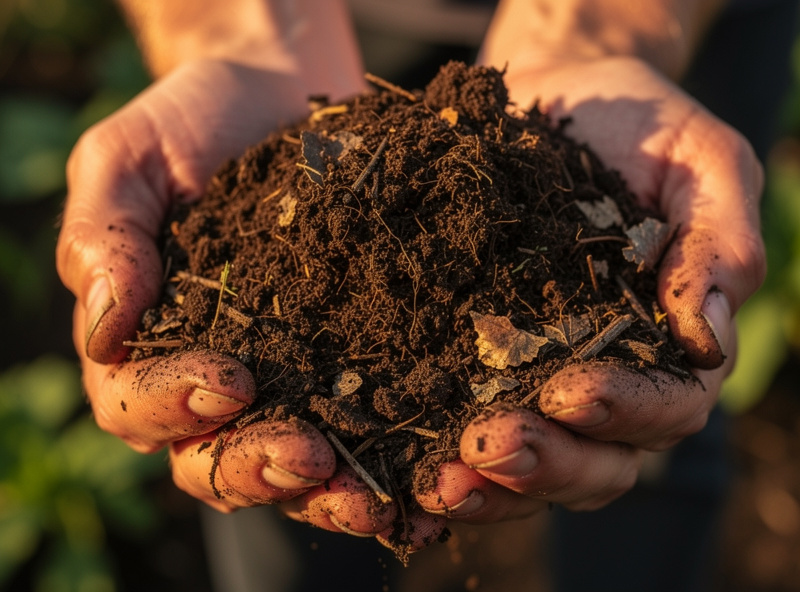
Compost is decomposed organic matter that adds beneficial microorganisms to soil while improving structure. A cubic foot of compost covers 12 square feet at a 1-inch depth. For raised beds, add 2-3 inches of compost annually, mixing it into the top 6 inches of soil. For container gardens, mix one part compost with two parts potting soil to create a nutrient-rich growing medium that drains well while retaining necessary moisture.
The carbon-to-nitrogen ratio in compost affects decomposition speed and nitrogen availability. Materials with high carbon content (leaves, straw, cardboard) decompose slowly and can temporarily tie up nitrogen if mixed in excess. Materials with high nitrogen content (kitchen scraps, fresh grass clippings, coffee grounds) decompose quickly and heat up the pile faster. Aim for a 30:1 carbon-to-nitrogen ratio for optimal hot composting conditions that reach 130-160F within 3-5 days.
Creating the Perfect Potting Mix for Containers
Potting mix differs fundamentally from garden soil. Garden soil contains native pathogens and weed seeds, compacts in containers, and drains poorly when confined — University of Maryland Extension explains why containers need a soilless growing medium rather than field soil. Quality potting mix is sterile, lightweight, and specifically formulated for container drainage. The best potting mixes contain peat moss or coco coir for moisture retention, perlite or pumice for drainage, and compost or worm castings for nutrition.
For general vegetables and herbs in containers, mix 2 parts peat moss or coco coir, 1 part perlite, and 1 part compost. This creates a mix that holds moisture without becoming waterlogged. For succulents and cacti, use 2 parts potting soil, 1 part coarse sand, and 1 part perlite. This fast-draining mix prevents root rot, which kills more container succulents than any other cause. Container gardening requires different soil strategies than traditional in-ground growing.
Coco coir has emerged as a sustainable alternative to peat moss. It has similar water retention properties but with a near-neutral pH (5.5-6.5) and no ecological harvesting concerns. Coco coir also has higher lignin content than peat, which helps it maintain soil structure longer. However, coco coir has lower cation exchange capacity, meaning it does not hold nutrients as effectively. Supplementing with worm castings or compost addresses this limitation.
On a balcony, weight is the constraint nobody talks about. Potting mix is light in the bag but heavy once saturated, and a 10-gallon fabric pot of soaked soil can easily push 40 pounds. I run coir-based mixes instead of peat-based ones partly because they shed water more freely after a heavy rain — meaning less standing weight on the balcony deck. Perlite and pumice matter here too: a mix with 25% perlite by volume is noticeably lighter than one with 10%. When I fill a long planter box, I will mix in extra perlite and a handful of horticultural pumice at the bottom third — it does not float up like perlite and keeps the base layer from turning into a waterlogged brick by August.
Complete Soil Amendments Guide: What to Add and When
Soil amendments modify soil characteristics beyond basic nutrition. Lime raises pH in acidic soils, with 5 pounds per 100 square feet raising pH by approximately 0.5 points. Sulfur lowers pH in alkaline soils, with 1 pound per 100 square feet lowering pH by 0.1 points. Always make pH adjustments gradually over multiple seasons to avoid shocking plants.
Other key amendments include blood meal (high nitrogen, quick-acting), bone meal (slow-release phosphorus for root development), and greensand (potassium and micronutrients). Alfalfa meal provides a balanced NPK ratio of 5-1-2 while adding triacontanol, a natural growth stimulant. Kelp meal adds potassium and 60+ trace minerals that support plant immune function.
Rock phosphate provides slow-release phosphorus over 3-5 years, making it ideal for perennial gardens and fruit trees. Gypsum loosens clay soil without changing pH, adding calcium without alkalizing. For raised bed gardens, combine multiple amendments to create a balanced growing medium that supports intensive planting.
Raised Bed Soil: Building the Perfect Growing Environment
Raised beds offer superior drainage, earlier spring warming, and easier access for planting and harvesting. However, they require more soil than traditional in-ground gardens, making it expensive to fill them entirely with premium potting mix. The most cost-effective approach combines a base layer of native soil or rough organic matter with a premium growing mix in the upper 12 inches where most plant roots concentrate.
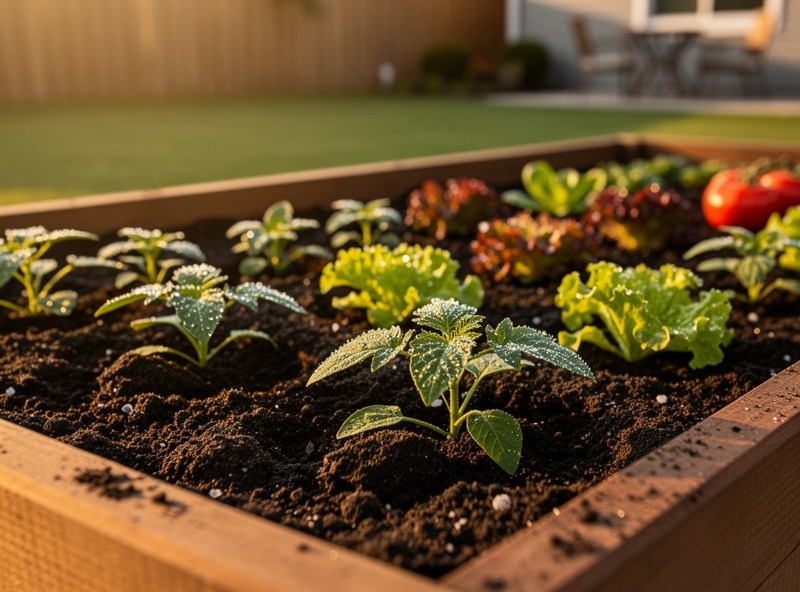
The Mel Mix formula, popularized by square foot gardening, combines equal parts of three ingredients: vermiculite, peat moss, and compost. This soilless mix weighs less than traditional garden soil, retains moisture exceptionally well, and provides excellent aeration for root development. For a 4×8-foot raised bed at 12 inches depth, you will need approximately 1 cubic yard of mix — a real investment compared to cheap bagged topsoil, but it produces dramatically better results.
Deep raised beds (18-24 inches) accommodate root vegetables and perennial crops more effectively than standard 12-inch beds. Stacked raised beds work well for vertical gardening setups where you want to maximize production in a small footprint. Fill the bottom 12 inches with large organic matter (logs, branches, leaves) that will decompose over 3-5 years, adding fertility while reducing the amount of expensive potting mix needed.
Indoor Plant Soil: Customizing Mixes for Houseplants
Indoor plants evolved in forest floors and jungle understories with different soil conditions than outdoor gardens. Tropical houseplants like monsteras and philodendrons need chunky, fast-draining mixes that do not stay wet — saturated indoor soil is the number one cause of fungus gnat infestations, as larvae thrive in persistently damp potting mix. Aroid species and tropical epiphytes need chunky, fast-draining mixes that mimic their natural conditions on forest floors and tree trunks — bark, leaf litter, and air pockets, not dense peat. Succulents and cacti need mineral-heavy mixes that dry completely within days. Understanding these needs prevents the most common houseplant killer: overwatering combined with poor drainage.
The right soil mix also matters for indoor fruiting crops — my indoor pepper growing guide covers container depth and potting mix needs for a crop that cycles from seedling to harvest entirely indoors. Aroid mix for tropical plants combines 40% orchid bark, 20% perlite, 20% coco coir, and 20% worm castings. This creates large air pockets that orchid-type roots need while retaining modest moisture. Succulent and cactus mixes use 50% coarse sand or pumice, 25% potting soil, and 25% perlite or pumice. This mineral-dominant mix drains in 24-48 hours, preventing the root rot that occurs when succulents sit in wet soil for days.
Orchid bark serves as the primary component for epiphytic plants like phalaenopsis orchids, cattleya, and vanda. Orchid bark comes in multiple grades: fine grade (1/4 inch) suits seedlings and small plants, medium grade (1/2 inch) works for most mature orchids, and coarse grade (3/4 inch) provides excellent drainage for plants that want to dry quickly between waterings.
Soil Testing: Know What Your Garden Actually Needs
Professional soil tests provide precise nutrient levels and pH recommendations for less than the cost of a couple of premium soil bags. University extension services offer testing with customized advice for your region. Home soil test kits are cheaper still and provide approximate readings sufficient for most gardeners. Test soil every 2-3 years, or annually if you are actively amending and want to track changes.
The ideal vegetable garden soil contains 30-50 ppm nitrogen, 30-50 ppm phosphorus, 150-250 ppm potassium, and 2,000-5,000 ppm calcium. Magnesium should be 100-200 ppm, and iron should be 20-100 ppm. These ranges vary by plant species, so adjust based on what you are growing. Heavy feeders like tomatoes and corn deplete soil faster than light feeders like herbs and root vegetables.
I test my containers once a year in early spring before I plant anything — it is the one habit that has saved me more frustration than any other. Interpreting soil test results requires understanding the relationships between nutrients. High phosphorus can lock out zinc and iron. Excessive potassium interferes with magnesium uptake. Adding nitrogen when phosphorus is low results in lush green growth with poor flowering and fruiting. Herbs generally require less fertility than vegetables and can tolerate wider pH ranges, making them forgiving crops for beginning gardeners working with imperfect soil.
Seasonal Soil Care: Maintaining Fertility Year After Year
Soil fertility depletes as plants absorb nutrients throughout the growing season. Fall is the ideal time to rebuild soil, as decomposition happens slowly over winter, creating bioavailable nutrients for spring planting. Apply 2-3 inches of compost annually in fall, allowing earthworms and frost action to work it into the top 6-8 inches of soil.
Cover crops improve soil over winter by preventing erosion, fixing nitrogen, and adding organic matter when cut and turned under in spring. Winter rye adds organic matter and prevents compaction. Crimson clover fixes roughly 70-150 pounds of nitrogen per acre, according to Michigan State University Extension. Austrian winter peas add nitrogen and create looser soil through their deep taproots. Cut cover crops at ground level 2-3 weeks before planting to allow residue to decompose without tying up nitrogen.
Spring soil preparation differs from fall work. Avoid working soil when wet, as compaction damages soil structure for months. Wait until soil crumbles easily in your hand rather than forming a ball. Urban gardeners working with limited space often use containerized cover crops or vermicomposting to maintain soil fertility without access to large garden areas.
What Happens to Container Soil Through a Nordic Winter
Freeze-thaw cycling chews through container soil faster than anything the growing season throws at it. In a Nordic climate where the temperature swings between -10°C and +3°C half a dozen times each winter, the water in the soil expands and contracts repeatedly, shattering soil aggregates and breaking down the crumb structure that took all summer to build. By March, last year’s potting mix is often dusty and hydrophobic — it repels water instead of absorbing it.
I have learned two things about overwintering containers on a balcony. First, if the pot is going to stay outside, I empty it into a storage bin and keep it dry through the freeze cycles — wet soil freezing in a container can crack even thick plastic pots, and the constant expansion cycles turn the medium into a dense, airless block by spring. Second, when I bring containers indoors to overwinter, I refresh the top third with fresh coir and compost before the first frost, because indoor heating through the dark months dries pots from the top down and a fresh layer of coir holds moisture longer near the surface where shallow-rooted winter greens need it. A soil moisture meter is worth its weight through winter — what looks dry on the surface can still be soaking three inches down where roots are actually sitting.
The compost pile also behaves differently in a Nordic winter. My outdoor hot pile freezes solid on the outside from December through February, but the core can still maintain 40-50°C if I insulate the sides with straw bales and keep adding kitchen scraps to the center. The worm bin, kept indoors on the kitchen counter, becomes the primary composting route through the dark months — the outdoor pile is essentially in cold storage until April. Hot composting in a cold climate rewards a slightly different approach than the standard US/UK guides assume.
The compost that finishes in October and freezes through winter is surprisingly usable by April. The freeze-thaw cycles break down any remaining coarse material, and what comes out of the bin in spring is finer and more uniform than the compost that went in. A 5-gallon bucket of overwintered compost refreshes the container soil on the entire balcony with enough left over to side-dress the tomato pots in July.
Composting 101: Turning Waste into Garden Gold
Composting transforms kitchen scraps and yard waste into nutrient-rich soil amendment — and it is the loop that connects my kitchen to my containers. Successful composting requires a 30:1 carbon-to-nitrogen ratio, adequate moisture (like a wrung-out sponge), and regular turning to provide oxygen. Carbon-rich brown materials include dry leaves, straw, and cardboard. Nitrogen-rich green materials include kitchen scraps, fresh grass clippings, and coffee grounds.
Hot composting reaches 130-160F and produces usable compost in 30-90 days. Layer browns and greens in equal parts by volume, keep the pile moist, and turn it every 3-4 days. Cold composting simply layers materials and waits 6-12 months for decomposition. While slower, cold compost requires less effort and produces excellent results for raised beds and mulching.
Vermicomposting uses red wiggler earthworms to process kitchen scraps into worm castings, one of the most nutrient-dense soil amendments available. A worm bin turns scraps into finished castings faster than a cold outdoor pile and works year-round indoors. Worm castings hold several times the plant-available nitrogen, phosphorus, and potassium of the ordinary soil the same material would have become.
I have run a worm bin on my kitchen counter through two Nordic winters now, and the real skill is moisture management. A bin that is too wet goes anaerobic and smells like ammonia — the fix is shredded cardboard and a day with the lid cracked open. Too dry and the worms slow down to near-dormancy. The sweet spot is the consistency of a wrung-out sponge: when I squeeze a handful of bedding and a few drops bead between my fingers, the bin is exactly where it should be. I feed my worm bin kitchen scraps roughly twice a week — coffee grounds, vegetable peels, crushed eggshells — and harvest castings every 3 months. A handful of castings per 5-gallon container at planting time is the single amendment I will not skip. The plants show it in greener new growth and better fruit set, and I have never once burned a plant with castings the way I have with concentrated bottled fertilizers.
Soil Type Comparison
| Soil Type | Best For | pH Range | Key Amendments | Drainage |
|---|---|---|---|---|
| Sandy Loam | Root vegetables, carrots, potatoes | 6.0-7.0 | Compost, peat moss | Fast |
| Clay Loam | Brassicas, beans, squash | 6.5-7.5 | Coarse sand, compost | Slow |
| Silt Loam | Tomatoes, peppers, leafy greens | 6.0-7.0 | Compost, perlite | Medium |
| Potting Mix | Containers, indoor plants | 6.0-6.8 | Perlite, coco coir | Fast |
| Succulent Mix | Succulents, cacti, drought plants | 6.0-7.0 | Coarse sand, pumice | Very Fast |
| Raised Bed Mix | Raised bed vegetables, herbs | 6.2-7.0 | Vermiculite, compost | Medium-Fast |
2026 Update: Peat-Free Compost Alternatives Going Mainstream
Peat moss has been the default potting mix ingredient for decades, but in 2025-2026 major retailers including B&Q and Homebase in the UK committed to peat-free policies, and several US garden center chains followed. The best peat-free alternatives for home gardeners are coco coir (made from coconut husks, holds water well, pH neutral), composted bark fines (excellent drainage), and leaf mold (free if you have deciduous trees nearby). Coco coir costs about the same as peat moss per cubic foot and rehydrates from compressed bricks. I switched all my containers to coir-based mixes three seasons ago and have not looked back — the compressed coir bricks store in a fraction of the space a bale of peat moss claims, which matters when your garden supply closet is a balcony storage box. If you are switching a container garden to peat-free, expect to water slightly more frequently — coco coir drains faster than peat — but the environmental benefit is substantial: peat bogs store twice as much carbon as all the world forests combined, and commercial peat harvesting releases that carbon permanently.
How Much Soil a Balcony Garden Actually Needs
Nobody warns you how much of container gardening is really soil logistics. Before buying anything, add up your real volume: a 30 cm pot holds roughly 10 liters, a standard balcony trough 20-25 liters, and a modest raised planter box swallows 100 liters without looking full. My own setup — a dozen containers plus two planter boxes — runs on somewhere around 400 liters of growing medium, and every liter of it came up the stairwell in my arms. That is the quiet argument for mixing your own: a compressed coir brick that expands to 60-70 liters weighs a few kilos dry, and the perlite that lightens the blend is nearly weightless. The equivalent volume in pre-bagged mix is a full day of carrying.
The buying maths point the same direction. Filling every container with premium bagged vegetable mix is the most expensive way to garden on a balcony. Blending coir, compost, and perlite myself cut my per-liter cost roughly in half the first season I tried it, and the consistency beats the budget bags — no half-composted bark chunks, no mystery fillers. The one component I refuse to skimp on is the compost fraction, because that is where the nutrition and the microbial life live. If your municipality sells finished compost cheaply in spring, as many Swedish kommuner do, that plus a coir brick and a bag of perlite will fill a whole balcony for less than three bags of premium mix.
Storage closes the loop. I keep a lidded 50-liter bin of made-up mix on the balcony year-round — it means I can pot up seedlings in April or refresh a tired container in August without a trip to the garden center, and the mix in the bin stays dry, weed-free, and ready to use the moment the season turns.
Frequently Asked Questions
What is the best soil pH for growing vegetables?
Most vegetables thrive in soil with a pH between 6.0 and 7.0. Within this range, plants can access the maximum amount of nutrients. Tomatoes prefer slightly acidic soil around 6.2-6.8, while brassicas like cabbage and broccoli do well at 6.5-7.5. Get your soil tested and adjust gradually using sulfur to lower pH or lime to raise it.
Can I use garden soil in containers?
Garden soil should not be used alone in containers. It compacts when confined, reducing oxygen availability to roots and creating poor drainage that leads to root rot. Use a quality potting mix specifically formulated for containers, or create your own mix with 2 parts peat moss or coco coir, 1 part perlite, and 1 part compost.
How often should I add compost to my garden?
Add 2-3 inches of compost annually to garden beds, preferably in fall where it breaks down slowly and improves soil structure over winter. For container gardens, refresh the top 2 inches of potting mix with compost every spring. Over time, regular composting increases soil organic matter from 2-3% to 5-7%, dramatically improving water retention and plant health.
What is the difference between potting soil and garden soil?
Potting soil is sterile, lightweight, and designed specifically for container drainage. It contains no native pathogens or weed seeds and includes perlite or pumice for aeration. Garden soil is native soil meant for in-ground use, containing microorganisms and beneficial fungi that support plant health in proper conditions but can cause problems in containers.
How do I test my soil at home?
Use a digital pH meter for quick readings, inserting the probe into moist soil for 60 seconds. For nutrient testing, home test kits provide approximate nitrogen, phosphorus, and potassium levels using color-coded solutions. For precise recommendations, send a sample to your local university extension service, which typically costs 15-30 dollars and provides customized fertilization plans.
What amendments do I need to add for tomatoes?
Tomatoes need phosphorus for fruit development and calcium to prevent blossom end rot. Add 2-3 pounds of bone meal per 100 square feet before planting for slow-release phosphorus. If your soil is acidic, add lime to maintain pH around 6.2-6.8. During the season, side-dress with compost and apply calcium foliar spray if blossom end rot appears despite proper pH.
Why is my soil still wet days after watering?
Poor drainage typically indicates excessive clay content or compacted soil. Clay particles are tiny and pack tightly, leaving minimal space for water to flow through. Improve drainage by adding 2-3 inches of coarse sand and 2-3 inches of compost annually. Raised beds filled with quality potting mix solve drainage problems entirely for container gardeners.
Related Guides
Building on your soil knowledge, explore these related guides:
- Best Potting Soil for Vegetables: Complete Guide
- Raised Beds and Planters: Complete Guide
- Container Gardening: Complete Guide
- Growing Plants Indoors: Complete Guide
- Balcony Gardening: Complete Guide
- Vertical Gardening: Complete Guide
- Urban Gardening: Complete Beginner Guide
- Small Garden Trees and Shrubs: Complete Guide
- Best Potting Soil for Indoor Plants
- Best Potting Soil for Tomatoes
- Best Soil for Raised Beds
- Best Compost for Vegetable Garden
- Best Soil for Succulents
- Growing Herbs Indoors: Complete Guide
- Potting Soil vs Garden Soil: When to Use Each
- Best Soil for Herbs: Culinary Garden Guide
- How to Make Compost for Vegetables: Fast Method