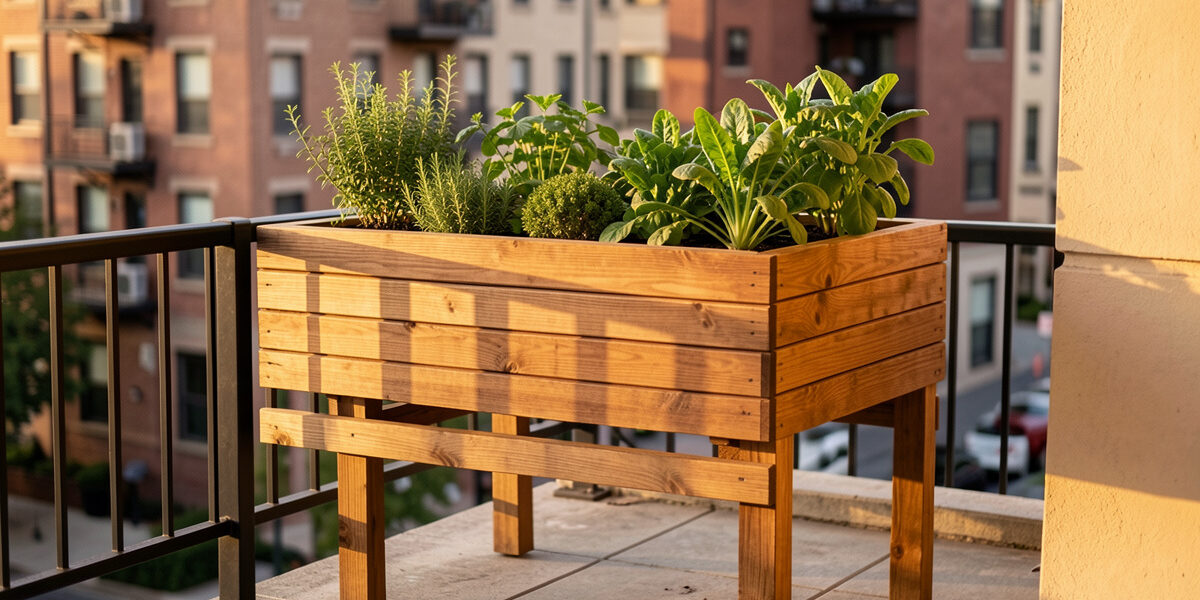
Raised planter boxes on legs lift your growing surface to 30-34 inches, eliminating the bending and kneeling that kills enthusiasm for apartment gardening. I keep two elevated planters on my city balcony — after three growing seasons in a Swedish climate, they are the containers I plant first every spring and the ones that produce through October frost.
For a complete overview of all methods and options, see our complete raised beds and planters guide.
The ergonomic advantage is real. Traditional ground-level bed gardening fades fast when your lower back protests after 20 minutes. Elevated planters bring the garden to your hands — no crawling, no strain, just productive growing at a comfortable working height. Over a full growing season, that difference means more time weeding, pruning, and harvesting, and fewer injuries that sideline you for a week.
Why I Switched to Elevated Leg-Mounted Planters
I started with fabric grow bags on a balcony floor five years ago, and the constant crouching made 20-minute maintenance sessions feel like an hour. Moving to leg-mounted planters at waist height changed everything — weed pulls take seconds, watering covers every plant without reaching, and I actually spot pest issues early because I am looking at foliage straight on instead of from above.
Beyond ergonomics, elevated planters solve apartment-specific problems that ground-level beds on concrete create:
Balcony weight management: Leg-mounted planters concentrate the load on four feet rather than spreading it across the full footprint. On a balcony rated for 300 kg/m2, a 2×4 foot planter weighing 350 kg when saturated is possible because the weight distributes to reinforced edge beams, not the center span. This is the detail most US gardening guides never mention but determines whether you can even grow on an upper-floor balcony.
Drainage you control: Elevated planters drain freely underneath — no saucer trudge, no pooling water the landlord notices. On my setup, I slide shallow plastic trays beneath the drain holes in dry spells to catch runoff for re-use, then remove them when heavy rain hits.
Pest reduction that actually works: After losing three crops of pak choi to slugs the first wet season, the 30-inch height made a measurable difference — slugs simply do not climb vertical cedar legs the way they slither across ground-level containers. It is not pest-proof, but it is the single biggest yield improvement I got from any hardware change.
Season extension for short Nordic summers: Elevated soil warms 2-4 weeks earlier in spring than ground-level containers or in-ground beds. In Stockholm, that pulls my first lettuce harvest from mid-June back to late May — a full month of extra salad greens the weather would otherwise steal.
How to Pick the Right Raised Planter Box
I have bought three elevated planters over the years and returned one because the legs were undersized for the soil volume they claimed. Here are the specifications that matter when you shop, ranked by what actually caused problems for me.
Material and how it handles your climate: Cedar and redwood are the gold standard — naturally rot-resistant without chemical treatment, and they look better as they silver. My oldest cedar VegTrug has four winters on it with zero structural degradation. Treated pine is cheaper and widely available, but modern copper-based pressure-treating leaches into soil in detectable amounts (though below food-safety thresholds, per Oregon State University Extension’s assessment). Composite wood-plastic blends eliminate maintenance entirely, which matters when -15 degrees C winters mean you cannot re-seal anything outdoors for six months. Metal planters (galvanized or powder-coated steel) are indestructible but heat up fast in direct sun — that root-zone temperature spike can bolt your lettuce in an afternoon.
Soil depth, not just volume: The spec that trips people up. Tomatoes need 12-16 inches of soil depth; root vegetables need 10-12 inches — figures that track closely with Wisconsin Extension’s container vegetable guidance. Many planters taper at the bottom or list “soil volume” without stating depth. My Keter planter holds 3.8 cubic feet but tapers to 6 inches at the narrowest point — great for herbs, useless for a carrot row. Always check minimum depth, not just capacity.
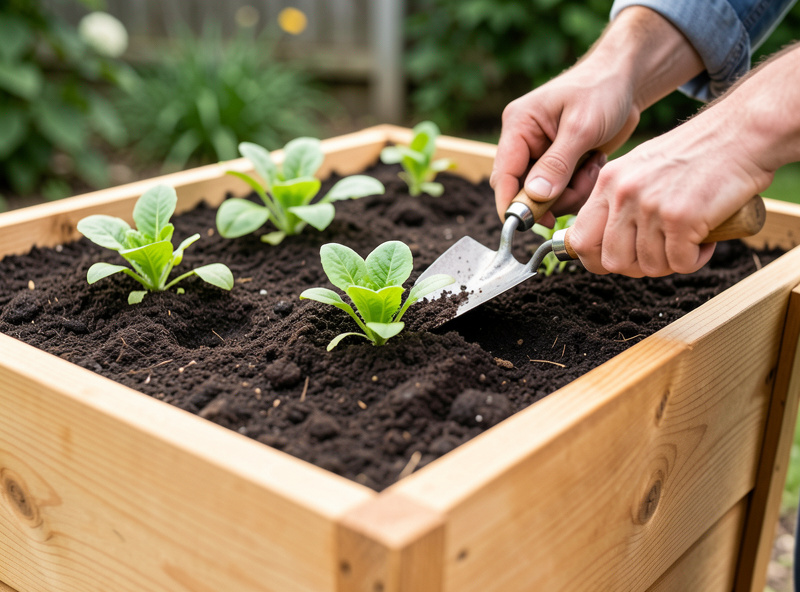
Drainage design: Quality planters have pre-drilled holes in the floor panel plus an air gap beneath (a false bottom). The false bottom is what transforms them from “shallow box on sticks” into actual growing systems — it prevents roots sitting in standing water, which is what killed my first batch of kale in a bargain planter that was basically a bathtub on legs.
Weight capacity math: Wet potting mix weighs about 90-100 lbs per cubic foot. A planter that holds 8 cubic feet weighs 720-800 lbs when saturated. That load sits on four leg joints. Look for cross-bracing between legs and wide footpads (not narrow dowels) that spread the weight onto pavers or decking. The planter I returned had spindly legs that wobbled under half load — at full weight, they would have snapped or punched through my balcony decking.
Assembly reality check: Some flat-packed planters arrive with 50+ screws and no pilot holes. If you lack a drill and 45 minutes of patience, the pre-assembled or snap-together designs are the way to go. I assembled my Greenes Fence planter in under half an hour — dovetail joints, stainless bolts, clear instructions. The VegTrug took closer to an hour because the V-shaped panels require precise alignment.
Top Elevated Planter Boxes I Have Grown With
These are planters I own or have tested side-by-side through at least one full growing season. Prices shift, but the design quality and material durability are the real decision points.
VegTrug Medium Raised Planter (70″ L x 31″ W x 31″ H): The V-shaped trough is the design innovation here — 12 inches of soil depth at the center tapers to 6 inches at the edges. This means tomatoes and peppers go in the deep middle while shallow-rooted lettuce and herbs line the sides, and you use roughly 25% less potting mix than a rectangular box of the same footprint (around 30-40 GBP saved on soil alone per fill). FSC-certified cedar holds up beautifully through freeze-thaw cycles. The optional greenhouse cover turns it into a cold frame and extends my autumn harvest by 3-4 weeks. The one critique: the pre-assembled panels still took me 45 minutes to square up properly. As an Amazon Associate I earn from qualifying purchases.
Find the VegTrug on Amazon.
Greenes Fence Cedar Elevated Garden Bed (48″ L x 24″ W x 31″ H): This is the workhorse. North American white cedar, dovetail corner joints (no metal fasteners to rust), stainless bolts on the leg attachments. Ten inches of consistent soil depth — no taper means you use every cubic inch for roots. I grow kale, spinach, bush peas, and lettuce in mine and get two full successions per season. The 4.5 cubic feet capacity is the sweet spot for a single person’s salad-and-greens supply without over-committing balcony square footage. Only downside: the bottom panel is thinner than the side walls and will need replacement around year 7-8.
Find Greenes Fence cedar planters on Amazon.
Lifetime 60069 Raised Garden Bed (48″ L x 24″ W x 29″ H): UV-stabilized HDPE plastic that you assemble without tools in about 10 minutes. No rot, no maintenance, no splinters. The double-walled panels insulate the root zone — in direct July sun on a concrete balcony, the interior soil temperature stays 5-8 degrees F cooler than a metal planter sitting next to it. The simulated wood texture looks convincing from 10 feet away. Its single drawback: it is lightweight when empty, so strong winds can shift it unless you stake it or fill it with soil first. Once loaded with 4.8 cubic feet of wet mix, it stays put.
Find the Lifetime raised bed on Amazon.
Keter Urban Bloomer Elevated Planter (44″ L x 19″ W x 30″ H): The built-in reservoir underneath holds 2.5 gallons of water and extends the watering interval to 7-10 days — the single biggest practical advantage for anyone who travels or forgets to water. The water gauge is reliable, and the drain plug lets you disable the reservoir when heavy rain is forecast (waterlogged self-watering planters are worse than conventional ones). The rattan-look polypropylene resin looks more expensive than it is and does not fade after two summers of direct sun. The 3.8 cubic foot capacity is the smallest here — ideal for herbs, lettuce, and compact determinate tomatoes, not for sprawling crops.
Find the Keter Urban Bloomer on Amazon.
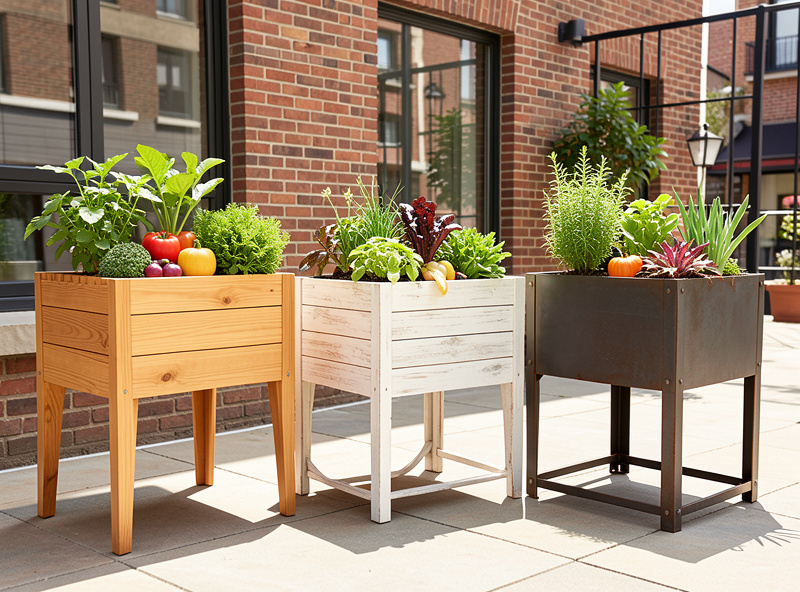
Giantex Wooden Raised Garden Bed (48″ L x 24″ W x 30″ H): The budget play. Solid fir with a water-resistant coating holds up decently through two seasons before the coating needs re-application. Eight inches of soil depth limits you to leafy greens, herbs, and shallow-rooted vegetables, but at roughly half the price of cedar equivalents, it is the right starter planter if you are testing whether elevated growing works in your space. The open-bottomed design lets roots reach underlying soil through gaps in the slats, which partly compensates for the shallow depth. Budget the cost of a new waterproofing coat every other spring — skip it and the fir starts to soften where soil contacts the walls.
Find the Giantex raised bed on Amazon.
Specialized Elevated Planter Designs Worth Knowing
Wheel-mounted portable planters: Locking casters rated for at least 200 lbs each let you reposition the planter to chase sun, pull it under cover during storms, or move it off the balcony entirely for winter storage. I added caster wheels to one of my wooden planters with a retrofit kit (25 GBP from a hardware store) and now track the morning-to-afternoon light shift across my balcony during the short May days when every hour of direct sun counts.
Cascading tiered systems: Multi-level planters stack 3-4 growing shelves within a single 2-square-foot footprint — roughly 6-8 square feet of total planting surface. The trade-off: each tier shades the one below it, so they work best for partial-shade crops (lettuce, spinach, chard) and fail for sun-hungry plants like tomatoes. I use a 3-tier unit against the back wall of my balcony where the top tier gets full light and the bottom two grow cut-and-come-again greens that tolerate partial shade.
Accessibility-focused planters: Designed at 24-28 inches of working height with extended leg clearance so a wheelchair rolls directly beneath. Width is kept under 30 inches for comfortable reach from a seated position. These are niche products but they solve a real problem — the difference between gardening or being kept out of it entirely. The VegTrug and Lifetime models both produce specific accessible-height versions.
What to Plant and How to Plant It in Elevated Boxes
Soil choices for containers, not gardens: Garden soil compacts into concrete inside a planter box. I use a mix that is 60% peat-free container potting mix, 30% homemade worm castings (from the bin under my kitchen sink), and 10% perlite or coarse pumice for drainage. Bagged “potting soil” is mostly fine-textured peat that collapses under repeated watering — add perlite even to premium bagged mixes. A 2-cubic-foot bag of FoxFarm Ocean Forest blended 50/50 with perlite fills one 4.5-cubic-foot planter box and produces visible growth differences over straight bagged soil within two weeks.
Watering rhythm for elevated planters: Expect to water every 1-2 days in full summer sun — elevated containers dry faster than ground beds because air circulates on all six sides. Soil moisture meters solve the guesswork; I check at finger depth every morning and water when the top 2 inches are dry. Self-watering reservoirs (built into the Keter design above) extend that to 7-10 days, which is the feature that prevents crispy plants the week you go on holiday.
Plant spacing for raised planter productivity: Elevated boxes with premium soil support tighter spacing than in-ground gardens. Lettuce at 6-inch spacing (not 12), bush beans at 4 inches, determinate tomatoes at 18 inches with one plant per square foot of soil surface. The improved drainage and loose soil structure let roots expand freely without competition — the spacing charts on seed packets assume compacted ground, not fluffy container mix.
Cold-climate timing tricks: The elevated soil in my planters warms 10-14 days ahead of ground-level beds each spring. I start cool-season crops (spinach, mache, radishes) in the planters in late March under floating row cover fabric — a 15 USD investment that buys me three extra weeks of growing before the summer crops take over. In October, that same row cover laid over the VegTrug with its greenhouse frame keeps kale and chard producing until the first hard frost hits in mid-November.
Connecting Raised Planters to Your Full Urban Grow
Leg-mounted planters are the backbone of an apartment growing system, but they integrate best with other techniques. Vertical wall planters handle the vining crops (peas, beans) that the planter box frees you to grow. Fabric grow bags at ground level handle the bulky crops (potatoes, zucchini) that need deep soil and spread. Together, a single small balcony with one elevated planter, two wall-mounted troughs, and three 5-gallon fabric pots produces salad greens and vegetables April through November — about 60-80 lbs total harvest in a Nordic growing season. That is not self-sufficiency, but it is fresh food for two people for six months from a space most people leave empty.
For vertical growing techniques that complement your elevated planters, read our vertical gardening guide. For the fundamental container-growing skills that make any planter productive, start with our container gardening guide. And if you are building your setup from a budget, our budget urban gardening article covers the DIY hacks and thrift-store finds that get you started for under 100 USD.
Frequently Asked Questions
How long do wooden raised planters last?
Cedar and redwood planters last 5-10 years naturally; treated pine lasts 3-5 years. Annual application of penetrating oil or sealant extends lifespan by 2-3 years. Composite and plastic planters offer 15-20 year lifespans with minimal maintenance.
Can I grow root vegetables in raised planters?
Yes, provided soil depth exceeds 10 inches for carrots and beets, 12 inches for parsnips. Choose round or short varieties like Paris Market carrots or Round Romeo beets for shallower planters.
Do I need to line raised planters on legs?
Landscaping fabric liners protect wooden planters from direct soil contact, extending lifespan. They also prevent soil washing through drainage holes. Plastic planters generally do not require liners unless drainage holes are oversized.
How much weight can a balcony handle with filled planters?
A standard balcony rated for 300-350 kg per square meter can support one large filled planter if positioned near load-bearing walls or over support beams rather than the center span. Wet soil weighs 90-100 lbs per cubic foot. Place planters against walls or over column lines for safety.
What vegetables grow best in elevated planter boxes?
Leafy greens, herbs, bush peas, determinate tomatoes, peppers, radishes, and strawberries all thrive in 8-12 inch soil depths typical of elevated planters. Avoid indeterminate tomatoes, corn, squash, and melons unless your planter provides 16+ inches of depth and 3+ cubic feet per plant.