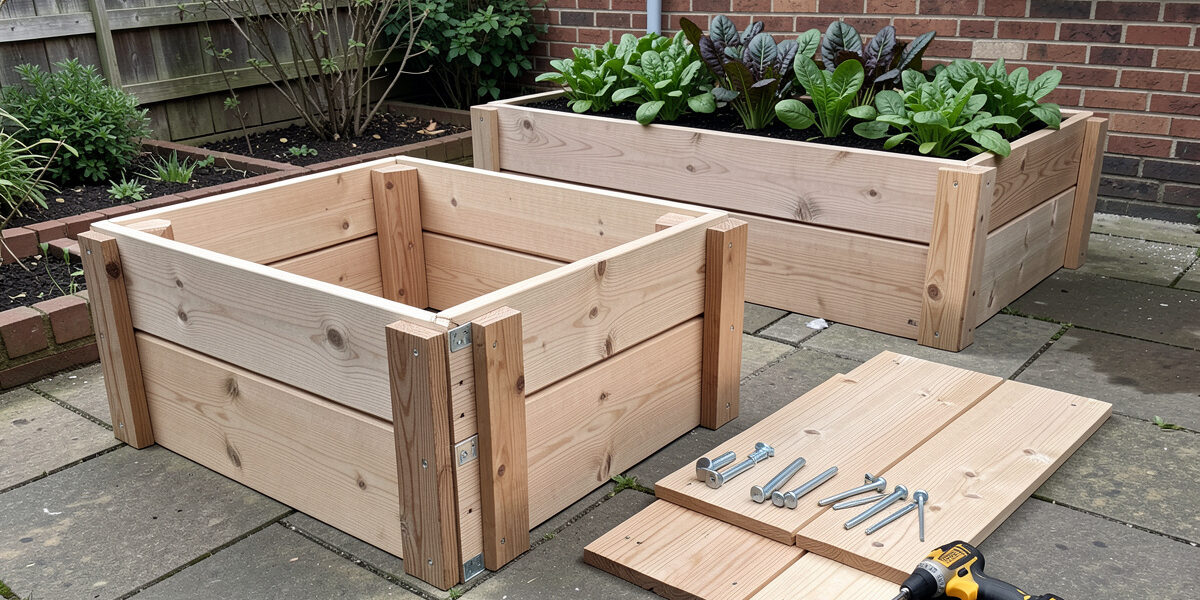
Flat pack raised garden beds ship compactly to your door and assemble into productive growing spaces in under an hour, with no carpentry skills, expensive tools, or professional installation required. On my Swedish balcony, the flat pack kits I have assembled over the years are the raised beds I recommend to anyone who is nervous about building their own — the precision engineering means you get a structurally sound bed even if your DIY skills stop at following a diagram. For the wider picture, see my complete raised beds and planters guide.
As an Amazon Associate I earn from qualifying purchases.
Why Choose Flat Pack Raised Beds
Flat pack systems address several common barriers to raised bed gardening. Traditional raised beds demand cutting lumber, drilling holes, and driving screws — skills many urban gardeners lack. Flat pack systems arrive pre-cut with all holes precisely positioned. Assembly requires only basic hand tools or often just the included Allen keys. Full-sized lumber doesn’t fit compact cars or public transport, but flat packs slide easily into vehicle boots, back seats, or even bicycle baskets. And if you move or need winter storage, you can disassemble the bed into a compact bundle that takes up minimal space — invaluable for renters or anyone reconfiguring their garden seasonally.
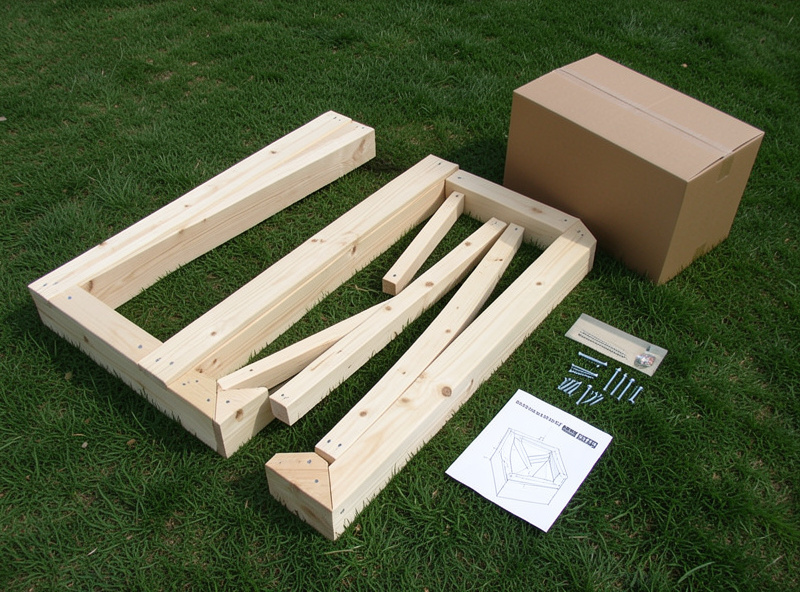
The precision engineering is the hidden advantage. CNC-cut components fit together with tolerances impossible to achieve hand-cutting lumber. Panels align perfectly, corners square automatically, and the structural integrity exceeds typical DIY construction. On my Greenes Fence cedar kit, the dovetail joints slide together so precisely that the bed is square the moment the last panel clicks into place — no measuring diagonals, no shimming.
Critical Features to Evaluate
Assembly Complexity
Not all “easy assembly” claims prove accurate. Quality indicators include tool requirements (should need only common hand tools or included hex keys), fastener type (screws are acceptable; cam locks and dowels offer superior ease), component count (fewer pieces generally mean simpler assembly), instruction quality (clear diagrams, numbered steps, online video support), and realistic assembly time (30-60 minutes for most designs).
Material Quality and Thickness
Panel thickness determines structural integrity. For wood options, cedar and redwood offer premium rot resistance at 1-inch+ thickness preferred, treated pine is affordable at 3/4-inch minimum thickness, and engineered wood provides consistent quality though moisture resistance is critical. For metal options, steel gauge thickness matters — 22-gauge minimum for rigidity, aluminium is lighter but requires thicker profiles for strength, and powder coat or galvanisation is essential for longevity.
Joint and Connection Systems
Connection methods affect both assembly ease and long-term stability. Superior systems include mortise-and-tenon with screws, aluminium corner brackets, interlocking panel designs, and cam-lock fasteners that are tool-free. Avoid simple butt joints with minimal fastening, thin plastic connectors, and single-screw attachment points — these are the joints that fail first under freeze-thaw cycling.
Expandability and Modularity
The best flat pack systems accommodate future growth through stacking kits for increased height, extension kits for added length, connector pieces linking multiple beds, and compatible accessories like trellises, covers, and irrigation. This matters more than you might think — the flat pack bed you buy for herbs this year is the same bed you will want to stack taller next year for deep-rooted carrots.
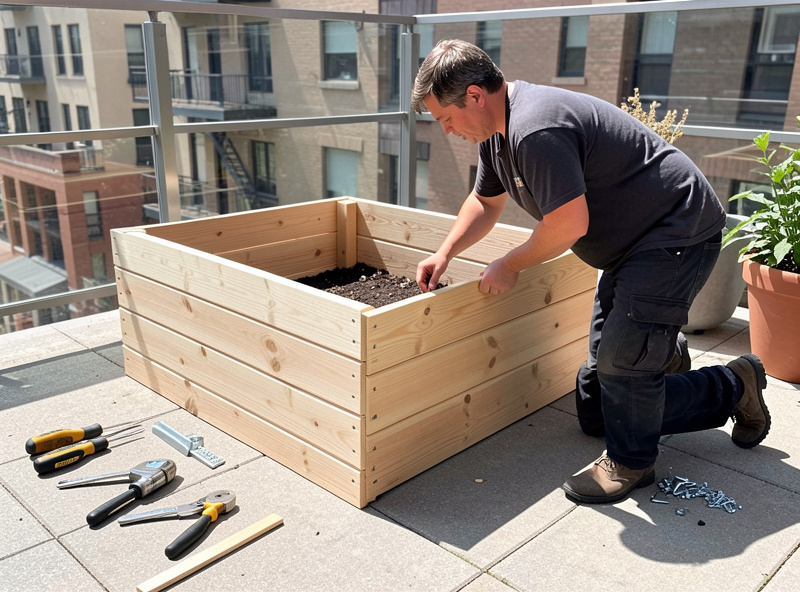
Top Flat Pack Raised Bed Systems Reviewed
These are kits I have assembled and run through at least one full Nordic growing season. The joint engineering and material quality — not the marketing — are what determine which kit lasts a decade and which falls apart in the second winter.
1. Greenes Fence Original Cedar Raised Bed Kit
Dimensions: 48″ L x 48″ W x 10.5″ H (also 4×8, 2×8) | Material: North American cedar | Assembly: 15-20 minutes, no tools (sliding dovetail joints)
Greenes Fence pioneered the flat pack cedar bed category and remains the benchmark. The sliding dovetail joint system assembles without fasteners — simply slide pre-cut panels together. Corners lock securely creating square, stable beds instantly. Western red cedar offers natural rot resistance without chemical treatments — the same decay resistance that Iowa State Extension specifically recommends for outdoor garden structures. The 1-inch thick boards provide a substantial feel lacking in cheaper alternatives, and the stackable design allows building 21-inch or 31.5-inch tall beds with additional kits.
Why it wins: Fastest assembly, no tools required, premium materials, proven track record.
2. Vita Classic Vinyl Raised Bed
Dimensions: 48″ L x 48″ W x 11″ H | Material: BPA-free vinyl | Assembly: 20-30 minutes, rubber mallet included
Vita’s modular vinyl system offers maintenance-free gardening with tool-free assembly. Heavy-duty vinyl panels slide into aluminium posts then lock securely with the included mallet. Unlike wood, vinyl never rots, warps, or requires finishing. The white finish brightens garden spaces while remaining easy to clean, and the modular design allows expansion or reconfiguration as needs change.
Why it wins: Zero maintenance, tool-free assembly, modular flexibility, food-safe materials.
3. Frame It All Composite Raised Bed
Dimensions: 48″ L x 48″ W x 11″ H (modular) | Material: Recycled wood-plastic composite | Assembly: 30-45 minutes, screwdriver required
Frame It All’s composite boards combine recycled plastic with wood fibres creating weatherproof, rot-proof construction. The patented bracket system connects boards at any angle, enabling custom shapes beyond simple rectangles — L-shapes, hexagons, and curves are all possible. The composite material withstands ground contact indefinitely without degradation, and the 1-inch board thickness provides substantial rigidity.
Why it wins: Unlimited configurability, sustainable materials, long lifespan, custom shapes possible.
4. RaisedBeds.com Classic Cedar Kit
Dimensions: Various (4×4, 4×8, 4×12) | Material: Western red cedar | Assembly: 30-40 minutes, cordless drill required
RaisedBeds.com specialises exclusively in raised bed kits, refining designs over decades. Their Classic Cedar kit features pre-drilled boards connecting with heavy-duty steel corner brackets. Pre-cut 4×4 cedar posts anchor corners providing exceptional stability, and the precision machining ensures perfect alignment. The 11-inch depth suits most vegetables, with optional stacking for taller configurations. Optional trellis systems integrate seamlessly.
Why it wins: Specialisation shows in details, heavy-duty brackets, integrated accessory ecosystem.
5. Birdies Modular Raised Bed System
Dimensions: Modular (various configurations) | Material: Aluzinc steel | Assembly: 15-25 minutes, included wrench
Birdies brought Australian innovation to international markets with their modular steel system. Lightweight panels connect with proprietary brackets creating beds from 15 to 30+ inches tall in various dimensions. The Aluzinc coating provides 20+ year corrosion resistance — I cover the full Birdies story in my dedicated Birdies review. Panel corrugation adds structural strength while powder-coat colour options modernise aesthetics.
Why it wins: Exceptional modularity, modern aesthetics, tool-free assembly, longest lifespan.
Assembly Best Practices
Pre-Assembly Preparation
Before opening the flat pack, verify all components arrived against the packing list. Identify a level assembly location with enough space for the bed dimensions. Gather the required tools, review the instructions completely before starting, and watch the manufacturer video if one is available — five minutes of preparation saves an hour of rework.
Site Preparation
Prepare the installation area by removing sod or vegetation, levelling the ground (beds can tolerate slight slopes, but levelling improves appearance and structural integrity), adding landscape fabric if weed suppression is desired, and positioning the bed to allow access from all sides. Leave 18-24 inches of clearance around the perimeter for maintenance — you need that space for watering, weeding, and harvesting without standing in the bed itself.
Assembly Sequence
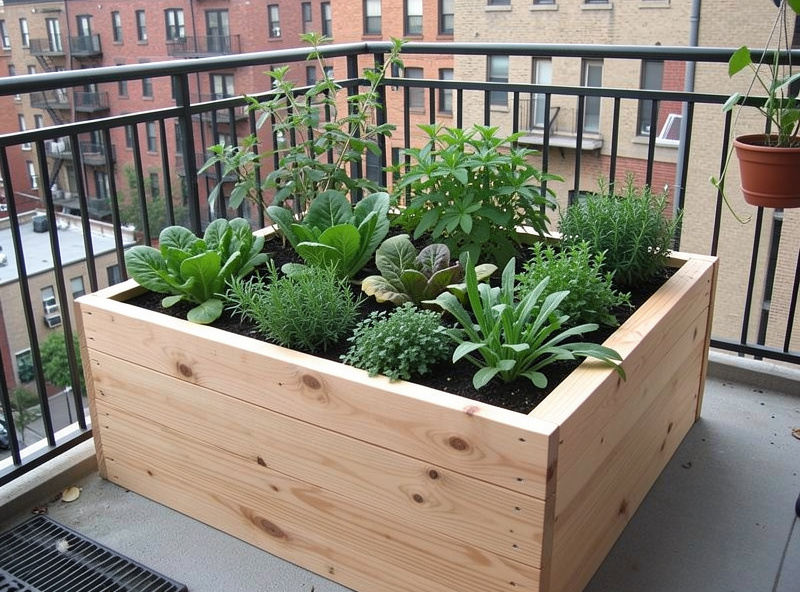
The general sequence for most flat pack systems: lay out panels and hardware verifying quantities, connect side panels to corner posts or brackets, square corners using a carpenter’s square or by measuring diagonals (equal diagonals mean square), install remaining panels completing the rectangle, tighten all fasteners without over-torquing, test corner stability and overall squareness, position on the prepared site, then fill with soil mix. The common mistakes to avoid are over-tightening (stripping screws or cracking wood), ignoring squareness (crooked beds stress every joint), rushing (misaligned panels create gaps and weak connections), and skipping the instructions (each system has specific quirks the manual addresses).
The Nordic Flat Pack Experience
Running flat pack beds through real Swedish winters has taught me two things the marketing never mentions. First, the freeze-thaw cycle tests every joint connection harder than any summer ever does. Water seeps into the joint gaps, freezes, and expands — pushing panels apart by fractions of a millimetre each cycle. After a winter of 40+ freeze-thaw transitions, a dovetail joint that was tight in October may have loosened enough to wobble in April. The fix is simple: check and re-tighten every joint each spring before refilling. On my Greenes Fence kit, this takes about ten minutes and has kept the bed structurally sound through four winters.
Second, the soil depth matters more in a short Nordic season than the kit manufacturers account for. Their depth recommendations assume warm-climate growing where roots spread laterally in loose, warm soil. Up here, the soil stays cold deeper longer, and deeper-rooted crops need more vertical room to establish before the short productive window closes. I stack my Greenes Fence kit to 21 inches rather than the standard 10.5 — the extra soil volume warms faster in spring (more mass to heat) and gives carrots, parsnips, and deep-rooted kale the root run they need to produce before the October frost shuts everything down. The depth guidance in Wisconsin Extension’s container vegetable resources tracks closely with what I have found works in my climate.
Cost Comparison: Flat Pack vs DIY
For a 4×8 foot raised bed at 12-inch height, a DIY cedar construction runs roughly $230-320 in materials and tools (if you need to buy them), taking 4-6 hours and requiring moderate carpentry skill. A flat pack cedar kit of the same dimensions costs $200-280, requires no additional tools, takes 30-45 minutes, and needs minimal skill. Flat packs often prove more economical when you value your time, especially if you don’t already own tools — and the precision fit typically exceeds what most DIYers can achieve on their first attempt.
Connecting to Complete Raised Bed Success
Flat pack beds represent the starting point for productive gardens. Learn the full soil strategy in my best soil for raised beds guide. For construction comparisons with other methods, see my sleepers guide. For the beginner framework covering everything from site selection to first planting, my urban gardening beginners guide walks through the full setup. And for equipment supporting raised bed productivity, see my equipment recommendations.
Related Articles
- Raised Beds and Planters: Complete Guide
- How to Build a Sleeper Planter Box — DIY Guide
- Best Raised Planter Boxes on Legs for Small Spaces
- Best Sleepers for Raised Beds — Wood vs Concrete
- Urban Gardening on a Budget
What are flat pack raised garden beds?
Flat pack raised garden beds are precut, predrilled kits that ship in a compact box and assemble without sawing or measuring. Assembly takes 30-90 minutes using basic tools like a screwdriver or included hex key. They are typically made from cedar, vinyl, composite, or coated steel.
How long does assembly take for a flat pack raised bed?
Most kits claim 15-60 minutes. Expect closer to 60-90 minutes for your first one as you learn the system. A second identical kit usually cuts that time in half. The Greenes Fence dovetail system is the fastest I have assembled at about 15 minutes for a 4×4 bed.
Are flat pack raised beds as durable as custom-built ones?
Quality flat pack beds from brands like Greenes Fence and Birdies match custom-built durability when assembled correctly. The weak points are corner joints and fasteners. Checking and tightening joints each spring extends cedar kit lifespan to 10+ years, even through Nordic freeze-thaw winters.
What tools do I need to assemble a flat pack raised bed?
Most kits need only a screwdriver and a rubber mallet. Some require a cordless drill with a Phillips bit. The Greenes Fence dovetail system needs no tools at all. If the kit includes metal corner brackets, a socket wrench may speed things up. No saw, no measuring tape, no woodworking experience required.
Can flat pack raised beds handle Nordic winters?
Cedar flat pack beds survive Nordic winters if joints are checked and tightened each spring. The freeze-thaw cycle stress-tests every corner connection. I run a Greenes Fence cedar kit through four Stockholm winters and the only maintenance needed is tightening corner joints each April before refilling.