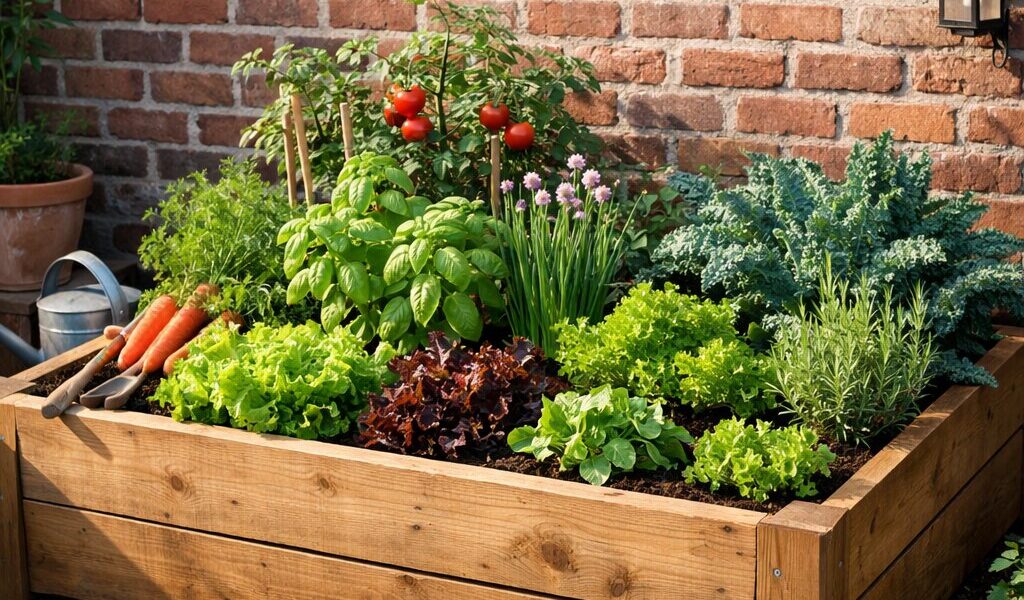
The best sleepers for raised beds in a wet climate are rot-proof materials — composite, concrete, or galvanized metal — because softwood lasts 5-7 years in constant damp and freeze-thaw cycling, not the 10-15 years the label claims. I have rebuilt pine beds in my Nordic garden three times now. For the full raised-bed strategy, see my complete raised beds and planters guide.
As an Amazon Associate I earn from qualifying purchases.
Understanding Garden Sleepers
Sleepers are the horizontal beams that form the retaining walls of a raised bed. The name comes from railway sleepers (the old track ties), but garden sleepers today are made in everything from cedar to recycled composite to precast concrete. They typically run 15–30 cm tall and a couple of metres long; you stack them to the depth you want and join the corners to make the bed. Whatever the material, the job is the same: hold a heavy, wet load of soil in place through years of weather without rotting, bowing, or poisoning what you grow.
What the brochures never mention is freeze-thaw. The cycle that actually destroys a sleeper up here isn’t steady moisture — it’s the nightly expansion of water that has seeped into the end grain and the joint gaps, frozen solid, and pushed the wood fibres apart by roughly 9 percent overnight. Repeat that forty or fifty times a single Stockholm winter and the timber at the soil line starts fraying into a spongy mat that holds water against itself and rots from the inside out. A cedar bed rated for twenty years in a mild maritime climate might give you eight where I live, because the shoulder seasons ping-pong between thaw and hard frost for months on end. That is the single reason I now lean toward materials that simply ignore water entirely — composite, concrete, or galvanized steel — for any bed I do not want to rebuild.
Wood Sleepers
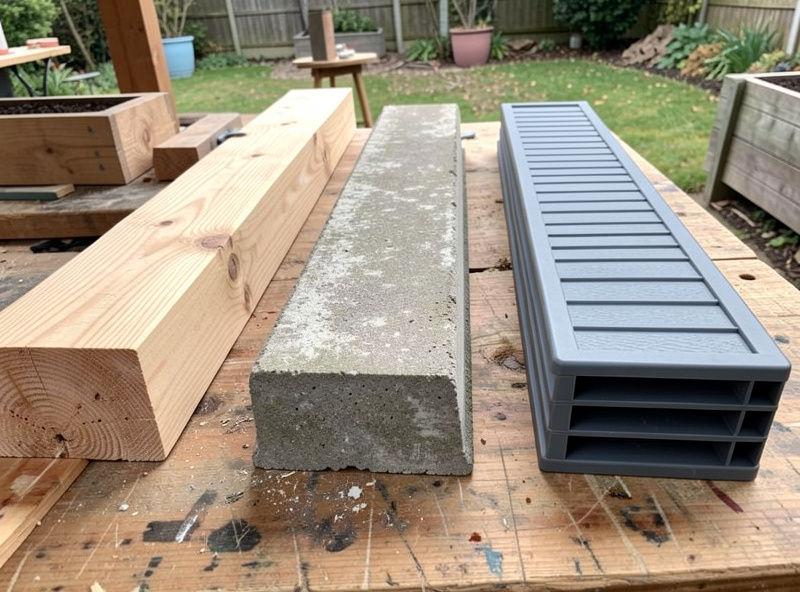
Wood is still the most popular choice — natural-looking, easy to work, renewable. But the species matters enormously, and in a damp climate it matters more than the brochures admit.
Cedar and Redwood: the premium natural option
Western red cedar and redwood carry natural oils and tannins that fend off rot and insects with no chemical treatment — Iowa State Extension specifically lists them as the go-to decay-resistant woods for raised-bed walls in its raised-bed construction guidance. They’re light and easy to cut, and in ground contact they’ll give you the better part of two decades in a mild climate. The trade-offs are price (often two to three times treated pine), a softer surface that dents, and patchy availability. They’re my pick when food safety and looks both matter and budget allows.
Pressure-treated pine: cheap and available
Modern treated lumber uses copper-based preservatives (ACQ or copper azole) — the nasty old arsenic-based CCA was pulled from residential use years ago (Oregon State Extension’s safety assessment walks through the leaching research). It’s the cheapest option, available everywhere, and easy to build with, giving maybe 10–15 years in mild conditions. Two honest caveats: some organic growers don’t want any treatment chemicals against their veg soil (line the bed and you sidestep most of that — more below), and in a wet, freeze-thaw climate like mine that lifespan is optimistic. Constant autumn damp and dozens of freeze-thaw cycles a year chew through softwood faster than the milder-climate figures on the label.
Untreated hardwood: chemical-free and tough
Dense hardwoods like oak, black locust, and black walnut resist rot naturally and last as long as cedar while being completely chemical-free. The catch is that they’re heavy, genuinely hard to cut and drill, pricey, and rarely sold in tidy raised-bed dimensions. Brilliant if you can source them and don’t mind the work.
Recycled plastic composite: the no-rot wood-alternative
Wood-plastic composite sleepers won’t rot, splinter, or feed insects, and they shrug off exactly the wet conditions that kill softwood — which is why they appeal to me in this climate. Expect 25 years-plus and zero maintenance. Downsides: a higher upfront cost, a sometimes obviously synthetic look, real weight, and some thermal expansion. Over a 20-year horizon the lifecycle cost often beats wood.
Galvanized steel: the material I actually settled on
I mention metal here because it is what I run now, and it belongs in any honest sleeper comparison even though the title says wood versus concrete. Corrugated galvanised steel beds — the modular panels that bolt together at the corners — give you a rot-proof, chemical-free wall that conducts heat into the soil faster than timber or concrete ever will. In a short Nordic season that early warm-up is worth real harvest days; my steel bed consistently produces salad greens a couple of weeks ahead of the cedar one sitting three metres away in the same light. The trade-offs are genuine: thin-gauge steel dents if you swing a spade carelessly, the exposed top edge gets hot enough to burn bare hands in direct July sun, and the look is more allotment than cottage garden. But on a never-replace, zero-maintenance calculus nothing else comes close. I walk through the specifics in my Birdies metal raised beds review — worth reading before committing to timber if freeze-thaw rot is your main worry.
Concrete Sleepers
For a permanent, never-touch-it-again bed, concrete is unbeatable on durability.
Precast concrete
Factory units, often steel-reinforced and available in smooth or wood-grain textures, install fast and last 50 years or more with no rot, no insects, and no fading. The price you pay is weight (you’ll need help or equipment to move them), the near-impossibility of modifying a bed later, a higher cost per metre, and a mild alkalinity that nudges soil pH up for the first season or two.
Poured concrete and block
Poured-in-place walls give unlimited custom shapes and maximum strength but really want professional installation and are utterly permanent. Concrete block or brick is the DIY-friendly masonry route — modular, attractive, and re-stackable if dry-laid — though it’s heavy, needs a stable base, and costs more than wood.
Head-to-Head Comparison
| Factor | Cedar/Redwood | Treated Pine | Composite | Concrete |
|---|---|---|---|---|
| Lifespan (mild climate) | 15-25 years | 10-15 years | 25+ years | 50+ years |
| Initial Cost | High | Low | High | Highest |
| Maintenance | Moderate | Moderate | None | None |
| Food Safety | Excellent | Good (sealed/lined) | Excellent | Good (after curing) |
| Workability | Excellent | Excellent | Fair | Poor |
| Weight | Light | Light | Heavy | Very Heavy |
| Aesthetic | Natural | Natural | Variable | Industrial |
Read the lifespan row as a mild-climate best case. The wetter and colder your site, the more the wood numbers shrink and the more the rot-proof options (composite, concrete, or metal) pull ahead.
Installation — and the one step that doubles wood’s life
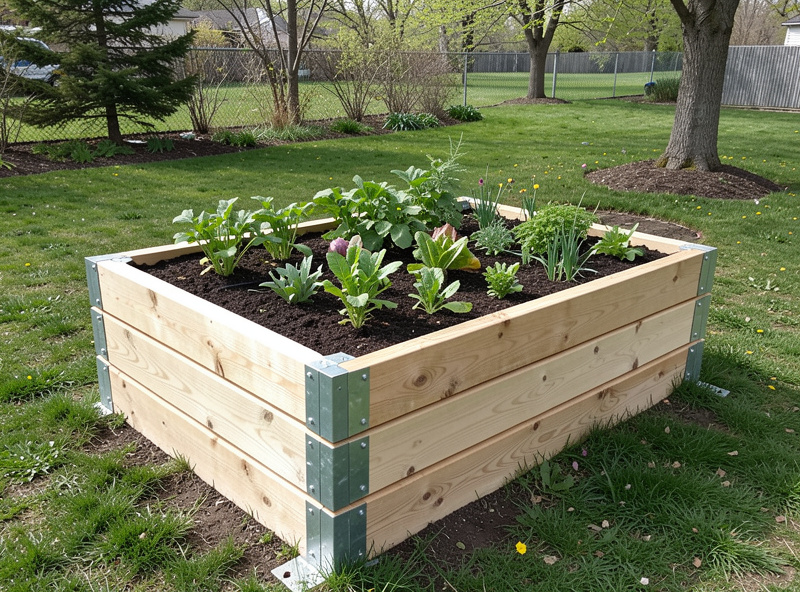
Wood sleepers go together with basic carpentry: stack to height, join the corners with metal brackets or screws, and pre-drill near the ends so they don’t split. Use proper exterior, ground-contact-rated screws and raised-bed corner brackets — ordinary indoor screws rust through in a season. The single highest-value step, especially in a damp climate, is to line the inside walls with landscape fabric. A bed liner keeps wet soil off the timber, slows rot dramatically, and puts a barrier between any treatment chemicals and your roots — solving the food-safety worry and the longevity worry in one cheap move. Seal the cut ends, where preservative never reached, with a food-safe penetrating oil.
Concrete sleepers need a level, well-draining base — compacted gravel or a footing — or they settle and tip. Poured walls want rebar, control joints, and really a professional for anything over about 45 cm tall.
On a balcony or hardstanding where you cannot dig a footing, stand the sleepers on a shallow bed of compacted gravel inside a geotextile-lined trench instead. It drains freely and, more importantly, breaks the capillary wicking action that pulls moisture up from the standing surface into the timber base — which is where rot always starts first. I also leave a two-finger air gap between the bottom rail and the ground on my balcony beds, filled with loose gravel, so air circulates underneath. That one detail alone has added visible years to the cedar legs on my elevated planters: the wood never sits in standing water after a November downpour, and the airflow dries the grain between rain events.
The Honest Verdict — and Why I Went Metal
Choose wood if you want natural looks, a DIY build with common tools, and a lower upfront spend — and pick cedar or untreated hardwood (or line treated pine) if it’s a food bed. Choose concrete if you want a permanent, maintenance-free, maximum-strength bed and don’t mind the weight or the cost.
But here’s where my own experience pushed me off wood entirely. After watching pine sleepers go spongy at the corners faster than any label promised — that wet-climate rot clock again — I got tired of the rebuild-and-replace cycle and switched to a galvanized steel modular bed instead. No rot, no chemicals, no replacing rails every few years, and it warms the soil earlier in spring, which up north is its own reward. If you’re weighing sleepers mainly to avoid future hassle, read my Birdies metal raised beds review before you buy timber — and if you want a no-rot kit to compare against, metal raised bed kits are worth a look. For the plastic-and-composite angle, my recycled plastic raised beds review covers that route.
Cost Over 10 Years
Total ownership cost tells a different story than the price tag. Roughly, for a 4×8-foot, 30 cm bed: treated pine costs least upfront but you’ll likely reseal it and replace it within the decade; cedar costs more upfront but skips the replacement, landing only a little above pine over ten years while being food-safe; composite costs most upfront and then essentially nothing, winning clearly over a 20-year horizon. The “expensive” materials are usually the cheap ones once you count replacements — and in a wet climate, the rot-proof options reach that break-even even sooner.
What Goes Inside the Walls Matters as Much
A sleeper bed is only as productive as what you fill it with, and the wrong fill turns a beautiful cedar box into a waterlogged root-tomb in a single season. I layer mine the same way every time, regardless of wall material. A five-centimetre drainage layer of gravel or broken crock at the bottom lets gravity pull excess water away from the root zone. Over that goes a sheet of permeable landscape fabric — the same roll I use to line the walls — to stop the growing mix washing down through the gravel and clogging it. Then the mix itself goes on top: roughly 60 percent peat-free container compost, 30 percent worm castings from the bin under my kitchen sink, and 10 percent perlite or coarse pumice to keep the structure open.
That blend drains within minutes of a heavy rain but holds enough moisture to carry leafy greens through a dry July week without daily watering. Never fill a sleeper bed with straight garden topsoil — it compacts into anaerobic clay inside one growing season, suffocating the roots you spent weeks nurturing, and it brings weed seeds and soil-borne pathogens into a clean raised bed. For the full soil strategy — C:N ratios, amendments, and why bagged “potting mix” is the wrong starting point — my best soil for raised beds guide goes deep on the mix I have dialled in through several seasons of side-by-side trialling.
Connecting to the Rest of the System
Sleepers are one piece of a raised bed. To actually build one, see my sleeper planter box DIY guide; for doing it cheaply, the urban gardening on a budget guide; and for the tools that make any raised bed easier, my urban gardening equipment guide. Whatever walls you choose, what you fill them with matters just as much — see my best soil for raised beds mix guide.
Related Articles
- Raised Beds and Planters: Complete Guide
- Best Raised Planter Boxes on Legs for Small Spaces
- Heavy Duty Recycled Plastic Raised Beds — Worth It?
- Birdies Raised Beds Review — Are They the Best?
- How to Build a Sleeper Planter Box — DIY Guide
What are the best sleepers for raised beds?
Cedar and untreated hardwoods like oak last 15-20+ years and are naturally rot-resistant and food-safe. Treated pine is cheapest but shorter-lived, especially in wet climates. Composite and concrete sleepers last longest of all. In a cold, damp climate, lean toward rot-proof materials or line wood beds well.
How do you choose between wood and concrete sleepers?
Wood is lighter, cheaper, easier to work, and looks natural, but it rots eventually – faster in wet, freeze-thaw climates. Concrete lasts 50+ years with no rot but is very heavy, harder to install, and more expensive. Choose wood for a DIY, natural, budget build; concrete for a permanent, maintenance-free one.
How deep should sleeper raised beds be?
Two layers of sleepers (about 30-40 cm) suit most vegetables. Three layers (45-60 cm) is better for deep-rooted crops like carrots and potatoes, and saves your back. Deeper beds also dry out and warm up faster, which helps in a short, cool season.
Do you need to treat wood sleepers for raised beds?
Naturally rot-resistant woods like cedar and untreated hardwood need no treatment. Modern copper-based pressure-treated pine is considered safe for vegetable beds, but many growers still line the inside with landscape fabric so soil never touches the timber. Avoid old pre-2004 treated wood, which contained arsenic.
How long do wood sleepers last in a wet climate?
Less than the labels suggest. Softwood lifespan figures assume mild conditions; constant damp and repeated freeze-thaw cycles shorten them noticeably. Lining the beds, sealing cut ends, and keeping soil off the timber all help, but in genuinely wet climates composite, concrete, or metal beds avoid the problem entirely.