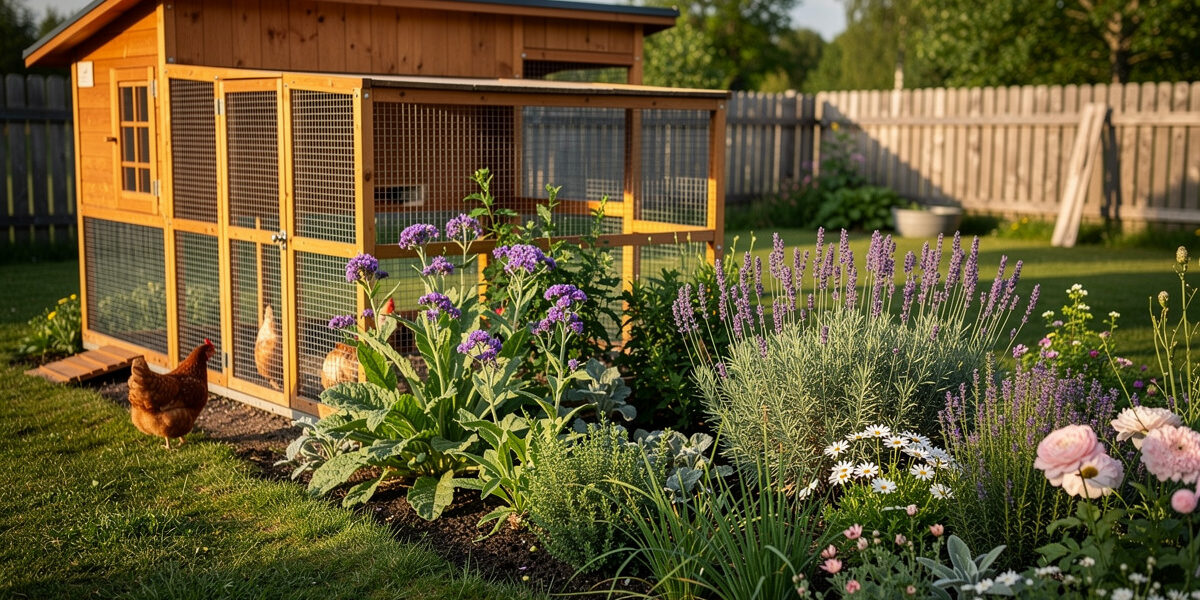
The raised bed nearest my coop planted itself — or at least, that is how it felt after the first season of watching hens strip everything within beak-reach to bare dirt. These 12 chicken-safe plants are what survived: non-toxic, drought-tolerant varieties that provide shade, pest control, and occasional forage without needing to be replanted every month. Every plant on this list is confirmed safe by poultry veterinary references, though chickens being chickens, they will still trample a hosta to death just because they can.
Why the Coop Run Zone Matters
Chickens scratch. My flock reduced a 3-foot radius around the run to bare dirt within the first month. The plants that survived my first season created a functional perimeter — they shade the run during summer heat stress, repel flies and mites with aromatic foliage, and in some cases drop edible leaves or berries the birds can forage. A well-planted run edge also filters dust and feather dander drifting toward the house, which anyone with a coop within 30 feet of the back door will appreciate. The key is choosing plants that are non-toxic (no nightshade family, no rhubarb, no foxglove near birds that eat everything) and tough enough to survive being sideswiped by a flapping hen. My run perimeter follows the same planting logic I apply to my raised beds — put the right plant in the right spot and let it earn its keep.
12 Chicken-Safe Plants for the Run Perimeter
1. Comfrey (Symphytum officinale)
Comfrey is the chicken-keeper’s Swiss Army knife. Its deep taproot mines minerals from the subsoil and concentrates them in large, mineral-rich leaves that chickens peck at directly and owners harvest for compost tea or fresh feed. The plant grows 2-3 feet tall and wide, creating a living barrier on the run edge. Once established, comfrey regrows from root fragments — do not plant it where you might want to remove it later, because you will not succeed. Bocking 14 is the sterile cultivar that will not self-seed across the yard.
2. Lemon Balm (Melissa officinalis)
Lemon balm’s citronellal content repels mosquitoes and gnats, which makes it valuable on the wet side of the run near the waterer. It spreads reliably but not aggressively in most climates, forming a 2-foot clump with small white flowers that attract pollinators without drawing wasps. Chickens will peck at the leaves occasionally but rarely destroy the crown. Bonus: rubbing crushed leaves on your own arms before coop chores is a functional, DEET-free mosquito deterrent.
3. Nasturtium (Tropaeolum majus)
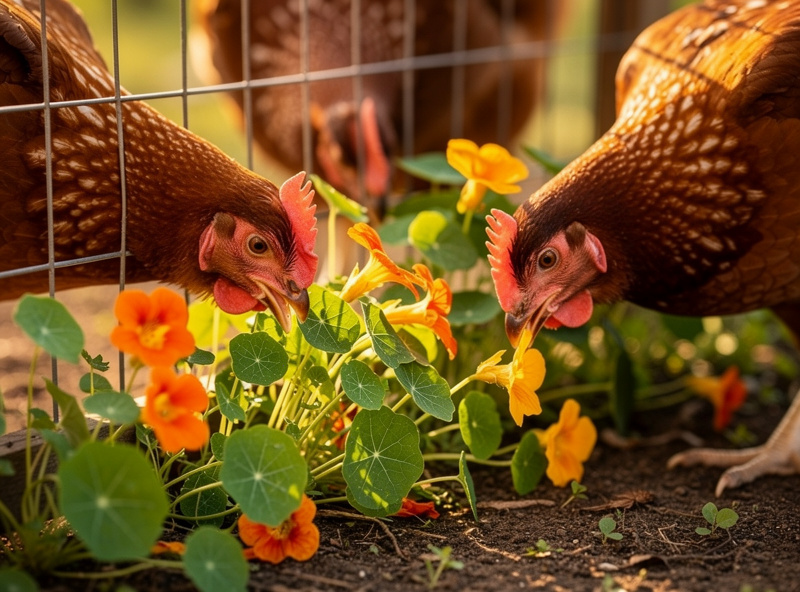
Nasturtium is the easiest chicken-safe annual I seed directly into the ground around the run. Every above-ground part is edible for both birds and people, which is why poultry keepers grow it as a free forage plant the flock can pick at. The trailing varieties cover rough ground fast — use them to hide the ugly transition zone where hardware cloth meets soil. Flowers are high in lutein, which deepens egg yolk color. Just reseed annually, because nasturtium is not perennial in zones below 9.
4. Lavender (Lavandula angustifolia)
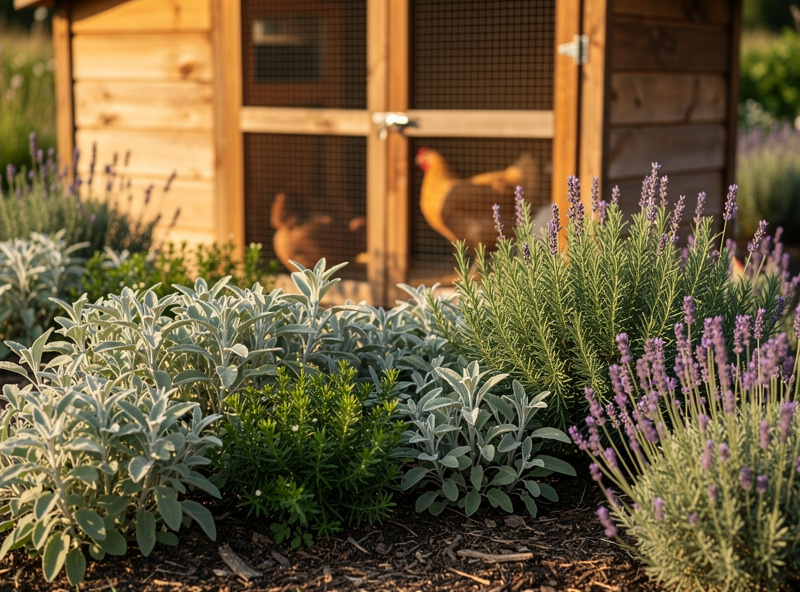
English lavender placed on the sunniest side of the run does three things: it gives skittish birds a sheltered edge to tuck beside, it is widely planted around coops to help keep mites down in the surrounding soil, and it looks better than any other plant on this list when it blooms. Chickens generally leave lavender alone — the aromatic oils are too intense for casual browsing. Plant on a slight mound for drainage; lavender rots in the wet, compacted soil that forms near coop doors.
5. Curly Kale (Brassica oleracea var. sabellica)
Kale planted as a perimeter crop gives my chickens a living salad bar that regrows after grazing. I space my plants 18 inches apart and protect the crowns with a small wire cage until the plants reach 8-10 inches tall — chickens will destroy young kale, but they peck mature leaves selectively without killing the plant. Dinosaur kale (Lacinato) holds up better than curly varieties under heavy scratching. One mature kale plant provides roughly 2-3 weeks of forage per bird before needing a recovery period.
6. Rosemary (Salvia rosmarinus)
Woody, aromatic rosemary is effectively chicken-proof — the birds dislike the needle-like texture and strong oils. Plant it on the south or west side of the run where the reflected heat from fencing benefits this Mediterranean shrub. Rosemary is a classic aromatic to plant near a coop, and a stand of it on the dusty, dander-heavy edge of the run earns its place on scent alone. Upright varieties (Tuscan Blue) work better than creeping types, which birds will flatten by walking on them.
7. Sunflowers (Helianthus annuus)
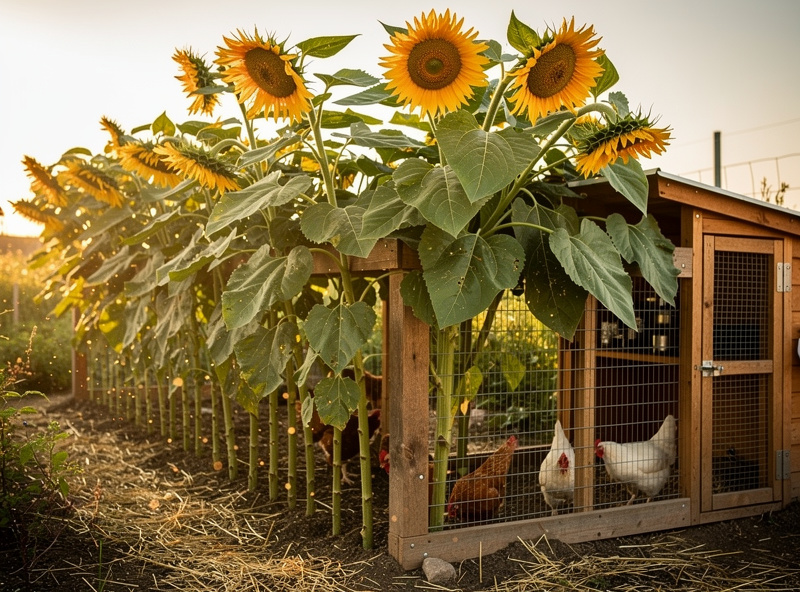
Sunflowers solve the shade problem faster than any other plant on this list. I run a row of mammoth varieties on the west side of my coop, and by mid-July they create a living wall of shade that takes a real edge off the afternoon heat in the run. At season’s end, cut the heads and toss them whole into the run — chickens will strip every seed in 48 hours, and the empty heads become enrichment toys. Plant in succession every 3 weeks starting after last frost to extend the shade and seed supply into fall.
8. Fennel (Foeniculum vulgare)
Fennel’s feathery fronds host swallowtail caterpillars, which chickens will hunt with the enthusiasm of small velociraptors — free protein from a plant that costs basically nothing to grow. The bulb and foliage are chicken-safe, and the anise-scented leaves repel aphids that would otherwise migrate to nearby vegetable beds. Fennel self-seeds freely; plant it where you want a permanent stand, because once it establishes, pulling volunteers becomes a recurring chore.
9. Marigold (Tagetes spp.)
French marigolds planted in a dense band around the run base suppress root-knot nematodes in the soil and add carotenoids to the birds’ diet when they eat the petals. Marigolds produce more flowers the more they are lightly grazed, so a peck or two actually increases the display. Avoid African marigolds (Tagetes erecta) — the larger flowers hold moisture and can develop botrytis in humid coop microclimates. French varieties stay compact at 8-12 inches and will not shade out shorter herbs planted nearby.
10. Oregano (Origanum vulgare)
Oregano earns its spot on two fronts: it is one of the most-researched plants for poultry, and it pulls double duty — the same oregano that lines my run perimeter ends up dried in my kitchen jar for cooking. Carvacrol and thymol — the same compounds that have made oregano oil a studied alternative to antibiotic growth promoters in poultry — are present in the fresh leaves. My birds pick at it on their own, and it is one of the herbs they graze most readily. Plant it on the dry, well-drained edge of the run; oregano in wet soil loses its aromatic punch and succumbs to root rot within one season.
11. Borage (Borago officinalis)
Borage is unpopular with gardeners who have never kept chickens and beloved by those who have. The cucumber-flavored leaves are chicken-safe, the blue star-shaped flowers are among the best pollinator magnets in the garden, and the plant self-seeds with cheerful abandon. Chickens eat young leaves and flowers but leave established plants alone. One warning: borage grows 2-3 feet tall and wide per plant — give it space or it will overrun shorter companions by August.
12. Sage (Salvia officinalis)
Garden sage completes the aromatic perimeter quartet (with rosemary, lavender, and oregano) that turns the coop run edge into a functional herb hedge. Sage’s silvery foliage reflects heat, keeping the soil underneath cooler than bare ground, and like the other woody herbs on this list it shrugs off both chicken traffic and drought. Chickens ignore sage almost completely — the texture and taste are too intense. Plant common sage rather than variegated or purple cultivars, which are less cold-hardy and less vigorous under grazing pressure.
Plants to Keep Away from Chicken Runs
Some common garden plants are toxic to chickens and should never be planted where birds can reach them. Nightshade-family plants — tomato, potato, eggplant, and pepper leaves and stems — contain solanine, which causes digestive and neurological distress in poultry. Rhubarb leaves are loaded with oxalates, and ornamentals like foxglove (Digitalis) carry cardiac glycosides that can kill a bird from a few pecked leaves. Yew (Taxus) is so toxic that a single branch clipping blown into the run is a veterinary emergency. If you are not sure about a plant, assume it is unsafe until you verify through a poultry-specific toxicology reference — dogs and cats metabolize differently, and standard pet-toxicity lists do not always translate to birds.
How to Plan the Run Perimeter
I divide my run perimeter into zones the same way I plan my raised beds. The south side gets the sun-lovers — lavender, rosemary, sage, and sunflowers. The north and east sides get partial-shade plants — comfrey, lemon balm, and kale. The wet zone near the waterer gets fennel and borage, which handle occasional splashing. I leave a 12-inch bare strip between plants and the run wire; chickens will stretch their necks through fencing to reach anything closer, and they will kill it. A cheap temporary barrier — hardware cloth bent into an L-shape and staked at ground level — protects young plants during their first 6-8 weeks while roots establish. After that, I remove it and let the plants fend for themselves.
For a deeper look at how the coop itself integrates with the garden — including coop-plus-run layouts that make the most of your space — see the full coop-with-run comparison guide on SmartCoopHQ, where the chicken-keeping side of this equation lives.
Frequently Asked Questions
Are marigolds safe for chickens to eat?
Yes. French marigolds (Tagetes patula) are safe for chickens and their petals add colour to egg yolks. Chickens eat the flowers and leaves without harm. Avoid African marigolds near coops because their larger flower heads trap moisture and develop fungal growth in humid run environments.
What is the fastest-growing plant for chicken run shade?
Mammoth sunflowers provide partial shade 6-8 weeks after seeding and full shade by week 10. A row on the west side takes a real edge off the afternoon heat in the run. Succession-plant every 3 weeks for continuous shade through late summer and seed heads for fall forage.
Can I plant vegetables chickens will eat right outside the run?
Yes, but protect young plants with a wire cage until they are 8-10 inches tall. Kale, Swiss chard, and nasturtium all regrow after moderate grazing by mature birds. Do not plant tomato, potato, eggplant, or pepper near runs — nightshade foliage is toxic to poultry even in small quantities.
What herbs naturally repel chicken coop pests?
Lavender (linalool repels mites), rosemary (antimicrobial foliage), lemon balm (citronellal deters mosquitoes), and oregano (carvacrol is studied in poultry science) all repel pests around coop runs. Plant them on the sunny, well-drained side of the run for maximum aromatic oil production and pest deterrence.
Is comfrey actually safe for chickens to eat?
Fresh comfrey leaves are safe for chickens in moderation. The plant is high in protein and minerals from its deep taproot. Use the sterile Bocking 14 cultivar to prevent spreading. Comfrey should be a supplemental forage — not a primary feed — because excessive quantities can cause liver stress in poultry.
How do I stop chickens from killing the plants around the run?
Leave a 12-inch bare strip between plants and run wire. Chickens reach through fencing and destroy anything closer. Install temporary hardware cloth barriers around young plants for the first 6-8 weeks until root systems establish. Mature woody herbs like rosemary, lavender, and sage are effectively chicken-proof without protection.
The plants listed here are the ones I have grown within reach of my own chickens and cross-checked against published veterinary guidance. A chicken-run garden is a low-maintenance way to supplement their diet with fresh greens while keeping the area around the coop looking lived-in and intentional rather than a muddy scraped-out pen.
Related Articles
- Calming Garden Herbs: 5 Pre-Sauna Tea Plants You Can Grow
- Garden-to-Coop: 7 Plants Chickens Love (and 5 They Should Not Eat)
- Container Gardening: The Complete Guide
- Raised Beds and Planters: Complete Setup Guide
- Soil and Compost: The Complete Foundation Guide
- Herb Garden: Complete Outdoor Growing Guide