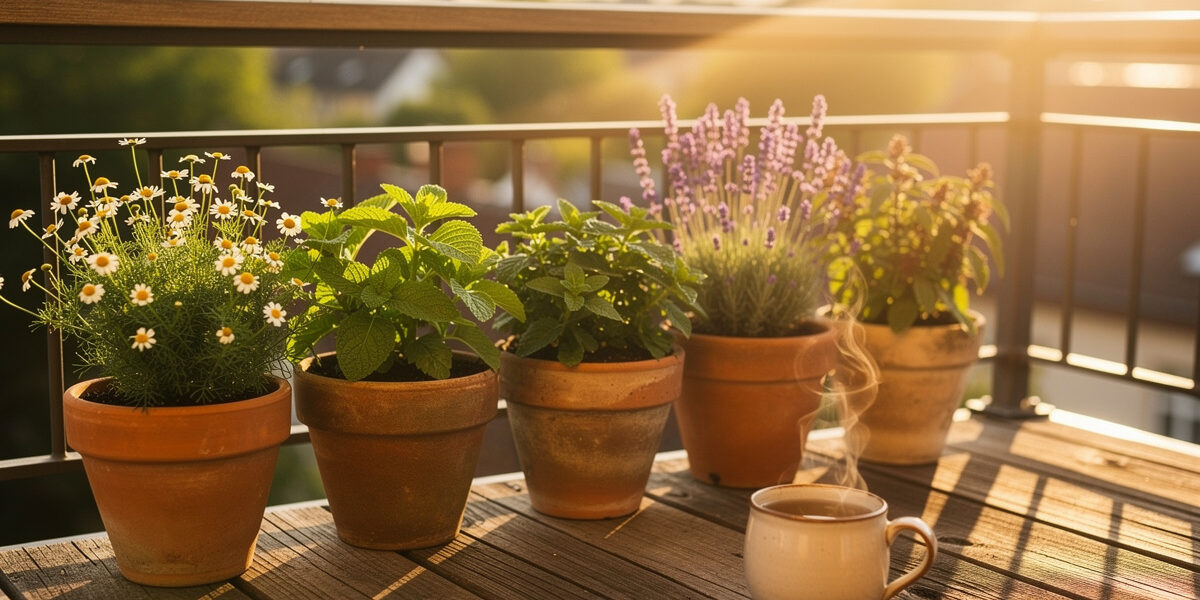
Five garden herbs grow easily in containers and brew into pre-sauna teas with fresh, clean flavor no tea bag can match: chamomile, lemon balm, peppermint, lavender, and tulsi (holy basil). All five thrive in 8-inch pots on a balcony or patio, tolerate full sun with regular watering, and dry well for off-season use. On my balcony the ritual of picking a handful of leaves, pouring hot water, and sitting with a warm mug for 20 minutes before stepping into the cabin is as much a part of the session as the heat itself. Here are the five plants I grow for it, and how to set them up in containers.
The pairing is about the ritual. Pre-sauna hydration with a warm herbal infusion is an easy way to top up on fluids and — honestly — it gives you a reason to sit still for 20 minutes before the heat begins, which is the hardest part of any sauna session for me. Below is a per-plant grow brief, a brewing window for each, and the exact patio container setup I use to keep all five alive year-round.
As an Amazon Associate I earn from qualifying purchases.
Why Garden Herbs Beat Pre-Bagged Sauna Teas
Garden-fresh herbs carry far more of the volatile oils that drive flavor than supermarket tea bags, which sit in cardboard for a year or more before you brew them. A fresh chamomile flower brewed within an hour of picking has a rich apple-like sweetness that fades within weeks in a paper sachet — and the same holds for lemon balm’s citrus note and tulsi’s clove-like warmth. Fresh herbs produce a clean, complex cup; aged bagged herbs produce faintly-flavoured hot water. For pre-sauna drinking, that difference is the whole point.
For a pre-sauna routine, freshness matters even more than for a bedtime tea. Infrared sessions warm you through and pull water hard. A clean-tasting brew with genuine garden flavor makes drinking 16 ounces before a session feel like a small ritual rather than a chore, and the brewing protocol on infrared sauna session protocol on Infrared Sauna Lab walks through session timing that pairs well with garden tea. Bagged herbs get you caffeine-free liquid; fresh herbs get you a genuinely good cup.
If you grow vegetables already, you have everything needed: a sunny corner, a 6-inch-deep container, and a watering can. The plants below are forgiving — chamomile will reseed itself for years, and tulsi tolerates the kind of heat a south-facing balcony hits in July without flinching. None of them need a greenhouse, grow lights, or a dedicated bed.
The 5 Pre-Sauna Tea Plants
Each of the five herbs below brings a distinct flavor to the pre-sauna cup: chamomile is sweet and apple-like, lemon balm is bright and citrusy, peppermint is sharp and cooling, lavender is floral and aromatic, and tulsi is warm and clove-like. Start with single-herb infusions your first few sessions to learn the flavor of each, then blend two together once you know what you like. The five plants also look great together on a balcony rail — chamomile flowers draw bees, lavender spikes add structure, and tulsi catches afternoon sun like nothing else in the collection.
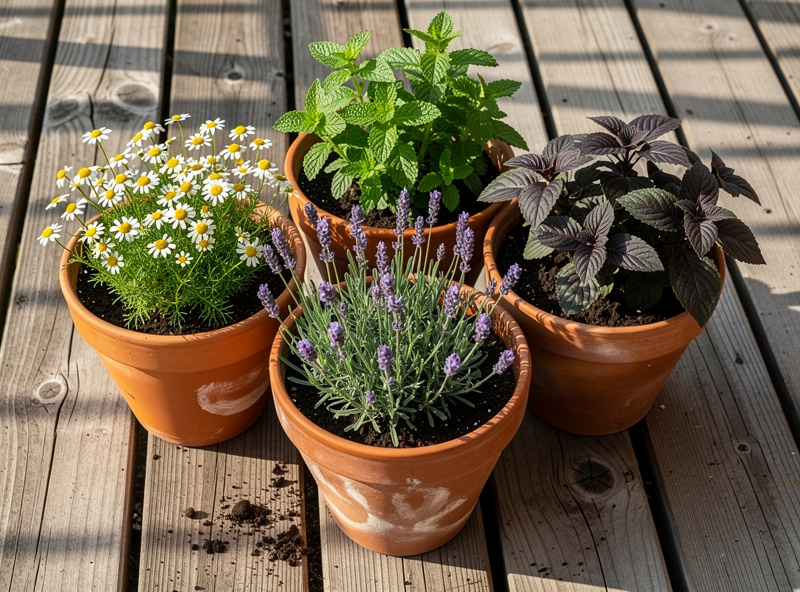
1. Chamomile (Matricaria chamomilla)
German chamomile is an annual that reseeds aggressively. Sow directly in an 8-inch pot in March, harvest the daisy-like flowerheads from late May through August, and dry on a paper plate for 48 hours. One tablespoon of dried flowers per cup, steeped 5 minutes, gives a clean sweet apple-scented cup 30 minutes before the session. Chamomile reseeds itself reliably — I let a few flowers go to seed in late summer and find volunteers in nearby pots the following spring.
2. Lemon Balm (Melissa officinalis)
A perennial mint relative that returns every spring. Lemon balm wants partial shade in zones 7-9 and full sun further north. The fresh leaves carry bright lemon-citrus flavor. On my balcony lemon balm handles partial shade better than most herbs, which makes it a good fit for the spot under the railing where basil would sulk. Tear five leaves into a mug, top with hot water, steep 4 minutes, and drink during the 25-minute pre-heat phase. The detailed grow card for this plant lives at grow lemon balm.
3. Peppermint (Mentha × piperita)
Peppermint is a runner — never plant it in the ground, because it spreads aggressively by underground rhizomes and turns invasive. A 10-inch container with a saucer keeps it contained and productive. Pinch tips weekly from May to October. The sharp cooling flavor cuts through warm water well, and a few fresh leaves make 16 ounces of pre-sauna liquid taste like something you actually want to drink. See the peppermint runner control guide for specifics on containing the rhizomes.
4. Lavender (Lavandula angustifolia)
English lavender (Munstead, Hidcote) is the type most often used for culinary purposes. Its floral aroma is unmistakable and concentrated — a little goes a long way. The scent alone is enough to shift the mood of the whole balcony on a warm afternoon. Use one teaspoon of buds per cup; oversteeping turns bitter fast. Full grow protocol is on the growing lavender perennial guide.
5. Tulsi / Holy Basil (Ocimum tenuiflorum)
Tulsi loves heat — it will sulk below 70°F and explode in growth above 80°F. A 12-inch pot, full sun, and weekly liquid feed produces enough leaves for two cups per week. Use 8-10 fresh leaves per cup, steep 6 minutes, and drink within 45 minutes of harvest for peak flavor. Of the five plants on this list, tulsi is the one that genuinely enjoys the July sun on a south-facing balcony — the hotter it gets, the faster it grows.
Container and Soil Setup for All Five
The simplest setup is one terracotta pot per herb, 8-12 inches in diameter, sitting on a balcony rail or patio table. Use a 60/30/10 mix of potting soil, compost, and perlite. Water when the top inch dries out — overwatering kills lavender and tulsi within two weeks. South or southwest exposure delivers the 6+ hours of sun chamomile and lavender demand.
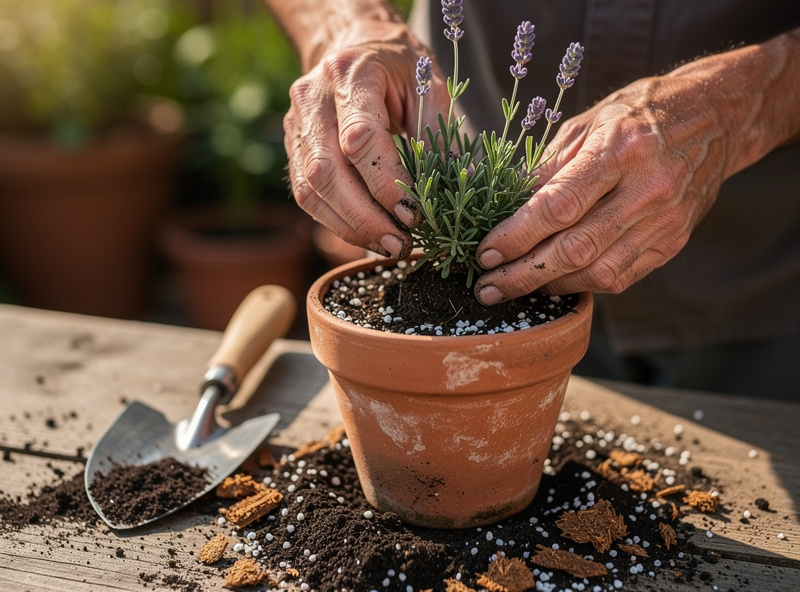
Fertilize lightly. Herbs grown for tea concentrate volatile oils when slightly stressed; over-fertilized plants make leaves but lose flavor. A liquid kelp feed at quarter strength every three weeks is plenty. For container basics that apply across the herb garden, the container gardening complete guide covers drainage, soil layering, and rotation cadence.
Terracotta breathes, which dries soil faster than glazed ceramic or plastic — that is a feature for Mediterranean herbs (lavender, tulsi) and a bug for moisture-lovers (lemon balm, peppermint). Mix materials accordingly: terracotta for the sun lovers, glazed for the moisture lovers, both side by side for visual cohesion.
Through a Swedish winter the split matters more than the aesthetics. Lemon balm and peppermint are hardy enough to go dormant on the balcony and come back on their own in spring, so I leave those pots out and just stop watering once growth stops. The lavender gets pushed tight against the wall for the little bit of shelter it buys, and the tulsi comes indoors under the grow-light shelf or does not survive at all — it is a tropical that will not take a single frost, so I treat it as an annual most years and start fresh from seed each spring.
Brewing Window: 30 Minutes Before the Sauna
The optimal window is 25-35 minutes before the cabin reaches target temperature. Drinking earlier means the warm liquid is processed before the session; drinking too late forces the kidneys to process during peak sweat. A 12-oz mug at the 30-minute mark gives the body 20 minutes to absorb, then 10 minutes to redistribute fluid before the heat starts pulling.
Steep times matter. Chamomile and lemon balm release their compounds in 4-5 minutes; lavender turns bitter past 4 minutes; tulsi needs a full 6 minutes to extract eugenol. Peppermint is forgiving — anywhere from 3 to 8 minutes works. Use just-off-boil water (around 200°F) for all five; rolling boil destroys the volatile oils that carry the flavor.
Drying and Storing for the Off-Season
Air-dry small batches on paper plates in a dark cupboard for 48-72 hours. Once leaves crumble between fingers, transfer to glass jars and store away from light. Properly dried chamomile holds its flavor for 8-10 months; lemon balm peaks at 6 months and fades fast after that. Label jars with harvest date — flavor decays even in good storage.
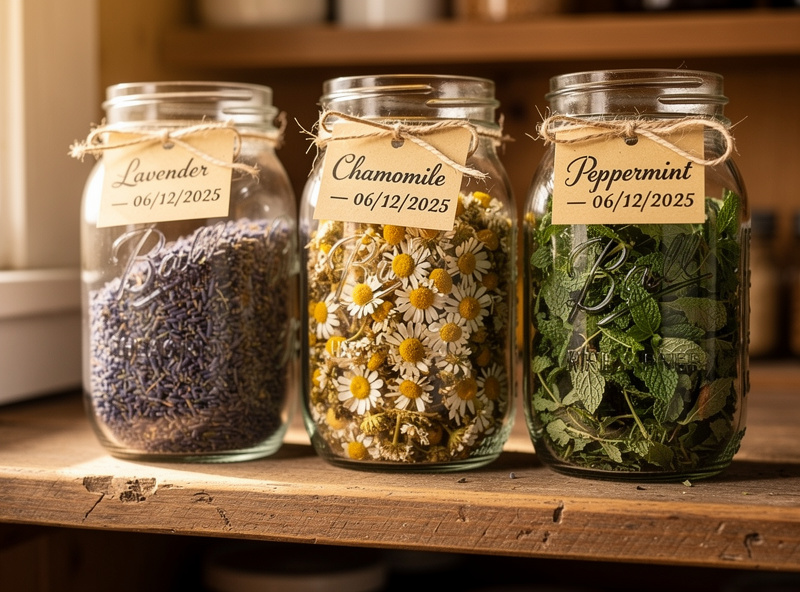
Skip silica packets. Herbs need to breathe slightly to maintain aroma — a tightly sealed jar with a desiccant turns flat within weeks. A standard mason jar with a two-piece lid, kept in a cool dark cabinet, holds quality through winter when fresh leaves are not available. Label jars with harvest date — flavor fades even in good storage, and you want the best cup when fresh herbs cannot supply it. The best soil for herbs guide covers the post-harvest soil amendments that keep the plants productive into a second season.
Pairing Herbs with Sauna Session Length
Match the herb to the session length and time of day. Short 20-minute morning sessions pair well with peppermint or lemon balm — both are bright and refreshing without being heavy. Longer 40-minute evening sessions match chamomile, lavender, or tulsi, whose deeper, richer flavors hold up through a longer slow drink. This is about taste and preference — try each solo and trust what you reach for.
| Herb | Best Session Length | Brewing Time | Flavor Notes |
|---|---|---|---|
| Chamomile | 30-45 min | 5 min | Sweet, apple-like, mellow |
| Lemon Balm | 20-30 min | 4 min | Bright citrus, refreshing |
| Peppermint | 20-25 min | 3-5 min | Sharp, cooling, crisp |
| Lavender | 30-40 min | 4 min | Floral, aromatic, perfumed |
| Tulsi | 40-60 min | 6 min | Warm, clove-like, earthy |
Frequently Asked Questions
What herb tea is best before an infrared sauna?
Chamomile is the strongest single-herb choice for pre-sauna brewing. Its sweet apple-like flavor and mellow character pair well with the quiet settling-in phase before an infrared session without being overpowering. Lemon balm is a close second if you prefer citrus notes.
Can you grow all 5 sauna herbs in containers?
Yes. Chamomile, lemon balm, peppermint, lavender, and tulsi all thrive in 8-12 inch containers with at least 6 hours of sun. Peppermint must stay in a contained pot or it will overrun any garden bed within one season.
How long before a sauna should you drink the tea?
Drink 12 ounces 25-35 minutes before the session begins. This gives you 20 minutes to enjoy the cup at leisure and 10 minutes for the fluid to distribute before the heat begins pulling water through the skin.
Do dried herbs work as well as fresh for sauna tea?
Properly dried herbs keep much of their flavor for 6–10 months. Chamomile holds best at 10 months, lemon balm fades fastest at 6 months. Store in glass jars away from light and label with harvest date.
Is it safe to drink herbal tea right before a hot sauna?
Yes for healthy adults. The 12-ounce pre-sauna cup adds to baseline hydration and the warmth of the herbal infusion encourages a light early sweat. Skip caffeinated teas before a sauna because caffeine accelerates dehydration during heat exposure.
Which herb brews the best single-herb pre-sauna tea?
For flavor alone, chamomile is the most forgiving and approachable, with a sweetness that holds up even if you oversteep slightly. Lavender is the fastest to brew and the most aromatic — just a few buds fills the room. Combine the two for sessions longer than 35 minutes.
A balcony herb garden for pre-sauna tea is one of the most rewarding small-space projects I run: the plants need almost nothing beyond sun and the occasional watering can, and the reward is a fresh cup of chamomile or lemon balm from plants I started from seed. Four feet of railing and five terracotta pots is all the space the five need — they produce from late spring through the first frost, and the whole dried harvest fits into a handful of glass jars that carry the ritual through the winter.