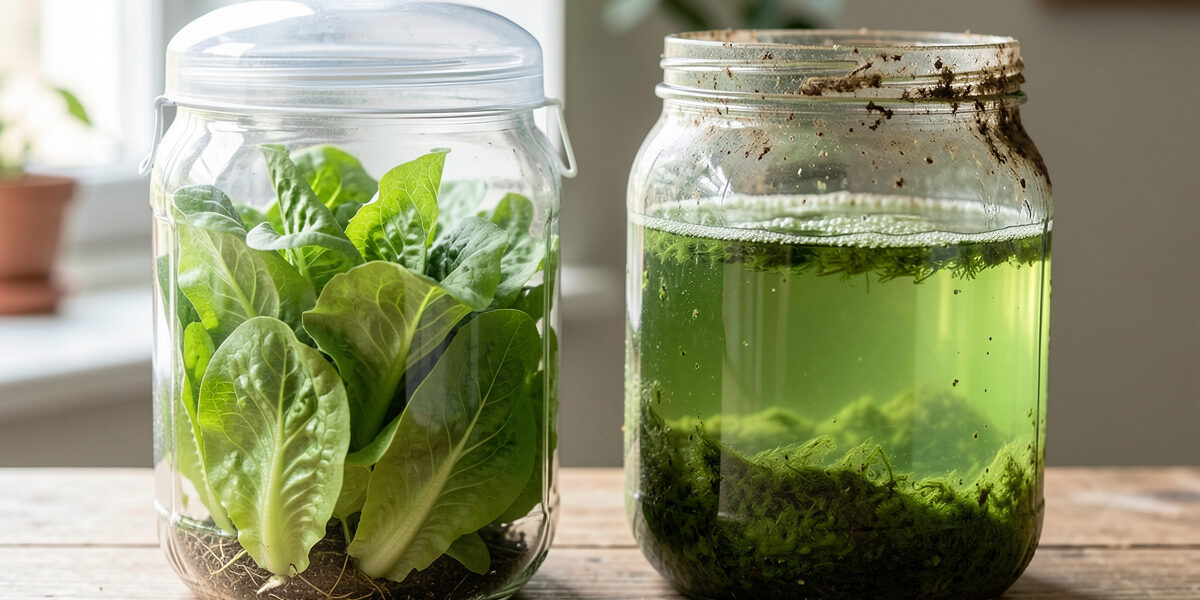
Algae grows in a hydroponic reservoir for one simple reason: light is reaching the nutrient water. Give algae light, water, and dissolved nutrients — three things every hydroponic system has in abundance — and it blooms, turning your solution green and slimy. The fix is equally simple: block the light. Get an opaque reservoir and algae has nowhere to grow, no matter how rich the solution or how warm the room.
Nearly every green, murky jar I have been shown traces back to the same cause — a clear container on a bright sill with nothing covering the water. It is the most common beginner problem in passive hydroponics and also the most completely preventable, because unlike root rot or pH lockout, algae has a single root cause you can eliminate at setup. Here is why it happens, why it actually matters for your plants, and every practical way to shut it down.
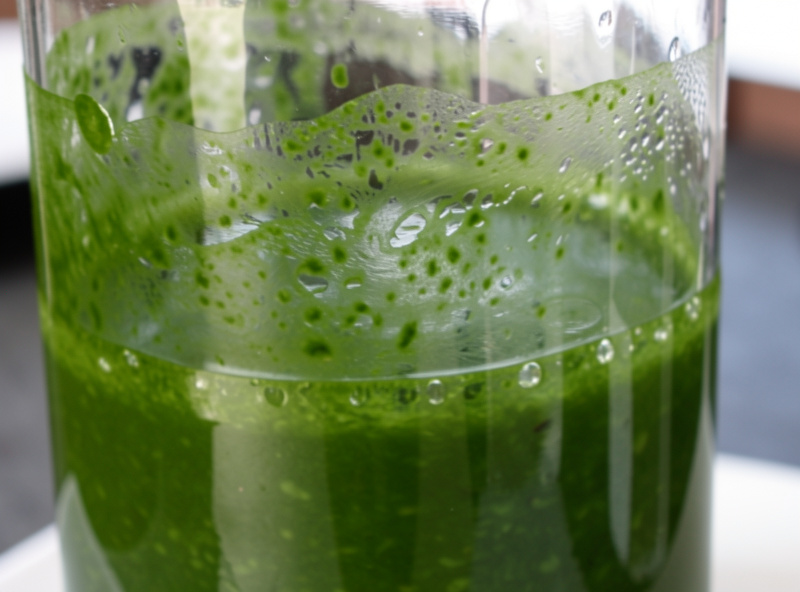
Why Does Algae Grow in a Hydroponic Reservoir?
Algae grows because your reservoir offers everything it needs: light, water, and the same dissolved nutrients you mixed for your plant. It is a photosynthetic organism, so light is the trigger — cut off the light and algae simply cannot establish, even with all the water and nutrients in the world sitting right there. This is exactly why Bernard Kratky’s original non-circulating systems, developed through the University of Hawaii’s College of Tropical Agriculture and Human Resources, were always specified with an opaque reservoir rather than left to chance.
This is why clear glass jars and translucent white tubs are the worst offenders, and why an opaque or wrapped container is nearly immune. The nutrient solution that makes your lettuce thrive is an equally good meal for algae; you cannot starve the algae without starving the plant, so nutrients are not the lever to pull. Warmth speeds a bloom along, and a bright warm windowsill in spring is a perfect algae incubator, but heat only accelerates what light starts. Remove the light and there is no bloom to accelerate. Everything about controlling algae comes back to that one variable, which is genuinely good news — it means the problem has a clean, permanent solution rather than an ongoing battle.
Is Algae in a Hydroponic System Actually Harmful?
Yes, algae harms your plants in several quiet ways even though it looks like just an aesthetic nuisance. It competes directly with your crop for nutrients and dissolved oxygen, it can coat and clog roots, and when it dies off it decays and feeds the kind of anaerobic conditions that lead to root rot. A heavy bloom genuinely holds a plant back.
The competition for oxygen is the part beginners underestimate. In a passive system the roots depend on the air gap and on whatever oxygen is in the water; a thriving algae mass consumes oxygen too, especially at night when it stops producing it, squeezing your plant’s roots. Algae also strips nutrients your lettuce paid for, so a green reservoir is a slightly hungrier reservoir. And a thick surface film can reduce the gas exchange the solution needs. None of this kills a plant overnight — I have grown a passable lettuce in a jar that had gone a bit green before I caught it — but it drags on vigour, and a badly fouled reservoir smells sour and looks unappetising in a way that takes the joy out of the whole thing. It is worth preventing simply because prevention is so easy.
How Do You Block Light to Stop Algae?
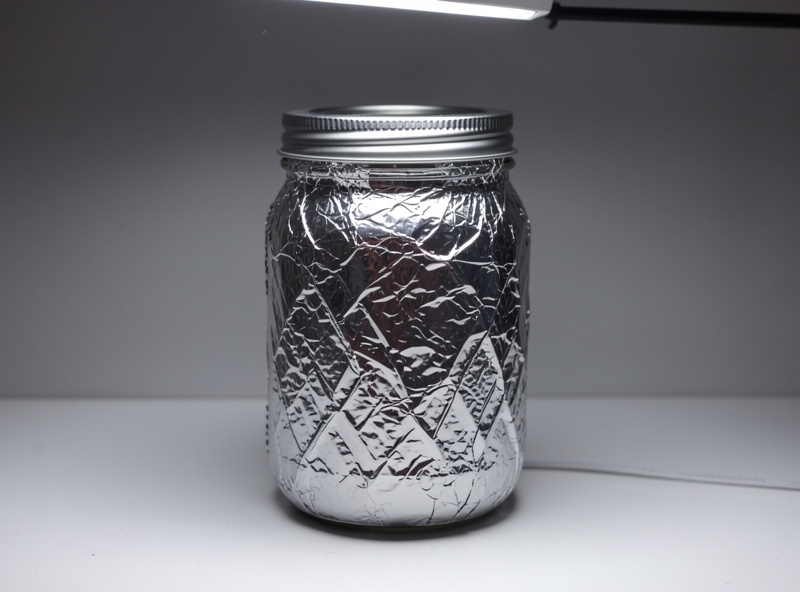
You block light by making the reservoir opaque — wrap a clear jar in foil or tape, paint it, slip it into a sleeve, or simply grow in an opaque container from the start. The goal is total: any gap that lets light onto the water lets algae in, so cover the sides and, where you can, shade the surface around the net cup too.
My go-to for jars is aluminium foil, because it is instant, reusable, and reflects a little extra light back up onto the leaves as a small bonus. Black tape or a coat of paint works permanently for a container you have committed to. For tubs, the easiest route is to choose an opaque one — a solid-coloured storage box rather than a clear or translucent white one — so there is nothing to wrap. The one spot people miss is the net-cup opening: light can slip down through the medium into the solution, which is another reason I fill the net cup with clay pebbles that sit proud and shade the gap, as covered in the net cups guide. Cover the sides, shade the top, and the bloom never starts. This is exactly the step I stress in the mason jar build, because a bare glass jar is the classic way to grow algae by accident.
How Do You Get Rid of Algae Once It Has Started?
If a reservoir has already gone green, the fix is to empty it, scrub the container clean, block the light, and refill with fresh nutrient solution — you cannot easily kill algae in place without harming the plant, so you reset. Rinse the roots gently under clean water to remove the slime, wash the jar and net cup thoroughly, and set it back up properly covered.
Do not reach for bleach or hydrogen peroxide in a jar with a plant you want to keep; the reliable, plant-safe move is a physical clean and a fresh start under opaque cover. If the plant is far enough along, this is also a fine moment to just harvest it and begin again with a clean, wrapped reservoir. The reason prevention beats cure so decisively here is that a cure means disturbing the roots and remixing solution mid-grow, which sets a plant back, whereas prevention costs nothing but a strip of foil at the start. Once you have cleaned up one green jar, you will never leave a reservoir uncovered again — the lesson lands hard and stays.
Does Algae Mean Something Else Is Wrong?
Algae itself only means light is reaching the water — it is not a sign of bad nutrients or a sick plant. But it often travels with the other classic beginner mistake, overfilling, because a reservoir kept brimming and uncovered gives algae both the light and the constant high water surface it likes. Fixing the cover and the fill level together solves both.
It is worth separating algae from root rot in your mind, because they look related but are not the same problem. Algae is green and grows in the light; root rot is a brown, slimy, foul-smelling breakdown of the roots that thrives in warm, stagnant, oxygen-poor water, and a heavy algae bloom can help tip a reservoir toward it. The shared prevention is a well-run passive setup: opaque reservoir, correct fill so the air gap forms, and healthy transpiration under good light. That is the same recipe that grows good lettuce in the first place, laid out in the Kratky method for beginners guide and reinforced in the lettuce and nutrients guides. Block the light, get the fill right, and algae becomes a problem you simply never have. For the broader science of algae in nutrient solutions and controlled-environment growing, Cornell’s Controlled Environment Agriculture program is a solid resource once you want to go deeper.
Do Grow Lights Cause Reservoir Algae?
A grow light can feed reservoir algae if its light reaches the water, which matters for anyone growing indoors up north where the bar runs long hours. The algae does not care whether the light is sunshine or an LED — photons are photons, and a bright bar running 12 to 16 hours a day over an uncovered jar is just as effective an algae incubator as a summer windowsill.
This is easy to overlook because you set up a grow shelf precisely to blast the plants with light, and it feels counterintuitive that the same light you want on the leaves is the light you must keep off the water. The answer is the same as ever: cover the reservoir. Opaque tubs and foil-wrapped jars sit happily under a full-spectrum bar with no algae at all, because the light hits only the leaves and the wrapping, never the solution. I run my winter greens under a bright bar for long photoperiods and never see a bloom, purely because every reservoir on the shelf is opaque. If you are adding lights to grow through a dark season and you notice green creeping into a jar, the light on the water is your culprit, and a strip of foil is the whole fix. Good lighting and zero algae are perfectly compatible — they just require that the two never touch.
Keep Reading
- The Kratky Method for Beginners: Passive Hydroponics
- DIY Mason Jar Hydroponics: A Kratky Build From Stuff You Own
- Best Net Cups and Baskets for Small-Space Hydroponics
- Growing Lettuce With the Kratky Method
Why is there algae in my hydroponic reservoir?
Algae grows because light is reaching the nutrient water. Algae is photosynthetic, so it needs light to bloom, and a hydroponic reservoir already supplies the water and dissolved nutrients it feeds on. Clear glass jars and translucent tubs on a bright windowsill are the most common cause.
Is algae bad for hydroponic plants?
Yes. Algae competes with your plant for nutrients and dissolved oxygen, can coat and clog roots, and when it dies it decays and encourages the anaerobic conditions behind root rot. It rarely kills a plant outright but noticeably drags on vigour, so it is worth preventing.
How do you stop algae in a Kratky jar?
Block all light from the reservoir by making it opaque. Wrap a clear jar in foil or tape, paint it, or grow in a solid opaque container from the start. Also shade the net-cup opening with medium like clay pebbles so light cannot slip down into the solution.
How do you get rid of algae that has already grown?
Empty the reservoir, scrub the container and net cup clean, gently rinse the roots, block the light, and refill with fresh nutrient solution. Avoid bleach or peroxide in a jar with a plant you want to keep. If the crop is far along, simply harvest and restart under cover.
Does algae mean my nutrients are wrong?
No. Algae only indicates that light is reaching the water, not that your nutrient mix is bad. You cannot starve algae without starving the plant, since they feed on the same solution. The only effective lever is light, so an opaque reservoir is the complete fix.