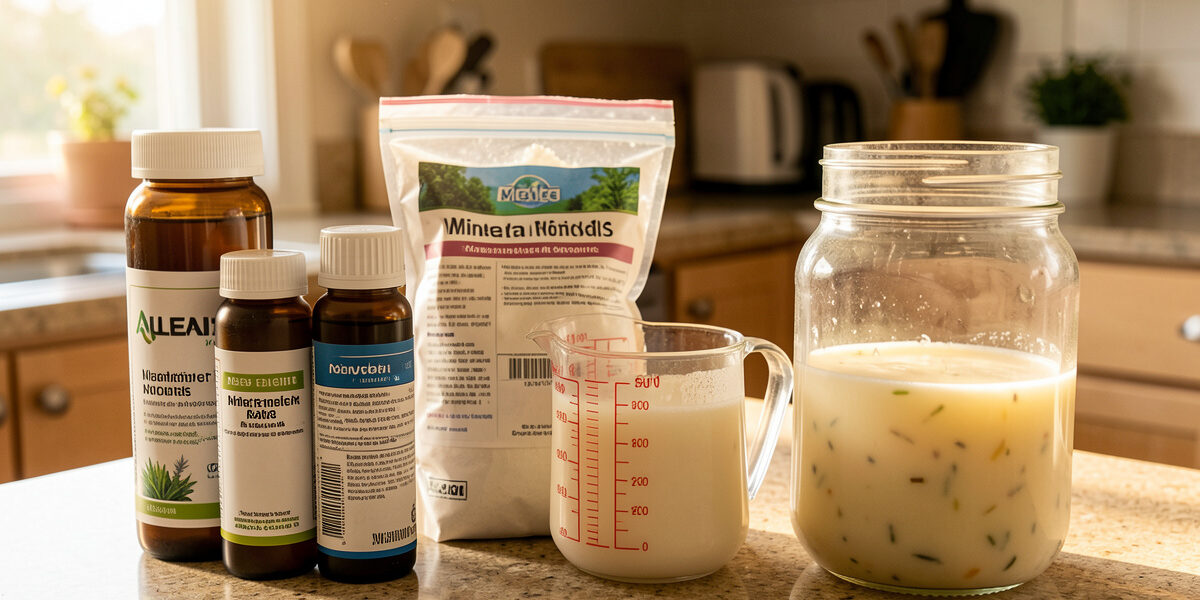
Hydroponic nutrients are complete mineral fertilisers that dissolve fully in water and give a plant every element it needs — because in hydroponics there is no soil to supply anything. That is the one non-negotiable purchase in passive growing: you can improvise the jar, the net cup, and the medium, but you cannot fake plant food with kitchen scraps or a bottle of houseplant fertiliser. Get the nutrients right and a Kratky jar practically grows itself; get them wrong and nothing else you do matters.
This trips up more beginners than any other single thing. People assume “fertiliser is fertiliser,” pour in something meant for potted plants, and wonder why their lettuce yellows in a tank that looks full of food. The difference is real and worth understanding once, properly. Here is what hydroponic nutrients actually are, how to mix them without a chemistry degree, and how strong to make the solution for the leafy crops that suit a Nordic apartment.
Why Can’t You Use Regular Fertiliser in Hydroponics?
Regular garden and houseplant fertilisers are formulated to supplement soil, so they assume the soil already supplies calcium, magnesium, and a range of micronutrients — which in water it does not. A hydroponic nutrient is “complete”: it contains every element a plant needs, in forms that stay fully dissolved and available in solution. Pour a soil fertiliser into a Kratky jar and you get gaps a plant cannot fill.
The classic missing pieces are calcium and magnesium, the secondary nutrients that soil normally provides for free. A plant short on calcium gets tip burn on its new leaves; short on magnesium, the older leaves yellow between the veins. I learned this by trying to stretch a houseplant feed across a jar of lettuce during my first winter, watching it pale despite a “full” reservoir, and only later understanding that the bottle simply did not contain half of what the plant was asking for. Complete hydroponic nutrients exist precisely to close that gap. There is no workaround — this is the item you buy. Bernard Kratky’s original non-circulating research through the University of Hawaii’s College of Tropical Agriculture and Human Resources used exactly this kind of complete mineral solution, never a soil-style feed, which is why the method only works with true hydroponic nutrients.
What Are the Different Types of Hydroponic Nutrients?
Hydroponic nutrients come in three practical formats: ready-to-mix liquid concentrates, multi-part liquid systems, and powdered mineral salts you dissolve yourself. All three can grow excellent lettuce; they differ mainly in convenience, cost, and how much you enjoy the mixing.
Liquid multi-part systems like the General Hydroponics Flora series (a micro, a grow, and a bloom bottle you combine) are the friendliest starting point — you measure a few millilitres of each into water and you are done. Powdered systems like the MasterBlend trio (the base powder plus calcium nitrate and Epsom salt) are the cheapest per litre by a wide margin and what I have settled on for the volume I mix, but you keep the three parts separate and dissolve them one at a time so the calcium does not react with the sulphates and cloud out. Single-bottle “grow anything” formulas exist and are the simplest of all, though they compromise a little on being ideal for every crop. For a beginner I would start with a two- or three-part liquid, learn the rhythm, then switch to powder for cost once you are hooked.
| Nutrient type | Ease | Cost per litre | Best for |
|---|---|---|---|
| Single-bottle liquid | Easiest | Higher | Absolute beginners, small setups |
| Two/three-part liquid | Easy | Medium | Learning the ropes, most home growers |
| Powdered mineral salts | Moderate | Lowest | Volume mixing, ongoing use |
How Do You Mix Hydroponic Nutrients?
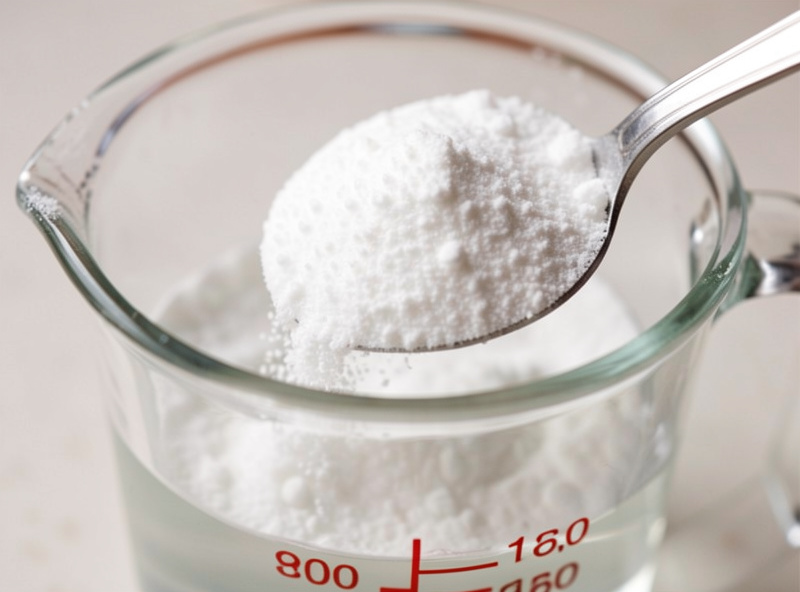
You add the nutrient parts to water — never water to concentrate — one part at a time, stirring each in fully before adding the next, then check and adjust pH last. Follow the dilution on the label for leafy greens, which is usually the lightest strength the product lists. Mixing order matters more than beginners expect, especially with multi-part systems.
The reason for one-at-a-time is chemistry: if you combine concentrated calcium nitrate with concentrated sulphates or phosphates, they can react and precipitate into a chalky sludge that drops your nutrients out of solution before the plant ever sees them. Diluted into a full reservoir and stirred between additions, they coexist happily. I mix into room-temperature water — cold winter tap water dissolves powders slowly and holds less oxygen for the roots — and I always add nutrients before adjusting pH, because the nutrients themselves shift the pH and there is no point chasing a number that is about to move. Once mixed, the solution should be clear, not cloudy; cloudiness means something has precipitated and the recipe or order needs fixing.
How Strong Should Hydroponic Nutrient Solution Be?
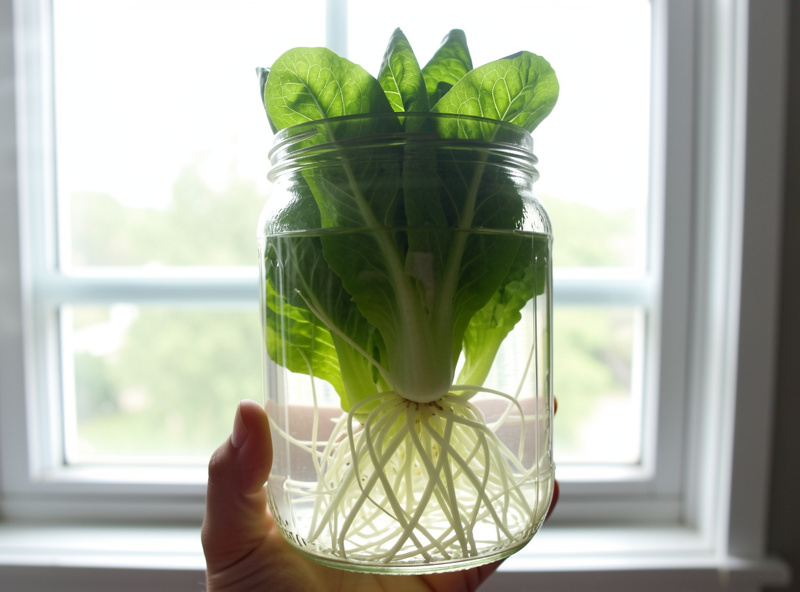
Leafy greens want a relatively weak solution — lower than fruiting crops — because they are light feeders and a solution that is too strong can burn tender roots and cause tip burn. Nutrient charts express strength as EC (electrical conductivity) or PPM (parts per million), and for lettuce and greens the commonly recommended range sits at the low end of what a home meter reads.
You do not strictly need a meter to grow lettuce — following the label’s leafy-greens dilution gets you close — but a cheap EC meter takes the guesswork out and tells you when a reservoir is exhausting. As a rule of thumb from the nutrient charts I follow, seedlings and delicate greens want the weakest solution, mature leafy crops a step up, and fruiting crops stronger still. When in doubt with greens, mix on the weaker side: a slightly hungry lettuce grows fine and green, while an over-fed one shows burn you cannot easily undo. Cornell’s Controlled Environment Agriculture program publishes the EC ranges commercial leafy-greens growers target, and a home reservoir at the low end of that range is exactly where I aim. The pH sits alongside strength as the other half of the equation, and it is covered in full in hydroponic pH for vegetables — the two work together, because even a perfect nutrient strength locks out if the pH is wrong.
How Do You Know If a Plant Has a Nutrient Problem?
Nutrient problems announce themselves in the leaves, and the pattern tells you which element is short: yellowing on old lower leaves usually means nitrogen or magnesium, browning leaf tips point to calcium, and an overall pale, stalled plant is often a pH lockout rather than a true shortage. Reading the plant is a skill worth building because it turns a vague “it looks sad” into an actual diagnosis.
The trap I fell into early was treating every symptom as “needs more food” and dosing the reservoir stronger, which made a pH-lockout problem worse rather than better. The plant was surrounded by nutrients it could not absorb because the pH was out of range — adding more just raised the strength toward burn territory. Now my first move on any pale plant is to check pH before I touch the nutrients, exactly the logic in the pH guide. True deficiencies do happen, especially in a reservoir near the end of its life, but in a freshly mixed, correctly balanced solution the culprit is far more often pH than a missing element. The worm bin and compost that feed my soil containers, covered in worm castings benefits, run on completely different chemistry — a slow biological release — which is exactly why soil amendments do not translate to a hydroponic jar.
What Nutrients Should a Beginner Buy?
Start with a small bottle or bag of a complete hydroponic nutrient rated for vegetables, plus a basic pH test kit or meter and a bottle of pH Down — that trio grows any leafy crop in the cluster. Do not over-buy; a modest amount of concentrate makes a startling number of litres of solution, so the value here is excellent.
For most beginners I recommend a two- or three-part liquid to learn on, then powders for economy once you are mixing regularly. A complete hydroponic nutrient set for leafy greens and a simple pH kit are genuinely the only consumables passive hydroponics needs. Everything else in the Kratky method is reusable kit or improvised from your kitchen. Buy the right food once, learn to read your plants, and the rest of this hobby is nearly free — which, for fresh greens through a Swedish winter, still amazes me.
As an Amazon Associate I earn from qualifying purchases.
Further Reading
- The Kratky Method for Beginners: Passive Hydroponics
- Hydroponic pH for Vegetables
- Growing Lettuce With the Kratky Method
- Best Net Cups and Baskets for Small-Space Hydroponics
Can you use normal plant fertiliser for hydroponics?
No. Regular garden and houseplant fertilisers assume soil supplies calcium, magnesium, and micronutrients, so they leave gaps a water-only system cannot fill. Hydroponics needs a complete nutrient that contains every element the plant needs in a fully dissolved, available form.
What is the best hydroponic nutrient for beginners?
A complete two-part or three-part liquid nutrient rated for vegetables is the friendliest starting point because you just measure a few millilitres of each into water. Powdered mineral-salt systems are cheaper per litre and worth switching to once you mix regularly.
How do you mix hydroponic nutrients correctly?
Add the nutrient parts to water, never water to concentrate, one part at a time, stirring each in fully before the next. Combining concentrated calcium with sulphates or phosphates can make them precipitate. Adjust pH last, because adding the nutrients shifts the pH on its own.
How strong should nutrient solution be for lettuce?
Lettuce and leafy greens are light feeders and want a weak solution, at the low end of what nutrient charts recommend, measured as EC or PPM. Too strong a solution can burn roots and cause tip burn, so when in doubt with greens, mix on the weaker side.
Why is my hydroponic plant yellow even with nutrients?
An overall pale, stalled plant in a full reservoir is usually a pH lockout, not a true shortage. Outside the correct pH range the plant cannot absorb the food that is present. Check and correct pH before adding more nutrients, which would otherwise push the solution toward burn.
How long do hydroponic nutrients last in the reservoir?
In a single-charge Kratky grow the nutrients last the whole crop for fast leafy greens, since the plant finishes before the reservoir is exhausted. The solution does drift in pH and balance over time, so a very long or oversized grow may show late deficiencies near the end.