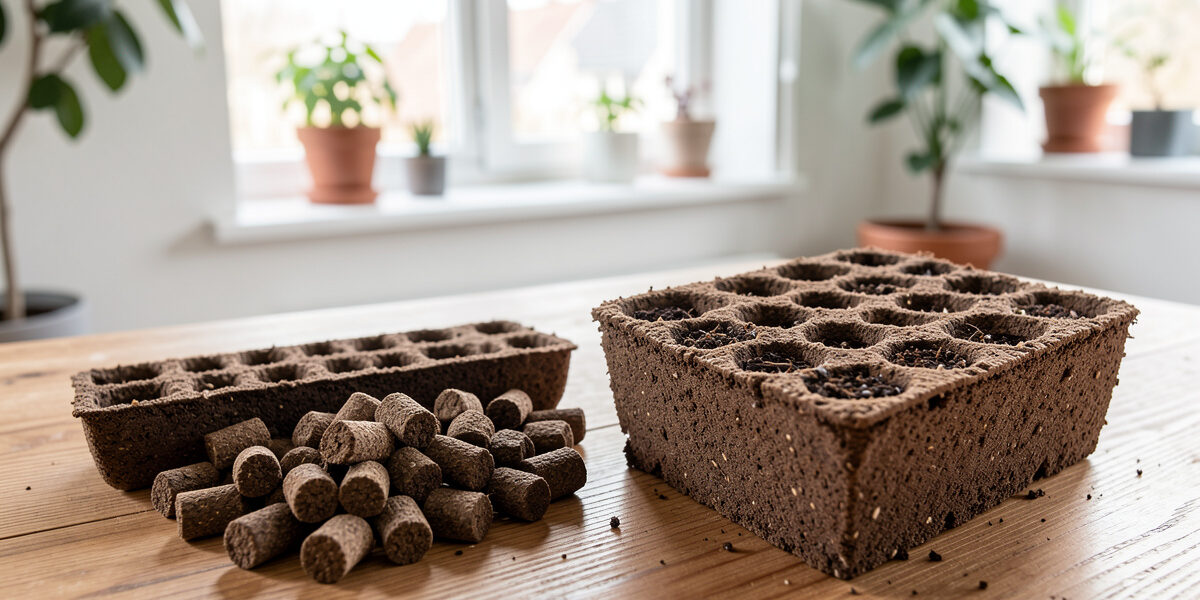
Peat pellets are worth it for convenience and disturbance-free crops, and not worth it as your default sowing method — because they cost a few kronor per plant every season, hold little nutrition, and solve a problem that reusable cells and your own medium solve for free. They are a genuinely tidy tool for a handful of seeds. As the backbone of a regular seed-starting habit, they are the most expensive way to fill a tray.
I keep a sleeve of pellets in the drawer and reach for them maybe twice a season. The rest of my sowing goes into cells with my own mix, and understanding why is the whole point of this comparison. Pellets, soil blocks, and cell trays each win at something different, and the marketing that sells pellets as the easy answer quietly skips their recurring cost and their environmental baggage. Here is the honest three-way breakdown, from someone who has sown all three side by side.
What Are Peat Pellets and How Do They Work?
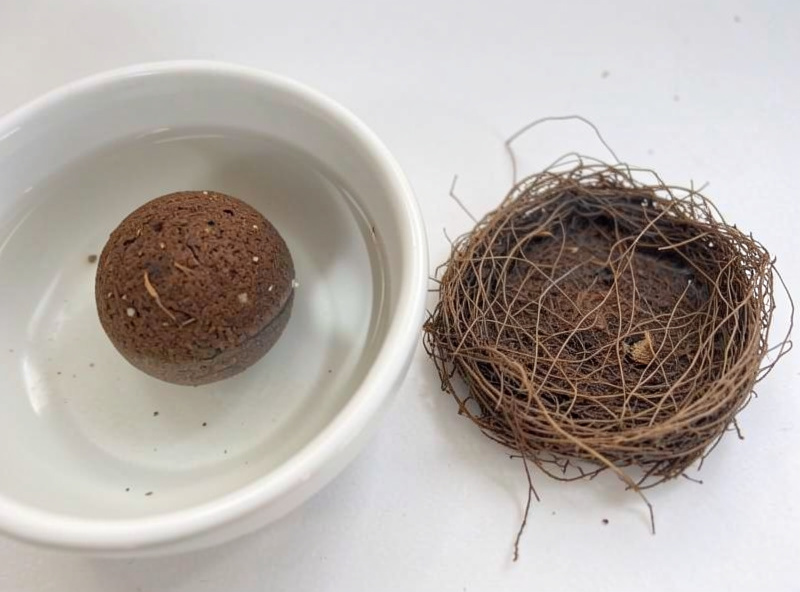
A peat pellet is a compressed disc of peat or coir wrapped in a fine net that swells into a self-contained plug when you soak it. You drop a seed into the dimple on top, and the pellet is both the container and the medium in one — no cells to fill, no mix to scoop, no mess on the counter. When the seedling is ready, you plant the whole netted plug, so roots are never disturbed.
That last point is the real selling feature. Because you plant the entire pellet, there is no transplant shock — no teasing roots out of a cell, no check to growth — which matters for the crops that hate having their roots touched. The pellet swells in a couple of minutes in warm water, and you are sowing. It is the lowest-friction way to start a seed that exists, and for a beginner intimidated by mixing medium and filling cells, that friction reduction is worth something. But convenience is the only axis on which pellets clearly win, and it comes at a recurring price the box does not advertise. For where pellets sit among all the sowing options, see my seed-starting equipment list.
Are Peat Pellets Actually Worth the Money?
For most regular sowing, no — the per-plant cost adds up fast and the plug holds little feed. Each pellet costs a few kronor and is single-use; sow two flats of seedlings a season and you are spending real money on something a bag of medium and reusable cells replace at a fraction of the cost. Cells you buy once and use for years; pellets you buy again every sowing. Over a few seasons the gap is substantial.
There is also a horticultural catch. A straight peat or coir pellet carries almost no nutrition, so seedlings that sit in a pellet for more than a couple of weeks run hungry and need feeding sooner than those in a richer mix — and the netting can girdle roots if you forget to peel or slit it at planting. I have pulled established seedlings out of pellets to find roots circling inside an intact net that never let them out. So the “plant the whole thing” convenience has a failure mode: the net that protects the roots can also trap them. Pellets are worth it when the convenience genuinely matters and the crop moves on fast; they are a poor default when you are sowing in any volume.
Peat Pellets vs Soil Blocks vs Cell Trays
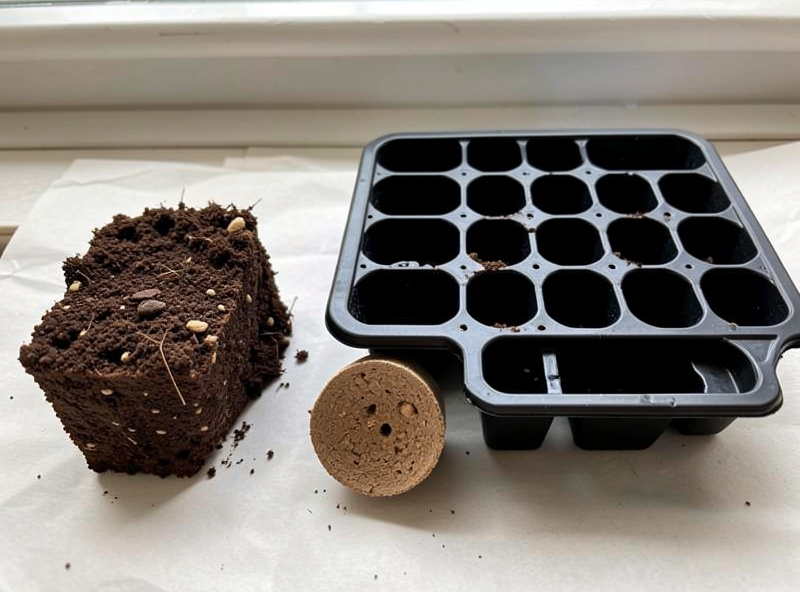
The three methods trade convenience, cost, and control against each other, and the right choice depends on which of those you care about most. Pellets win on convenience and lose on cost. Cell trays win on cost and control and ask a little more effort. Soil blocks win on cost and root health and ask the most effort and a one-time tool. Here is how they stack up.
| Method | Cost per season | Effort | Root disturbance | Best for |
|---|---|---|---|---|
| Peat pellets | High (buy every sowing) | Lowest | None — plant whole plug | A few disturbance-sensitive crops, beginners |
| Cell trays | Very low (reuse for years) | Moderate (fill cells) | Low if potted up on time | Most sowing, full control of medium |
| Soil blocks | Very low (mix + one tool) | Highest (make blocks) | None — no walls, air-pruned roots | Volume growers who want no plastic, no net |
Soil blocks deserve a word because they quietly solve the pellet’s two big faults. A block is a free-standing cube of firm mix pressed by a blocking tool, with no net and no cell wall, so roots air-prune at the edges instead of circling and there is nothing to girdle them. Once you own the blocker, the only cost is the medium, so it is as cheap as cells and gentler on roots than either. The catch is effort and technique — the mix has to be wet and firm enough to hold, and making a tray of blocks takes longer than filling cells. For a grower sowing in volume who dislikes both plastic and netting, blocks are the endgame; for most people, cells are the sensible middle. I go deeper on the cell side in seed-starting trays with drainage.
The Peat Problem: Why I Lean Toward Coir and Blocks
There is an environmental cost to peat that is worth taking seriously. Peat forms over thousands of years in bogs that store enormous amounts of carbon, and harvesting it releases that carbon and destroys rare wetland habitat. This is why several countries are phasing out peat in horticulture, and why I have shifted most of my own growing to coir and homemade mixes. It is a real consideration, not greenwashing — the Royal Horticultural Society has publicly backed peat-free gardening, and the direction of travel across European horticulture is clear.
Practically, this pushes me toward coir pellets over peat ones where I use pellets at all, and toward soil blocks and my own coir-based mix for the bulk of sowing. Coir — coconut fibre, a byproduct of the coconut industry — wets and holds water much like peat without draining a bog, and it is what I build my seed mix around. If you are going to buy pellets, buying the coir version costs the same and carries far less baggage. And if you are ready to stop buying single-use plugs entirely, a soil blocker plus a bag of coir is the setup that ends the recurring cost and the peat question in one move. My full reasoning on media is in best potting soil for indoor plants, and the compost that enriches my own mixes comes from the worm bin I describe in apartment composting.
When I Actually Reach for Peat Pellets
There is a narrow case where pellets earn their place on my shelf: crops that resent root disturbance and move on quickly. Cucurbits — cucumber, squash, courgette — hate having their roots handled and grow fast, so I sometimes start a few in coir pellets and plant the whole plug straight out before they get hungry or root-bound. The disturbance-free planting is worth the per-plant cost for the handful of plants where transplant shock genuinely sets a crop back.
I also keep pellets for the odd one-off — a single melon I am trialling, a few extra tomatoes started late — where filling and cleaning a tray for three seeds is more hassle than the pellets cost. That is the honest scope: a convenience tool for small numbers and sensitive crops, not a sowing system. The sensory tell that always reminds me why I do not use them at scale is planting-out day — cutting the net off each expanded pellet with my thumbnail, one at a time, and thinking how much faster a tray of cells would have tipped out. If you want to try them, an Amazon search for coir seed-starting pellets turns up the lower-impact version.
As an Amazon Associate I earn from qualifying purchases.
How to Use Peat Pellets Without the Common Mistakes
If you do use pellets, three habits avoid the failures that give them a bad name. First, peel or slit the net before planting. The fine mesh is meant to break down but often does not fast enough, and an intact net girdles roots as the plant grows — so I tear the netting open at planting rather than trusting it to rot. That single step removes the pellet’s worst failure mode.
Second, do not let a seedling sit too long in a pellet. Because the plug holds little nutrition, a plant left in a pellet past a couple of weeks runs hungry and stalls; either plant it out or pot it up into richer medium before it starves. I watch for the first true leaves as the signal to move it on. Third, keep the pellets evenly moist but never waterlogged — a swollen pellet standing in a dish of water stays saturated and rots the seed, the same drainage failure that plagues any container without an escape for excess water. I sit pellets in a tray, water from below, and pour off what is not absorbed.
Done that way, pellets perform as advertised for the narrow job they suit. Skip those steps and you get the girdled roots, hungry seedlings, and rotted plugs that make growers swear off them. The tool is fine; the technique is what people miss.
My Verdict on Peat Pellets
Pellets are a convenience you pay for every season, and a convenience most growers stop needing once they are comfortable. If you are brand new and the idea of mixing medium and filling cells is what is stopping you from sowing at all, buy a sleeve of coir pellets, get seeds started, and learn the process — that is worth more than any saving. But treat them as training wheels. Within a season or two, reusable cells with your own mix will cost you almost nothing per sowing and give you full control, and a soil blocker will take you further still if you sow in volume and want no plastic or net at all.
What I would do starting today: keep a small sleeve of coir pellets for cucurbits and one-off sowings, run everything else in cells I reuse for years, and mix my own coir-based medium so I am neither buying single-use plugs nor draining a peat bog. The pellet is a fine tool for the job it is actually good at — disturbance-free planting of a few sensitive seeds — and an expensive habit for everything else. For the sowing technique that sits on top of whichever method you choose, see seed starting in small spaces, and if you are still assembling your kit, best seed-starting kits covers the buy-or-build decision the pellets are only one small part of.