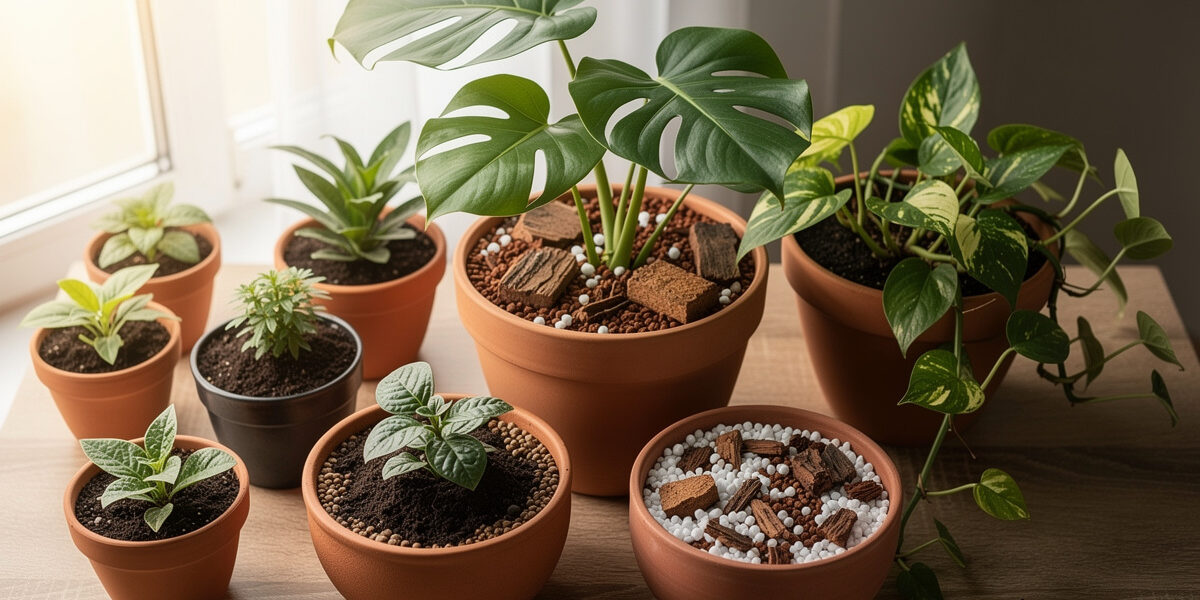
The wrong potting soil is the number one cause of indoor plant death — more than underwatering, more than low light. In a heated apartment through a Nordic winter, a dense bagged mix turns every watering into a slow drowning because pots barely dry out between waterings.
Here’s the honest truth most guides skip: I have killed more houseplants with kindness than with neglect, and the culprit was almost always the soil. In my Swedish apartment — radiators on from October to April, daylight gone by mid-afternoon all winter — the wrong bag becomes a rot factory. This guide covers both routes properly: the ready-made bags actually worth your money by plant type, the ones to avoid, and the exact mixes I blend myself when no bag on the shelf is worth it.
As an Amazon Associate I earn from qualifying purchases.
| Plant type | What to buy | What to avoid |
|---|---|---|
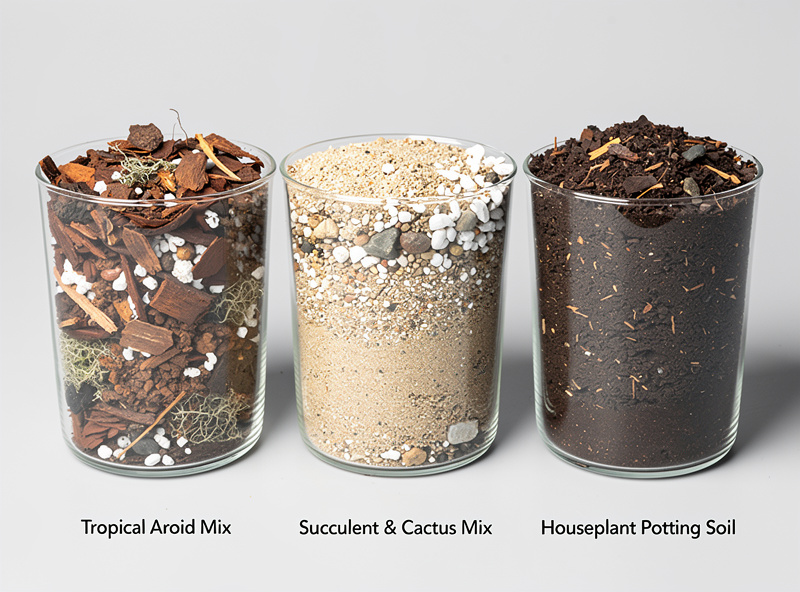
| Tropical aroids (monstera, philodendron, pothos) | A chunky, bark-based “aroid mix” | Dense all-purpose soil; anything with moisture-control crystals |
| Succulents & cacti | A gritty cactus/succulent mix (high mineral content) | Standard potting soil; “cactus soil” that’s mostly peat |
| Ferns, peace lilies, general foliage | A quality organic all-purpose potting mix | Cheap “garden soil” or topsoil (wrong product entirely) |
| Budget, any plant | A basic indoor mix + a bag of perlite to amend it | Bargain-bin mixes used straight from the bag |
| DIY, any plant | Perlite + coco coir + a basic mix (recipes below) | Paying premium prices for what you can blend in a bucket |
What Separates a Good Indoor Bag From a Bad One
Before any brand names, learn to read the bag, because the same rules apply whatever’s in stock near you. Two things matter most.
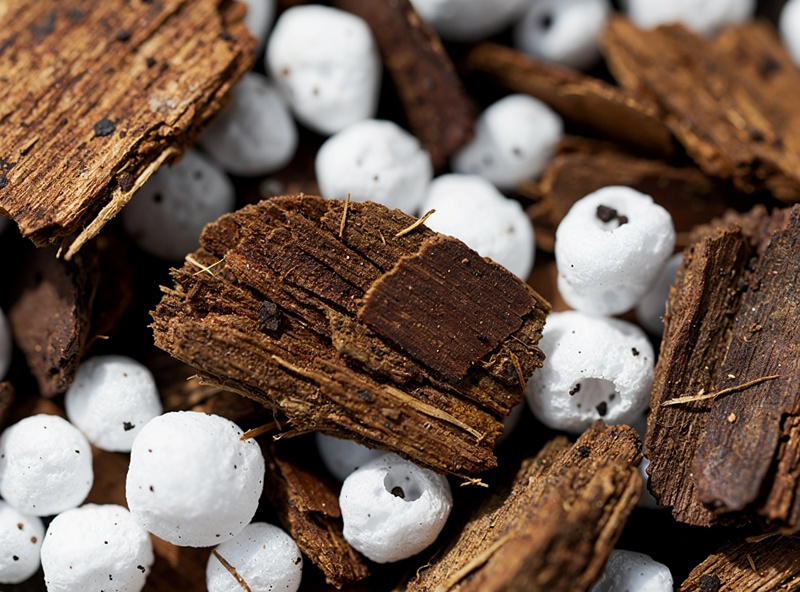
Drainage ingredients you can see. A good indoor mix has visible chunky bits — perlite (white specks), bark, pumice, or coarse coir. If the bag is a uniform fine black soil, it will compact and stay wet. Avoid “moisture control” formulas for indoor plants above all else; those water-retaining crystals are designed to keep outdoor pots from drying out in summer heat, which is the exact opposite of what an indoor plant in low light needs. They’re the single most common cause of the root rot I see people fighting.
And don’t confuse “potting soil” with “garden soil” or “topsoil.” Garden soil and topsoil are for the ground; they compact into concrete in a pot. You want a bag that says potting mix or container mix, ideally peat-reduced or coir-based. For the full breakdown of why, see soil and compost.
There’s a physics reason indoor pots are so unforgiving. Confined to a container, ordinary soil compacts a little every time you water, until the air pockets roots need are gone — and roots that can’t breathe rot, which is why University of Georgia Extension ranks waterlogged, oxygen-starved soil among the most common ways houseplants fail. Indoor air makes it worse: a mix that dries in a day outdoors can stay wet for five to seven days inside, and in a dry, heated Nordic winter, when the plant is barely transpiring, even longer. Most of the popular tropical houseplants evolved clinging to tree bark and leaf litter with their roots in open air, which is why every recommendation on this page leans hard toward drainage over moisture retention. When in doubt, go chunkier than feels right.
Best All-Purpose Bag: Foliage Plants, Ferns, Peace Lilies
For most leafy houseplants, a quality organic all-purpose mix straight from the bag is genuinely fine. The two I’d reach for are FoxFarm Ocean Forest — rich, well-aerated, and forgiving, a long-time favourite of serious growers — and Espoma Organic Potting Mix if you want something simpler and OMRI-listed organic. Both already contain enough perlite and bark to breathe. For fast-growing aroids I’d still add a couple of handfuls of perlite, but for ferns, peace lilies, and the general foliage crowd they work as-is. If “organic” is the priority, the Espoma is the honest pick: OMRI-listed, no synthetic fertiliser charge, and consistent from bag to bag in a way cheap organic-labelled mixes are not.
Best Ready-Made Aroid Mix: Monstera, Philodendron, Pothos
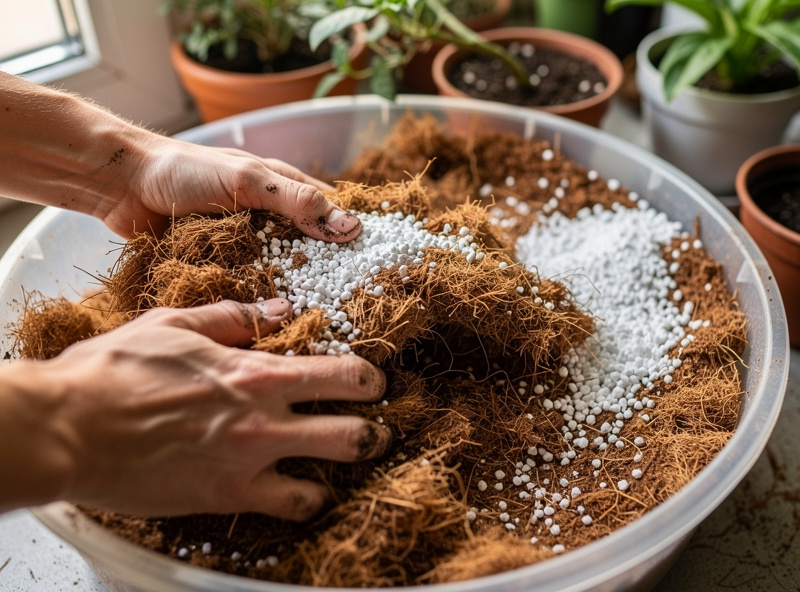
This is the one category where a specialist bag really pays off. Aroids want a chunky, bark-heavy mix that drains in seconds, and no standard potting soil delivers that out of the bag. Rather than build it yourself, you can buy a ready-made chunky aroid mix — these are blends of orchid bark, perlite, coco chunks, and charcoal made specifically for the Araceae family. They cost more per litre than all-purpose soil, but for a prized monstera or a rare philodendron it’s cheap insurance against the rot that kills most of them in the first month. If you’d rather blend the exact aroid ratio yourself for a fraction of the price, my recipes are further down this page.
Best Succulent & Cactus Bag
Most bags labelled “cactus & succulent soil” are a trap — they’re mostly peat with a token bit of sand, and they hold far too much water. Root rot from soggy soil is what kills succulents, so you want a genuinely gritty mix with real mineral content. The gold standard in a bag is a true gritty blend like Bonsai Jack’s gritty succulent mix, which drains almost instantly and is hard to overwater. If you can’t find a good gritty bag, buy any cactus mix and cut it 1:1 with pumice — that single step fixes 90% of the mediocre bags on the shelf. In years of running succulents on a dark Swedish windowsill I have never lost one to soil that drained too fast, only to soil that held water. More detail in my succulent soil guide.
Best Budget Route: Fix a Cheap Bag Yourself
You don’t need a premium bag. A basic indoor potting mix — yes, even the mainstream supermarket ones — becomes a perfectly good houseplant soil the moment you stir in extra perlite. Aim for roughly one part perlite to two parts bagged mix for foliage plants, more for anything that likes it dry. Just steer clear of the “moisture control” version of any budget brand for the reasons above. This amend-a-cheap-bag approach is what I’d point most beginners to, and it pairs naturally with the full cost breakdown in my urban gardening on a budget guide (starting a garden for under $50).
The Mixes I Blend Myself (When No Bag Is Worth It)
Once you’ve amended one cheap bag, the next step is obvious: stop buying “soil” and start buying components. Everything below comes off the same short shelf — perlite, coco coir, orchid bark, worm castings, pumice — and mixes in a bucket in two minutes.
My go-to all-purpose mix — what I actually reach for nine times out of ten, for pothos, philodendron, ferns, and most leafy foliage plants: one part bagged potting soil, one part perlite, one part coco coir. The perlite keeps it open, the coir holds just enough moisture without going sour, and the potting soil carries the nutrition. It costs a fraction of branded “houseplant soil” and drains better than any of them.
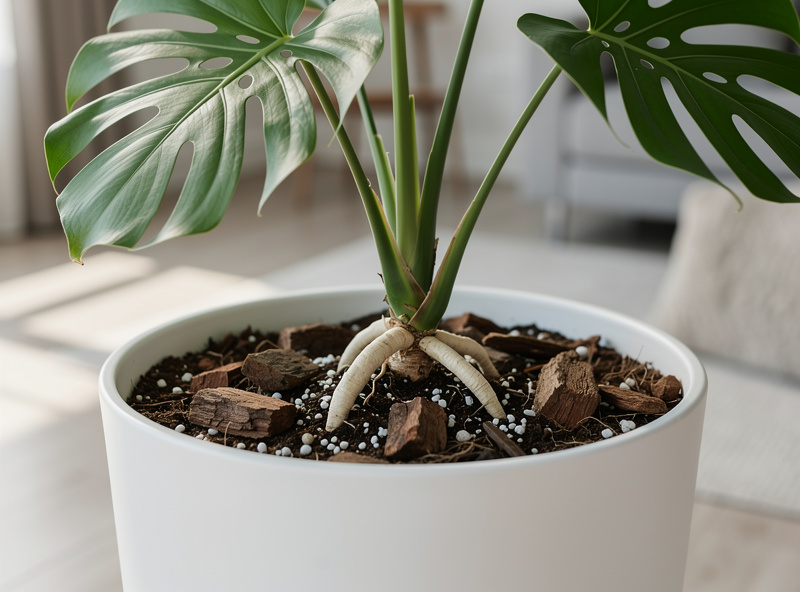
My aroid blend — for monsteras, philodendrons, and the rest of the Araceae family: 40% orchid bark (½-inch grade), 20% perlite, 20% coco coir, 20% worm castings. The bark gives the chunky structure these roots cling to and breaks down slowly over two to three years; the castings feed gently — slow-release and impossible to burn roots with, which matters when you can’t run outside to flush a pot in a Swedish February. Mine come from my own worm bin, which is exactly why castings are the amendment I keep coming back to. This blend pours water straight through, and that’s the whole point.
My succulent ratio — 50% coarse grit (pumice or 3–5mm coarse sand), 25% potting soil, 25% perlite or more pumice. Coarse grit, never fine sand; fine sand packs into the air gaps and does the exact opposite of what you want. A tablespoon of horticultural charcoal per quart helps mop up excess moisture in decorative pots with poor drainage.
Flowering houseplants sit in the middle — more moisture than a succulent, better drainage than straight potting soil. For African violets: 50% coco coir or peat, 25% vermiculite, 25% perlite, a soilless blend that holds moisture but breathes. Peace lilies cope fine with my all-purpose mix but flower better with a handful of compost stirred in. Orchids are their own world — coarse bark and almost no “soil” at all, closer to the succulent end than anything leafy.
When and How to Repot
Repot fast growers like pothos and monsteras every 12–18 months, slow growers like snake plants every two to three years. The tells: roots poking from the drainage holes, water running straight through without wetting the soil, or the plant suddenly drinking far faster than before. One timing note from my own climate — repot in spring as the light returns, not in the dark of winter. A plant that’s barely growing in January won’t push new roots into fresh soil; it’ll just sit in damp mix and sulk. Wait for the days to lengthen.
Go up only one or two inches in pot diameter — Penn State Extension makes the same point: the new container should be only slightly larger than the old one. Jumping to a much bigger pot leaves a ring of wet, rootless soil that stays soggy and invites rot — the same mistake as overwatering, just built into the pot. Trim any brown mushy roots before settling the plant into fresh mix, and always use a pot with drainage holes; decorative pots without holes trap water and will drown a plant within weeks no matter how good your soil is.
The 60-Second Test That Beats Any Label
However you buy or blend it, prove the soil before you trust a plant to it. Fill the pot with your mix, water it thoroughly, and time how long until water stops running from the drainage holes. For tropical plants you want it to stop inside 30–60 seconds; for succulents, almost immediately. If water pools on the surface or takes minutes to clear, the mix is too dense — stir in more perlite or pumice and test again. This little test accounts for your exact pot, your humidity, and your watering habits better than any bag’s marketing, and in a damp indoor environment it’s also your best defence against fungus gnats, whose larvae breed in soil that never dries. (If you’ve already got them, cinnamon as a top-dressing and learning to spot the larvae early are where to start. And if small flies are already hovering, you might wonder whether fungus gnats bite — they don’t, but their larvae damage roots.)
A Note on Outdoor Containers and Beds
Everything above is for indoor pots. The moment you move outdoors — a balcony container or a raised bed — the recipe changes completely, because outdoor soil has to feed bigger, hungrier plants and cope with rain and real weather. Don’t fill a raised bed with houseplant mix; it’s far too lean and far too expensive at that volume. I’ve laid out the right approach in my best soil for raised beds guide.
Frequently Asked Questions
What is the best store-bought potting soil for indoor plants?
For general foliage plants, a quality organic all-purpose mix like FoxFarm Ocean Forest or Espoma Organic works straight from the bag. Tropical aroids need a chunky bark-based aroid mix, and succulents need a gritty cactus mix. There is no single best bag for every plant – match the mix to the plant type.
Is Miracle-Gro bad for houseplants?
Standard Miracle-Gro indoor mix is fine once you stir in extra perlite for drainage, but avoid the Moisture Control version for indoor plants. Its water-retaining crystals keep soil wet far too long in low indoor light, which is a leading cause of root rot and fungus gnats.
What should I avoid in a bagged potting soil?
Avoid three things for indoor plants: moisture-control formulas (water-retaining crystals keep soil too wet), fine uniform soil with no visible perlite or bark (it compacts), and anything labelled garden soil or topsoil (those are for the ground and turn to concrete in a pot).
What is the best soil for monsteras?
Monsteras need a chunky aroid mix: 40% orchid bark, 20% perlite, 20% coco coir, and 20% worm castings – or a ready-made bagged aroid mix. This fast-draining blend mimics the bark they cling to in the wild and prevents the root rot that kills most new monsteras.
How often should I repot houseplants?
Repot every 12-18 months for fast growers like pothos and monsteras, every 2-3 years for slow growers like snake plants and ZZ plants. Do it in spring as light returns, not in winter. Signs include roots from drainage holes, water running straight through, or increased watering frequency.
What is the difference between potting soil and succulent soil?
Succulent soil is roughly 50% mineral content (pumice or coarse grit) so it drains almost instantly. Standard potting soil is organic-based and holds moisture far longer, which rots succulent roots within days.
Can I reuse old potting soil?
Reuse old soil only if the plant was healthy and pest-free. Old mix is depleted and often compacted, so refresh it 50/50 with fresh mix and perlite before reusing, and never reuse soil from a plant that died of root rot or fungus gnats.