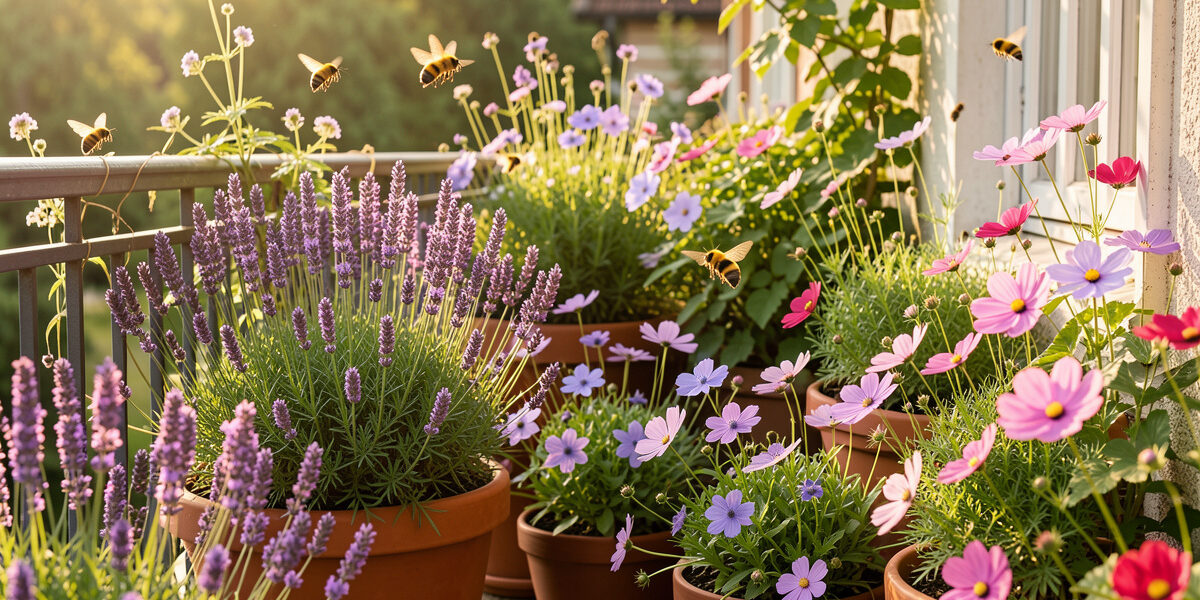
A pollinator garden in a Nordic small space comes down to three things: flowers that bloom across a short season, a mix that feeds bees and butterflies and the predatory insects that do your pest control, and containers deep enough to survive a balcony summer. Get those right and even a 4-square-metre balcony pulls in steady traffic from May to September.
I’ve run pollinator plantings on my balcony alongside the food crops for years now, and the thing nobody writing from California tells you is that timing is everything up here. The season is short, the spring is cold and late, and the plants that anchor a pollinator garden in a warmer climate often bloom at the wrong moment or not at all. This guide is the framework I use — what to plant, who it feeds, how to keep something flowering the whole season, and how to let the insects handle the aphids so you don’t have to.
Why a Nordic pollinator garden works differently
The single biggest difference up north is the bloom window. A Swedish growing season gives you roughly four usable months outdoors, with a cold, slow spring that holds plants back until late May. That compresses everything — you can’t rely on a long, lazy procession of blooms the way southern gardens do. You have to plant deliberately for overlap so there’s always nectar on offer when the bees are flying.
Cold also changes which plants pull their weight. Heat-loving annuals that southern guides treat as bee magnets sulk through a cool June and barely flower before the first frost. The reliable performers here are the tough, cool-tolerant flowers and the early-blooming perennials — the same realism I bring to choosing balcony vegetables that actually work. Pick for the climate you have, not the one the internet assumes.
Small space is the other constraint. Most pollinator advice pictures a meadow strip or a border bed. On a balcony you’re working with containers, weight limits, and maybe a railing. That’s a feature, not a bug — a dense cluster of the right flowers in pots draws pollinators just as well as a sprawling bed, and you control the soil completely. My full approach to the format lives in the container gardening guide and the complete balcony gardening guide.
The three groups you’re actually feeding
“Pollinators” is a loose word. In practice you’re catering to three overlapping groups, and a good small-space garden feeds all of them rather than chasing only honeybees. Bees (honeybees, but mostly wild bumblebees and solitary bees up here) want accessible nectar and pollen across the season. Butterflies want nectar from open, landing-pad flowers plus host plants for their caterpillars. And beneficial predatory insects — hoverflies, lacewings, ladybirds, parasitic wasps — want both nectar and the pest insects you’re trying to be rid of.
Bumblebees deserve special mention in a Nordic context: they fly in cooler, greyer weather than honeybees and are often your main pollinator on a cold spring balcony. Plant for bumblebees first and the rest follow. The Bumblebee Conservation Trust’s garden pages are the reference I’d point a beginner to on bumblebee-first planting. I go deep on the bee side in the dedicated guides to bee-friendly balcony plants and the broader list of flowering plants that attract bees.
Plants that actually pull pollinators in a cold climate
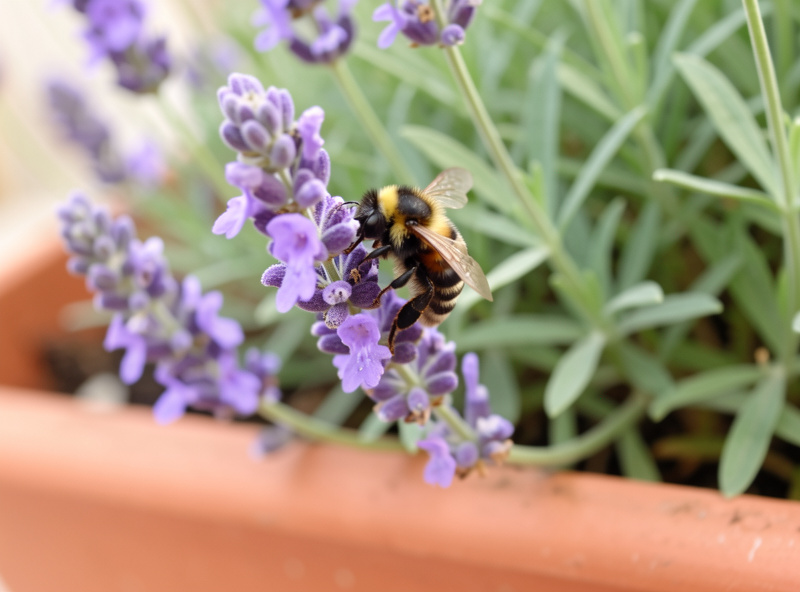
The shortlist that earns its place in my pots: lavender, borage, single-flowered marigolds and cosmos, chives and other flowering herbs, sedum, catmint, and any of the daisy-family flowers with open centres. Open, single flowers beat the showy double-petalled cultivars every time — doubles are bred for looks and often have the nectar and pollen bred right out of them, leaving a pollinator nothing to land on or feed from. If you’re ever unsure whether a plant earns its place, cross-check it against the RHS Plants for Pollinators list before you buy.
Flowering herbs are the small-space grower’s secret weapon because they double as food. Let a few chives flower and the bees swarm the purple pompoms; the same goes for thyme, oregano, and dill, which also feeds butterfly caterpillars. Lavender is the single most reliable bee plant I grow — drought-tolerant, container-happy, and humming all July. For pure flowers, my best flowers for full-sun pots and continuous-blooming pots guides overlap heavily with the pollinator shortlist.
Native and near-native flowers matter more than most balcony growers realise: local wild bees evolved alongside local flora and often feed most efficiently from it. That’s a whole topic of its own, covered in the guide to native plants for urban pollinators.
Quick-reference: who feeds whom
| Plant | Best for | Bloom window (Nordic) | Container fit |
|---|---|---|---|
| Lavender | Bees, butterflies | July–August | Excellent (deep pot) |
| Borage | Bumblebees (heavily) | June–September | Good (self-seeds) |
| Single marigold | Hoverflies, bees | June–first frost | Excellent |
| Chives (in flower) | Bees | May–June | Excellent |
| Cosmos | Bees, butterflies | July–frost | Good (needs depth) |
| Dill / fennel | Butterflies (host), wasps | July–August | Good (deep pot) |
| Catmint (Nepeta) | Bees, butterflies | June–August | Excellent |
| Sedum | Late bees, butterflies | August–September | Excellent |
Designing a pollinator patch on a balcony
The design rule I follow is clumps, not singles. A pollinator flying past spots a block of one colour far more readily than a scattered single bloom, and a clump lets a foraging bee work efficiently without flying far between flowers. Three pots of the same flower grouped together outperform three different flowers in three corners. Within the balcony, I cluster by colour and bloom time so there’s always a working block on offer.
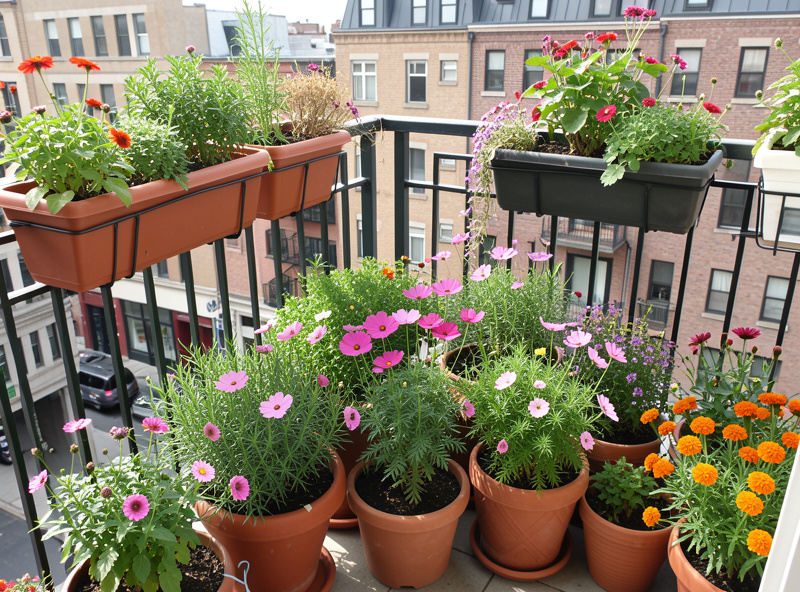
Depth matters as much for flowers as it does for vegetables. A 25–30 cm deep container holds enough moisture and root room for lavender, cosmos, and catmint to flower hard all season; shallow railing troughs dry out by midday in July and the blooms stutter. Weight is the balcony-specific catch — a row of full, wet pots adds up fast, so I lean on lighter container mixes and self-watering setups to keep the watering manageable, the same rigs I use across the balcony. The detailed plant-by-plant balcony picks are in bee-friendly balcony plants, and the small-garden-scale version of all this is in attracting pollinators to a small garden.
Let the insects do your pest control
The best part of a pollinator garden is the bonus army it recruits. The same flowers that feed bees also feed the predatory insects that eat your pests — ladybirds and their larvae demolish aphids, hoverfly larvae do the same, lacewings hunt soft-bodied pests, and tiny parasitic wasps keep caterpillar and aphid numbers down. Plant flat-topped umbel flowers like dill and fennel and you specifically draw in hoverflies and parasitic wasps, whose adults feed on nectar before laying eggs near your aphid colonies.
Once that system establishes, you stop reaching for sprays — and you should, because broad-spectrum insecticides kill the predators and the pollinators along with the pests, breaking the very balance you built. On the balcony I treat a light aphid flush as food for the ladybirds rather than a problem to nuke. The full strategy, including which flowers recruit which predators and how to handle an outbreak without wrecking the system, is in the guide to beneficial insects for garden pest control. It pairs naturally with companion planting, which works on the same recruit-and-confuse logic.
Butterflies need two things, not one
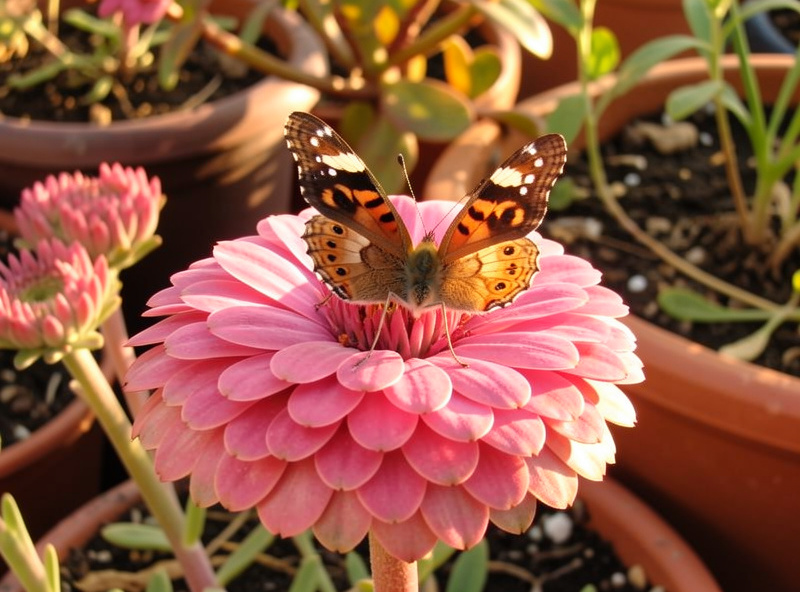
Most people plant for butterflies and only get half the equation. Adult butterflies want nectar — open, flat flowers they can perch on, like sedum, catmint, and single daisies. But to actually keep butterflies in your space you also need host plants for the caterpillars, and those are different species entirely. Dill, fennel, and parsley host swallowtail caterpillars; nettles host several others. Without host plants you’re a fuel stop, not a home.
In containers this is very doable — a deep pot of dill earns its place twice over (kitchen herb plus caterpillar host), and a sedum in a shallow bowl handles the late-season nectar when little else is flowering. The container-specific butterfly playbook, host plants included, is in butterfly-friendly plants for containers.
Native plants and urban pollinators
City balconies sit in a patchwork of concrete, lawns, and ornamental beds that offer wild pollinators very little. A few pots of the right native or near-native flowers turn a balcony into a genuine refuelling station on a pollinator’s route across the city. Local solitary bees in particular often specialise on local flora and feed poorly from exotic ornamentals, so a little native planting punches well above its size.
You don’t need a wild meadow — a couple of containers of natives mixed in with the rest does real work. Which species, where to source seed, and how natives behave in pots is the subject of native plants for urban pollinators.
Water and shelter matter as much as flowers
A pollinator garden that only offers nectar is half-built. Bees need water — especially in a hot, sheltered balcony corner where temperatures climb — and they drown easily in open dishes. A shallow saucer with pebbles or marbles for them to land on, topped up every couple of days, becomes a steady stop once they find it. I keep one tucked among the pots from June onward and it sees constant traffic on warm afternoons.
Shelter is the part nearly everyone forgets. Most of our wild bees are solitary species that nest in hollow stems, dead wood, or bare soil rather than hives, and a city balcony offers almost none of that by default. A simple bundle of hollow plant stems, a drilled block of untreated hardwood, or a purpose-built bee hotel mounted in a sheltered, morning-sun spot gives solitary bees somewhere to nest. Leave a few seed heads and hollow stems standing over winter rather than cutting everything back in autumn — that standing material is overwintering habitat, and the tidy-up instinct is the enemy of it. The same logic carries into the beds; my small garden trees and shrubs guide covers the woody structure that gives a small space year-round shelter.
What it costs to start small
One of the quiet advantages of a balcony pollinator garden is how cheap it is to begin. A packet of borage or cosmos seed costs less than a coffee and fills a pot for a whole season; flowering herbs you may already be growing for the kitchen do double duty for free. The real spend is on a few deep containers and decent mix — and even there, fabric grow bags are light, cheap, and ideal for the lavender and catmint that want good drainage. If you want to compare formats before buying, my honest take on the options sits in the container gardening guide.
If you do want a starter kit of seeds and a couple of grow bags in one go, a search for a pollinator wildflower seed mix is a reasonable entry point — just check it suits a cool, short season rather than a Mediterranean one before you sow. As an Amazon Associate I earn from qualifying purchases. Beyond that first packet the garden largely funds itself: borage and cosmos self-seed, perennials like lavender and sedum come back every year, and the herbs keep earning their place at the table.
Keeping something in bloom all season
The skill that separates a working pollinator garden from a pretty one is succession — staging the bloom so there’s nectar from the first warm days to the last. In a Nordic season I aim for three waves: early (flowering chives, early bulbs, the first herbs) carrying the bumblebees that emerge into a cold spring; mid-summer (lavender, borage, catmint, cosmos) doing the heavy lifting through July; and late (sedum, late cosmos, autumn-flowering herbs) feeding the bees fattening up before winter. The late wave matters most and is the one beginners skip.
Deadheading keeps the mid-season flowers pumping — a cosmos or marigold cut back regularly flowers for weeks longer than one left to set seed. This is the same succession-sowing discipline I use for greens, just applied to flowers. For the small-garden version of season-long planning, see attracting pollinators to a small garden, and for the food-crop overlap, balcony herb garden ideas.
A simple starter plan for one balcony
If you want a concrete place to begin rather than a plant list, here’s the layout I’d hand a neighbour starting from nothing. One deep pot of lavender as the permanent anchor — it carries the mid-summer bee traffic and comes back every year. One large container or grow bag sown with a mix of borage and single cosmos for the long mid-to-late summer bloom that keeps going until frost. A trough or two of flowering herbs — chives for the early-season bees, dill for the butterflies and hoverflies, thyme spilling over the edge. And a shallow sedum bowl for the late wave in August and September.
That’s four or five containers, well within a small balcony’s weight budget, and it already covers all three pollinator groups across the whole season. Add the pebble water dish and a small bee hotel in a sheltered corner and you have a complete, self-sustaining pollinator station. Everything after that is refinement — swapping in a native or two, deadheading to extend the bloom, letting the borage self-seed where it lands. Start with those pots this season and you’ll have bees, hoverflies, and the odd butterfly working the balcony within weeks of the first flowers opening.
Common mistakes I see on balconies
The big one is planting double-flowered showy cultivars and wondering why nothing visits — they look spectacular and feed nobody. Second is a one-shot bloom: a single burst in July and bare pots either side of it. Third is spraying. The fourth, specific to up here, is planting heat-lovers that never get warm enough to flower before frost. And the fifth is forgetting water — a stressed, dried-out plant stops producing nectar long before it wilts.
Fix those five and a balcony hums. None of it needs a big space, a long season, or a spray cabinet — it needs the right plants in deep enough pots, staged to overlap, left unsprayed so the insects can move in. That’s the whole game, and it scales down to a railing better than almost anything else you can grow. For the wider context of what a small urban plot can do, the small balcony garden walkthrough and the apartment balcony plant picks are the natural next reads.
Frequently Asked Questions
What is the single best plant to start a pollinator garden in a cold climate?
Lavender. It is drought-tolerant, thrives in a deep container, and blooms heavily through July when bees are most active. It survives Nordic winters in a sheltered spot and comes back year after year, making it the highest-value first plant for a small space.
Do I need a big garden to attract pollinators?
No. A cluster of the right flowers in containers on a 4-square-metre balcony draws steady pollinator traffic. Bees and butterflies respond to dense blocks of bloom, not total area, so a few well-chosen deep pots work as well as a border bed.
Why do bees ignore my flowers?
Usually because they are double-flowered ornamental cultivars bred for looks, which have little accessible nectar or pollen. Swap to single, open-flowered varieties. The other common causes are a one-shot bloom with nothing flowering before or after, and drought-stressed plants that have stopped producing nectar.
Will a pollinator garden bring aphids and pests?
The opposite. The same flowers feed predatory insects like ladybirds, hoverflies, and lacewings whose larvae eat aphids. A planted, unsprayed balcony develops its own pest control within a season, as long as you avoid broad-spectrum insecticides that kill the predators too.
When should pollinator plants bloom in a Nordic season?
Aim for three overlapping waves across the roughly four-month season: early bloom from flowering chives and herbs for spring bumblebees, mid-summer from lavender, borage and cosmos, and a late wave from sedum and autumn herbs to feed bees before winter. The late wave is the one most beginners forget.
Are native plants better than ornamentals for pollinators?
For wild and solitary bees, often yes. Many local bee species evolved alongside local flora and feed most efficiently from native flowers, while some exotic ornamentals offer them little. A couple of pots of natives mixed in with ornamentals covers both specialist and generalist pollinators.