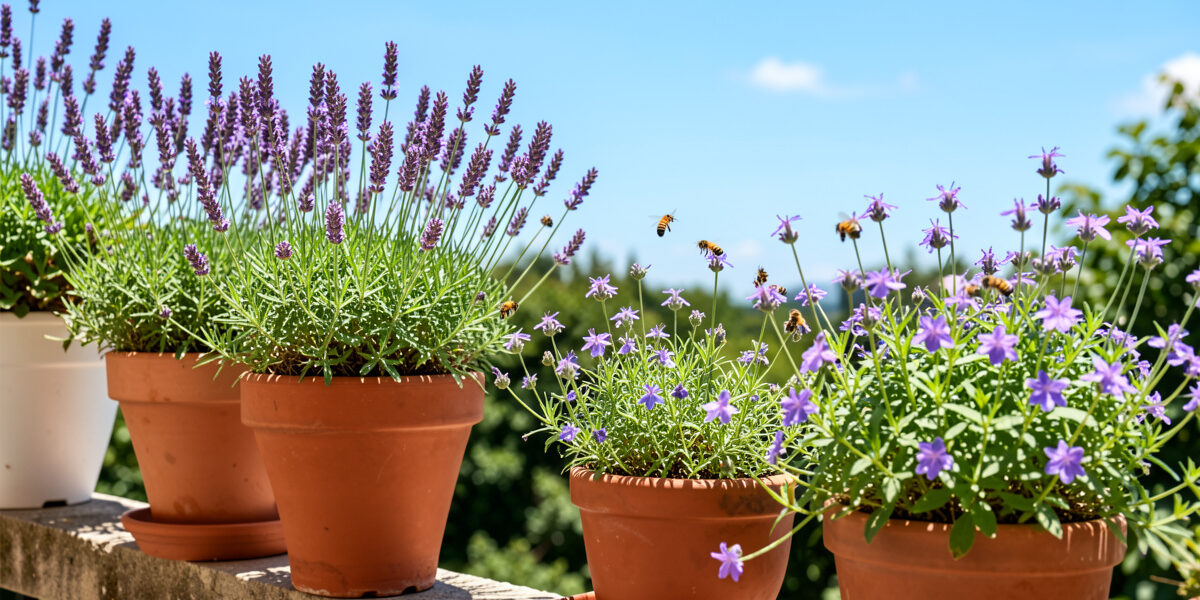
The best bee-friendly balcony plants are single-flowered, nectar-rich, and tough enough to bloom through a cool Nordic summer: lavender, borage, catmint, flowering chives, single cosmos, and marjoram. A few deep pots of these draw bumblebees and solitary bees within weeks, even on a small fourth-floor balcony.
I plant for bees every season on my balcony, mixed right in with the herbs and salad crops, and the list below is what has actually earned its place — not what a glossy seed catalogue claims. The filter is simple: does it flower reliably in a short, cool season, does it feed bees rather than just look pretty, and does it cope with life in a container? If a plant fails any of those three it doesn’t make the balcony.
What makes a plant genuinely bee-friendly
The biggest mistake balcony growers make is buying the showiest flower in the garden centre. Bees don’t care about show — they care about accessible nectar and pollen. Double-flowered cultivars, the kind with ruffled extra petals, are usually bred at the expense of the very nectaries and pollen a bee needs, so a pot of frilly double begonias can be a complete dead zone to a foraging bee. Always choose the single, open-flowered form: a flat or bell-shaped flower a bee can land on and reach into. The RHS Plants for Pollinators list is the quickest way to sanity-check a plant before you buy it.
The second filter, up here especially, is bloom reliability in cool conditions. Our main balcony bees are bumblebees and solitary bees, and bumblebees in particular forage in cooler, greyer weather than honeybees — so plants that flower steadily through a mediocre July matter more than one spectacular hot-weather bloomer. The framework behind all of this sits in the main pollinator garden guide; this article is the balcony plant list that puts it into pots. The Bumblebee Conservation Trust’s garden pages are worth a read on why bumblebees, our main balcony bee, keep working in the cool, grey weather honeybees sit out.
The reliable performers for a balcony
Lavender is the one I’d plant first. It’s drought-tolerant, thrives in a deep, well-drained pot, and hums with bees all through July. It’s perennial and overwinters in a sheltered balcony spot, so it earns its container space year after year. Give it the grittiest, sharpest-draining mix you have — lavender hates wet feet far more than it minds cold. My full notes on it are in the lavender growing guide.
Borage is the bumblebee magnet. Its blue star flowers refill with nectar remarkably fast, so bees return to the same plant again and again all day. It’s an easy annual from seed, it self-seeds politely for next year, and the flowers are edible for you too. It wants a deep pot because it grows a long taproot. Catmint (Nepeta) is the low-effort perennial workhorse — a long haze of blue-purple flowers from June, shrugs off drought, and re-blooms if you shear it back after the first flush.
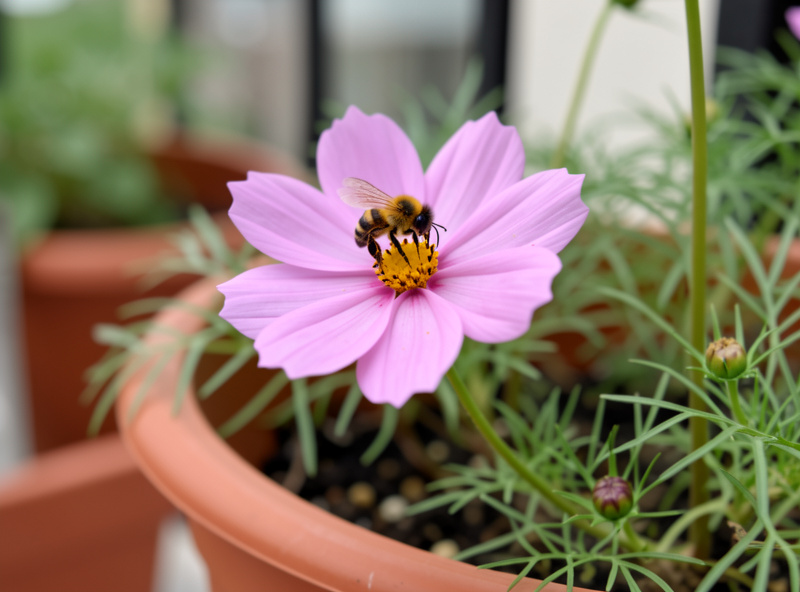
Flowering herbs are the small-space grower’s cheat code because they feed you and the bees from the same pot. Let chives bloom and the purple drumsticks swarm with early bees; marjoram and oregano left to flower are covered in bees and hoverflies in late summer; thyme spilling over a pot edge does the same in spring. Single cosmos and single-flowered marigolds round out the annuals, flowering from midsummer right up to the first frost if you keep deadheading.
Matching plants to your balcony’s light
Be honest about your light before you buy. A south-facing balcony in full sun suits lavender, catmint, marjoram, and cosmos — the Mediterranean and sun-loving crowd that flowers hardest in heat. A balcony that only gets a few hours of direct sun or sits in bright shade is a tougher brief, but borage, chives, and many of the flowering mints still perform there. For the broader question of what survives low light and exposure on an apartment balcony, my apartment balcony plant guide goes deeper, and the pure-flower angle is covered in best flowers for full-sun pots.
Wind is the other balcony reality nobody mentions. A high or exposed balcony dries pots out fast and batters tall flowers, so keep cosmos and borage toward the sheltered back and let lower, tougher plants like thyme and catmint take the windward edge. Grouping pots together also creates a slightly more sheltered microclimate that both the plants and the bees appreciate.
Containers, depth, and soil for bee plants
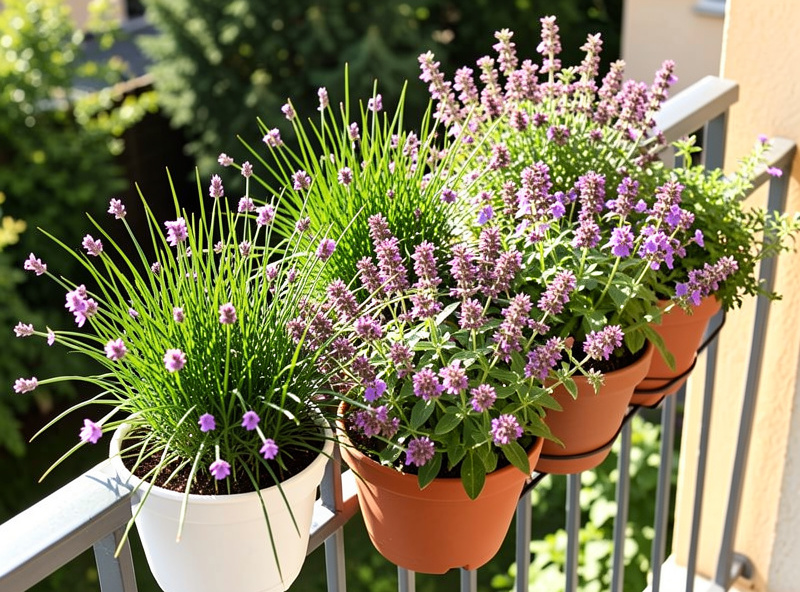
Depth is everything. Lavender, borage, and cosmos all want at least 25–30 cm of root room to flower hard and ride out a hot day without wilting; a shallow railing trough dries out by midday and the bloom stutters. I lean on fabric grow bags for the sun-lovers because they drain freely and stay light on the balcony — weight is a real constraint when you’ve got a row of full, wet pots on a structure that wasn’t designed as a garden. The format trade-offs are all in the container gardening guide.
Skip the bagged “potting soil” for these — it compacts and holds too much water, which is exactly wrong for lavender and the Mediterranean herbs. A free-draining container mix with added grit or perlite keeps roots breathing. Don’t over-feed either: high-nitrogen feeding pushes leafy growth at the expense of flowers, and fewer flowers means fewer bees.
Planting for bees all season, not one week
One burst of bloom in July helps bees for a fortnight and then leaves them with nothing. The trick is staging it: flowering chives and thyme for the early bees in May and June, lavender, borage, and catmint carrying the heart of summer, and late cosmos and marjoram running into autumn. That continuous-supply thinking is the single biggest upgrade you can make, and it’s the same logic as my continuous-blooming pots approach. For the small-garden-scale version, see attracting pollinators to a small garden, and for the widest list of bee flowers beyond the balcony, flowering plants that attract bees.
One last thing: add a shallow water dish with pebbles for the bees to land on, and never spray. A balcony that’s chemical-free and always has something in flower becomes a fixed stop on the local bees’ route within a single season — and once they’ve found it, they keep coming back.
Frequently Asked Questions
What is the best bee plant for a small balcony?
Lavender. It is drought-tolerant, thrives in a deep container, flowers heavily through July when bees are most active, and comes back every year in a sheltered Nordic spot. Give it gritty, free-draining soil and full sun and it will hum with bees all summer.
Do balcony flowers really attract bees that high up?
Yes. Bumblebees and many solitary bees forage well above ground level and will find flowers on a fourth-floor balcony within days of them opening. A dense cluster of nectar-rich blooms is what draws them, not how close you are to the ground.
Why are bees ignoring the flowers I bought?
Most likely they are double-flowered ornamental varieties bred for looks, which have little accessible nectar or pollen. Swap to single, open-flowered forms. Drought-stressed or over-fertilised plants also stop producing the nectar bees are after.
Can I grow bee plants and herbs in the same pots?
Yes, and you should. Flowering herbs like chives, marjoram, thyme and oregano feed both you and the bees from the same container. Just let some of the plant flower rather than harvesting every stem, since the blooms are what the bees need.
Do I need to worry about getting stung on a small balcony?
Foraging bees on flowers are focused on feeding and are not aggressive. Bumblebees and solitary bees in particular almost never sting while working flowers. Keep a calm distance and they will ignore you entirely while they work the blooms.