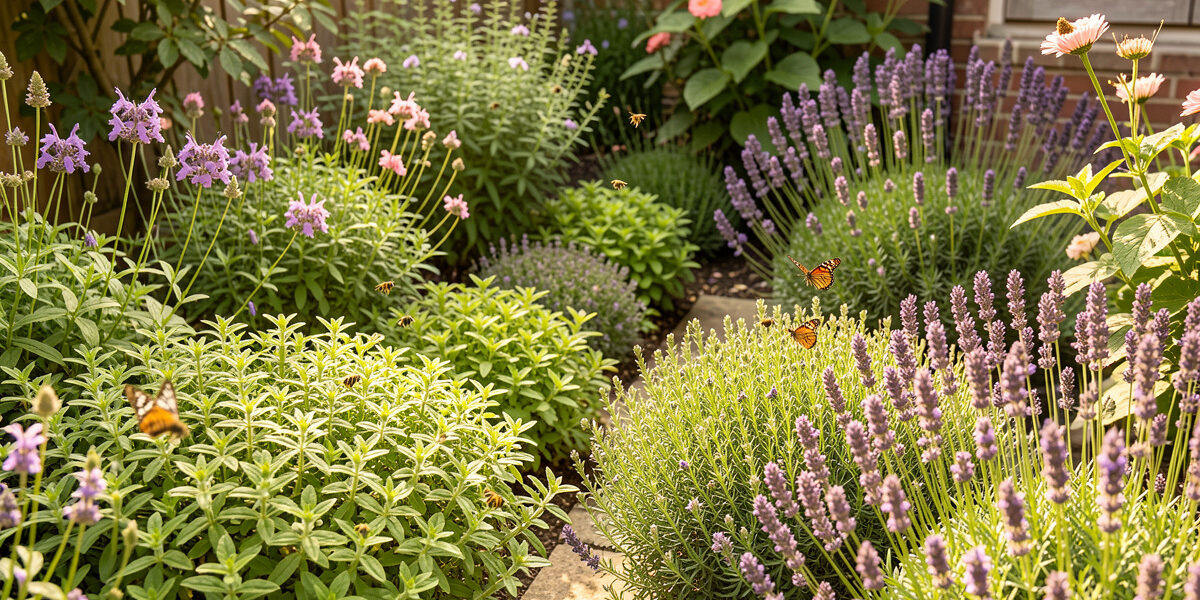
Attracting pollinators to a small garden is less about size and more about design: plant dense blocks of single-flowered, nectar-rich plants, stage the bloom across the whole season, add water and a little shelter, and stop spraying. Do that in even a few square metres and you’ll have bees, hoverflies, and butterflies working the space within weeks.
A small garden actually has an advantage over a big one here — you can pack it. A pollinator flying over the neighbourhood is looking for a concentrated patch of flowers, and a tightly planted courtyard, patio, or tiny back garden reads as a far richer target than a large lawn with a thin border. Below is how I’d turn a small space into one that hums, working with the short, cool season most of my readers actually garden in.
Plant in blocks, not singletons
The first rule is density. A lone flower here and there barely registers; a clump of the same plant is a beacon. Bees forage most efficiently when they can work one type of flower in one spot, so three plants of catmint together draw far more traffic than three different flowers spread around the garden. In a small space this also looks better — bold drifts of a few well-chosen plants beat a confused scatter of one-of-everything.
Choose single, open-flowered varieties so the nectar and pollen are actually accessible — the double-petalled show cultivars are mostly useless to bees. If you’re not sure which plants deliver, the flowering plants that attract bees list and the bee-friendly balcony plants guide are the shortlists I work from. The whole strategy behind this article is laid out in the pollinator garden guide.
Layer the space — go up as well as along
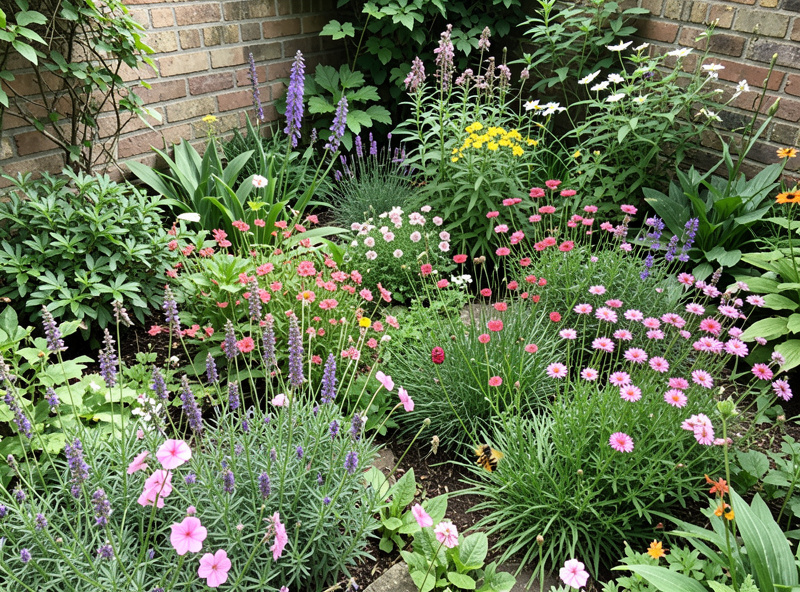
A small garden gains a lot of pollinator capacity by using height. Mix low ground-level flowers, mid-height perennials, and a climber or two on a wall or trellis, and you triple the flowering surface without taking more floor space. Climbing plants like honeysuckle are excellent nectar sources and turn a bare fence into a vertical flower bank. Pots let you stack bloom at different levels too — a raised shelf of herbs above a bed of catmint covers more vertical range than either alone.
This vertical thinking is the same one I use to grow food in tight spaces, and the structures overlap: a trellis that carries beans one year carries a flowering climber the next. If your small garden is really a balcony or patio, lean on containers and railing planters — my take on what thrives in those conditions is in the apartment balcony plant guide.
Stage the bloom across the whole season
The single biggest upgrade to any pollinator garden is continuity. A space that flowers hard in July and stands bare in May and September feeds bees for a few weeks and abandons them the rest of the time. Aim for three overlapping waves: early bloom from flowering bulbs, chives, and the first herbs for the bumblebees emerging into a cold spring; the mid-summer heavy lifters like lavender, borage, and catmint; and a late wave from sedum, late-flowering perennials, and autumn herbs to feed bees building reserves before winter.
That late wave is the one most people skip, and it’s arguably the most valuable in a Nordic climate where the season shuts down fast. Deadheading keeps the mid-season annuals flowering for weeks longer. It’s the same continuous-supply logic as my continuous-blooming pots approach, just applied across a whole small garden.
Add water and shelter, not just flowers
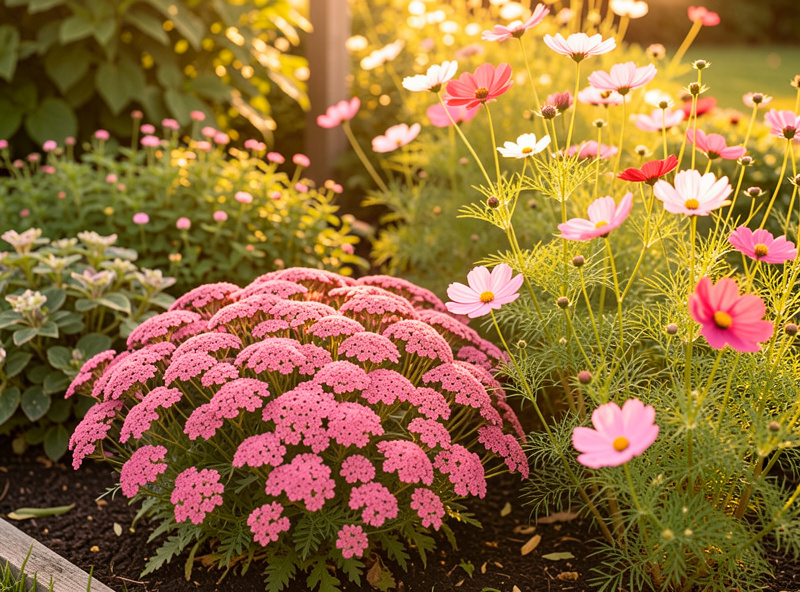
Flowers are only half a habitat. Bees need water — a shallow dish with pebbles or marbles for them to land on, kept topped up, becomes a steady stop in a hot, sheltered small garden. And our wild bees are mostly solitary species that nest in hollow stems, dead wood, or bare ground, none of which a tidy small garden offers by default. A bundle of hollow stems, a drilled hardwood block, or a bee hotel in a sheltered, morning-sun spot gives them somewhere to nest.
Resist the autumn tidy-up. Leaving seed heads and hollow stems standing over winter provides overwintering habitat and food, and a small unmown corner or a patch of bare soil supports ground-nesting bees. A little deliberate untidiness is one of the highest-value things you can do for pollinators, and it costs nothing. Buglife’s gardening-for-bugs advice goes deeper on nesting and overwintering habitat if you want to build that side out.
Sun matters too. Most pollinators are warmth-driven, so the flowers in the sunniest corner of a small garden will out-draw the same plants in shade — bees feed earlier in the day and stay later where the sun hits first. If your space is shaded, prioritise the shade-tolerant nectar plants like borage and the flowering mints, and put your warmth-lovers wherever the light is strongest. Reading your garden’s light honestly is the same first step I take before planting anything edible, and it pays off just as much with flowers.
Rethink the lawn and ditch the sprays
If your small garden has any lawn, it’s probably your least productive pollinator space. Letting part of it grow longer and flower — clover, self-heal, dandelions — instantly turns dead green into forage, or you can replace a patch with a flowering ground cover. Even a small change here makes a visible difference to how many bees use the space. Plantlife’s No Mow May campaign is built on exactly this — letting the grass flower is one of the cheapest forage boosts there is.
And stop spraying. Broad-spectrum insecticides kill the pollinators and the beneficial predators along with the pests, which is self-defeating in a garden you’re trying to bring to life. A planted, unsprayed garden grows its own pest control as ladybirds, hoverflies, and lacewings move in — the full mechanism is in beneficial insects for garden pest control, and it pairs naturally with companion planting. Native plants give the whole thing an extra edge with specialist local bees, covered in native plants for urban pollinators.
Frequently Asked Questions
How small can a pollinator garden be and still work?
Very small. A few square metres densely planted with single-flowered, nectar-rich plants will draw bees, hoverflies and butterflies. Pollinators respond to the concentration of bloom, not the total area, so a packed courtyard or patio often outperforms a large lawn with a thin border.
What is the fastest way to attract pollinators to a new garden?
Plant dense blocks of single-flowered favourites like catmint, borage and lavender, and add some flowering herbs. Cluster the same plant together rather than scattering singles, choose varieties that bloom in your conditions, and stop using any insecticide. Bees usually find a fresh patch within days of it flowering.
Should I plant flowers or build a bee hotel first?
Flowers first. A bee hotel with no nearby forage stays empty. Once the garden reliably flowers across the season, add a bee hotel in a sheltered, morning-sun spot and leave some hollow stems and bare soil for ground-nesting and stem-nesting solitary bees.
Does a small garden need native plants to attract pollinators?
Not strictly, but they help. Many ornamental flowers feed generalist bees well, while some specialist solitary bees feed best from native flora. A mix of reliable ornamentals plus a couple of natives covers both groups and broadens the range of pollinators you support.
How do I keep pollinators coming back all summer?
Stage the bloom in three overlapping waves: early herbs and bulbs, mid-summer lavender and borage, and late sedum and autumn flowers. Deadhead annuals to extend flowering, keep a water dish topped up, and never spray. Continuity of food is what turns visitors into regulars.