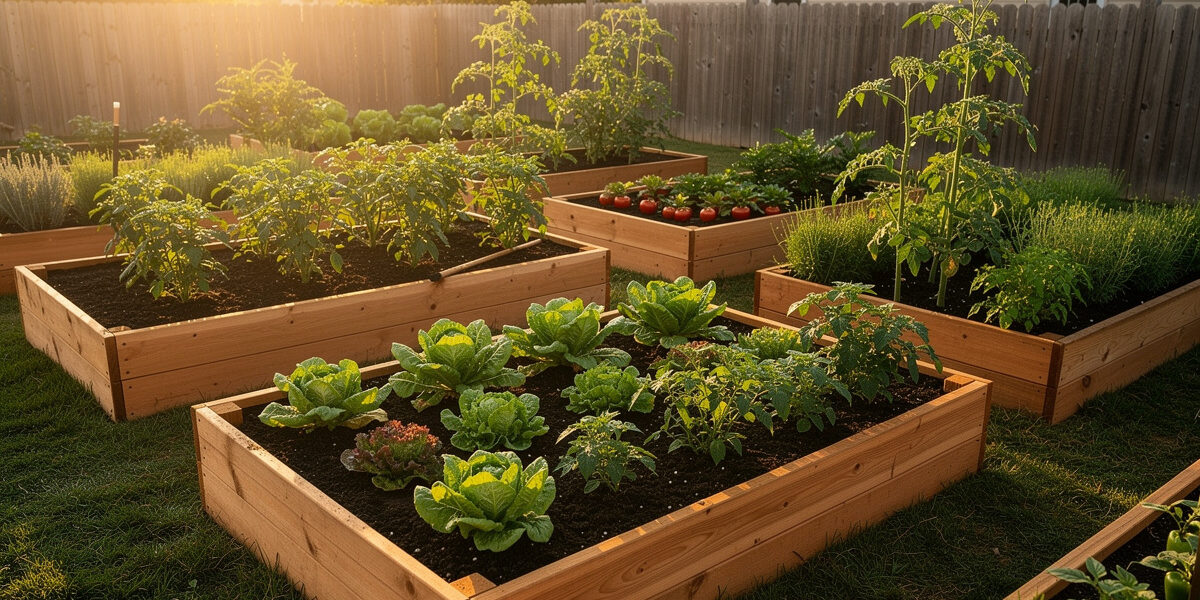
Get the soil right and a raised bed will out-grow open ground for years; get it wrong and you’ve spent a fortune filling a box with something that compacts, dries out, or starves your plants. The catch is volume — a deep bed swallows a surprising amount of mix, and filling one entirely with premium bagged soil is eye-wateringly expensive. So this is the honest, cost-aware approach I use to fill and feed raised beds in a cold climate, from a money-saving layered base to the mix that goes on top and the yearly amendments that keep it producing. One bonus that matters this far north: a raised bed warms a couple of weeks earlier in spring than the cold ground around it, and the right open-textured soil amplifies that head start.
As an Amazon Associate I earn from qualifying purchases.
Raised Bed Soil Fundamentals
Raised beds drain faster than flat ground — good for most vegetables, but it means more watering once they’re established. They also warm earlier in spring, and that early warmth is a genuine season-extender in a short, cool climate: it’s a big part of why I run raised beds (and a metal one — see my Birdies raised beds review for how the bed material itself affects soil warming). An open-bottomed bed lets roots probe down into the native soil for moisture, but it can also leak nutrients into that ground if you don’t keep feeding it. Before you order a delivery, my potting soil vs garden soil guide explains why you can’t just shovel in cheap garden soil, and the soil and compost guide covers the bigger picture.
The Money-Saving Layered Fill (Hugelkultur)
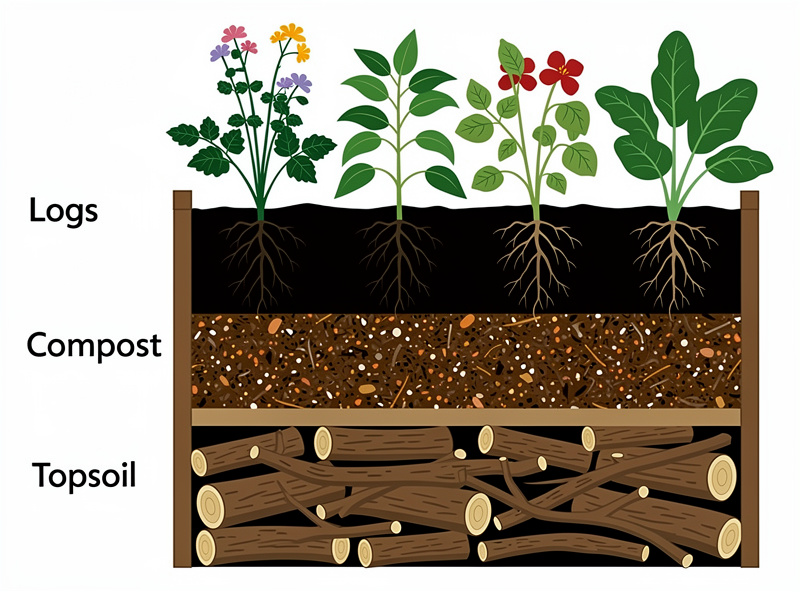
The single best way to cut the cost of filling a deep bed is to not fill the whole thing with expensive mix. Hugelkultur — a centuries-old technique — puts woody debris at the base, where it slowly rots into a moisture-holding sponge over five to ten years, feeding the bed as it goes. For a 30 cm bed: pile the bottom 20 cm with logs and branches, add a layer of leaves or straw, then a thin layer of grass clippings or kitchen scraps, and reserve the top 15–20 cm for quality growing mix. The wood ties up a little nitrogen as it starts to break down, so top-feed the first season — and because the woody layer shrinks as it rots, overfill by a few centimetres at the start. It’s also the most sustainable way to fill a bed, using material you’d otherwise haul away.
Mel’s Mix — and My Peat-Free Version
Mel Bartholomew’s square-foot-gardening formula is still the gold standard for the growing layer: equal parts by volume of compost, a moisture-holding material, and vermiculite. It’s light, holds water without compacting, and feeds plants well — Iowa State University Extension makes the same point, recommending a balanced blend of topsoil, organic matter, and coarse sand so the bed stays light and well-drained rather than dense. The classic recipe uses peat moss for the moisture-holding third — but I swap that for coco coir, which does the same job with a near-neutral pH and without digging up peat bogs. So my version is one-third compost (ideally from several sources for a broad nutrient base), one-third coco coir, and one-third vermiculite.
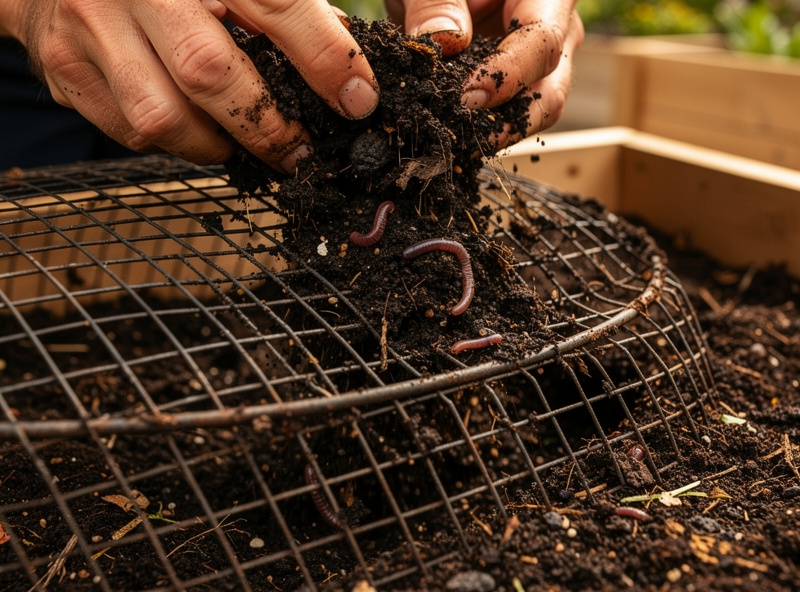
A 4×8-foot bed at 15 cm deep needs roughly 16 cubic feet of mix — around $80–120 in materials, more than plain topsoil but worth every krona for the results. If buying the components separately is a hassle, a good bagged raised bed soil mix for the top layer over a hugelkultur base is the easiest route. Either way, a few handfuls of worm castings worked in gives the mix a living microbial kick — see my worm castings guide.
Should Native Topsoil Go Into the Blend?
Mel’s Mix purists will tell you soil has no place in a raised bed, but for a big open-bottomed bed I think that’s dogma talking, not economics. Screened topsoil is a fraction of the price of coir and vermiculite, it buffers moisture and nutrients better than any soilless blend, and blended with generous compost it grows excellent vegetables. University of Maryland Extension puts usable numbers on it: a raised bed containing garden soil should run 25-50% organic matter by volume, with the rest being that mineral soil fraction. In practice that means roughly one part good compost to one or two parts screened topsoil — nowhere near the all-bagged-product fill the garden-centre economics push you toward.
The catch is quality. Bulk “topsoil” is an unregulated word, and around here it often means whatever glacial clay came out of a construction site. Squeeze a moist handful: if it forms a slick, shiny ribbon, it is clay-heavy and will turn your bed into a brick. Good screened topsoil crumbles. If the local supply is poor, split the difference — clay-heavy soil in the bottom half where deep roots only need moisture, and the compost-rich mix in the top 20 cm where the feeding happens. And if you are lifting soil from your own plot instead of buying it, read my potting soil vs garden soil comparison first, because unamended garden ground behaves very differently inside a box.
The First Season: Why New Beds Underperform
My first hugelkultur bed disappointed me in year one, and if I’d known why I would have planned around it instead of blaming the seeds. Three things hold a fresh bed back. First, nitrogen tie-up: microbes colonizing the woody base layer borrow nitrogen from the surrounding soil while they work, and although a coarse log core with limited soil contact loses far less than buried wood chips would, the effect is real in season one before the wood starts giving nitrogen back. Second, settling — a new fill can drop several centimetres over the first summer as air pockets close and the woody layer compresses, which is why I overfill at the start and top up in midsummer. Third, the soil food web itself: a just-mixed bed is biologically raw, and the fungal and bacterial networks that make nutrients available take a season or two to establish.
The workaround is simple: feed the first season harder than you think necessary — nitrogen-rich amendments like grass clippings or a fish-based liquid feed every few weeks — and plant forgiving crops. Leaf lettuce, kale, bush beans, and radishes cropped happily in my raw first-year bed; the demanding fruiting crops earned their place in year two, when the bed had settled into itself.
Keeping It Alive: Yearly Amendments
Raised-bed soil gives its nutrients to your plants, so you have to give them back. Every spring I add a few centimetres of compost across the surface and work it into the top 15 cm — that replaces what last year’s crops took and keeps the organic matter up, which is what really drives soil health. After a few seasons of this you’ll have rich, dark, crumbly soil that holds water and grows almost anything.
Autumn cover crops earn their keep too: winter rye establishes fast and adds bulk when you turn it under, and crimson clover fixes its own nitrogen. Cut cover crops down a couple of weeks before spring planting so the residue breaks down without robbing nitrogen during the season. For making your own fuel for all this, see my best compost for vegetable garden guide.
Soil Depth by Crop
Match the bed depth to what you want to grow rather than guessing. The general rule:
| Crop Type | Minimum Depth | Recommended | Examples |
|---|---|---|---|
| Shallow rooted | 15 cm (6 in) | 20 cm (8 in) | Lettuce, spinach, radishes |
| Medium rooted | 30 cm (12 in) | 45 cm (18 in) | Peppers, beans, cucumbers |
| Deep rooted | 45 cm (18 in) | 60 cm+ (24 in+) | Tomatoes, carrots, parsnips |
Deeper beds also dry and warm faster and save your back — no small thing. If you’re choosing the bed itself, my guides to sleeper materials and the complete raised beds and planters guide walk through the options.
Seasonal Raised Bed Care
Start spring prep two or three weeks before planting — but only once the soil crumbles in your hand instead of forming a ball, because working wet soil wrecks its structure for months (a real temptation up north when you’re itching to get going after a long winter). Read last year’s plants for clues: yellow leaves meant low nitrogen, poor fruiting low phosphorus, weak stems low potassium, and amend accordingly. Autumn is the time for bulky organic matter — straw, leaves, compost — and for sowing those cover crops.
A Cheap Soil Test Beats Every Rule of Thumb
Everything above is a starting recipe, and after a season or two your bed has drifted from it — crops remove nutrients unevenly, compost batches vary, and rain leaches what it leaches. The only way to know what your soil actually holds is to test it. I resisted this for years as something for farmers, then finally sent a sample off and discovered my “tired” bed wasn’t low on nitrogen at all — the pH had crept up from repeated wood-ash additions, locking nutrients away from the roots. One test explained two mediocre seasons.
The cheap colour-changing test kits from the garden centre are better than nothing, but not by much: University of New Hampshire Extension compared home kits against laboratory analysis and found the lab results considerably more accurate and far more useful, since a lab report comes with actual amendment recommendations. Sampling is the part people get wrong: take thin slices from 10-15 cm deep at several spots across the bed, mix them in a clean pail, and send in one blended sample — a single scoop from one corner tells you about that corner only. For vegetables you want the result to land in the slightly acidic band around pH 6.2-6.8; below that, lime nudges it up, and above it, elemental sulfur slowly brings it down. Slowly is the operative word — I correct pH in autumn so the amendment has the whole winter to react before anything is planted.
Raised Bed Soil Through a Nordic Freeze-Thaw Cycle
A raised bed exposed on a balcony endures freeze-thaw cycles that break down soil structure faster than anything an in-ground bed experiences. Water trapped in the soil freezes and expands, pushing soil particles apart and collapsing the drainage channels that took all summer to establish. The fix is coarse material at the bottom: a 2-inch layer of pea gravel under the soil mix gives meltwater a path out of the container and prevents the waterlogged layer that suffocates perennial roots through winter.
Bed Depth vs Balcony Weight
Twelve inches of soil is the minimum for most vegetables in a raised bed, and that is also about the depth that fits the weight limits of a balcony. A 4-foot by 2-foot bed filled to 12 inches with moist soil weighs a couple of hundred pounds — a real consideration on many apartment balconies. I run a smaller 3-foot by 18-inch bed at 10 inches deep, which stays well within the load I’m comfortable putting on the balcony while still giving lettuce, greens, and bush crops the root room they need.
Frequently Asked Questions
What is the best soil mix for raised beds?
A Mel Mix formula works best: equal parts compost, a moisture-holding material, and vermiculite. The classic recipe uses peat moss, but coco coir is a peat-free substitute with a near-neutral pH. For cost savings, fill the bottom third of a deep bed with logs and branches (hugelkultur), then top with 15-20 cm of the mix.
How deep should raised beds be for vegetables?
Shallow crops like lettuce need 15-20 cm (6-8 inches). Medium crops like peppers need 30-45 cm (12-18 inches). Deep crops like tomatoes and carrots need 45-60 cm (18-24 inches). Match bed depth to your target crops rather than using one uniform depth.
Can I fill raised beds with just compost?
No. Compost alone is too dense and nitrogen-rich for most crops and can cause nitrogen tie-up and waterlogging. Mix compost at about one-third by volume with coco coir or peat and vermiculite or perlite for proper drainage and aeration.
How often should I replace raised bed soil?
Quality raised bed soil lasts 5-10 years with proper annual amendment, so you rarely replace it outright. Top it up with compost each spring. Only replace soil if pathogens build up, structure degrades despite aeration, or nutrient levels cannot be corrected. Rotate crops annually to prevent disease.
Do raised beds need a bottom?
Open-bottomed raised beds let roots grow into the underlying soil, which improves stability and drought resistance. Closed bottoms make sense on a patio or over contaminated ground but limit root depth and require more frequent watering.
What is hugelkultur?
Hugelkultur fills the bottom of a raised bed with large woody debris that decomposes over 5-10 years. It creates a moisture-holding reservoir, cuts the cost of fill soil, and provides long-term fertility as the wood breaks down. It is the most sustainable way to fill a deep bed.
How do I prevent raised bed soil from drying out?
Mulch with a few centimetres of straw to cut evaporation sharply, run drip irrigation on a timer for consistent moisture, and add compost every year to build the organic matter that holds water. Coco coir in the mix also improves water retention.